Modern manners

Whatever happened to ‘Snog first, talk later’?

From our UK edition

Sometimes I sit my nieces down and treat them to tales of dating in the dark ages, before iPhones arrived to save teenkind. Poor nieces. Though they scuff their Uggs on the carpet and stare longingly at the door, I carry on. When I was your age, I say, we had no access to boys. Those of us at mixed schools had a few limp options, and the rest relied on miracles: a hottie met by chance on holiday; a friend’s brother’s friend. There was no social media, no looking someone up, so unless you bagged your hottie sharpish he vanished. Boys surfaced like rare sea-mammals for single sightings before sinking back into the fathomless unknown. No googling! Can you believe it, nieces? They can’t. They’re the Snapchat generation, born as the century turned.


Creaky voice

From our UK edition

My husband, not surprisingly, finds it extremely annoying. It, in this instance, is the use by women of creaky voice. If you don’t recognise the trend immediately imagine a youngish woman (not me) finishing a sentence with the phrase ‘really shiny leather’ and creaking, like a door, as she says the vowels. The trait is also known as vocal fry, as if it were produced by a chip-fryer. It is a feminine characteristic by a proportion of two to one. Reese Witherspoon was heard doing it to the phrase ‘truly heinous angora sweater’ in the film Legally Blonde as long ago as 2001. Recently I’ve heard Emma Barnett on Woman’s Hour doing it. Why do we women do it? If it’s a fashion, is it smart or downmarket?

Your problems solved | 4 February 2016

From our UK edition

Q. My husband-to-be and I both work full time. We are getting married from his family HQ and his kind mother has effectively done all the planning. She’s done it all with superb taste and efficiency so I am loath to be critical about the one thing I don’t like. She has ordered laminated name badges for all the guests, to be handed to them as they arrive at the reception, and is adamant they must be worn. She says they will help the elderly guests, but these make up only a tiny percentage: most are in their twenties or thirties. Do you agree that name badges would give an unromantic corporate flavour to our wedding reception? How can we overrule her with tact? — Name withheld, London SW10 A. Your concern is misguided.

Your problems solved | 28 January 2016

From our UK edition

Q. For the past two New Year’s Eves we have ducked an annual party given by some acquaintances, who are very nice although the husband is a bore. His wife has recently been unwell and they have decided to corral us New Year refuseniks for a curry supper, date to be confirmed when all are available. We do not want to go, but would hate to upset the wife. Is there any way to avoid going convincingly, other than last-minute flu or a fictitious crisis? —J.M., London SW3 A. Compromise with an enthusiastic call to the couple inviting them to you for drinks à quatre. Explain that you would love to see them but your diary is offering no windows for the curry, and you don’t want to hold up the other refuseniks.

Dear Mary solves problems for Nicky Haslam, Nigel Slater, Professor Mary Beard and others

From our UK edition

From Nicky Haslam Q. Being considered something of a guru on the subject of things common, can you advise me how to finesse the host or hostess who asks, challengingly, ‘I suppose you think my twinkling decorations/strings of cards/mulled wine/sushi/antler headband/children are terribly common?’ A wan smile won’t suffice. A. Say, ‘Yes I do. You’re so clever to be in the vanguard. Common is the new chic.’ From Nigel Slater Q. With each passing year (I am nearly 60, for heaven’s sake), I am finding it increasingly difficult to lie convincingly. This is a particular problem when unwrapping presents. The grateful words flow from my lips like warm jam from a spoon but what appears on my face is ‘Seriously, how could you?

The year of the cad

From our UK edition

Now that former Central Office favourite Mark Clarke has been banned for life from the Conservative party, he could pursue a career in copy-writing. He seems to have a twisted aptitude for that sort of thing. When leading the Tories’ general election RoadTrip 2015 of young activists, many of them peachy girls, Mr Clarke was said to have had the slogan ‘Isolate, inebriate and penetrate’. Though he denies the bon mot, his approach was apparently wildly successful — which is more than can be said for his attempts to land a parliamentary seat. Several women, including at least one serving cabinet minister, fell for this plausible smarmer over the years.

Christmas Notebook | 10 December 2015

From our UK edition

As I strolled through the aisles in a large department store, I almost choked when I read a large display that blared: ‘Don’t forget to treat your pussy at Christmas…’ with relief I read the rest of the ad: ‘…and your bow-wow too!’ Beneath the dubious banner lay a massive display of beautifully wrapped chew toys, scratching posts and all manner of treats and playthings. That’s when I realised this entire Christmas practice has gone truly bonkers. Every 6 January I breathe a sigh of relief as I take down and store the enormous number of Christmas decorations with which I festoon my house. ‘Never again!’ I say to Percy, ‘Let’s go away next Christmas.

The secret brilliance of Prince Philip’s ‘gaffes’

From our UK edition

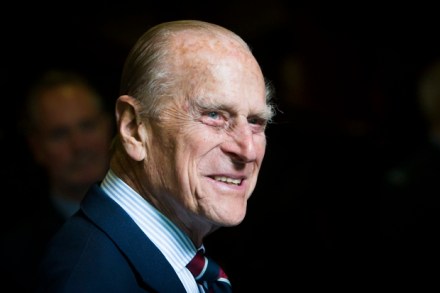
Prince Philip has died at the age of 99. Writing in 2015, Harry Mount reflected on the Duke of Edinburgh's personable style and sense of public service.I’ve just been on the receiving end of a Prince Philip gaffe, of sorts, and I loved it. It was at a lunch last week at the Cavalry and Guards Club for the Gallipoli Association — the charity that commemorates victims and veterans of that tragic, doomed campaign. For 40 years, the Duke of Edinburgh has been the association’s patron. And so, in Gallipoli’s centenary year, he came to the association’s lunch. Before lunch, he roamed at will around the cavernous drawing room, chatting to association members.

Women’s issues are for everyone now, not just feminists

From our UK edition

Like all right-thinking lefty men who came of age in the women’s liberation movement of the 1970s, I always thought of myself as a feminist. But now, thanks to Meryl Streep, I’ve been liberated from the label. Last week I heard her on the radio promoting her new film Suffragette. Asked why the story of the suffragettes hadn’t been made into a film before now, she said that in Hollywood the men with the power to get films made didn’t see this subject as anything to do with them. ‘It wasn’t their fight,’ said Streep. But now things were changing. ‘Increasingly we think that women’s issues and women rights are men’s issues,’ she said. ‘But it belongs to all of us to right this imbalance.

Dear Mary: Another way to deal with a maddening blackhead

From our UK edition

Q. Might I suggest an alternative solution to E.B. of London’s problem (3 October) about the person sporting a ‘maddening’ blackhead at a poolside party? Surely a more tactful way of drawing the man’s attention to the blackhead would have been for E.B. to pretend she thought it was an insect that had landed. On failing to shoo it away, she could have exclaimed that it might be a tick and he should remove it and then offered to assist in this operation. The nuisance could thus have been dealt with without the poor man even discovering that he had an embarrassing zit. — J.P., Stratford upon Avon A. Thank you. The first part of your solution is good but the second part is unusable, since a tick bite can be such a real menace.

Dear Mary: How can girls avoid freezing in cold marquees?

From our UK edition

Q. What do you do when you are so cold at a party that you cannot enjoy it? At a recent 21st in Hampshire the theme was Summer of Love so I was in a beaded catsuit and my friends were in cotton minidresses with bandanas and thin velvet coats. But the theme Arctic Explorers would have been more appropriate. There were heaters in the marquee but they only made a difference if you stood in front of them and only one person at a time could do so. The food and music were brilliant but all we could think about was how cold we were. Our host was cold herself but she kept the house locked up. — B.G., London SW3 A. Nothing like this should happen if a proper party planner is employed.

I invented ‘virtue signalling’. Now it’s taking over the world

From our UK edition

To my astonishment and delight, the phrase ‘virtue signalling’ has become part of the English language. I coined the phrase in an article here in The Spectator (18 April) in which I described the way in which many people say or write things to indicate that they are virtuous. Sometimes it is quite subtle. By saying that they hate the Daily Mail or Ukip, they are really telling you that they are admirably non-racist, left-wing or open-minded. One of the crucial aspects of virtue signalling is that it does not require actually doing anything virtuous. It does not involve delivering lunches to elderly neighbours or staying together with a spouse for the sake of the children. It takes no effort or sacrifice at all.

Baby steps

From our UK edition

When I was pregnant, nearly everyone who’d had children asked me and my husband whether we’d booked our antenatal course with the National Childbirth Trust. Men tended to ask with a gleam of sadistic glee in their eye, and the question was almost always followed by a hurried disclaimer: ‘Ignore most of what they say, but it’s worth it for the friends.’ It seemed like an expensive and boring way to make friends: the courses are usually 17 hours long and they cost several hundred pounds. The NCT offers heavily discounted rates to people who can’t afford it, but for most of its pupils, the full fee is an accepted cost of having your first baby.

Is my only choice to be a cynic or a sucker?

From our UK edition

It’s all the rage to mistrust the powerful these days, to say politicians are scum, or all bankers are selfish. Journalists are considered particularly disgusting post-Corbyn, which encourages all manner of needling on Twitter: ‘I’m sorry, but if you’re a journalist you should get a better job.’ This from a Corbynite. ‘I’m sorry, but…’ — are there three more irritating words? All this sticking it to The Man. All this talk of real, kindly people versus the shifty elite. I think it’s bogus.

Twitter speak

From our UK edition

‘Tweeting’s like text messaging, isn’t it?’ said my husband confidently, though not, as usual, from any knowledge of the matter. I find the register of language in tweets interesting. The tweeter in his own right must assume an easy tone, quite different from that of the niggling troll. As far as style goes, I was impressed by Jamie Reed, the Labour MP who made public his resignation from the shadow cabinet when Jeremy Corbyn had hardly finished his acceptance speech. Mr Reed is fond of tweeting, and quite good at it. The little picture (tweeters it call an avatar) with his account shows Larry Sanders, the fictional chatshow host. Having resigned, Mr Reed later tweeted: ‘Forgot to put the bones in my shirt collars and now my train has broken down.

The perfect pub

From our UK edition

Whenever one of those news stories appears about how many pubs have been forced to close in the last year, I always think of George Orwell. He would have had the correct reaction: lots of pubs are forced to close because they’re terrible. Yes, the pub is a wonderful British institution, with a long and noble history — but that doesn’t mean that any individual pub has a God-given right to stay open forever. If a landlord waters down his beer and scowls at his customers, as plenty of them do, they’ve only got themselves to blame when the bailiffs come knocking. We know Orwell had strong opinions on the subject because he wrote an article about it, setting out the qualities of the perfect pub, a sadly mythical place he called the Moon Under Water.

Names | 27 August 2015

From our UK edition

We reached peak Charlie in 2012, when 5,571 baby boys were given the name. There were only 4,642 last year. Perhaps the Paris massacre early this year will leave more infants than ever lisping ‘Je suis Charlie’ when they learn to talk. Names go in waves. In the Office for National Statistics list of last year’s names in England and Wales, diminutives are noticeably popular. Charlie, not Charles, is at No. 5 for boys, with Harry, not Henry, at No. 3 and Jack, not John, at No. 2. The tendency is less pronounced among girls, with the tenth most popular name being Sophie, though Lily (ninth) and Poppy (fifth) sound like diminutives.

Last orders | 27 August 2015

From our UK edition

Lant Street would be easy to miss, if you weren’t looking for it. Charles Dickens lodged on Lant Street as a child, during his father’s stay in Marshalsea debtors’ prison nearby. The Gladstone Arms is about halfway down, doors open to the narrow street on a warm afternoon in August. Inside, an old man nurses a pint in late summer light that falls through mullioned windows. The grain of the oak floors has a dark patina of London grime. There is nothing spiffed-up about the place. But it’s beautiful, and in decent nick. A black and white cat sits on the piano. This tiny place is also a live music venue, and even has an in-house label for bands that play there regularly. CDs are for sale at the bar.

Death watch | 27 August 2015

From our UK edition

[audioplayer src="http://rss.acast.com/viewfrom22/thereturnofassisteddying/media.mp3" title="Lord Falconer and Douglas Murray debate 'assisted dying'" startat=42] Listen [/audioplayer]A couple of years ago I contacted Holland’s top pro-euthanasia organisation. Our House of Lords looks likely to approve a bill legalising euthanasia here, I told them. ‘Very exciting!’ came the reply. Next month Parliament will again be discussing ‘assisted dying’, and although the tone of the British debate is not yet quite like the Dutch one, a shift in tone has undoubtedly occurred. In the past few years euthanasia has been renamed ‘assisted dying’ and become part of the ‘progressive’ cause.

The breast test

From our UK edition

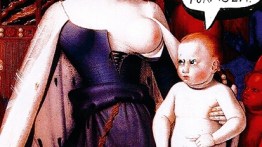
How should a new mother feed her baby? You might well imagine that was up to her. While some mothers take to breast-feeding as if their bosoms have been waiting all their lives for it, others find it exhausting, excruciating and demoralising. Sacrificing every waking hour to nature’s cause, they still produce a mere soupçon of milk, not nearly enough to satisfy a ravenous baby. So isn’t it sometimes better to bottle-feed, with formula milk? Beware. To do such a thing, in our guilt-ridden, competitive age, is seen as stepping into an abyss of last resort. Never mind that your baby will stop crying at last, fall blissfully asleep: the goody-goody breast-feeding mothers in your NCT group will mentally vilify you as a slovenly baby-poisoner.