Minerals

No, I’m not a CIA spy in Greenland

From our US edition

The Danish media has accused me of being a US spy. They say I'm involved in a covert influence operation in Greenland to push the territory towards becoming part of the US. I want to be clear that I have never worked as a covert operative. Instead, my work involves getting investment for sectors like mining and infrastructure. I am very public about my travels in Greenland and business there. I routinely appear on daytime television and bring my family on these trips. That would be a strange thing for Jason Bourne or James Bond to do. I often go for dinner with Greenlandic officials at very public restaurants, with their respective wives and children too. Despite this, I’ve been told by numerous insiders that I’m being monitored.
Greenland

China is holding the West to ransom over rare earths

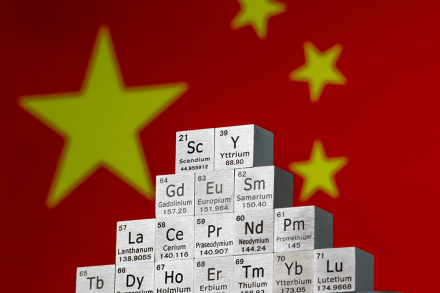
China’s naked weaponization of rare earths brings to mind Mao Zedong’s "four pests" campaign, the old tyrant’s fanatical effort to exterminate all flies, mosquitoes, rats and sparrows, which turned into a spectacular piece of self-harm. Sparrows were always an odd choice of enemy, but Mao and his communist advisors reckoned each one ate four pounds of grain a year and a million dead sparrows would free up food for 60,000 people. The campaign, launched in 1958, saw the extermination of a billion sparrows, driving them to the brink of extinction. But the sparrows also ate insects, notably locusts, whose population exploded, and the ravenous locusts wreaked far more damage to crops than the sparrows ever did, hastening China’s descent into the deadliest famine in human history.

ian williams china rare earths

Why Ukraine’s minerals matter, the NHS’s sterilisation problem & remembering the worst poet in history

42 min listen

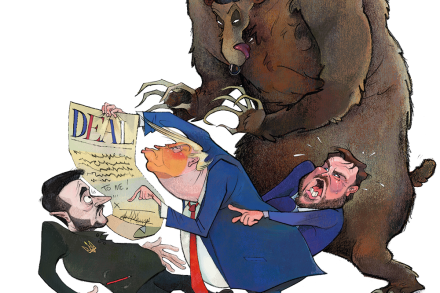
This week: the carve-up of Ukraine’s natural resources From the success of Keir Starmer’s visit to Washington to the squabbling we saw in the Oval Office and the breakdown of security guarantees for Ukraine – we have seen the good, the bad and the ugly of geopolitics in the last week, say Niall Ferguson and Nicholas Kulish in this week’s cover piece. They argue that what Donald Trump is really concerned with when it comes to Ukraine is rare earth minerals – which Ukraine has in abundance under its soil. The conventional wisdom is that the US is desperately short of these crucial minerals and, as Niall and Nicholas point out, the dealmaking president is driven by a nagging sense of inferiority in comparison to rare earth minerals powerhouse China.

Dirty deal: what Trump really wants from Ukraine’s natural resources

In Sergio Leone’s epic spaghetti western The Good, the Bad and the Ugly, Blondie, played by Clint Eastwood, and Tuco, played by Eli Wallach, are rival hunters for stolen Confederate gold. The treasure, they discover, is buried in a huge Civil War cemetery. Unfortunately, they have no idea exactly where. Having earlier taken the precaution of emptying Tuco’s revolver, Blondie turns to him and utters the immortal lines: ‘You see, in this world there’s two kinds of people, my friend. Those with loaded guns. And those who dig. You dig.’ This week has seen good, bad and ugly moments in geopolitics. And it’s ended with Donald Trump playing Blondie and Volodymyr Zelensky as Tuco. Trump has the weapons, so Zelensky has to dig.

The shards of heaven beneath our feet

In the early 20th century, the world went ‘raving mad on the subject of radium’, according to George Bernard Shaw. The newly discovered element was considered a miracle cure, used to treat about 150 medical complaints. And it was fashionable: society ladies drank afternoon tea in rooms filled with radium vapours, and cosmetic companies developed hair tonics, face lotions and anti-wrinkle creams, all claiming to contain the element. Doramad toothpaste even boasted: ‘Your teeth will shine with radioactive brilliance.’ Of course, the discovery had its down sides. One American tycoon drank so much of the tonic Radithor that his bones began to disintegrate.

Is it worth it for Trump to buy Greenland?

From our US edition

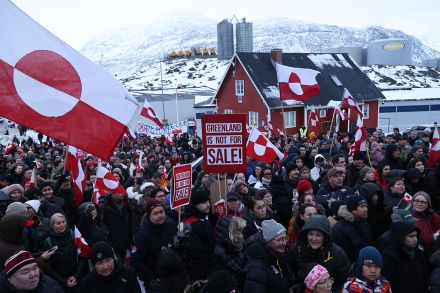
"The art of the deal" is President Trump’s much-vaunted modus operandi as well as the title of his 1987 bestseller. But how smart would he be to make an offer for Greenland to the Danish government? Leaving aside issues of military sites and future unfrozen shipping routes, would the currently still-frozen north Atlantic island be worth a rich price for its mineral deposits alone? I consulted an intrepid investor who spent six years there prospecting for tantalum, a "transition metal" used in capacitors for mobile phones. His answer was not encouraging. There’s no disputing the potential to find everything from gold and uranium to rare earth elements such as neodymium and dysprosium, in demand for advanced electronics. But the operating difficulties are truly formidable.

Greenland