Millennials

Retirement is in crisis and employers, as well as employees, must plan for the future

From our UK edition

The idea of working 9-5 until you receive a gold watch at age 60 is dying out fast. Millennials seem to have the biggest millstone around their neck: a survey of under-35s by Prudential found that over a third of millennials believe that, despite saving as much as they can, they are never going to save enough for a comfortable retirement. The cost of living longer in retirement is pushing the average retirement age higher, and millennials’ struggle to fill their pension pot will lead to them postponing retirement even longer. Changing generational trends could be affecting productivity in business too. Companies who look closely at their baby-boomer employees’ retirement plans are looking at a perfect storm. Official statistics this year show a record 10.

Millennials aren’t taking offence. They’re hunting for victims

In a recent column, I vowed to return to a point made in passing. To refresh your memory, the American magazine the Nation printed a formal apology for running a harmless 14-line poem by a white writer about homelessness. The poet’s sins: using the word ‘cripple’ and adopting a voice lightly evoking what I gather we’re now to call ‘AAVE’: African-American Vernacular English. Facebookers were incensed, comments huffy. The poet apologised, too. I decried this ritual progressive self-abasement as cowardly and undignified. But it’s worth taking a second look at that story as a prime example of screaming emotional fraudulence in the public sphere.

antifa snowflakes millennials

Diary – 30 August 2018

From our UK edition

Attending my goddaughter Cara Delevingne’s 26th birthday party at the trendy Chateau Marmont hotel in LA, I was interested to see how today’s young dress to party. Forget the fairy frocks, cocktail dresses and lounge suits I remember from my Hollywood parties in the golden age; it was shorts, ragged jeans and T-shirts emblazoned with cryptic messages for the boys, and minute, fabric-saving, low-cut dresses for the gals. Or perhaps it was the other way around. Fortunately the Chateau hasn’t yet succumbed to the fad for gender-neutral toilets that almost every institution in the UK has adopted. Where is a girl supposed to apply some lippy and have a quiet gossip nowadays?

Taking offence has become a blood sport

In a recent column, I vowed to return to a point made in passing. To refresh your memory, the American magazine the Nation printed a formal apology for running a harmless 14-line poem by a white writer about homelessness. The poet’s sins: using the word ‘cripple’ and adopting a voice lightly evoking what I gather we’re now to call ‘AAVE’: African-American Vernacular English. Facebookers were incensed, comments huffy. The poet apologised, too. I decried this ritual progressive self-abasement as cowardly and undignified. But it’s worth taking a second look at that story as a prime example of screaming emotional fraudulence in the public sphere.

And I think to myself, not a wonderful world

From our UK edition

The story of Jay Austin and Lauren Geoghegan is an interesting one, I think, for what it tells us about the right, the left and human nature. These two youngish people — both 29, one of them a vegan, the other a vegetarian — jacked in their wonkish jobs in Washington DC in order to experience the world in all its glory. Their itinerary included dangerous areas — or at least areas deemed dangerous by western governments with an axe to grind. As Jay put it: ‘People, the narrative goes, are not to be trusted. People are bad. People are evil. I don’t buy it. Evil is a make-believe concept we’ve invented to deal with the complexities of fellow humans holding values and beliefs and perspectives different than our own... By and large, humans are kind.

How can we encourage millennials to save for their retirement?

From our UK edition

It’s a story we’ve become used to hearing in recent years. How millennials are the sensible generation. They’ve turned their backs on alcohol and going out every single night. They smoke less than other age groups, and have fewer sexual partners. And here’s another string to add to their bow – it turns out that they are also keen to invest in their retirement, even now, when that could be fifty years away. Research released today by Royal London show that auto-enrolment in workplace pensions schemes hasn’t put off those aged 24-35 from saving for retirement. 71% of those questioned said that they decided not to opt out of their workplace pension scheme, while 8% of those questioned did initially choose to opt out but then changed their minds.

Is sex too messy for millennials?

From our UK edition

They may have perfected the sexy selfie and a nonchalance about internet porn but millennials are just not that into sex. The guilty secret behind today’s swipe-right hookup culture is not promiscuity but abstinence. Research out this week suggests that one in eight 26-year-olds have never had sex, up from one in 20 a generation ago. According to Steve McKay, professor in social research at Lincoln University, the true figure may be even higher; if those who refused to answer the question were also virgins then the number of abstainers rises to 16.4 per cent, or one in six. Last year’s National Survey of Sexual Attitudes and Lifestyles revealed a similar story, showing that 23 per cent of 16-24 year-olds had not had sex in the past year.

The Tories’ biggest problem at the next election? Generation Rent

From our UK edition

The government is currently busying itself trying to win retrospective Commons votes on Theresa May's Syria intervention and clearing up the Home Office's Windrush mess. But should they have time for some morning reading, today's Resolution Foundation research on millenials' property prospects ought to give cause for alarm. The think tank predicts that one in three millennials will never own their own home. Instead, they will have to live – and potentially raise families – in privately rented accommodation throughout their lives. And that's before we get to what happens when they stop working and rely on a pension. What's more, half of current UK 20-35-year-olds are expected to be renting in their 40s. This has big implications for the Conservative party.

Blue pill-pushers

From our UK edition

In September last year, official figures showed a startling rise in the number of young British men turning up at A&E with painfully persistent erections. The number of admissions for priapism, to use the medical term, has increased by 51 per cent on the previous decade. Medical experts suggested that the cause was young men taking Viagra in combination with other illegal drugs. This may come as a surprise to anyone who assumed that taking Viagra was the preserve of older men who want to keep their sex life going for as long as possible. But now, 20 years after the famous blue pills were first approved, they are a lifestyle drug for young people. A reasonable question to ask is why younger men, in the prime of life, should need Viagra — or want to take it.

Are young Londoners financially squeezed?

From our UK edition

London, along with other capital cities like Singapore, Hong Kong, Kyoto are thought to be one of the most expensive cities to live in the world. So is London Mayor Sadiq Khan, going too far by suggesting that every young Londoner should be entitled to a bank account? The simple logic should be: if you can’t afford to live and work in London, don’t move to London. But I suppose it is not as simple as that, and the good, great and the millennials have been lured to the Capital for studying, family or work reasons. This sort of simple logic might be a tad unreasonable.

Why the millennials’ railcard isn’t such a bad idea

From our UK edition

It's Budget day tomorrow and there's growing concern among Tories that the Chancellor may be about to bungle the Budget. Only rather than housing, the NHS or education, the issue that has got everyone hot and bothered is a plan for an 18-30 railcard. Nicknamed the millennials' card, the Chancellor is expected to announce that discounted train travel will be extended to people up to 30-years-old. Currently, the young persons' railcard – which costs about £30 and means a third off ticket fares – is just for the 16-25 age bracket. The move comes after a trial of the 26-30 year-olds card took place in East Anglia which led the Treasury to believe the policy will be revenue neutral. So far, so good? Apparently not.

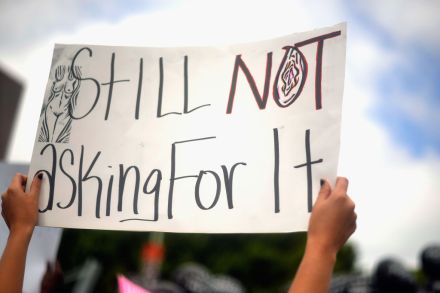
The #metoo movement has an icy heart

From our UK edition

On rolls the Harvey Weinstein horror show with no finale in sight. The next episode looks likely to star Uma Thurman, who’s waiting for the right moment, she says, to tell her own Harvey story. Hollywood waits for Uma and I wait for Robert De Niro, who said of Donald Trump: ‘He’s a dog, he’s a pig, a mutt.’ If groping makes you mad, Rob, why so silent about friend Harvey? Weinstein is clearly a slimeball predator. I hope the great wave of feminist outrage washes all the Harveys clean away, out of Tinseltown, out of Washington, out of Westminster. But running alongside the Weinstein drama is another trickier case — one I think the credibility of the whole #metoo movement rests on.

The young oppress their future selves

From our UK edition

Matt Ridley’s fine recent Times column was hardly the first to raise the alarm about the pseudo-Soviet intolerance of the left emerging from university campuses. Yet he began with arresting statistics: ‘38 per cent of Britons and 70 per cent of Germans think the government should be able to prevent speech that is offensive to minorities.’ Given that any populace can be subdivided into a veritably infinite number of minorities, with equally infinite sensitivities, the perceived bruising of which we only encourage, pretty soon none of us may be allowed to say an ever-loving thing. We won’t rehash the whole trigger warning/safe spaces nonsense.

Harry Potter and the millennial mind

From our UK edition

Which Hogwarts house would you be in? There are four options, and everybody fits into one. The brave and chivalrous are put in Gryffindor. Patient and loyal types head to Hufflepuff. Ravenclaw is for the witty and intelligent. The cunning and ambitious — and potentially evil — are destined for Slytherin. In the Harry Potter books, a pugnacious talking hat, known as the ‘Sorting Hat’, carries out the selection. If you are like me and under 35, you probably didn’t need that explaining. Almost every young person who can read has read Harry Potter — 450 million copies have been sold worldwide. Not to do so was an act of rebellion. On Monday, fans will celebrate the 20th anniversary of the first book’s publication — two decades on and J.K.

I don’t blame millennials for voting for Corbyn

From our UK edition

On the morning after the election I was drinking coffee with one of my heroes, Sir Roger Scruton. We talked about the moment during the 1968 Paris évenéments when Scruton, who had been fairly apolitical up to that point, suddenly discovered he was a conservative. He had watched the educated children of privilege wantonly destroying the property of their social inferiors in the name of something or other, and realised: ‘Whatever they are for, I am against.’ That was the reason he has spent so much of his life since trying to develop a philosophy of conservatism as thorough, persuasive and enticing as the variations on Marxism so compelling to those students.

The Spectator Podcast: Keeping the faith

From our UK edition

On this week's episode, we discuss the future of Christians as a minority group, consider whether Trump has found an ally in Britain, and dissect the 21st century phenomenon of the 'flake'. First, with Easter just around the corner, the fate of Christianity in an increasingly secular Britain came under scrutiny. In this week's magazine cover story, Rod Dreher advocates for 'the Benedict option', where Christian communities develop stronger personal identities. But Matthew Parris argues against this proposal, and they go head-to-head on the podcast. As Rod writes: "The collapse of religion in Britain has been perhaps the most striking feature of the last generation.

Marmalade

From our UK edition

Marmalade’s had a rough old time of it lately. A recent report in the Telegraph declared it is dying out; that only oldies are buying it because millennials can’t handle ‘bits’ in spreads. Well, excuse me, but I direct you to this year’s World Marmalade Awards, held a few weeks ago in a big Georgian house called Dalemain just outside Penrith, which attracted nearly 2,000 homemade jars from around the globe. Big jars, little jars, jars decorated with glitter, sticky jars that had leaked in the post, jars with gingham hats. All laid out on trestle tables with individual, handwritten tasting notes from the WI judges underneath, marking each jar out of 20.

The mad, bad crusade against ‘cultural appropriation’

From our UK edition

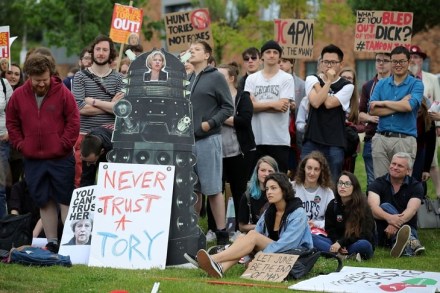
It’s usually best to ignore the indignant fury of the 21st-century young. We’re used to them now, these snowflakes, posing as victims (though they’re mostly middle-class), demanding ‘safe spaces’, banning books and speakers. Best to rise above them, deadhead the camellias. Attention, especially from the press, acts on entitled millennials like water on gremlins — they start proliferating and develop a taste for blood. But then sometimes they go too far. Ten days ago, the Whitney museum, on the New York bank of the Hudson, opened its biennial exhibition of contemporary American art. It’s an exciting show, full of vim and diversity.

The mad, bad war on ‘cultural appropriation’

From our UK edition

It’s usually best to ignore the indignant fury of the 21st-century young. We’re used to them now, these snowflakes, posing as victims (though they’re mostly middle-class), demanding ‘safe spaces’, banning books and speakers. Best to rise above them, deadhead the camellias. Attention, especially from the press, acts on entitled millennials like water on gremlins — they start proliferating and develop a taste for blood. But then sometimes they go too far. Ten days ago, the Whitney museum, on the New York bank of the Hudson, opened its biennial exhibition of contemporary American art. It’s an exciting show, full of vim and diversity.

A choice of first novels | 17 November 2016

From our UK edition

Constellation by Adrien Bosc (Serpent’s Tail, £12.99) picks nimbly along the divide between fiction and non-fiction. It’s really a speculative group biography, telling the story of a Air France plane crash in the Azores in 1949, and the lives of the plane’s passengers, mostly (except for a quintet of migrating Basque shepherds) of an appropriately stellar socio-economic stratum.