Millennials

The final word on the millennial generation

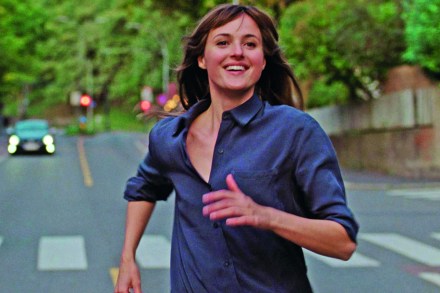
More than anything else, the phrase “I’m still figuring it out” defines the millennial generation. Floating from passion to passion, job to job, lover to lover, possible spouse to possible dead end. In Joachim Trier’s The Worst Person in the World, Renate Reinsve plays Julie, a person that most of us would recognize from life, and certainly from the last ten years of media: approaching thirty; romantic and flighty to a fault (in the prologue, she drops out of medical school to become a philosopher and then a photographer); beginning to feel a void she doesn’t know how to fill.

worst

How the boomers robbed the young of all hope

"Young people do not degenerate; this occurs only after grown men have already become corrupt.” — Montesquieu, The Spirit of Laws, 1748. The great test of a generation is whether it leaves better prospects for its descendants. Yet by virtually every indication, the baby boomers, and even the Gen Xers, are leaving a heritage of economic carnage — as well as a growing social and cultural dissipation that could shape our future and the fate of democratic self-rule, and not for the better. This legacy comes not from outside forces, but the investment bankers, tech oligarchs and their partners in the clerisy who have weakened their national economies and undermined the chances of upward mobility for most young people.

young

Why must younger generations constantly ‘work on themselves’?

From our UK edition

If I could lift one thing from younger generations, unpeel one idea from their anxious minds, it would be the notion they have to ‘work on themselves’, and that the point of life is to do this ‘work’ until they feel able to have a relationship, at which point they must grimly set about working on that. I’m not suggesting that it’s not useful to have treatment or therapy for a particular problem, but it’s as if everyone born after 1990 thinks of themselves the way 1950s man thought of his car — as something to be worked on in every spare moment, tinkered with and polished, but rarely taken out for a spin, for fear of dents. You can tell an era by its aphorisms.

The rise of the second-string left

If a recent Scientific American opinion piece purporting to explain how growing opposition to critical race theory damages public education reveals anything, it is that the real problem with today’s left goes much deeper than its progressive ideology. The co-authors assert that resistance to CRT is based on white supremacy, a refusal to acknowledge history, a rebirth of ‘50s-style anti-communism, and the conservative desire to harden racial divisions. These stunning inaccuracies raise questions not just about the validity of their argument but the competence of the supposed experts making it.

defund

Why millennials love Halloween way too much

Millennials — roughly defined as the generation born between 1980 and 1996 — love Halloween. Barely an instant after the sun sets on Labor Day, giddy social media posts announcing the arrival of #SpookySeason” start replacing #SummerVibes faster than you can say “sweater weather.” Pumpkin-spiced IPAs and photos of girls wearing floppy, completely impractical Indiana Jones hats supplant selfies with spiked seltzers and cut-off jeans. “The modern Halloween is for millennials as much as kids,” reports businesswire.com. In 2018, the site said that “59 percent of millennials planned either to attend or throw a Halloween party.

millennials

The techniques of totalitarianism are still fully in play today

From our UK edition

How to Become a Tyrant (Netflix) is ideal history TV for Generation No Attention Span. Presented in six bite-sized chunks by Peter Dinklage, aka the ‘Imp’ Tyrion Lannister from Game of Thrones, it tells you most of the things you need to know about Hitler, Stalin, Mao, Gaddafi, Kim Il-Sung, Idi Amin and Saddam Hussein, without obliging you to think or grapple with any tedious detail. Instead of examining the dictators individually, it explores their careers thematically, looking for the ingredients they have in common.

How politics ruined Instagram

Someday, we’ll count them like fallen soldiers: the online platforms that began by promising to be different, an escape from the grind of endless internet flame wars, and ended up like all the others, captured by memeified outrage. The trajectory is always the same. Tumblr, originally a home for cheeky fanblogs with titles like ‘fuckyeahsharks!’, was overtaken in a few short years by the ‘Your Fave Is Problematic’ brand of outrage archaeology. Facebook started as a place to collect your photos, share updates about your lunch and platonically ‘poke’ your friends, only to devolve into a wasteland abandoned by virtually everyone except a bunch of angry boomers battling over whether or not Hillary Clinton does, in fact, eat babies. Twitter...

instagram
generation x

Spare me, Generation X: you’re not that special

A sprawling New York Times feature package this week showcases essays, photos, and snippets of nostalgia that all amount to the declaration ‘This Gen X Mess.’ One of the declarations in one of the essays is that ‘it’s easy to decide that Gen X is culturally irrelevant.’ Who actually thinks that? I was born in the mid-1980s and I’ve been sick of hearing Gen-X talk about itself and its place in history ever since I grew old enough to date men born in the Seventies without it being gross and creepy. To backtrack a bit, the events of my birth toss me squarely into the elder bracket of ‘millennials,’ you know, that overexposed generation of helicopter-parented, selfie-snapping, Adderall-addled ‘digital natives.

How the West was lost

One feels for the olds who birthed this cancer. They just wanted to placate the youngs. They had no idea they were disemboweling the same institutions they were charged with safeguarding against the idiot-children. The olds, the so-called progressive elites (so-called because they lacked any sense of noblesse oblige), were scared of being ‘on the wrong side of history’. They wanted the youngs — the new radicals — to like them, to follow them on social media. They wanted to hold onto their power, and they were shallow, and they were vulnerable to their own spinelessness. Blinded by it.

hate

From Cool to Cringe: what’s happened to American culture?

Back in March, around 4,000 years ago, the world was ending. Plague swept in from the east like a horde. Clam-tight lockdowns, unthinkable even days before, were announced everywhere. Who could save us? On March 18 our prayers were answered. An honor roll of Hollywood bluebloods took action. Assembled by Wonder Woman herself, Gal Gadot, they created a video montage cover of John Lennon’s masterpiece — yes! — ‘Imagine’, which she posted — thank goodness! — on Instagram. ‘We’re all in this together,’ said Gadot’s expensive oval face, and, in a sense, she was right. Will Ferrell and Mark Ruffalo, Sia and Zoë Kravitz, Norah Jones and Amy Adams: they were all in this big wet bathful of tears together.

cool cringe

I hate the Nineties

I’m a Nineties kid. You know what that means: Tamagotchis, Super Mario, Sega, primitive cell phones, slap bracelets, skateboarding, The Simpsons, Seinfeld, David Koresh, scooters, Britney Spears, the Backstreet Boys, the Spice Girls, the first bombing of the World Trade Center, the Nato bombing of Sarajevo, Pokémon!, Blink-182, Bill Clinton, Friends and the friends of Bill Clinton. What a decade! Only Nineties kids will understand it. And as even Nineties kids grow up, Nineties nostalgia is now big business. Everyone from the Spice Girls to Smashing Pumpkins has launched comeback tours on a rising tide of misty-eyed affection. McDonald’s brought back Tamagotchis and Furbys and other veteran Happy Meal toys. Friends is set to make a highly profitable return.

nineties

Millennials will be the death of us

It turns out millennials are the worst generation after all. By now, we should all be well aware that social distancing is crucial if we wish to end the coronavirus pandemic anytime soon. Many of us have responded accordingly — if not already forced to close by state mandate, bars, restaurants, and other employers have determined nipping the virus in the bud outweighs the financial cost of shutting down their businesses. Events and shows have been canceled around the world, and most schools are closed through the semester. No one is thrilled about it, but there is one group that seems to be handling the disruptions to their lives with less decorum than others: millennials. 'May as well enjoy it before everything gets shut down,' one spring breaker toldFox News on Tuesday.

Miami spring break millenials

We must defend freedom of reaction

From our UK edition

Debbie Harry, Blondie’s lead singer, has written a memoir in which she relates, in her usual deadpan, punk-rock way, the strange, horrific things that have happened to her. She had a narrow escape from Ted Bundy, the serial killer; David Bowie showed her his penis (‘adorable’, apparently) and early in her pop career she was raped by an opportunist burglar. ‘He poked around, searching for anything worth anything. He piled up the guitars and Chris’s camera. Then he untied my hands and told me to take off my pants… I can’t say I felt a lot of fear,’ writes Debbie. ‘In the end, the stolen guitars hurt me more than the rape. I mean, we had no equipment.

OK zoomer, is that really the best you’ve got?

From our UK edition

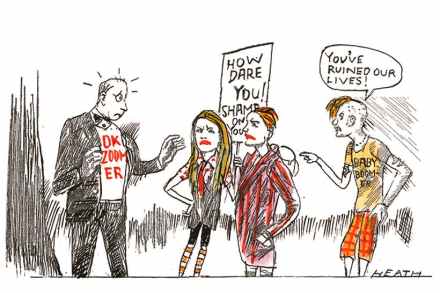
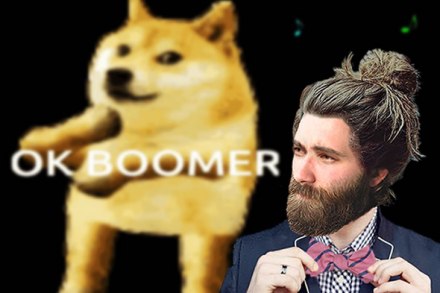
Every generation and teen subculture likes to put the boot into baby boomers like me. I’ve been physically attacked by skinheads, verbally assaulted by right-wing intellectuals and mocked by millennials. But I never thought I would be subjected to the derision and verbal lashings of Generation Z. The ‘zoomers’ — that is, people born after about 1995 — have come up with a cutting and dismissive retort for older people: ‘OK boomer.’ It all began when an elderly man posted a video on the social media app Tik-Tok denouncing the younger generation. They were, he claimed, suffering from ‘Peter Pan syndrome’ and ‘needed to grow up’.

‘OK boomer’ is the most important meme of my generation

‘What the fuck is that on your head?’ a repulsive white man called out to me from a shop doorway as I crossed the street towards him. He was standing with a couple of other men. All white. All of them in their thirties at least. Wishing to remain civil, I graciously replied, ‘It’s a top-knot, or semi man-bun. First implemented as a popular hairstyle in Japan during the Edo period.’ The uncultured wretches all scoffed visibly at this enlightening nugget of education I had gifted to them with no request for recompense. ‘Haha this hipster prick thinks he’s the fucking Karate Kid!’ retorted one of them as the rest mocked and jeered. I winced inwardly at his foolish statement.

boomer

The arresting truth about snowflakes

From our UK edition

I was driving to Gunnersbury Park last Sunday for my weekly 10K run when I caught the tail end of Broadcasting House on Radio 4. The presenter Paddy O’Connell was interviewing George King, the 19-year-old who scampered up the Shard at the beginning of July without the aid of ropes or suction cups. As you’d expect, he was impressive. He first set eyes on Britain’s tallest building as a 13-year-old on a school trip and decided then and there that he wanted to climb it. He embarked on years of rigorous training, taking up boxing and running a 62-mile ultramarathon.

Why zero deposit mortgages will make the gap between rich and poor worse

From our UK edition

A common opinion in today’s media is that millennials have it all – flexibility in jobs, a greater freedom to travel, and all the information they need at their fingertips. However, if you dive a bit deeper into the statistics, things don’t appear to be as rosy as we first thought. Today’s young face longer commutes than those before them and are confronted by an increasingly out of reach property sector. Over the last 20 years we’ve seen nothing short of a collapse in homeownership amongst younger people. In 1995-96, sixty five percent of those with incomes in the middle twenty percent for their age owned their own home. In 2015-16 the figure stood at twenty seven percent. Those looking for a reason as to why won’t have to search hard.

Renter’s paradise

From our UK edition

On turning 50, I realised I’d never own my own home. What bank would agree to give a mortgage to someone with no regular source of income? Even if I did somehow hold down a job, I would have just 15 years until retirement age. For a while, I was depressed. Owning your own home is the British dream. Why else would all those property shows I drool over be so popular? I won’t have anything to hand down to my kids. What sort of loser am I? Then I remembered: I live in a five-bedroom Victorian terrace in Islington, which is owned by the council. At £650 per month, our rent is far less than what private tenants might pay for a flea-infested bedsit in the same area.

This will end badly | 15 November 2018

From our UK edition

Pinter Three appeals to opposite poles of the play-going spectrum. The birdbrains like me will enjoy the music-hall sketches while the goatee-strokers will have fun pretending that Pinter’s deadly earnest memory plays are worth seeing. Watching the first piece, Landscape, is like receiving a jigsaw puzzle in instalments. Two characters, Duff and Beth, speak to us without acknowledging each other. Maybe they’re married. Maybe they aren’t. Duff, played by Keith Allen, is a barking, aggressive know-all who works as a chauffeur. Tamsin Greig’s Beth is a prattling Irish scullery maid who witters on about ‘having a baby’ with a lover who may be Duff, or an unseen chap named Sykes, or someone else.

Is ethical investment only for millennials and hipsters?

From our UK edition

In the 'bad old days' – namely before the late 20th century – it was traditionally the case that the less ethical and the less green a business or sector, the better. There was, and still is, a whole cacophony of 'sin stocks, from tobacco to oil and gas to defence and junk food. The reason for an enthusiasm for all things sinful was, and probably still is, because such businesses tended to have the most secure profits profile. After all, people will always smoke, go to war and binge eat. However, from a moral standpoint investors would be scraping the bottom of the barrel in terms of a clear conscience by going for such an approach.