Millennials

Every unhappy generation is unhappy in its own way

The Kids Are All Right was a 2010 movie that attempted to reassure audiences that the teenage children of a lesbian couple are psychologically just fine. The movie is largely forgotten but the title has lingered, often as a springboard for observers who say that today’s kids are not, in fact, all right. The diagnoses of what ails the current generation of young folk are many and various. They are the products of infantilization, feminization, iPhones, cancel culture, digitalization, narcissism, social-justice intoxication and nihilism – among other maladies.

I love Labubu

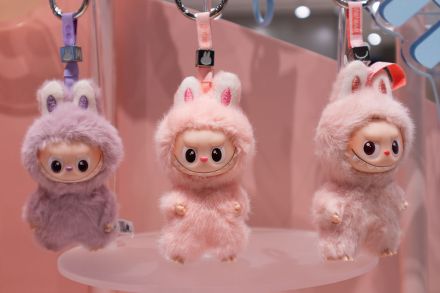
I don’t recall how it happened. One moment I was a sane member of society, the next I was at an arcade, slotting coin after coin into a claw machine – and on the other side of the glass, taunting me with her feral grin, was the object of my desire: Labubu. Labubu is a mischievous, furry elf-monster with bunny-like ears and distinctive sharp teeth. Depending on who you ask, she is either incredibly cute or incredibly creepy. She exists in many forms – most notably as a key-ring collectible plush doll – embodying an ugly-cute aesthetic called kimo-kawaii in Japanese that both unsettles and endears. Her creator, Hong Kong–born and Netherlands-raised Kasing Lung, was inspired by Nordic folklore.

labubu

Zohran Mamdani’s politics of entitlement

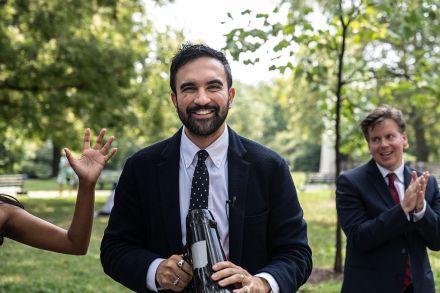
Zohran Mamdani’s presumptive victory will make history: if elected in November, he will become New York’s first Muslim and first Indian-American mayor. Powering his win in the Democratic primaries was a massive surge of young, urban, progressive voters changing the city’s political future. But beneath the energy and hope lies something more troubling: a generational embrace of a politics of entitlement, poised to undermine not only the city’s finances but also the values that have historically bound together American civic life. The city’s youth voting base turned out in force: voters aged 18–29 gave Mamdani the win.

Zohran Mamdani (Getty)

Why is American pride at an all-time low?

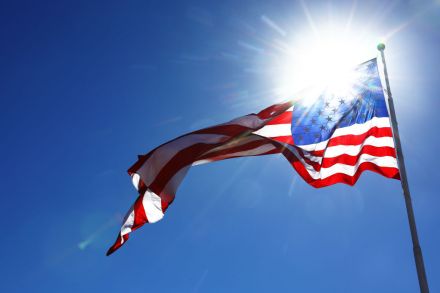
Lee Greenwood may be “Proud to be an American,” but the same can't be said for a growing number of his countrymen and women. Those who identify as “extremely” or “very” proud to be American has dropped from 87 percent in 2001 to 58 percent in 2025.  In 2001, Republicans, Independents and Democrats were all within six points of each other in their reported national pride. But now there's a 56-point divide between Republicans (92 percent) and Democrats (36 percent). Republicans stay patriotic regardless of the presidency, while Democrats have dropped 24 percent since Trump's inauguration this year. Beyond political affiliation, it seems the younger a generation is, the less American pride its members have.

4th of July preparations at the National Mall, DC (Getty)

An insightful account of America’s decline

I wouldn’t have thought a book about America’s decline would cause me to laugh out loud, but having enjoyed its author Matt Purple’s work for years now (full disclosure: he’s a personal friend and former Spectator colleague), I should not have been the least bit surprised that his debut book is as funny as it is insightful. Decline from the Top: Snapshots from America’s Crisis and Glimmers of Hope is a veritable joy to read. Though he declares himself to be a “cranky conservative,” Purple’s humor and wit offer a diagnostic examination of the American condition that exudes warmth and obvious heartfelt concern for our nation’s wellbeing.

Purple

What’s behind the risk-averse approach toward love and family?

Human risk assessment is not a dispassionate numbers-crunching game. Those who fear flying have to know we’re four times more likely to die in a car crash than in a fiery plunge from the skies, even if we’re boarding a Boeing. The fear of flying may be common, but only a select few will rule out the jet engine entirely. When it comes to emotional risk evaluation, there is one area where phobia prevails over reason: our increasingly sterile view of what constitutes a good bet when it comes to marriage and family life. Since the second half of the twentieth century, American society has been on a mission to eliminate risk. Seatbelt and helmet laws reduced deaths in automobile and bike accidents at the expense of comfort and self-respect.

risk

Why the luxury life feels alien

My path to “media personality” (puke) and cultural commentator was not the usual one. I didn’t get a degree in Journalism or Broadcast Journalism or Communications. I didn’t go to Harvard or Columbia or Syracuse or Yale. In fact, I didn’t get a degree at all. This sets me apart from almost everyone in old-guard media — and were it not for new media and more importantly, social media, I would still probably be excluded by most of the establishment gatekeepers. Our mainstream media and late-night television rooms are dominated by people who went to Ivy League schools. The Harvard Lampoon guys. The Columbia School of Journalism kids.

luxury

Against LOLflation

Between the deranged cancellations still roiling online life the Muskification of Twitter, and the undead nature of the Donald Trump-attention economy, there is no shortage of legitimate matters to depress someone like me who cohosts a podcast about internet bullshit. And yet for some reason, I’m fixated on an insignificant issue: LOLflation. The majority of you know what “LOL” stands for: “laughing out loud.” What it’s supposed to mean, when communicated via text or direct message or (less often) email, is: you just wrote something funny enough that I physically laughed. This is touching not just because it’s flattering to make someone laugh, but because it temporarily breaks the spell of the online world.

lolflation

Sean McVay is the NFL’s suffering millennial wunderkind

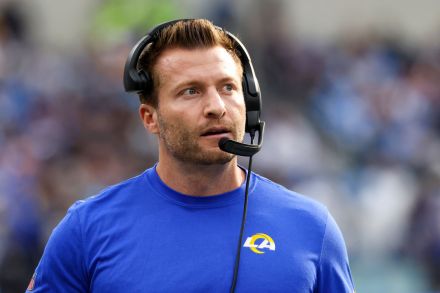
There was a time, not long ago, when any NFL franchise with a coaching vacancy was desperately searching for the next Sean McVay. This was explicitly spelled out: we want the next McVay, a literal clone if possible. Now, only six years into his head coaching career and following his first losing season, Sean McVay isn't entirely sure he wants to be Sean McVay anymore; at least not Sean McVay the football coach, at least not for a while. That McVay spent years representing the mold that coaches aspired to had something to do with the cult of the wunderkind. Every few years, there's a new hotshot coordinator or ascendant college coach who is said to be taking the NFL by storm.

The generation war and why millennials are drifting leftward

The war between the generations is on, and the battle lines have been drawn. The baby boomers don't like the millennials because they can't understand why the millennials won't just buy a house already. The millennials don't like the boomers because, as they've explained, a house no longer costs $75 with a couple coupons like it did back in 1972. And lately the millennials and Generation Z have been mixing it up as well, over such important issues as hair partings and emojis. So a fractured conflict, this one, a bit like Lebanon's civil war except with more awful Facebook posts. Yet if you're looking to really understand the social media-fueled rifts between the generations, then you have to start with the main combatants, the boomers and the millennials.

crime debate themes matt walsh

Report: baby boomer CEO exits on the rise

The number of CEOs leaving US companies surged in November, according to a new report. There were almost 100 exits for the month, roughly twenty more than were reported in October. The report, from global outplacement firm Challenger, Gray, & Christmas, Inc., shows that these exits were not replacements or instances of “stepping down” to pursue other opportunities, either. For thirty-seven of the executives, retirement was the primary reason for leaving, the most retirements in a single month since January 2020. The larger trend of CEO exits may have some staying power, too. Andrew Challenger, the firm's senior vice president, predicts, “We may begin to see large numbers of CEO changes as we enter 2023 amid an economic downturn.

boomer blockade

Why Gen X is the Trumpiest generation

Republican fortunes are again on the upswing as the 2022 midterm elections loom. A series of Biden administration legislative wins over the summer, along with the Supreme Court’s ruling to overturn Roe v. Wade, appeared to be mitigating projected Democratic losses in November. But persistent inflation, a recessing economy, a worsening national crime wave, a slew of foreign policy embarrassments, and other gaffes have combined to put the Republicans back in a decisive lead. A New York Times/Siena College poll published on Monday gave the GOP a four-point advantage over the Democrats among likely voters. In most categories, the breakdown by age demographic is about what one might expect.

maga exposure therapy

The beauty of becoming an adult

One day during a recent visit to my parents in Hunterdon County, New Jersey, my best friend and I met up and went on a daytrip. We drove around Edison’s Oak Tree Road corridor to the east, a heavily Indian neighborhood in a suburban sprawl setting. It’s a really interesting place, but the highlight of the day was probably going over to my friend’s house later that evening. We grew up together — we were fellow homeschoolers in our church group — and I know his house as well as the one I grew up in. I’ve written before about how thankful I am to have grown up in one house, in one place, as my friend did. But I guess we kind of grew up in two houses, because we knew each others’ so well. Both of them are thick with memories.

The vibe shifts to East Austin

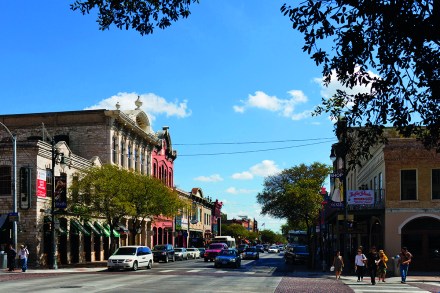
East Austin is a Proust’s madeleine of a neighborhood: picture a zombified resurrection of Brooklyn’s 2000s Peak Hipster moment with a veneer of Instagrammable gloss on top. If an aging millennial cast a spell that encased just under ten square miles of Texas in a bubble made up of his happiest memories, this would be the result. Williamsburg, NYC circa 2008 was, as the zoomers now say, a whole vibe. Except that the zoomers did not say this, not then, because they were still in diapers. This was a millennial moment: we were still in our twenties then, clad in American Apparel-brand basics made of cotton so thin it was practically transparent, not yet cursed with middle-aged pudge. The millennial infestation was thickest on the ground in gentrifying Brooklyn.

Austin

My roaring thirties

I spent my twenties drinking beer. I spent my thirtieth birthday drinking beer and eating oysters. And I remember thinking how far I'd come. Thirty. That number can blaze with dread in the young adult imagination. For years, it loomed ahead of me like some kind of buzzkill apocalypse, the exact moment when everything I loved would come to a screeching halt. The carousing would stop, the long nights would turn to early mornings, the glittering friends would metamorphose into glowering Dursleys. Thirty meant adulting, as our pathetically adolescence-obsessed culture calls it, and adulting meant not freedom but obligation. Admittedly some of that has come to pass.

The final word on the millennial generation

More than anything else, the phrase “I’m still figuring it out” defines the millennial generation. Floating from passion to passion, job to job, lover to lover, possible spouse to possible dead end. In Joachim Trier’s The Worst Person in the World, Renate Reinsve plays Julie, a person that most of us would recognize from life, and certainly from the last ten years of media: approaching thirty; romantic and flighty to a fault (in the prologue, she drops out of medical school to become a philosopher and then a photographer); beginning to feel a void she doesn’t know how to fill.

worst

How the boomers robbed the young of all hope

"Young people do not degenerate; this occurs only after grown men have already become corrupt.” — Montesquieu, The Spirit of Laws, 1748. The great test of a generation is whether it leaves better prospects for its descendants. Yet by virtually every indication, the baby boomers, and even the Gen Xers, are leaving a heritage of economic carnage — as well as a growing social and cultural dissipation that could shape our future and the fate of democratic self-rule, and not for the better. This legacy comes not from outside forces, but the investment bankers, tech oligarchs and their partners in the clerisy who have weakened their national economies and undermined the chances of upward mobility for most young people.

young

The rise of the second-string left

If a recent Scientific American opinion piece purporting to explain how growing opposition to critical race theory damages public education reveals anything, it is that the real problem with today’s left goes much deeper than its progressive ideology. The co-authors assert that resistance to CRT is based on white supremacy, a refusal to acknowledge history, a rebirth of ‘50s-style anti-communism, and the conservative desire to harden racial divisions. These stunning inaccuracies raise questions not just about the validity of their argument but the competence of the supposed experts making it.

defund

Why millennials love Halloween way too much

Millennials — roughly defined as the generation born between 1980 and 1996 — love Halloween. Barely an instant after the sun sets on Labor Day, giddy social media posts announcing the arrival of #SpookySeason” start replacing #SummerVibes faster than you can say “sweater weather.” Pumpkin-spiced IPAs and photos of girls wearing floppy, completely impractical Indiana Jones hats supplant selfies with spiked seltzers and cut-off jeans. “The modern Halloween is for millennials as much as kids,” reports businesswire.com. In 2018, the site said that “59 percent of millennials planned either to attend or throw a Halloween party.

millennials

How politics ruined Instagram

Someday, we’ll count them like fallen soldiers: the online platforms that began by promising to be different, an escape from the grind of endless internet flame wars, and ended up like all the others, captured by memeified outrage. The trajectory is always the same. Tumblr, originally a home for cheeky fanblogs with titles like ‘fuckyeahsharks!’, was overtaken in a few short years by the ‘Your Fave Is Problematic’ brand of outrage archaeology. Facebook started as a place to collect your photos, share updates about your lunch and platonically ‘poke’ your friends, only to devolve into a wasteland abandoned by virtually everyone except a bunch of angry boomers battling over whether or not Hillary Clinton does, in fact, eat babies. Twitter...

instagram