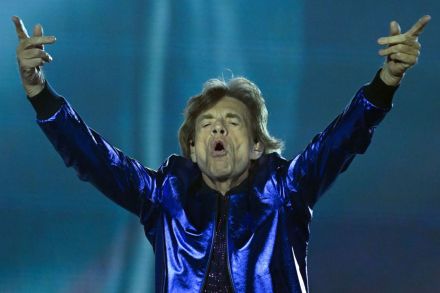
Mick jagger

The man who – inadvertently – invented the 1970s

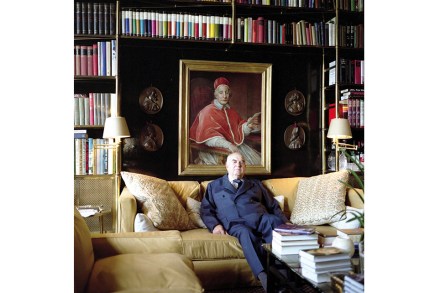
Style, self-evidently among those who pursue an interest in such affairs, is, according to the Comte de Buffon, the man himself – the essence, the heart, the bowel, the bovril. While, among the much greater majority who pursue an ignorance in such affairs, it is an assumed gamut of off-the-peg tics, props, accent – style is something bolted on to a being’s chassis and core in the hope that it will hold. We can be certain which of these two nugatory classifications better suits the late Christopher Gibbs who in the course of his long, more or less antiquarian life encountered Everyone, absolutely Everyone. ‘Everyone’ in this instance unhelpfully signifies little beside the people, per se, whom Gibbs met, smiled at, sold to, bought from, bought for, advised and charmed.

None of McCartney’s new songs will trouble his setlist for long

On 30 May 1966, the Beatles released ‘Paperback Writer’ – a fortnight after ‘Paint It Black’ by the Rolling Stones and only days before Bob Dylan released ‘I Want You’ as a single. Paul Simon wrote and recorded (with Art Garfunkel) ‘A Hazy Shade of Winter’ not long after. Yes, yes, what bliss it was in that dawn etc. But anyone predicting back then that, exactly 60 years later, all four artists would still be releasing new music and touring to large and appreciative audiences would have been laughed clean out of the Bag O’Nails. Even when glossy monthly music magazines such as Q started appearing in the 1980s, 40 was regarded as the dark side of the moon for the foundational pop stars of the 1960s.

Lean and mean: Mick Jagger was always a tightwad

From our UK edition

This book got glowing reviews when it was published in the US a few months ago: ‘Irresistible’ (New York Times); ‘Riveting’ (Boston Globe); ‘Energetic and engaging’ (Washington Post). I kept wondering if I was reading the same book. You wouldn’t have thought it possible to make the Rolling Stones boring, but Bob Spitz somehow manages to. Let me count the ways. By giving his own programme notes on every Stones record; by paying far too much attention to the actual recording process and crediting every new sound engineer; and by totally missing the point that it is the Stones themselves we are interested in. I’m fairly typical of diehard Stones fans in that I got hooked in the 1960s and have stayed with them ever since. I am now 82.

How the Rolling Stones keep rocking

From our UK edition

The Rolling Stones’ resilience is hard to get one’s head around. In a world of fleeting cultural phenomena, they just keep going… and going… and going. Earlier this month, under the pseudonym ‘The Cockroaches’, the band released 1,000 copies of a vinyl-only single (their 124th in their 65th year of rocking) ahead of a new studio album which will come out this summer. The combined age of the three surviving principals Mick Jagger, Keith Richards and Ronnie Wood is 242. The band are so venerable that even jokes about their age are getting old: their ‘Steel Wheels’ tour was dubbed ‘Steel Wheelchairs’ back in… 1989.  Full disclosure: I’m hardly a Rolling Stones fan.

Will the Stones ever play live again?

How times change. Our forebears once thought that full-figured Bill Haley was at the razor-sharp, frighteningly decadent and anarchic edge of pop culture. Compared to the Rolling Stones’ subsequent carnival of drug busts, court appearances, car crashes, house fires, paternity suits and chosen or enforced overseas exile, not to mention the matter of Keith Richards’s alleged blood transfusion, or of his unusual choice in dispersing his father’s ashes (cocaine, nostril), Haley’s act now seems as quaint as the background accompaniment to an Edwardian tea-dance.

Nostalgia for the 1980s New Romantic scene 

From our UK edition

It is hard to write the history of a subculture without upsetting people. Events were either significant or inconsequential depending on who was there, which leads to absurdities. When Jon Savage wrote England’s Dreaming, his history of punk, Jenny Turner berated him in the London Review of Books for being ‘a bit of a Sex Pistols snob’. Ironically, the most exclusive British subculture of them all seems to have escaped infighting over who or what mattered, possibly because so few people were part of it. The Blitz, Steve Strange and Rusty Egan’s much mythologised early 1980s nightclub, had a brutally selective door policy.

A transatlantic party route

Breaker Media, which has established itself as one of New York City’s foremost bean-spillers, hosted its first shindig at the West Village’s Super Burrito. Exuberant Aussie founder Lachlan Cartwright, an unashamedly old-school hack with a business card wedged in the brim of his fedora, mounted the bar and gave an impassioned speech: “I might as well have called this Broken Media because it’s almost broken me! But I’m having the time of my life.” So too were the guests as they guzzled martinis and snagged cigarettes from bowls on the tables. During one cig break, I had my fortune read by one of the party’s hired psychics. She said all the right things – “born under a lucky star, many children etc.

transatlantic

‘You can really sing!’ – Sonny discovers the teenage Cher

From our UK edition

This is a very odd book. Where you’d expect to find an author’s photo inside the dust-jacket it just says: ‘Cher is a global icon.’ As for the ending – there isn’t one. It feels as though the publishers snatched the manuscript out of Cher’s hands almost mid-sentence, saying: ‘Keep the rest for Part Two.’ Still, it’s a breathlessly exciting story. With 5,000 screaming fans at the airport, success had arrived. And Cher was still only 19 ‘I mean, jeez, my family,’ Cher exclaims at one point, ‘you couldn’t make it up.’ Her mother Jackie Jean, a dazzling beauty from a dirt-poor Arkansas background, had been taught not to sleep with anyone before marriage.

Does it matter how posh pop stars are?

From our UK edition

‘A working class hero is something to be.’ Rishi Sunak and Keir Starmer must have missed the conflicted, sardonic edge to John Lennon’s lyric, from his 1970 song ‘Working Class Hero’, given their rush to scrub away the whiff of privilege in the crudest manner imaginable. Sunak, desperately, by means of bemoaning a childhood forever blighted by lack of access to satellite TV; Starmer by dully hammering home that he is the son of a toolmaker. A country pile, a double-barrelled girlfriend and a mock-regal drawl were valued plunder in 1960s pop As in politics, so in music. In both fields, class anxiety has become inverted. The fear now is to appear too privileged. It wasn’t always thus.

The evergreen, ageless Rolling Stones

Are the Rolling Stones the new Rat Pack? Or put it another way: how did the Stones achieve this curious headlock on our affections? If anything, it seems to get stronger over time. In the band’s current US stadium tour, aptly sponsored by the old-age interest group AARP, a million customers are each paying $100 for a seat that allows you to aim a pair of binoculars at a distant video screen. Want an actual view of the stage? It’ll cost you up to ten times as much. Still, it’s all gravy. The last major Stones tour grossed $550 million at the box office.

Stones

Keef at eighty (Yes, really)

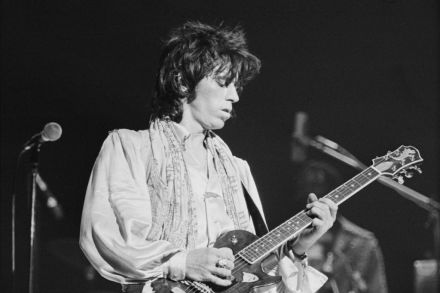
Most of us have at one time played the you-couldn’t-make-it-up game. What were the odds back in, say, 1973, that millions of us would casually engage in Jetsons-style video chats, conduct business at the swipe of a thumb, or consider the prospect of a space-tourism flight courtesy of Virgin Galactic? Or for that matter, rue the fact that the all-conquering Oakland Athletics might fall so low as to become the worst team in baseball last season, with a dismal 50-112 record? Perhaps the biggest shock to someone contemplating the future in 1973 might have been the knowledge that Keith Richards, the guitarist and primary creative force of the Rolling Stones, would still be alive and well at the time of his eightieth birthday on December 18, 2023. Wrecked. Sick. Zombielike. Undead.

keith richards

Age is catching up with our much-beloved musicians

On the Who’s 1965 single “My Generation,” the band’s twenty-one-year-old lead singer Roger Daltrey half-sang, half-sneered, “Hope I die before I get old.” The song, written by the then-twenty-year-old Peter Townshend, has remained a classic for nearly sixty years, boasting both a fantastic tune and unforgettable lyrics. Yet even as the Who continue to tour the world — often in the company of that invaluable accessory for any self-regarding rock band, a full orchestra — it is now with self-aware amusement that the seventy-nine-year-old Daltrey and seventy-eight-year-old Townshend perform it.

musicians

The many lives of George Weidenfeld, legendary publisher and ladies’ man

From our UK edition

‘You can go ahead,’ said the voice at the other end of the telephone. ‘The DPP has decided not to prosecute.’ It was the call that allowed the publication of Lolita, one of the greatest gambles of George Weidenfeld’s career. The moment George – it is impossible to think of him as anything other than George – had read this controversial book, available from the Olympia Press in Paris, known for its pornographic list, he had wanted to publish it himself; but as the law then stood, it would have been pulped immediately, owing to its story of a middle-aged professor who becomes obsessed with a 12-year-old girl and kidnaps and sexually abuses her.

The Teutonic goddess who ‘created’ the Rolling Stones

From our UK edition

Feminism? Pfft! Marianne Faithfull practically spat the word at me when I interviewed her in 2017. Then she rowed back, conceding that she’d spent most of her life ‘standing up for women’s rights... I’ve had to.’ Pallenberg humilated, seduced, empowered, educated, bonded and divided the band as the whim took her In chronic pain with arthritis, she’d struggled into a comfy chair while directing me to squat on the mucky floor at her feet. Who could blame her? From the moment the record producer and impresario Andrew Loog Oldham first packaged her as a teenage ‘angel with big tits’, the media had refused to treat her with respect.

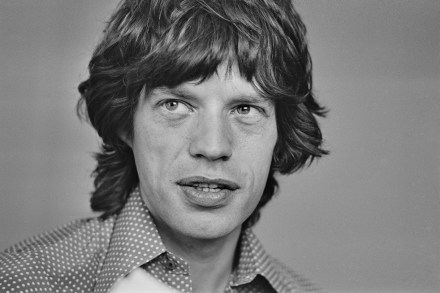
Mick Jagger at eighty: the beginnings of a Rolling Stone

Among the other jewels in the crown of Sir Mick Jagger’s songwriting career is a number he and his longtime creative partner Keith Richards knocked off in December 1963 to promote the Kellogg’s company products. Don’t laugh — it’s an infectious little tune in its way, even if the key lyrical message — “Wake up in the morning/ There’s a pop that really says/ Rice Krispies for you and you and you!”) falls some way short of the same duo’s “(I Can’t Get No) Satisfaction,” which followed barely twelve months later. But then Jagger, who turns eighty on July 26, was always a quick study. Last year’s four-part EPIX documentary series My Life as a Rolling Stone may be numbingly banal (“They set the bar for what a rock ’n’ roll band should sound like, look like..

mick jagger

‘Biden should own his old age’ and other bad Jeffrey Katzenberg ideas

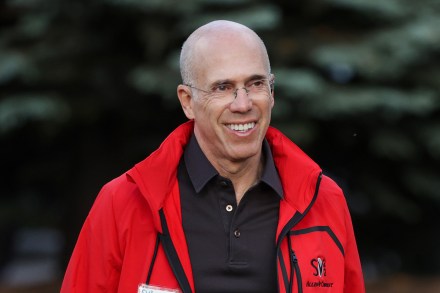
Seventy-two-year-old entertainment mogul and campaign advisor Jeffrey Katzenberg has some sage advice for President Biden: eighty is the new sixty.  In the Wall Street Journal, Katzenberg encouraged Biden to “own” his age and tout his longevity and wisdom as assets. Katzenberg pointed to Harrison Ford and Mick Jagger, similarly geriatric celebrities who still make splashes in their industries, as style models for Biden. Cockburn can’t help but think Katzenberg is onto something here. Imagine: Joe Biden and the Trials of Burisma — that's sure to help with the youth vote. And as long as there aren’t any sandbags present, Biden could do well to launch a stadium tour when he hits the campaign trail.

jeffrey katzenberg

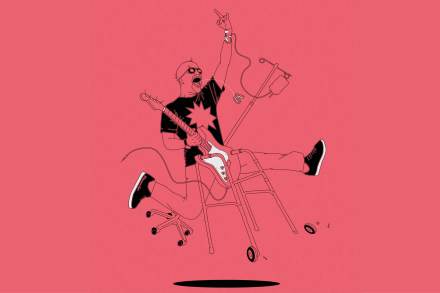
Long live the rock dinosaurs!

From our UK edition

When the Oldie changed ‘leadership’ a few years back I swooped on the new editor, young Harry Mount, like a seagull on a chip. ‘The one thing your great organ is missing is a pop critic!’ I lectured him. The average age of the reader was level-pegging with the pensioners in the rock’n’roll hall of fame: Rod Stewart, Bob Dylan, Mick Jagger, Tina Turner, Stevie Wonder, Bryan Ferry… it was a marriage made in mag heaven. ‘Papa’s not a rolling stone anymore,’ I continued. ‘He’s a grandpa, he’s a great-grandfather’ (Sir Mick became one in 2014).

The Rolling Stones cancel themselves

First, the good news. Despite the recent death of drummer Charlie Watts, the Rolling Stones are back among us, playing a series of sold-out US stadium shows between now and Thanksgiving. It’s not just that the three surviving band members, now all in their seventies, refuse to grow up. They seem actually to live in a time warp: in an era when most rock stars dress like they work at UPS and offer a relentless diet of screwed-up nihilism and phony salves, the Stones are still out there in their skimpy, Day-Glo T-shirts and leather pants, serving up great meat-and-potato rock songs garnished with lyrics about sex and drugs, and generally carrying on like it’s 1967 all over again. Now the bad news.

rolling stones

Why Mick Jagger is an insult to rock

From our UK edition

New York Orthodox Easter Sunday came late in May this year, and I spent it at an old friend’s Fifth Avenue home chatting with his young relatives. During a great lunch, I thought of those calendar pages one sees in old black and white flicks turning furiously to represent the passing years. It was the three generations present that brought on these reflections. My host George Livanos and I have been friends since 1957, and he and his wife Lita have five children and 15 grandchildren. Not all of them were present, but there were enough youngsters to remind one of the ballroom scene in The Leopard, when Prince Salina watches the younger generation with pride but also with sadness at having grown old.