Michelangelo

The spaces in between

The unfinished is, of course, something which tells us about the history of a work of art’s creation. A work of art may have been interrupted by the artist’s death, as with the paintings that Klimt left behind in his studio. Or it may simply have been abandoned when a patron failed to fulfil his obligations, or the painter had grown bored with the subject and moved on to something else. These spaces and gaps give us a glimpse of an artist at work and invite us to speculate about what Mondrian, for instance, was doing abandoning the 1934 ‘Composition with Double Lines’ or Cézanne the 1898 ‘Bouquet of Peonies’. Did something better come along? Did the painting present too many problems?

Moving statues

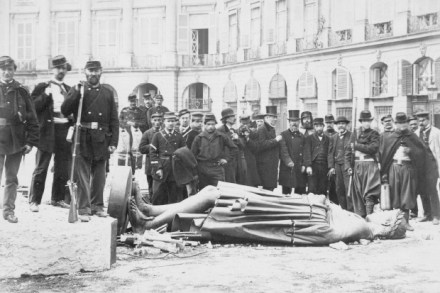
One of the stranger disputes of the past few weeks has concerned a Victorian figure that has occupied a niche in the centre of Oxford for more than a century without, for the most part, attracting any attention at all. Now, of course, the Rhodes Must Fall campaign is demanding that the sculpture — its subject having been posthumously found guilty of racism and imperialism — should be taken down from the façade of Oriel College. The controversy is a reminder of the fact, sometimes forgotten by the British, that public statues are intensely political. This was clear — until quite recently, at least — when one drove into the Syrian city of Hama. There, dominating a roundabout, was a large bronze representation of the late President Hafez al-Assad.

Seeking closure | 13 August 2015

A while ago, David Hockney mused on a proposal to tax the works of art stored in artists’ studios. ‘You’d only have to say they weren’t finished, and you are the only one who could say if they were,’ he suggested. ‘There’d be nothing they could do.’ This is the state of affairs examined in Unfinished, a thought-provoking little exhibition at the Courtauld Gallery. Once upon a time, it was as clear whether a painter had completed a picture as it was whether the gardener had thoroughly mowed the lawn. Indisputably, Perino del Vaga downed tools for some reason halfway through his ‘Holy Family with Saint John the Baptist’ (1528–37). That’s obvious.

We don’t think of highly gifted people as mentally disabled. Perhaps we should

I'm intrigued by this recent study suggesting that intellectual gifts and learning disabilities, far from lying on opposite ends of a spectrum of intelligence, sometimes go hand in hand. Intrigued, but not surprised. Very bright people can be odd – we all know that. The eccentric genius is one of the clichés of history and fiction. But it's rooted in observation. One thinks of wild-haired Oxford dons at high table, singing music hall songs in iambic pentameter while spraying their neighbours in Brown Windsor soup. Or the story of a distinguished academic banned from dining in his own college after – so legend has it – reinforcing his argument about the intellectual failings of women by exposing himself in front of horrified guests.

Reimaging the lost masterpieces of antiquity

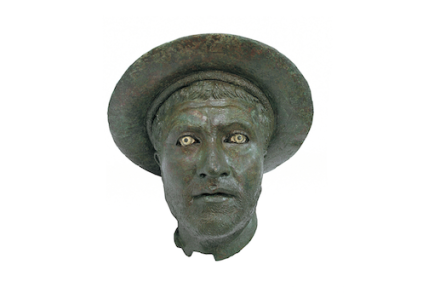
For centuries there has been a note of yearning in our feelings about ancient Greek and Roman art. We can’t help mourning for what has irretrievably vanished. In 1764 Johann Joachim Winckelmann wrote that we have ‘nothing but a shadowy outline left of the object of our wishes, but that very indistinctness awakens only a more earnest longing for what we have lost’. In the same spirit, Power and Pathos, an exhibition of Hellenistic bronze sculpture at the Palazzo Strozzi, Florence, begins with an empty plinth. It is the marble base of a statue, found in Corinth, on which are written the words ‘Lysippos made [this]’. The inscription is poignant for a series of reasons.

The dos and don’ts of the Russian art scene

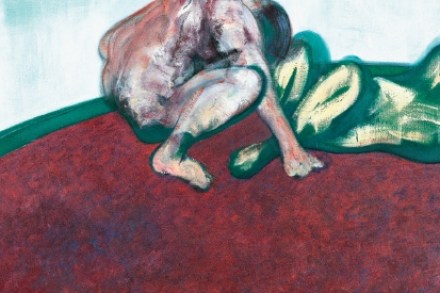
They’re doing fantastic deals on five-star hotels in St Petersburg the weekend the Francis Bacon exhibition opens at the Hermitage. With tensions between Russia and the west at their highest since the Cold War, ‘no one’, I’m told, wants to come here. No one, that is, except large numbers of elderly but well-heeled people from the Norwich area, many of them trustees and friends of the University of East Anglia’s Sainsbury Centre for Visual Arts — co-organisers of the exhibition — who have flown out here for the gala opening. If 2014’s UK-Russia Year of Culture passed virtually unnoticed for political reasons, the western visitor won’t experience the slightest sense of tension on the placid streets of St Petersburg.

Portrait of the week | 5 February 2015

Home MPs voted by 382 to 128 to make Britain the only country to allow genetic modification of embryos to prevent mitochondrial flaws: this could be done by the removal of the nucleus of a donor’s fertilised ovum and its replacement by the nucleus of two parents’ fertilised ovum, thus giving a child three parents. William Hague, the Leader of the House, outlined his plan for resolving the West Lothian question: ‘Before a Bill or parts of a Bill affecting only England was put to its final vote in the House of Commons, the English MPs would meet separately in what would be called the English Grand Committee and decide whether they agreed on it.’ Sir Martin Gilbert, the biographer of Churchill, died, aged 78.

Ignore the naysayers: these Fitzwilliam bronzes are by Michelangelo (probably)

A bronze sculpture by Michelangelo is one of the lost Holy Grails of art history. We know he made them, but the most important – an over life-size figure of Pope Julius II – was destroyed by the enraged citizens of Bologna (who had a grudge against the pontiff) a few years after it was made. A bronze David by Michelangelo vanished during the French Revolution. So that, it has always been concluded, was that. Now the Fitzwilliam Museum has unveiled not one but two bronzes attributed to the great man: athletic naked men mounted on slightly weird feline beasts. It seems too good to be true, but I am more than half persuaded that these are, as the art world says, 'right'.

Without a model, Moroni could be stunningly dull. With one, he was peerless…

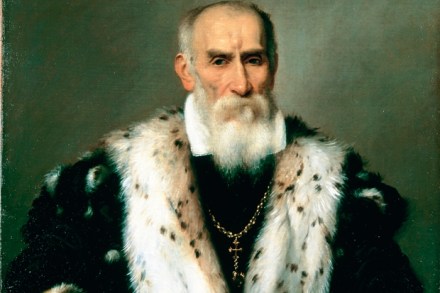
Giovanni Battista Moroni, wrote Bernard Berenson, was ‘the only mere portrait painter that Italy has ever produced’. Indeed, Berenson continued, warming to his theme, ‘even in later times, and in periods of miserable decline, that country, Mother of the arts, never had a son so uninventive, nay, so palsied, directly the model failed him’. It was a harsh judgment, but the great connoisseur inadvertently managed to put his finger on exactly what was so marvellous about his victim. A splendid exhibition at the Royal Academy triumphantly demonstrates that when Moroni actually did have a model in front of him, he was one of the most remarkable painters of later 16th-century Europe. He was, however, one who does not seem to fit easily into his time and place.

Things to do: read this book

It would be perverse not to succumb to the temptation to write this review as a list. So, the first item is how very handsome an object this book is: sturdy and smooth and substantial and full of white space and full-page illustrations (my favourite is Nick Cave’s homemade dictionary, which has two full pages). How much less satisfactory it will be in its e-form. This is somewhat ironic, as it had its genesis as a website, being a companion to the equally splendidly produced Letters of Note, such a hit last Christmas. Item two is that it is just as engrossing as that former volume. Indeed, judging from the number of shared contributors — F. Scott Fitzgerald, Leonardo da Vinci, Einstein, Vonnegut — it is less a companion, more an offspring of the first.

Michelangelo’s vision was greater even than Shakespeare’s

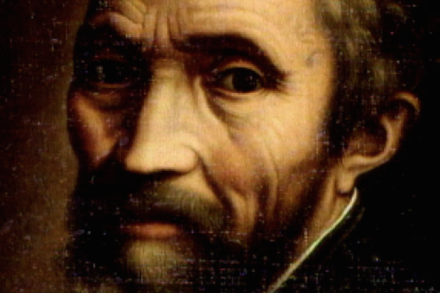
It is 450 years since the birth of William Shakespeare. The anniversary has been hard to avoid in this country, which is entirely appropriate. Shakespeare helped to shape not only our language but also our conception of character and our understanding of the human condition. Our experience of love, of facing death, of loss and of glory, contains echoes of Shakespeare, even if we hardly ever read him or see his plays. It is also 450 years since the death of Michelangelo. That anniversary has hardly been noticed here — although Michelangelo had as great an impact on visual arts in the West as Shakespeare has had on its literature. For centuries, every painter and sculptor felt the need either to emulate Michelangelo, or to escape his influence. Many still do.

Clarissa Tan’s Notebook: Why I stopped drinking petrol

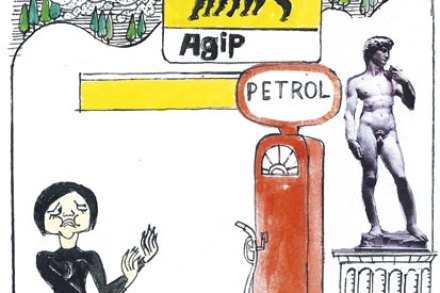
Florence was in fog the day I arrived. Its buildings were bathed in white cloud, its people moved as though through steam. The Arno river was a dense strip of dew. At the Piazzale Michelangelo, the statue of David was etched by the surrounding murkiness to a stark silhouette, the renaissance defined by gothic cloud. I peered through a telescope that overlooked the city and saw nothing for miles. My friend Alessandro told me this was unusual for sunny Tuscany, which made me feel quite pleased. Perhaps with each day that passed I would see less of Florence — the ultimate tourist experience. At a nearby cemetery, the milky arms of stone angels reached out through the brume, while creaking old Fiats disappeared into the ether.