Mental health

How we fell for antidepressants

The French novelist, Michel Houellebecq, with his accustomed acuity about modern culture, titled his last novel but one Serotonin. By then, of course, this famous neurochemical had become the key to a perfect human existence, too little or too much of it resulting in all the little problems that continue to plague mankind. If only we could get the chemical balance in our brains right, all would be well, life would return to its normal bliss! After the commercialisation of Prozac, people started talking about the chemical balance in their brains in much the same way as they talked about the ingredients of a recipe. As Peter D.

America has betrayed its young

Two articles last weekend made me feel sorry for American young people. We in the anti-woke brigade can be awfully hard on kids. But having been born in the 20th century turns out to have been a stroke of good fortune. On Sunday, the New York Times ran a feature about soaring mental illness in American teenagers. Between 2007 and 2018, suicide rates among people aged ten to 24 rose by 60 per cent. Between 2015 and 2019, prescriptions for antidepressants for teenagers rose 38 per cent. Between 2009 and 2019, emergency room visits for self-inflicted injuries among people aged ten to 19 doubled for both sexes; for girls, they more than doubled.

The truth about the anxiety epidemic

Knots in the stomach? An overwhelming sense of despair? Nervous, restless and tense? That'll be the anxiety talking and for good reason. What with the financial crash, austerity, Brexit partisanship, climate change catastrophising, social media derangement, pandemic pandemonium and now the possibility of a third world war, I'd be concerned if we weren’t all feeling a tad anxious. Indeed NHS leaders are now urging ministers to tackle what they are calling a 'second pandemic' of depression, anxiety, psychosis and eating disorders, brought about by recent events. Indeed, one study published in the British Journal of Psychiatry found that diagnoses of anxiety had tripled in young adults since 2008. It's right that we take mental illness seriously.

Why legalising cannabis is safer than decriminalising it

I hate weed. Week after week, I see the tragic effects of this substance and how it destroys the minds of the young. I work on a mental health ward which, like many around the country, is home to some of the victims of our current lackadaisical attitude towards cannabis. This drug is particularly dangerous to the developing brains of young people and yet we know that this age group are the most likely to be experimenting with it. Despite protestations from the powerful pro--cannabis lobby, it has been proved beyond doubt that cannabis use is associated with depression, anxiety, psychosis and avolition (poor motivation).

The debt I owe to cannabis

Boris Johnson, Dominic Raab and Jeremy Hunt have all admitted that they tried cannabis as young adults. Neither the admission nor the THC psychoactive component of the drug, which makes you high, seem to have done them much harm in their pathways to successful careers in parliament. But a new governmental war on drugs is afoot which some fear may lead to unexpected consequences, and not just for those who ply their trade on street corners or draw up on Deliveroo-type scooters to supply cannabis as if it were a takeaway curry. I wouldn’t bet on everyone getting caught up in judicial dragnets, though; I imagine that middle-class consumers will still largely avoid censure and that the police and the Crown Prosecution Services will continue to target working-class suppliers.

Try forest bathing – by day and night – to ward off depression

Ever since a consensus emerged that trees and, by extension, their ecosystems, were both vastly interesting and badly threatened, great tottering logpiles of books about woods or individual tree species have seen the light of day. Of these books, one of the most influential has been The Hidden Life of Trees (2018), written by Peter Wohlleben, who for many years has looked after a forest in the Eifel mountains in Germany. I read that book with interest, and needed no persuading that woodland trees form, in effect, a community, both as a result of the scents they give off and the interactions between their roots underground.

Should Simone Biles listen to Novak Djokovic?

I’ve always been a Spectator reader, so I’m delighted to be writing a diary about the Olympics from Tokyo. My first experience of an Olympic Games was probably the most political of them all — Moscow 1980. I wasn’t sure that I would be competing until a few weeks before the opening ceremony. The build-up was fraught with geopolitical tensions — the Soviet invasion of Afghanistan and the US-led boycott of the Games. Thatcher’s government fell in line with Uncle Sam — a little too eagerly — only to then lose its fight with the British Olympic Association. So we ended up going. I lost the first of my finals that year over 800m, which inspired some fairly critical reportage.

Simone Biles, Plutarch and an Olympic trial

The outstanding gymnast Simone Biles has pulled out of several Olympic events, saying: ‘I just don’t trust myself as much any more.’ Many took the view that this was a fashionable ‘mental health’ issue. Ancient Greeks might have come up with a rather different analysis. Plutarch (c. ad 100) is said to have been the author of a letter of condolence to one Apollonius whose son had just died. In it he considered how best one should react to loss in the context of the whole field of human suffering, which Greeks regarded as the common lot of all mankind. For example, Achilles in the Iliad claimed that Zeus possessed two storage-jars, one filled with evil, the other with blessings. A man could be served from the jar of evil alone, or from a mixture of both.

The strange veneration of Simone Biles’s Olympic exit

An opinion columnist should have some self-awareness in life. When your job is to sit behind a laptop droning on about politics, for example, one should be very careful before casting aspersions on the mental and physical performance of one of the most decorated Olympians of all time. Simone Biles, who transcended poverty and abuse to become in all likelihood the greatest gymnast ever, with 19 gold medals in World Championships, clearly has nothing to prove when it comes to mental toughness and physical excellence. You can’t hurl yourself head over heels, through the stratosphere, in front of millions of viewers, without both — never mind doing it better than anybody else.

Prince Harry could learn from Kate Middleton’s mental health work

I wonder if the royal family realise how lucky they are to have Kate? She may have been born a commoner, but she is proving herself to be the best asset the Firm have. As naff as this sounds, she comes across as actually caring and wanting to use her position of power and influence to do some good which is quite refreshing in today’s self-obsessed, navel-gazing world where those in the public eye only seem to care if there’s a long-lens camera trained on them while they do their good deeds. Along with William she has championed causes such as mental health which were profoundly uncool when they first adopted them and are now considered in vogue in no small part thanks to their involvement. Kate is showing herself to be a thoroughly modern royal.

A matter of life or death: Should We Stay or Should We Go, by Lionel Shriver, reviewed

Leave or remain? That’s the question hanging like a cartoon sledgehammer over Lionel Shriver’s 17th novel. Although she makes merry with the parallels, her subject isn’t Brexit. It’s how long a person should choose to live. Should we allow ourselves to shamble, with gentle optimism, into decades when mental and physical decay are statistical probabilities? Or should we Take Back Control, and off ourselves before revolted strangers are required to wash our private parts at great cost to our struggling NHS? The characters Shriver charges with assessing the options are Cyril and Kay Wilkinson. We meet them in their early fifties as they return home after Kay’s father’s funeral.

Why I’ve gone off country sports

‘Oh, I do so love to see all the lovely pheasants running around the place,’ said the lady walking the Alsatian up the farm track. The huge dog was straining at the leash, pulling her along, but she was trying to stop for a chat with the builder boyfriend as he mended a fence. I came alongside them in my car as I arrived at the farm to ride Darcy. I got out and joined the tail end of the conversation, in which the builder b took it upon himself to explain to this sweet lady that the pheasants got shot. Look, he had to. She was under the impression the footpath ran through a wildlife park, and that the millionaire at the top of the track was putting the pheasants there for the walkers to look at. I reckon this explains why the whole village support the local shoot.

Remembering David Storey, giant of postwar English culture

There is a famous story about David Storey. It is set in 1976 at the Royal Court where, for ten years, his plays had first been seen before heading away to the West End and Broadway. That same week he had won the Booker Prize with his novel Saville. With unrivalled success across fiction, theatre and cinema, Storey was a giant of postwar English culture. He was also, compared with most writers, an actual giant. This Sporting Life, his novel made into a groundbreaking film, grew out of his experience of playing rugby league for Leeds. Unlike Saville, his new play Mother’s Day was greeted by a raspberry fanfare after Alun Armstrong dried during a speech containing 27 uses of the f-word.

We’ve become a nation of armchair psychiatrists

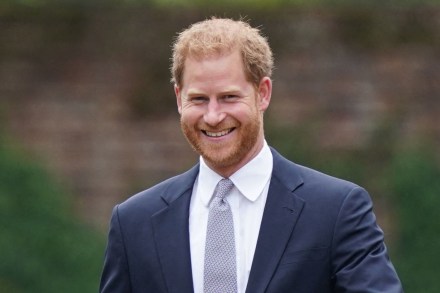
Are we becoming a nation of amateur psychoanalysts and armchair psychiatrists? We all speak the language of therapy and are quick to diagnose and label friends, strangers and even loved ones. Prince Harry does it to his wife Meghan Markle in a forthcoming five-part series on mental health for Apple TV that he’s co-produced with Oprah Winfrey. Discussing his wife’s suicidal state of mind during her pregnancy Prince Harry offers this diagnosis: ‘The thing that stopped her from seeing it through was how unfair it would be on me after everything that had happened to my mum, and now to be put in the position of losing another woman in my life with a baby inside of her, our baby.’ That’s a rather simplistic diagnosis.

Letters: China has peaked

China has peaked Sir: Niall Ferguson makes some good points about the nature of Xi Jinping’s imperial aspirations but misses two important parts of the picture (‘The China model’, 8 May). First, the Chinese Academy of Science predicts that China’s population will peak at 1.4 billion in 2029, drop to 1.36 billion by 2050, and shrink to as few as 1.17 billion people by 2065. They even forecast that China’s population might be reduced by about 50 per cent by the turn of the next century. And second, China’s economic rise is stalling.

The problem with Britain’s mental health

Experts tell us that we are facing a mental health ‘time bomb’ in the UK, partly as a consequence of Covid restrictions and partly because we have a Conservative government which has as its apparent main priority a malevolent desire to see people go insane and, hopefully, kill themselves. I am paraphrasing the experts here, all of whom hate the Tories and want more money spent on their area of expertise, i.e. mental health.

Demi Lovato makes Taylor Swift resemble Dostoevsky

Grade: Z If you wish to experience the full hideousness of Now, of our current age, condensed into one awful hour, then you should invest in this bucket of infected expectorant streaked with blood. It’s all there. The depthless self-absorption and introspection, the me me me. The self-aggrandising, the wallowing in victimhood, the complete lack of personal responsibility for her very bad decisions in life, the lack of discernible talent, the mawkishness, the stupidity, the facile political ‘awareness’. This is Demi Lovato, recent subject of an emetic four-part documentary on ‘her life’. Of course she is bulimic and bi-polar. Of course she nearly died of a skag (fentanyl) overdose and was a cokehead for years — none of it her fault.

Our mental health is going up in smoke

As we creep back into the open, as the Covid wards empty and the mental health clinics fill up, how are we going to tell what’s driven people crazy: lockdown, or what seems to have been a favourite lockdown hobby — smoking weed? Last week Sadiq Khan, London’s goblin mayor, announced that if re-elected he’ll set up a commission to look into the case for decriminalising cannabis. It’s not in Khan’s gift to decriminalise anything — Downing Street has already issued a response which amounted to: ‘Decriminalise dope? You must be high.’ But Khan doesn’t care. This isn’t about the policy, it’s about the posturing.

Covid has forced ministers to reassess mental health

Has the pandemic really been good for the way the NHS treats mental health? That’s the rather startling claim I report on today in my i paper column. Ministers have started to talk — equally surprisingly, it has to be said — about the possibility that they are close to reaching parity of esteem between the treatment of mental and physical health, and that the chaos of Covid is partly responsible. Covid has certainly made it harder for the government to just offer talk and no cash on mental health Now, it slightly depends on what your definition of ‘parity of esteem’ is.

Why I’ve gone right off the police

‘Welcome to Victims First. Please leave your name and number and we will return your call. Beeeeeeeeeeeep!’ I had rung the number given to me by the police to pay my fixed penalty fine for not having an MOT. This £100 I was trying to pay was coming out of an increasingly tight household budget, incidentally, so I decided that the fairest thing to do was to claw it back from the state. I had, of course, deeply apologised to the officer who pulled me over for forgetting the MOT after the Covid extension period ran out. And I begged him to let me drive straight home, park off road, and take the Volvo to be tested the very next morning. But he insisted I had to be fined.