Medicine

Let’s bring back Britain’s fever hospitals

From our UK edition

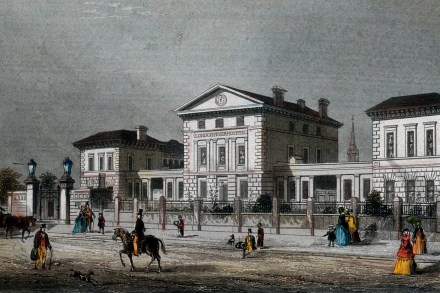
Could the future of pandemic planning lie in our past? A century ago, there were hundreds of so-called 'fever hospitals' dotted across Britain. These small institutions were built for diseases of a bygone age – smallpox, scarlet fever and typhus – but were designed for precisely the same problems we face today.  They contained isolation wards, separate accommodation for different infections, laboratories, operating theatres and convalescent wards with activities for recovering patients. Given the current problems of the Covid-19 outbreak, we need to re-establish these medical relics.
The truth behind ‘do not resuscitate’ orders

From our UK edition

Coronavirus is revealing many good things about our society: the number of people willing to volunteer to help tackle the outbreak and help the isolated, the number of former doctors and nurses keen to return to the front line, and the number of businesses that have switched to making equipment and protective clothing for those healthcare workers. But it has also revealed our ignorance about many matters that are still important outside of a pandemic. Today's example comes, inevitably, from our general reluctance to think about what old age and end-of-life care look like.

On the NHS front line, we’re braced for what’s coming

From our UK edition

From the moment when Boris Johnson announced that the country was moving from containment to ‘delay’ in handling coronavirus, the world’s biggest healthcare organisation has been on a war footing. What doctors like me have witnessed over the past days and weeks has been nothing short of extraordinary. Trusts in the NHS declared a ‘major incident’ on the evening of the announcement, and emergency plans swung into action within hours. By the time I came into work the next morning, managers, who had been up all night, had already started to implement profound changes to the way in which the hospital and services were run, and this continued over the following days. It was replicated in every hospital across the country.

Do Jews think differently?

From our UK edition

Sixteen years into a stop-go production saga, I got a call from the director of The Song of Names with a suggested script change. What, said François Girard, if one of the two protagonists was perhaps, er, not Jewish? My reply cannot be repeated. I was, for a minute or so, completely speechless. My novel, winner of a 2002 Whitbread Award, is the story of two boys bonding in wartime London. One is a refugee violinist from Poland, the other a middle-class kid of average abilities. ‘I am genius,’ says Dovidl to Martin. ‘You are — a bit everything.’ Beyond bomb sites, their friendship is rooted in a common heritage. The bond is savagely betrayed when Dovidl vanishes. Martin spends the rest of his life obsessively in pursuit.

Illusions about delusions

From our UK edition

Schizophrenia is the psychiatric illness about which the most misconceptions abound. It’s not so much the ‘negative’ symptoms that cause misunderstanding, devastating as they are — social withdrawal, self-neglect, flattening of mood — but the auditory hallucinations and delusions, often of a paranoid nature, that can accompany it. Nathan Filer, a psychiatric nurse, wrote the best novel I’ve read about schizophrenia, the Costa-winning The Shock of the Fall. The Heartland, his non-fiction book on the subject, is easily as good. Perhaps it’s the foreign nature of their experiences that gives rise to the myth that schizophrenics are dangerous.

Letters | 11 April 2019

From our UK edition

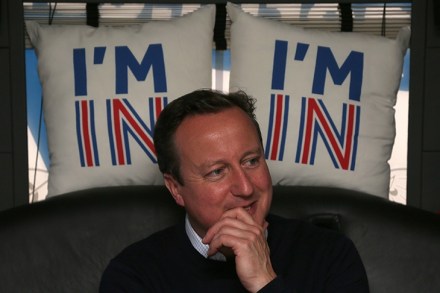
All Cameron’s fault Sir: In this time of febrile political speculation, there can have been few more arresting subject headings on your Letters page than ‘Not Cameron’s fault’ (6 April). Your correspondent Mike Jeffes added to the sense of unreality by writing that ‘Cameron did nothing wrong’. You need to be neither a Remainer nor Brexiteer to follow in horror the painful result of Cameron’s opening of this Pandora’s Box in 2016. In the 2010 and 2015 elections, the subject of Europe was well down on the list of voter concerns, but with a mixture of hubris, stupidity, and narrow political interest, Cameron’s decision to call the referendum has driven us into this political quagmire.

Lyme disease and me

From our UK edition

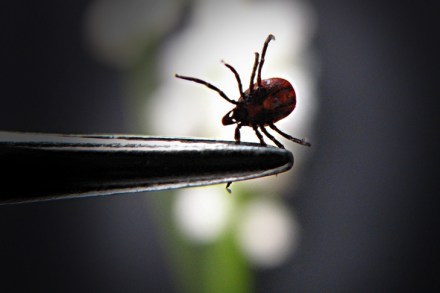
Some medical experts claim that Lyme disease is worse than cancer. It’s not a competition, but I do know one thing: at least if you’ve got the Big C you get sympathy, understanding and prompt treatment. With Lyme you’re pretty much on your own. This isn’t a plea for public sympathy. I’ve had Lyme for God knows how long — decades possibly — and though it has disrupted my health and my life in myriad weird, torturous and sometimes hideous ways, I still consider myself one of the fortunate ones. First, it hasn’t killed me; second, I’ve had some state-of-the-art stem cell treatment which with luck will eventually cure me. But it’s definitely not a condition I’d recommend.

Rules of engagement | 5 July 2018

From our UK edition

‘Can one person really grasp the significance of what another person has been through?’ asks Dr Rita Charon in this week’s essay on Radio 3. She’s a physician in New York (isn’t it somehow telling that in Britain we’ve long since forgotten what GP actually stands for?) and as a result of her experiences as a doctor has set up a pioneering training programme at Columbia University. In Narrative Medicine (produced by Elizabeth Funning) Charon explained how she came to believe in the power of literature, of listening to stories, as a way of bringing physicians ‘near enough to the patient to recognise their suffering and help them through their ordeal without disabling clinical judgment or rendering them helpless with passive sympathy’.

Conscientious objection is an important medical principle

From our UK edition

Something interesting is happening in the House of Lords. Baroness O’Loan’s Conscientious Objection (Medical Activities) Bill, now at the committee stage, has put on the agenda an issue which well-deserves to be there. Its point is simple: all healthcare professionals should have a legal right to opt out of certain procedures which they find objectionable. It specifies three areas: abortion provision, withdrawal of life-saving treatment, and actions relating to certain reproductive technologies. This is not particularly radical; the 1967 Abortion Act already explicitly protects conscientious objection. Indeed, it could even be asked why this should, in a country with a tradition of liberty like ours, even be up for debate.

The way to dusty death | 1 February 2018

From our UK edition

In the words of Dad’s Army’s Private Frazer: ‘We’re all doomed.’ Life remains a dangerous business whose outcome is always fatal. Despite all kinds of medical progress, the death rate is stubbornly fixed at 100 per cent, while the ways in which we die remain unchanged. At the same time, in a magnificent demonstration of cognitive dissonance, abetted by medical science, the human animal continues to cherish the fantasies of immortality that enable us, in Churchill’s stoic formula, to ‘keep buggering on’. This thrilling tension between the forces of life and death has always inspired two basic attitudes to mortality. First, a realistic, even forensic, fascination with the sensations and protocols of that last exit.

Smooth operators

From our UK edition

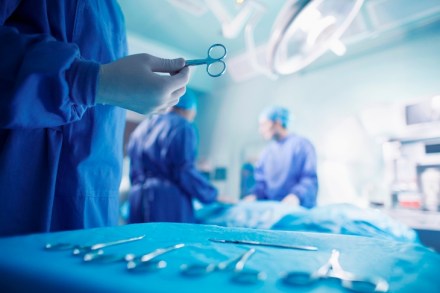
In George Bernard Shaw’s play The Doctor’s Dilemma, written early last century, the knife-happy surgeon invents a nut-shaped abdominal organ, the ‘nuciform sac’. It is situated near the appendix, ‘full of decaying matter’, and requires removal, assuming the patient can afford the fee. The surgeon, Cutler Walpole, has the line: ‘The operation ought to be compulsory.’ Bernard Shaw labours the point that removal of the nuciform sac equals 500 guineas, and not removing it equals nought guineas. He then suggests, wickedly, that we want our surgeons to be mortal, ‘quite as honest as most of us’, not God-like.

The gloves will come off

From our UK edition

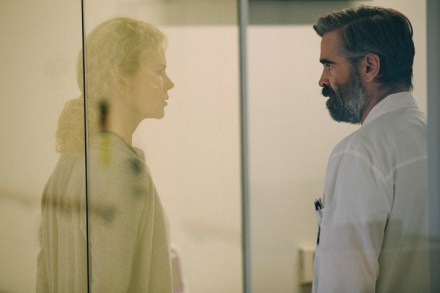
You know where you aren’t with director Yorgos Lanthimos. The Greek allegorist creates parallel worlds which superficially resemble our own. In Dogtooth an overweening patriarch incarcerates his three adult children in a state of infantilised innocence. The Lobster punishes those unable to find a mate by transfiguring them into animals. His acerbic commentaries on flawed modernity feel like lurid horror stories the ancients forgot to write down. The Killing of a Sacred Deer invokes pagan sacrifice in its title. Iphigenia is even mentioned in dispatches — the subject of a schoolgirl essay that doubles as a mythological flare. The film opens on a close-up of open-heart surgery in which a sickly pink organ throbs garishly.

Vital signs

From our UK edition

Exhibit A. It is 1958 and you are barrelling down a dual carriageway; the 70 mph limit is still eight years away. The road signs are nearly illegible. You miss your turning, over-correct, hit a tree and die. The following year, graphic designer Margaret Calvert is driving her Porsche 356c along the newly built M1. The motorway signs are hers. It is information design of a high order, possibly even life-saving. The clarity and intelligence of Calvert’s British road signs remain unmatched nearly 60 years later. And the font she created became the NHS, and later rail and airport, standard. Exhibit B. The French are worried about nuclear waste. Given the half-life of radio-active detritus, warning signs must be legible in 100,000 years when written language may be redundant.

My son and the back-crackers of Harley Street

From our UK edition

All along Harley Street, charlatans and medical experts have set up side by side with no obvious way to tell them apart. The same wide steps lead up to the same glossy front doors, all with prestigious brass knobs. Each separate house is itself a layered stack of quacks and docs: radiology one floor above absence healing, flower therapy down the corridor from paediatric ENT. The magnificent Harley Street address confers a blessing on every dubious therapy. Perhaps it has a placebo effect all of its own. I know the street quacks well, or used to. My mother had a horror of antibiotics and would pack us off to Harley Street’s alternative therapists. I remember a mournful young Russian who was said to have treated astronauts.

Beyond the stethoscope: transforming the NHS with new technology

From our UK edition

For technology manufacturers, healthcare is already big business, and, with an ageing population increasingly comfortable with technologies that would’ve been unthinkable even a decade ago, the opportunities to innovate are only going to increase. The Future Health Index, a global report commissioned by Philips, supports the fact that it is not just the UK’s younger generation that are embracing these technologies. However are these products – from popular or trendy FitBits to state-of-the-art imaging equipment – really going to revolutionise the country’s medical care? And will the NHS require a head to toe change of ethos to accommodate them?

Playing Stalin for laughs

From our UK edition

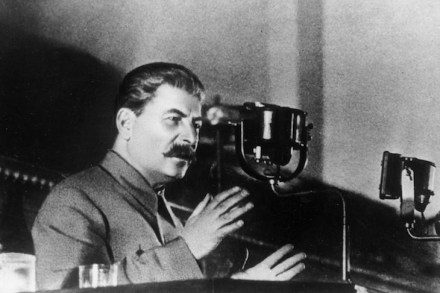
Christopher Wilson’s new novel is much easier to enjoy than to categorise. And ‘enjoy’ is definitely the right word, even though The Zoo tackles subject matter that should, by rights, make for a punishingly bleak read. The narrator is 12-year-old Yuri, whose misfortunes start with the fact that he’s growing up in Moscow in 1953 — and that a road accident when he was six damaged his brain, leaving him with a curious set of symptoms that couldn’t be worse suited to life under Stalin: a total lack of guile, a tendency to ask awkward questions and a face so angelically trustworthy that everybody tells him their deepest secrets.

Real life | 15 June 2017

From our UK edition

And so, as it must, the pilgrimage to find a local GP surgery begins. This is a great British tradition, and I have been honoured in my lifetime to have taken part in many and varied official registerings at different NHS surgeries. Having been ceremoniously relieved of my first GP in London, and invited to find another one because they had redrawn the boundaries, last year I was on the road again after they closed the second one down. I found myself at a surgery on a sink estate where the first language — and indeed the second, third and fourth languages — appeared not to be British and where I was asked if I would like a female chaperone because of all the religious objections I was likely to have.

The fount of all knowledge

From our UK edition

Somewhere around the middle of the 17th century our modern concept of the museum began to take shape. Until then the cabinet of curiosities formed by a prince or a dilettante was on show solely to his friends or to scholars deemed worthy of having it unlocked. Nothing in the way of a systematic catalogue existed to help them navigate the gallimaufry of odd objects filling its shelves and cupboards. A Japanese netsuke button, an Arawak headdress and a handkerchief soaked in the blood of Charles I could be found nestling beside a stuffed alligator or a bezoar stone, calculus from an animal’s stomach held to possess magical curative powers.

Light in the East | 9 March 2017

From our UK edition

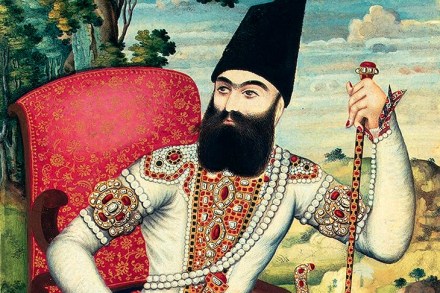
Christopher de Bellaigue, a journalist who has spent much of his working life in the Middle East, has grown tired of people throwing up their hands in horror at Isis, Erdogan and Islamic terror, and declaring that the region is backward and in need of a thorough western-style reformation. As he argues in this timely book, the Islamic world has been coming to terms with modernity in its own often turbulent way for more than two centuries. And we’d better understand it, because it’s an interesting story, and often a positive one — the way vast crowds streamed onto the streets of Cairo, Istanbul and Tehran in demonstrations against authoritarian rule over the past decade, for example. Western-style participatory democracy remains the dream of the man and woman in the souk.

All in the mind’s eye

From our UK edition

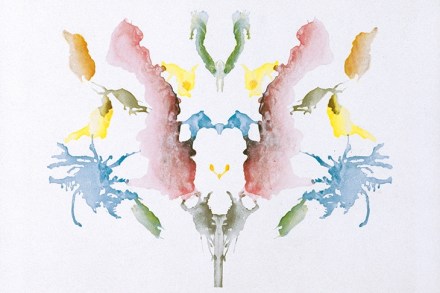
Everyone knows what the Rorschach tests are. Like Freudian slips, boycotts, quislings and platonic friendships, however, it was long ago forgotten that they had been named after an individual human being. Hermann Rorschach was a Swiss doctor and psychiatrist with curiosity about the visual arts, a contemporary of Freud and Jung. He created the tests in a book published in 1921, and a structure for evaluating patient responses to them before dying of appendicitis the following year. Rorschach’s life has its interests, and certainly casts some unexpected light on the Europe of his time. His father wrote an artistic treatise which sounds extraordinarily like the Bauhaus writings of Paul Klee, decades later.