Medicine

Another heroic freethinker is wiped from Russian history

From our UK edition

It sometimes seems that those people chosen to be subjects for biographies are drawn from a strictly limited cast. Every few years, another book about Tolstoy, Dickens or some other great literary figure comes along to make library shelves groan further. At a recent talk given for a new biography of George Orwell, I asked the author why he had felt a need to add to the pile, given the plethora of perfectly good existing ones. ‘Because OUP commissioned me,’ was the answer. I didn’t buy the book. So how refreshing that Miranda Seymour should choose an absolute unknown to write about, whose life was genuinely interesting and surprising.

How dangerous is the cruise ship hantavirus?

Virologists, the imaginative bunch that we are, often name new viruses after the places they were first found. Zika virus was initially described in Uganda’s Zika forest, while the Ebola river, flowing through what is now the Democratic Republic of the Congo, needs no explanation for the dread disease documented there. There are existing case reports of human outbreaks in South America stemming from gatherings and parties. That said, the documented efficiency of the transmission under these circumstances is extremely low Hantaviruses are chips off the same block.

Nothing beats a posh hospital room 

From our UK edition

The private hospital room in Chelsea was so relaxing I would have stayed for a week if it was affordable. It was more luxurious than the all-inclusive in Tenerife I went to last year, but sadly not in the same price bracket. One night in a hospital with designer soaps, a menu in Arabic and a gorgeous view of the London skyline nearly broke the bank, so I had to let them discharge me as planned the morning after my operation. There wasn’t really that much wrong with me, and certainly not enough to call it ‘a journey’, as all health crises are now termed.

Alchemy – the ultimate fool’s errand

From our UK edition

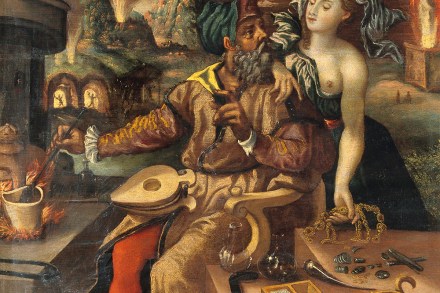
Alchemy, astrology and medicine (before the triumph of germ theory): three worthless intellectual systems which provided a good living for many into the 18th century and even beyond. Alchemy turned into chemistry; astrology was divorced by astronomy; and medicine (which might have become Pasteurism or Listerism) somehow kept its old name while abandoning all its old therapies. There have always been people with the good sense to say that alchemists and astrologers were charlatans, and doctors were more likely to kill you than cure you, but few listened. After all, all three could claim to be ancient, respectable forms of learning. And all three were too good to be true. Who does not want wealth, foresight and good health?

The enduring pathos of Wound Man

From our UK edition

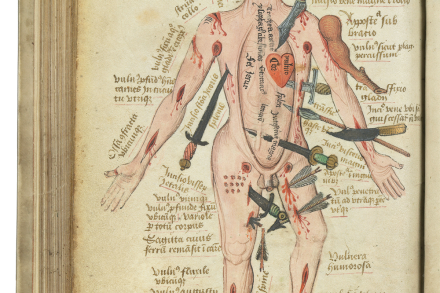
‘Full of strokes and blows/ broken, pitifully wounded’, the man, naked, or almost so, stands full frontal, legs and arms parted, one limb sometimes slightly bent to signal the beginning of a movement. His body is punctured by lesions and wounds, with small depictions of their material causes attached almost as adornment – knives or weapons aimed at cutting and bruising, but also accidental instruments of damage to the skin such as thorns or nails or even living agents – a rabid puppy with sharp teeth. Scratches, buboes and insect bites are also visible.

America’s top medical schools still hire by race

The institutions just won’t quit. Even after the Supreme Court made it abundantly clear that race-based admissions violate the Constitution, many of America’s top medical schools are digging in their heels – and, apparently, digging graves for meritocracy. A new report by Do No Harm, a group of physicians and health policy experts, reveals that public medical schools continue to admit students with dramatically different qualifications based largely on race. In other words, the diversity-industrial complex is alive and well – just operating in the shadows. The numbers don’t lie. According to the report, black students admitted to these schools had average MCAT scores significantly lower than their white and Asian counterparts.

Hospital

Are antidepressants making Americans violent?

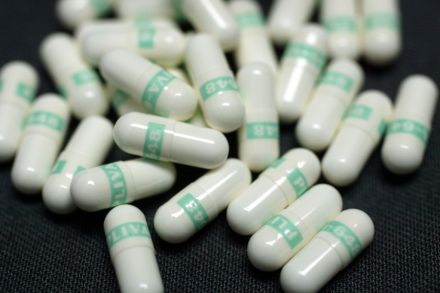
On April 20, 1999, Eric Harris and Dylan Klebold entered Columbine High School in Colorado, armed to the teeth, and set about murdering their fellow classmates and teachers. When the shooting was over, 12 children and one teacher lay dead. Harris and Klebold were dead, too, and 20 others were wounded. Within a little over a week of the atrocity, there was already speculation that psychotropic drugs might have been a factor, specifically the powerful and relatively new antidepressant Luvox (fluvoxamine), which Harris was known to have been taking. Fluvoxamine is a selective serotonin reuptake inhibitor (SSRI), a class of antidepressant medication that was first trialed in the 1970s and then brought to market in  the US in the late 1980s.

antidepressants

We shouldn’t downplay the risks of ADHD medication

I was diagnosed with ADHD in my freshman year of college. I’d suspected as much in high school, but I disliked the idea of taking medication. College was different. No matter what I tried, I kept finding gaps in my notes – and therefore gaps in my knowledge on test day. While I was prescribed so-called “smart drugs,” I didn’t delude myself into thinking they would magically make me more intelligent – which is why I laughed when I saw the ADHD research industry perform a volte-face in the pages of the New York Times, in a piece headlined: “Have we been thinking about ADHD all wrong?” The obvious answer is yes.

ADHD

The ‘physician associate’ will see you now…

From our UK edition

There is a war being waged in NHS hospitals. On one side are overstretched junior doctors in understaffed wards. On the other: physician associates (PAs) or, to use the more disparaging term, ‘noctors’.   Since 2003, non-medical graduates have been able to gain entry to hospital wards and GP practices if they complete a two-year clinical course that leaves them a ‘physician associate’ or ‘anaesthesia associate’. At first, PAs were rare – ten years ago there were fewer than 150 in England. Since the pandemic, however, the numbers have exploded. There are now approximately 4,000 PAs working in England and Wales.  PAs are supposed to help doctors with the time-consuming administrative work.

I was convinced by the cholesterol sceptics

From our UK edition

It’s never a good thing when your cardiologist sounds alarmed on the phone. Come in tomorrow, he said: we’ll get you on the table. He wasn’t talking about cracking my chest, thank Christ, but threading a wire in through a vein to get a look at the heart, blow up a tiny balloon to stretch the artery, and maybe leave behind a metal tube or three. I wasn’t keen on that last part. Then I thought: serves me right. I should have avoided all those bacon sandwiches and steaks fried in butter. ‘The wages of sin is death.’ Probably should have taken the statins, too. But if you are, understandably, unwilling to take a fistful of pills every day for the rest of your life, there are some medical mavericks to confirm your decision.

Why do we assume smell is our weakest sense?

From our UK edition

My cat can smell depression. Another family cat could smell my stepfather’s dementia. They both became more affectionate and tactile: the dementia-smelling cat would gently paw my stepfather, when he hadn’t even liked her when he had been well. My cat comes in close when my mood is darker. Perhaps both cats were using other cues, but I’m convinced it was smell. Up until the 18th century, doctors relied for diagnoses on smell as much as anything else For something that Jonas Olofsson calls ‘the easiest and most natural thing in the world’, smell is satisfyingly complicated. When it comes to humans’ ability to smell, as Olofsson persuades us in this captivating book, it has also been profoundly neglected. This wasn’t always the case.

Time is running out to tackle the dangers posed by AI

From our UK edition

Is this what it felt like in the months before August 1914? Or during the years leading up to September 1939? The discussion around artificial intelligence produces a deep foreboding that we are in the grip of forces largely beyond our control. Are we sleepwalking towards disaster? That is the feeling I have after reading Genesis, a collaboration by Eric Schmidt, the former CEO of Google, Craig Mundie, the former chief research and strategy officer at Microsoft, and Henry Kissinger, who died, aged 100, soon after completing this book. They have crafted a holistic analysis of the social, political, psychological and even spiritual impacts that a superior machine intelligence would have for humanity.  We are broadly familiar with AI’s current and future benefits.

Versailles’s role as a palace of science

From our UK edition

Versailles was a palace of science, as Anna Ferrari shows in this stimulating and innovative study, accompanying a dazzling exhibition of the same title at the Science Museum, London (until 21 April). Soldiers were subjected to electricity experiments in the Galerie des Glaces. The king watched the dissection of an elephant or a horse in the Menagerie. The latest globes and clocks, microscopes and barometers, miracles of precision and beauty, were, and in some cases still are, on display in the royal apartments. The gardens were exercises in trigonometry and hydraulics as well as planting. Louis XV had the largest and most varied plant collection in Europe.

How French absolutism powered a techno-progressive revolution

From our UK edition

The Enlightenment is back. Despite the best efforts of the past decade of handwringing about cultural imperialism and wailing over machismo, money and majesty, the future keeps crashing in. The Science Museum has now laid its cards on the table with Versailles: Science and Splendour. Think gilt, not guilt. Is there anything in our lives that could compare to witnessing the first successfully grown pineapple? It’s marvellous, and unusual these days, to visit an exhibition and feel the colossal force of history without anyone bashing you over the head with infantile morality tales. Expanding on a 2010 display at the Palace itself, lead curator Anna Ferrari ought to be saluted for this unabashed celebration of genius – perhaps with a three-hour firework display.

Why didn’t I read the comments sooner?

From our UK edition

I adhere to a pretty iron-clad rule: not only do I avoid the bumper cars of social media, but I don’t read the comments after my columns. Many other journalists avidly lap up reader responses to their work, and there’s certainly something to be said for confronting detractors, thus learning to anticipate counter-arguments and to guard against misinterpretation. But for me – I doubt this makes me unusual – one scornful put-down has a more lasting effect than ten gushing compliments. Forbidding myself from hitting that bottom tab is a matter of self-protection. While writing, I don’t want to lose my nerve, and too keen an awareness of your (potentially hostile) audience can be inhibiting, as if someone is reading over your shoulder.

When the local wizard was the repository of all wisdom

From our UK edition

What do you do when one of your possessions goes missing? Search behind the sofa cushions? Ask other members of the household where they put it? If you lived in Renaissance England, there’s a chance you would have consulted a local magician for advice, especially if the lost item was of value. In the absence of police to investigate theft or insurance to cover a loss, a wizard tracing the item seemed like a fair choice. Nor was it the entirely foolish idea it might seem now. In a time when belief in magic was widely held, making it known that a magician was on the case could prompt a guilty party to come forward. In Tabitha Stanmore’s Cunning Folk, these figures played an important social and cultural role in Britain, from the medieval to early modern period.

Adrift on the Canadian frontier: The Voyageur, by Paul Carlucci, reviewed

From our UK edition

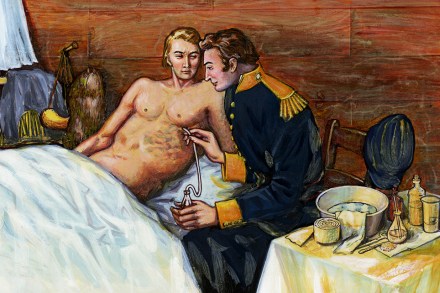
At the core of Paul Carlucci’s debut novel is a protracted medical experiment conducted by one human on another. Set on the Canadian frontier of the 1830s and inspired by historical record, the book takes the strange case of Dr William Beaumont’s tests on Alexis St Martin’s digestive system and spins a marvellously dark yarn around them, exploring the uses and abuses of an innocent. Alex is the innocent in question – the voyageur of the title. Our journey with him starts in raw boyhood, finding him living at the back of a Quebec harbour storehouse. His mother is dead, his beloved petit frère also. His grief-stricken father has sailed back to France, promising to return with enough earnings to start their dreamed-of peach orchard.

I want to see a doctor – not do another NHS survey

From our UK edition

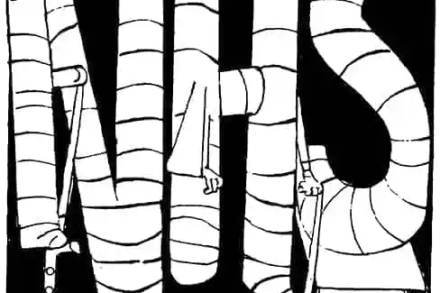
Nye Bevan did not make old bones, and perhaps that’s just as well. According to a recent British Social Attitudes survey, 52 per cent of those polled are dissatisfied with the NHS, in particular with the difficulties in getting a GP appointment, with long A&E trolley waits and with huge delays for hospital appointments. All this, in spite of ever more money being chucked into its maw. If invited, I could immediately save the NHS a packet by dialling down the thermostat that has turned hospitals into Hotel Tropicana for bacteria, and by asking, wherever possible, patients’ relatives to provide food, thereby reducing the amount of unappetising slop that goes straight from plate to bin while the sick go hungry. But that is not my theme today.

How much would your family stump up for your ransom?

From our UK edition

‘I can’t quite believe I’m here, having a steak dinner with a killer,’ writes Jenny Kleeman, as she sits with a hitman for the big opening to her book about the price we put on life. Someone paid to take lives is about to spill the beans on his dark trade. There should be tension. There should be jeopardy. We should be worried about Kleeman’s safety. So why does it feel a bit flat? It is difficult to find a hired gun, obviously. This one is John Alite, who was ‘a hitman for the Gambino dynasty’. However, he is now ‘a motivational speaker’ and ‘host of several podcasts’, and seems a lot more podcaster than hitman. Kleeman writes that he went to prison after he ‘pleaded guilty to charges that included two murders’.

Not everything in the garden is lovely

From our UK edition

While I was reading Most Delicious Poison, I visited a herbal garden in Spain which features the plants grown by the Nasrid rulers of Granada hundreds of years ago. They cultivated myrtle for its medicinal uses and jasmine for its fragrance. How did they know of myrtle’s properties? Some ancient ancestor must have figured it out. And that ancestor might be more ancient than we realise. Noah Whiteman explains that DNA from plants found in Neanderthals’ teeth tartar suggests even they were self-medicating with herbs. We have been entangled with the chemicals around us for as long as we have been human. The author of this book, a professor of biology at Berkeley, takes us on a global trip through plants and their chemicals.