Martinu

The joy of Martinu’s symphonies

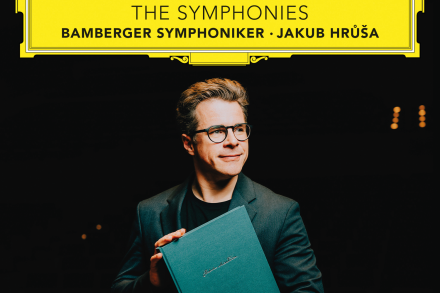
Grade: A– What, more Martinu? It feels like no time since the Pavel Haas Quartet was persuading us that there might, after all, be more than we’d suspected in the chamber music of this patchy but fascinating Czech composer. Now here’s the chief of the Royal Opera, Jakub Hrusa, with a symphony cycle, and it’s starting to look as if Martinu is having a moment. To older record collectors, there’s still something oddly authoritative about seeing the yellow Deutsche Grammophon cartouche above an earnest conductor photo. Stand up straight: it’s on DG. This is serious. Hrusa is certainly serious; very much the thinking man’s maestro, he’s even published a collection of essays on Martinu.
An album that proves Martinu was one of the great quartet composers

Grade: A Bohuslav Martinu was a patchy composer; worse, he was also a prolific one, meaning that if you dip into his music at random you never quite know if you’re going to have your day made, or just half an hour wasted. Ideally, you need someone to do the choosing for you, and praise be, here’s one of today’s brightest and best chamber ensembles doing exactly that. Seriously: listen to one of the big-name string quartets of the CD era – the Alban Berg Quartet, say, or the Emersons – and ask yourself, hand on heart, whether the Pavel Haas Quartet doesn’t play the socks off them. The vitality, the intelligence; the headlong, needle-point virtuosity: all this is a wholly 21st-century phenomenon and there’s no finer proof than this new release.

If you think all orchestras sound alike, listen to this recording

Grade: B+ These are gloomy days, so here’s a burst of melody and colour to cheer you up. Back in the LP era it wasn’t unusual for classical recordings to be put together like a concert that you might actually want to hear: a sequence of works by different but complementary composers, offering the possibility of a happy discovery. Come for the Strauss, stay for the Reznicek – that sort of thing. This lively new disc from the Borusan Istanbul Philharmonic adopts the same principle. The unifying theme is early-20th-century eastern European nationalism – the folksong-collecting variety, not the Archduke-assassinating kind. But it’s the opposite of monotonous.

The stupidity of the classical piano trio

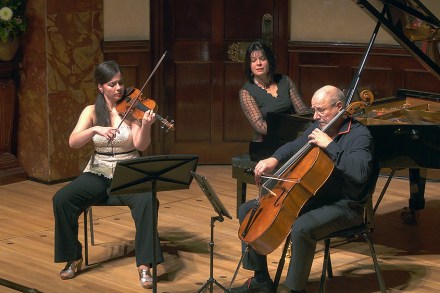
It’s a right mess, the classical piano trio; the unintended consequence of one of musical history’s more frustrating twists. When the trio first evolved, in the age of Haydn, the piano (or at any rate, its frail domestic forebear) was the junior partner, and the two string instruments, violin and cello, were added to make the silly thing audible. Then the piano started to evolve, while its partners – give or take the odd tweak – really didn’t, much. The end result, by the second half of the 19th century, completely reversed the original balance of power, leaving the two string instruments thrashing for dear life against the onslaught of that glossy, black, all-devouring monster, the modern concert grand.