Marriage

Tracey Emin has married a rock - but did the stone give consent?

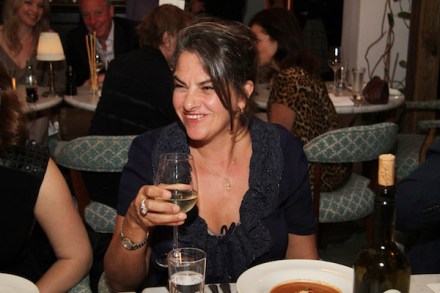
It’s a tough world out there for singletons in the digital age. Although dating apps like Tinder mean it’s never been easier to look for love, many find that any such romance is fleeting and miss the days of proper courtship. So, perhaps that’s why some women are now thinking outside the box. The artist Tracey Emin has announced that she has finally taken the plunge and got hitched. However, rather than a lucky man or woman, Emin has found love with a… rock. Yes, Emin has married an inanimate object after the pair met in France. For the ceremony, Emin wore her father’s white funeral shroud. While the ancient stone is thought
Excess baggage

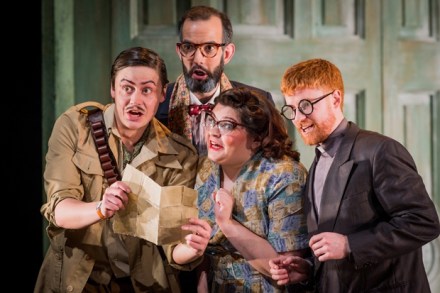
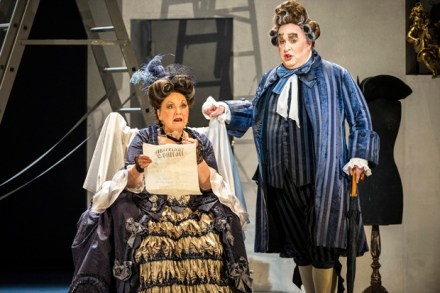
Near the end of Elena Langer’s new opera Figaro Gets a Divorce, as the Almaviva household — now emigrés in an unnamed 1930s police state — prepares to flee, the Countess announces that she intends to leave her trunk behind. It’s not the subtlest moment in David Pountney’s libretto. Any opera that sets itself up as a sequel to The Marriage of Figaro is already courting comparisons that are both completely unavoidable and massively unfair. When the production of Figaro is as good as this one, that baggage can become so heavy that it’s immovable. Welsh National Opera isn’t the first company to present The Barber of Seville and The

Women proposing on leap years? Wrong on so many levels

I’m planning to propose to my boyfriend this leap year. I’m proposing that he earns another £10,000 and loses a stone. But marriage? Hell, no. I don’t know why, in the age of equality, society still endorses women going down on bended knee on one solitary day every four years. The internet blames it on St Bridget, who in the 5th century allegedly complained that some men took too damn long to propose. It was St Patrick, though, who came up with the wheeze of granting us special dispensation to propose every 29 February. But to propose on this day is hideously outdated. It is tacky. It is tabloid. It is

A foolish proposal

[audioplayer src=”http://rss.acast.com/viewfrom22/insidethetorieseudogfight/media.mp3″ title=”Katie Glass and Isabel Hardman discuss Leap Year proposals” startat=1456] Listen [/audioplayer] I’m planning to propose to my boyfriend this leap year. I’m proposing that he earns another £10,000 and loses a stone. But marriage? Hell, no. I don’t know why, in the age of equality, society still endorses women going down on bended knee on one solitary day every four years. The internet blames it on St Bridget, who in the 5th century allegedly complained that some men took too damn long to propose. It was St Patrick, though, who came up with the wheeze of granting us special dispensation to propose every 29 February. But to propose

Stop calling me ‘Goat’

The title of Tim Parks’s 17th novel is false advertising, because Thomas and Mary: A Love Story is barely a love story, and it’s certainly not about Mary. The intended effect is irony: the dust jacket promises ‘a love story in reverse’, and the opening chapter describes Thomas Paige losing his wedding ring on Blackpool beach during a family holiday. The next few chapters are reasonably successful. Parks opens little windows on to the Paiges’ dying marriage. ‘Bedtimes’ takes us through a week of evenings, with the Paiges always going to bed at different times. ‘Goat’ explains the nicknames they’ve had for one another over the years, ending with a

Yes, civil partnership law is deeply unfair - to relatives like me and my sister

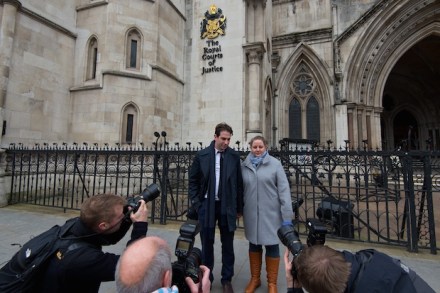
Try as I might, I find it difficult to feel too sorry for Charles Keidan and Rebecca Steinfeld, the cohabiting heterosexual couple who have failed to persuade a High Court judge that the government is wrong to deny them the right to form a civil partnership. Mr Keidan and Ms Steinfeld do not like the ‘patriarchal connotations’ and other cultural baggage which they say are associated with marriage and they do not see why, when same-sex couples can opt for a civil partnership as an alternative to marriage, they cannot. But, marriage provides all the same rights as a civil partnership and the judge has ruled that the government’s position is

It's time for the annual round of arguments with my sweet-natured wife

The older I get, the more Scrooge-like I become. I’m dyspeptic, misanthropic, curmudgeonly, parsimonious and unsentimental. Caroline, by contrast, is even-tempered, sweet-natured, charitable, generous and easily moved. Yet paradoxically, I love Christmas, whereas she regards it as a time of year to be endured rather than enjoyed. This inevitably leads to a number of arguments and, as with everything else connected with the festival, they’ve become ritualised. So here are the rows that are guaranteed to occur in the Young household at this time of year. The season always begins with a heated discussion about external lighting. My ideal is to go Full Chav, with a giant neon-lit Santa plastered

Why it is wrong for Christians to eat their wives

In his column last week, Rod Liddle suggested that an alleged fatwa by a Saudi Arabian cleric had said it was permissible to eat one’s wife when suffering from ‘severe hunger’ gave him (Rod) the go-ahead to eat his own wife. Not so, surely. In the Christian religion and, indeed, the secular law of the United Kingdom, one can have only one wife at a time. If one has only one wife, it would be quite wrong to eat her. Under Islam, one can have up to four. Obviously this generous provision creates ‘spares’. Until recently, British marriage law was hidebound by tradition, but, before the last election, Parliament voted

Northern Ireland Opera’s Turandot will fill you with awe and revulsion

Chords as bright and sweet as pomegranate seeds burst and spill in Turandot, a splinter of bitterness at their centre. Left incomplete at Puccini’s death in 1924, the opera is his most radical and most cruel. You can taste something of Stravinsky’s Rite of Spring in the instrumentation, a musky roughness that rubs against the Italian composer’s customary silky precision. Woodwind and strings cling to the voices of the monstrous princess Turandot, her intoxicated suitor Calaf, and Liù, the slave who slavishly adores him because he once smiled at her. So closely scored is the writing that it is almost suffocating. This is love as an addiction: violent, sleepless, lethal.

Fossilised Figaro

Is there a more extraordinary, more heart-stilling moment in all opera than the finale of Mozart’s The Marriage of Figaro? The Count, suddenly understanding his wife’s fidelity, begs her forgiveness — ‘Contessa perdono!’ Her answer comes like a musical benediction, but not until after the very slightest pause — space to doubt, to hope. It’s a touchstone for any production, and it says everything about the current revival of David McVicar’s long-lived Figaro that, on press night, the audience laughed. Since 2006, McVicar’s elegant period update — poised in the fragile political hinterland between France’s First and Second Republics — has done the business at the Royal Opera. But now

A marriage of misanthropes

This is a cautionary tale for any young couples out there thinking of tying the knot. Be wary of what you have in common — it may end up dividing you. When I first got together with Caroline, one of the things that made me think we were well suited was her slightly curmudgeonly nature. She wasn’t a full-blown misanthrope like me, but she was fond of a good grumble, particularly about other people. That’s a character trait that can leave you feeling quite isolated — it’s borderline socially unacceptable — so it was quite bonding to discover we both suffered from the same vice. Caroline reminded me of the

Summer’s end

Growing up in the West Country in the 1960s and 1970s, summer left me cold. There was only one place where I could bear to be when the sun shone — the lido at Weston-super-Mare, the nearest coastal town to my Bristol home. Unlike most of the banal backdrops to my childhood, it seemed a suitably grand place in which to plan my escape to get to That London and be famous. I would swerve my companions — at first my parents, then later my friend Karen — and hide on the upper level of the lido, slipping in and out of sleep in sunshine, dreaming of freedom. There was

Will he was

In 2011, the Daily Mail carried a long story about how the Queen’s cousin Prince William of Gloucester, who died in a plane crash aged 30, had been Prince Charles’s boyhood idol. (Our own Prince William, it claimed, was named after him.) In passing, it tactfully informed us that William’s ex-girlfriend Zsuzsi Starkloff ‘no longer wishes to be reminded of her lost love’. Well, the good news is that Zsuzsi has certainly changed her mind since. The following year she gave the Mail an interview describing their relationship in some detail. And on Thursday, she appeared in The Other Prince William: Secret History to tell all over again what Channel

The Spectator's notes | 13 August 2015

Our son, William, celebrated his marriage on Saturday. You would expect me to say that it was wonderful, sunny occasion. I do, and it was. I have been trying to work out why. The most important factor is something which parents can, fortunately, affect very little. Will was marrying a beautiful, kind and thoughtful woman, whom he loves; and she loves him. This mutuality, rather than any doctrine, is the main thing. Marriage occurs naturally in organised society and is not invented by religion. Religions only annex and defend it. Although my wife and I are believers — and so are Will and Hannah — I do not think religion

Diary - 6 August 2015

My Cambodian daughter and her husband have just got married again. Wedding One was a Buddhist affair in our drawing room, complete with monks, temple dancer, gold umbrellas, brass gongs, three changes of costume and a lot of delicious Cambodian food. That was family only, so this time she had the works: the full meringue, 200 guests, village church (she sees no conflict between Buddhism and Christianity), marquee, fireworks. Time was when wedding guests were the parents’ chums and the bride and groom went off as soon as the cake was cut and the bouquet thrown. Now the parents’ friends don’t get a look in. Not on day two either,

Your problems solved | 25 June 2015

Q. My partner, a leading political commentator on a national newspaper, recently agreed to shave off his hair at the suggestion of his editor, in order to write and illustrate a feature piece on the charms of baldness. The timing, at the height of the summer season, could of course not be more embarrassing. He is due to attend a dinner at your magazine in the next few days. Mary, how do I explain this horror to anyone we meet before it grows back — if it ever does? — J.G., London A. It seems likely that your partner may have been nursing a secret urge to upstage you. Now

Web of sin

The website illicitencounters.com connects married people who are interested in straying, in cheating on their spouses. Or, as the website puts it, people who are ‘looking for a little romance outside their current relationship’. The site now has a million British users. If you are old-fashioned and simplistic enough to disapprove of this, as undermining of marriage, then one of the company’s recent press releases can help you towards a more sophisticated view. Having polled 200 of its stalwart adulterers, who have been using the site for 11 years, it found that two thirds said that their extramarital adventures had strengthened their marriages. The website also claims that by helping

Sub-Aga saga

Lovely, gentle Isabel, just 40, makes masks. Her husband Dan, erstwhile ‘student of the Classics’ and playwright manqué, is ‘bored by the import-export business’. Enter long lost, lonely Bert, who ‘left soldiering, a distinguished colonel, and went to work for an oil company in New York’, plus Isabel’s unlikely friend and marriage-predator, thirtysomething Carlotta, who boasts a red dress, Mercedes coupé, unspecified high-powered job and ‘amazing (yes, amazing, I know) breasts’. Carlotta finds everyone ‘absolutely dementing’, but neither Dan nor Bert can resist — while suspecting ‘she just might have been one of those women who think it quite in order to go to any lengths to get what you

Ireland's 'tolerant' elite now demonise anyone who opposes gay marriage

If you think it’s tough being a Tory voter in 21st-century Britain, try being a ‘No’ voter in this week’s Irish referendum on gay marriage. Sure, Twitterati sneering at all things right-wing might have turned some Conservatives into Shy Tories, hiding their political leanings from pollsters. But in Ireland, to be a naysayer in relation to gay marriage is basically to make yourself a moral leper, unfit for polite society, ripe for exclusion from respectable circles. Irish opponents of gay marriage aren’t only encouraged to feel shy — they’re encouraged to feel shame. On Friday, the Irish electorate will be asked to vote on the redefinition of marriage as a

Dear Mary | 9 April 2015

Q. For ten years, I have made a reasonable freelance income working from home. During this time my husband has gone out to an office to work, leaving home in the early morning. Now my husband has announced that he is going to retire and will be at home with me all day. I feel guilty and disloyal saying this, but the truth is it means the end of my reasonable freelance income. Our marriage has been great for many years but I know it won’t survive this kind of annoyance. My husband just chuckles and says I am being neurotic and must learn to be more tolerant. I can’t