Marriage of figaro

The Arts Council’s awful vision for the future of opera 

English National Opera’s first production created in Manchester is Angel’s Bone, a one-act opera by Du Yun and the librettist Royce Vavrek. It was premièred in 2016 in New York and subsequently won the Pulitzer Prize, but we shouldn’t hold that against it. Musically, at least, it’s certainly more interesting than recent US imports like Jeanine Tesori’s Blue – worthy, sub-minimalist Yankslop addressing the fashionable issues of the day. (It’s funny how the classical music world imagines that the way to reach British audiences in 2026 is to programme stuff that was relevant to Americans in 2016.) It was a pretty horrible experience nonetheless. Daytime TV-fixated suburbanites Mr and Mrs X.E.

The problem with Klaus Makela

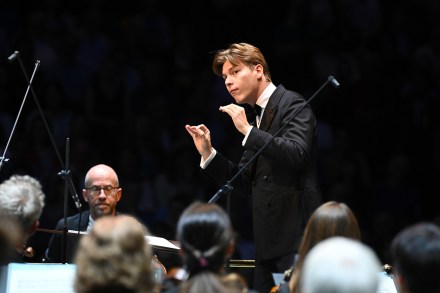
Klaus Makela is kind of a big deal. He’s a pupil of the Finnish conducting guru Jorma Panula – the so-called ‘Yoda of conducting’ – and he’s chief conductor of the Oslo Philharmonic as well as the Orchestre de Paris. Within the next three years he’s scheduled to take the baton at both the Chicago Symphony and the Royal Concertgebouw Orchestra in Amsterdam: blue-chip international positions, with fees to match. So we’re going to be hearing a lot more from maestro Makela, though possibly not in the UK where he has almost certainly (barring the LSO and Covent Garden) been priced out of the market. He is only 28, though apparently his agents would prefer it if you didn’t talk about that.

Aggressively jaded: Edinburgh’s Marriage of Figaro reviewed 

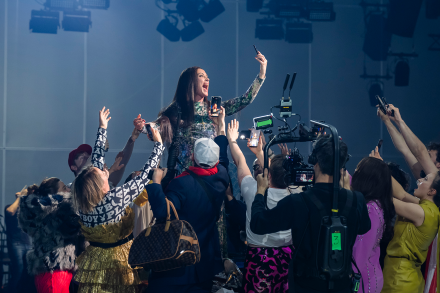
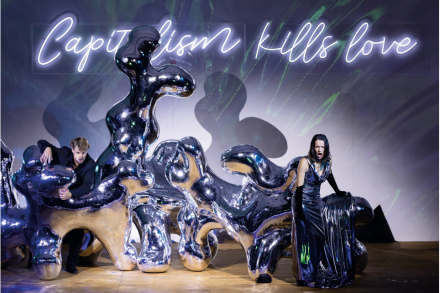
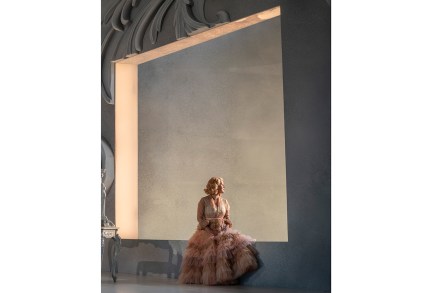
‘Boo!’ came a voice from the stalls. ‘Boo. Outrage!’ It was hard not to feel a pang of admiration. British opera audiences don’t tend to boo; we’re either too polite or too unengaged. But there we were in Act Three of Kirill Serebrennikov’s production of The Marriage of Figaro – just after the scene where Susanna, the Count and the Countess enjoy a three-in-a-bed romp while singing the trio ‘Soave sia il vento’ – and at least one person felt passionate enough to raise his voice. It was hard not to feel a pang of admiration. British opera audiences don’t tend to boo Obviously, there’s no such trio in The Marriage of Figaro.

A booster shot of sunlight: Unsuk Chin’s new violin concerto reviewed

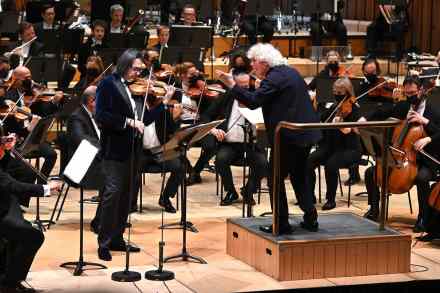
Sir Simon Rattle and the London Symphony Orchestra began the year with a world première. Unsuk Chin’s Second Violin Concerto opened with the soloist, Leonidas Kavakos, completely alone in front of a silent orchestra, playing phrases that rocked back and forth until, suddenly, they were striking sparks. As well they might; Kavakos, after all, is the reason that the concerto exists — the violinist whose ‘burningly intense’ (the composer’s words) artistry has prompted Chin to break her self-imposed rule of writing only one concerto for any given instrument. She explained in the programme notes that ‘the solo violin part forms the foundation of the whole score, the soloist triggering all of the orchestra’s actions and impulses.

Lush, elegant and vivid: Der Rosenkavalier at Garsington reviewed

At the turning point of Richard Strauss and Hugo von Hofmannsthal’s Der Rosenkavalier, all the clocks stop. Octavian has arrived at the house of the teenage bride-to-be Sophie von Faninal as bearer of the silver rose — the symbol of a love that is simultaneously as artificial and as eternal as any human creation can be. Sophie smells real roses; yes, says Octavian, there is a drop of Persian fragrance amid the silver petals. ‘Like a heavenly, not an earthly rose’, sings Sophie: and her voice soars higher and purer than anything we’ve heard so far, suspended in stillness while Strauss’s orchestra shimmers around her. The thing is, in Bruno Ravella’s new staging for Garsington Opera we already know the rose’s secret.

The musical vaccination we all needed: ETO’s Cosi fan tutte reviewed

Anyone familiar with Joe Hill-Gibbins’s work will brace instinctively when the curtain goes up on his new Figaro. He’s the young British director who smeared the Young Vic with jelly and custard (The Changeling) and transformed it into a giant mud pit (A Midsummer Night’s Dream), covered the Almeida in blood and more mud (The Tragedy of King Richard the Second) and bathed his cast in a stomach-turning blend of salad cream, ketchup and baked beans at the Edinburgh Festival (Greek).So when the curtain rises on a white-walled corridor whose sterile purity is broken up only by four equally white doors you do mentally reach for a mop. But Hill-Gibbins’s plans for Figaro are surprisingly clean and surprisingly, well, dry.