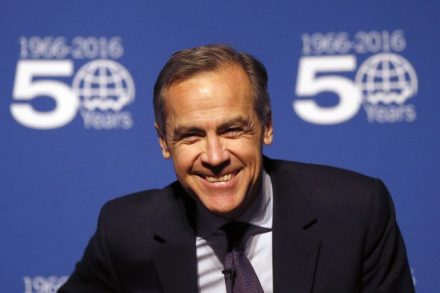
Mark carney

Don’t panic, Jacob Rees-Mogg will never replace Mark Carney

From our UK edition

For Mark Carney to have returned to-Canada after five years as Governor, as he originally planned, rather than serving until 2021, might by now have looked like a win for his critics — so adding an extra year, up to the end of Brexit talks in 2019, is a sidestep worthy of Strictly. Meanwhile, I was delighted to find ‘Might it be worth a flutter on Governor Rees-Mogg?’, the punchline of my last item on this subject (22 October), bouncing around the global media.

The Bank of England made a mistake. It should have admitted it

From our UK edition

The currency has been devalued by more than 30 per cent. Interest rates have been pushed all the way up to 20 per cent. The IMF is standing by with an emergency package, and capital controls and dollar rationing have been maintained. It has been a heck of a morning for the pound – although, fortunately enough for most us, the Egyptian rather than British one. Over here, it has all been rather quieter. The Bank of England, as most people expected, has stuck with its decision over the summer to take rates all the way down to the 0.25 per cent. It now looks inevitable that it will hold them there – potentially for as long as the seven years at which they were left at 0.5 per cent. And yet that is surely a mistake.

The Spectator podcast: Breaking the Bank

From our UK edition

On this week's podcast, we discuss the fraught relationship between Mark Carney and Theresa May, the similarities between the sieges in Mosul and Aleppo, and why we all have to wait so long at the airport. First up, this week saw Bank of England Governor Mark Carney announce that he would be stepping down from his post in June 2019. This was the conclusion to a troubled few weeks that started with the Prime Minister’s party conference speech, in which she spoke of the ‘bad side effects’ to recent monetary policy. So what’s the future for Carney and the Bank of England? And will May need to recalibrate her relationship with the central bank?

It’s time for Hammond to send a ruthless hit squad into RBS

From our UK edition

The new series of The Missing is surely the gloomiest television of the year. But it has nothing on the endless saga of RBS, which seems to use the same disturbing time-shift device: whenever there’s a horrible new plot twist, you have to spot whether we’re in 2008, 2011 or today. The crippled bank, still 73 per cent state-owned, has lost £2.5 billion in the first three quarters of this year, having just paid out another £425 million in ‘litigation and conduct’ costs chiefly relating to mortgage-backed securities hanky-panky in the US. Since its bailout eight years ago, it has lost considerably more than the £46 billion of taxpayers’ money that was pumped into it, and has never reported a full-year profit.

Breaking the Bank

From our UK edition

The exchange of letters this week between Mark Carney and Philip Hammond made it very clear who the supplicant was. The Governor of the Bank of England informed the Chancellor of the Exchequer that he was prepared to extend his term by one year. Carney pointed out that while the personal circumstances that had made him want to limit his term to five years had not changed, this country’s circumstances had. So he would be here a little longer. Things had seemed very different a few weeks ago, when Theresa May bemoaned the consequences of the Bank’s monetary policy in her party conference speech. ‘A change has got to come,’ she had warned. ‘And we are going to deliver it.

What the papers say: The ‘posturing governor’ stays put

From our UK edition

Mark Carney’s decision to stay on as Bank of England Governor until 2019 has been widely welcomed. But not everyone is happy about the news. The Daily Mail accuses Carney of being a ‘posturing governor’ and says the staging of his announcement yesterday was in line with much of his conduct: ‘designed to generate maximum publicity’. The paper says that while some were concerned at the possibility of uncertainty in the markets if he'd walked away, would it be any worse than ‘his relentless doom-mongering’?

Mark Carney reveals his personal Brexit plan

From our UK edition

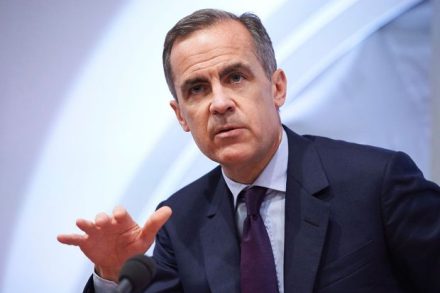
After days of speculation – and months of simmering tensions – over the Governor of the Bank of England's future, Mark Carney has finally revealed his exit plan. Following a meeting with the Prime Minister, Carney announced that he will stay on as Governor of the Bank of England only until June 2019 – three months after the UK is expected to leave the European Union. In a letter to the Chancellor, Carney expressed his wish to extend his current five-year term by one year in order to 'help contribute to securing an orderly transition to the UK's new relationship with Europe'. While some Brexiteers will no doubt be cheering that the end is in sight, his decision will come as a disappointment to the government.

The markets couldn’t care less whether Mark Carney stays or goes – and neither should we

From our UK edition

A crash in the pound, with sterling trading down at $1.15, and heading to parity. A spike in gilts, and a flight by bond investors in a panic over the state of the British economy. As the headlines are dominated by reports that the Governor of the Bank of England might decide to pack his bags and return to his native Canada as early as next year, there has been lots of speculation about the havoc that might inflict on our already jittery post-Brexit economy. Right now, no one seems to know whether Mark Carney is likely to stay on as Governor beyond his initial five-year term or not. But ignore some of the more fevered speculation you read in the press. In truth, the markets don’t care very much. Why not?

What the papers say: Should Carney stay?

From our UK edition

Mark Carney’s appointment in 2013 as Governor of the Bank of England was almost universally applauded. Yet more recently Carney has become something of a divisive figure. His interventions during the referendum campaign angered many. While his economic policies have also come in for criticism, leading some to call for Carney to quit. So should the Bank of England chief listen to his critics or is it best for Britain’s economy that he stays put? The Daily Telegraph says Carney has been hit by ‘referendum shockwaves’ and suggests that the attacks levied against him during the referendum - whether true or not - have undoubtedly placed him in an uncomfortable position.

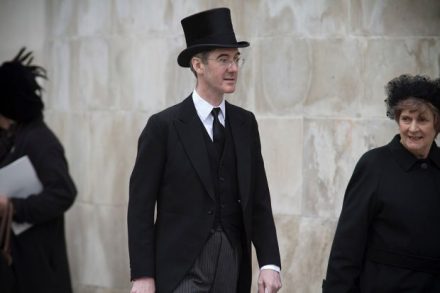
Could Jacob Rees-Mogg replace Mark Carney at the Bank of England?

From our UK edition

Will Mark Carney go or stay? On appointment in 2013, he indicated he would leave the Bank of England and return to Canada in 2018 (‘We’ll be back in five,’ his wife tweeted), but he has an option to stay a further three years. Theresa May’s criticism of QE in her conference speech was interpreted as an attack, but she and Philip Hammond have subsequently been described as ‘supportive’. Admirers say continuity would be a good thing through the pre-Brexit period, especially if inflation picks up, while detractors such as Nigel Lawson (‘He’s behaved disgracefully’) long to see the back of him.

It’s time for Mark Carney to go

From our UK edition

Oh dear. Mark Carney is irritated. His proud independence has been challenged. The Prime Minister had the temerity to admit that she was not altogether thrilled with his ‘super-low’ interest rates and quantitative easing. These policies meant that people with assets got richer, she pointed out. ‘People without them suffered… People with savings have found themselves poorer.’ Mr Carney found this intolerable and haughtily rebuffed her, saying, ‘The policies are done by technocrats. We are not going to take instruction on our policies from the political side.’ Back in your box, Mrs May. Carney’s in charge!

The Nissan test: can we really negotiate Brexit sector by sector?

From our UK edition

I wrote last month that a key test of Brexit success will be whether Nissan is still making cars here in ten years’ time. A few days later, Nissan chief Carlos Ghosn issued a warning that ‘If I need to make an investment in the next few months and I can’t wait until the end of Brexit, then I have to make a deal with the UK government.’ The investment decision he referred to — expected by Christmas, which means before Brexit talks even begin — is whether to build the next Qashqai model at Sunderland or in France, to avoid tariffs on exports when we leave the single market. And the deal he was fishing for was a promise of compensation if tariffs are imposed. What’s at stake is huge: the wider UK automotive sector supports 800,000 jobs.

Carney must go

From our UK edition

Oh dear. Mark Carney is irritated. His proud independence has been challenged. The Prime Minister had the temerity to admit that she was not altogether thrilled with his ‘super-low’ interest rates and quantitative easing. These policies meant that people with assets got richer, she pointed out. ‘People without them suffered… People with savings have found themselves poorer.’ Mr Carney found this intolerable and haughtily rebuffed her, saying, ‘The policies are done by technocrats. We are not going to take instruction on our policies from the political side.’ Back in your box, Mrs May. Carney’s in charge!

Don’t listen to the doom-mongers: A rise in inflation isn’t some kind of crisis

From our UK edition

It takes quite a determined Cassandra to see the rise in Consumer Prices Index (CPI) from 0.6 per cent in August to one per cent in September as some kind of crisis, not that that will stop the holdouts of the Remain campaign from trying to do so. When CPI fell below one per cent at the end of 2014, you might remember, there were dark warnings about the threat of deflation – with the horrors that would imply for borrowers, who would see the real value of their debts increase. Now, some are trying to present a rise to one per cent as bad news, with former Monetary Policy Committee member Andrew Sentance, for example, calling it the ‘tip of an inflationary iceberg’. Steady on. Sure, inflation is likely to increase over the next few months.

Sending shockwaves around the world’s currency markets with Mark Carney

From our UK edition

If only all my stories had as much impact. My interview with Mark Carney, the Governor of the Bank of England, sent shockwaves around the world’s currency markets. The Canadian was just three months into his new role as Britain’s most powerful unelected official when he visited Leeds to explain the central bank’s then new policy of forward guidance to a group of business leaders at the offices of one of the city’s Big Six law firms. In person, Carney was smooth, confident and assured, just as you would expect from someone who spent his formative years at Goldman Sachs. I had 10 minutes with the Governor, who was accompanied by his imported Canadian spokesman.

Mark ‘Carnage’ reveals what he would do with all the money in the world

From our UK edition

China could be hurtling towards a banking crisis, reports The Telegraph. Citing a report from international financial watchdog The Bank for International Settlements, the paper says that the country is mired in debt, with the ‘credit to GDP’ ratio at 30.1 – leagues ahead of any comparable country. Historically, any number above ten was a surefire sign of crisis to come, and certainly required close supervision. Credit currently stands at 255 pc of GDP. This represents $28 trillion of loans – more than North America and Japan combined. A collapse of Chinese banking would send shockwaves through the world. The UK is ‘appallingly bad’ at supporting start-ups, says the BBC.

Mark Carney has a shot at redemption tomorrow. Will he take it?

From our UK edition

There are not many predictions that are safe to make in the financial markets. M&S’s results will always be disappointing is perhaps one. Sir Philip Green will never apologise for anything is another. And there is one more that can now be added to the list. The Bank of England won’t raise interest rates when it meets this week. But it should. Why? Because the ‘emergency’ post-Brexit cut is already looking like an over-reaction. In truth, the Bank’s Governor Mark Carney is already looking dangerously over-committed to Project Remain. The best thing the Bank could do now would be to admit that it had a made a mistake – and put rates back to where they were before 23 June.

The Brexit bounce

From our UK edition

Next time it comes to redesigning the PPE course at Oxford, I suggest a module beginning with a quotation from George Osborne. It’s something he said to the Treasury Select Committee in May, back when he was still Chancellor: ‘If you look at the sheer weight of opinion, it is overwhelmingly the case that people who look at the case for leaving the EU come to the conclusion it would make the country poorer, and it would make the individuals in the country poorer, too.’ There might be advantages to Brexit, he said, ‘but let’s not pretend we’d be economically better off’. In other words: it wasn’t just George Osborne’s opinion that Britain would be worse off if we left the EU; it was objective fact.

‘Serene’ Mark Carney tries to take credit for Brexit bounceback

From our UK edition

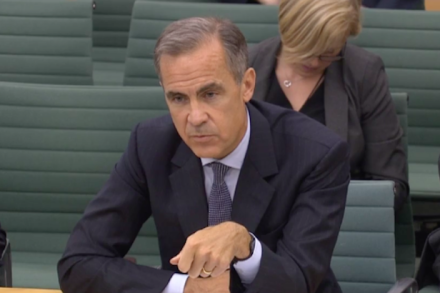
How does Mark Carney feel about his 'Project Fear' warnings in the run-up to the referendum? His mild-mannered nemesis Jacob Rees-Mogg probably wouldn't have been prepared for the Bank of England Governor's choice of words to describe his mood. Carney was 'serene' about how he handled himself before Brexit, he told the Treasury Select Committee this afternoon. But Carney didn't stop there: he also did his best to bait Rees-Mogg, who has clashed with Carney several times before at these hearings, suggesting the session was being wasted 'going through counterfactuals'. He then went on to slap down any suggestion from the Tory MP that his warnings had been 'dire'.

George Osborne’s gone, thank God. So why’s Mark Carney still around?

From our UK edition

Did you see that odd photo of George Osborne looking shifty, queuing up in the Vietnamese jungle for the chance to fire an M60 machine gun? I found it interesting for a number of reasons. One, obviously, is that it’s probably the first time in five years Osborne hasn’t been pictured wearing a hard hat and goggles. Another is what it tells us about his earnings prospects on the US speaker tour circuit: those guns can fire up to 650 rounds a minute — so at the local tourist rate of £1 a bullet that’s quite an expensive cheap thrill. Mainly, though, what struck me about that snap was just how quickly fortune’s wheel can turn.