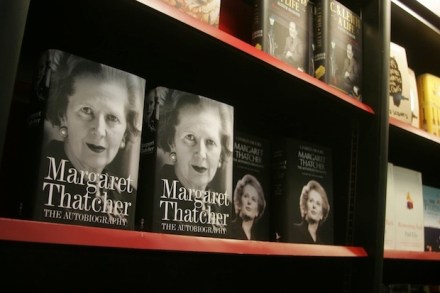
Margaret thatcher

Will anyone fight, fight and fight again to save what’s left of New Labour?

From our UK edition

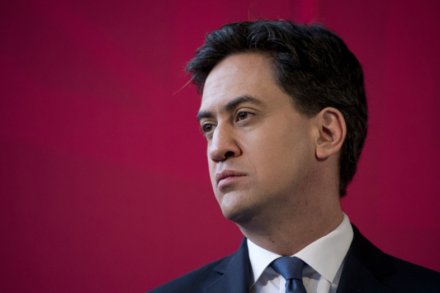
[audioplayer src="http://rss.acast.com/viewfrom22/thegreatbritishkowtow/media.mp3" title="James Forsyth and Stephen Bush discuss the upcoming Labour party conference" startat=1650] Listen [/audioplayer]Five years ago this Saturday, Ed Miliband was crowned Labour leader. Three days later, he had to deliver his first conference speech in that role. It was a distinctly underwhelming address. Miliband was overshadowed by his brother, who ticked Harriet Harman off for clapping. To try to give its new leader a better start this time round, Labour decided to announce the result of its leadership contest a fortnight before the party conference. But two weeks has been nowhere near enough time for Labour to come to terms with what has happened.

The emotional appeal of Tony Benn’s apostle

From our UK edition

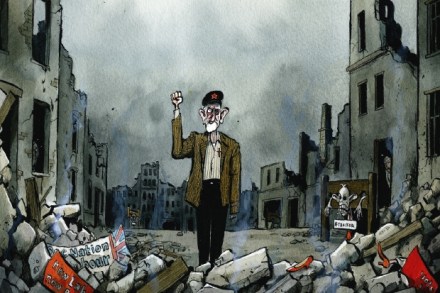
When the history of Corbynism comes to be written, many will assume that his form of leftism arose as a protest against the Thatcher era. This is not so. It predated her. There really was a belief in the 1970s that capitalism would ‘collapse under the weight of its own contradictions’. The formative experience of the Corbyn generation was not Thatcher but the crisis of 1976, when a Labour government was forced to bring in the IMF. It was then that the campaigns against ‘the cuts’, which have been going on ever since — and the hard-left infiltration connected with them — really took off. (Indeed the Jim Callaghan/Denis Healey cuts were much more severe than any imposed by Mrs Thatcher.

Maggie’s great, but can’t the US find an inspiring American woman to go on their banknote?

From our UK edition

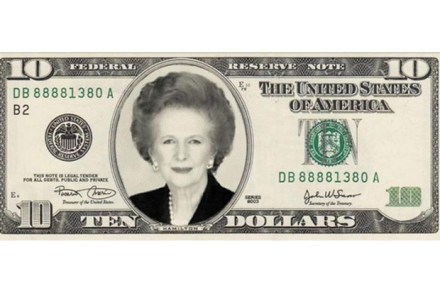
Banknotes, again. Now it’s America’s turn to suffer the unintended consequences of an ill-implemented campaign to inject some XX chromosomes into currency. In June, Treasury Secretary Jacob Lew announced that he was knocking founding father Alexander Hamilton, a self-made, illegitimate boy from the West Indies, off the $10 bill. There’s a nationwide hunt for a woman whose image could replace him: in this week’s Republican debate, Jeb Bush suggested Margaret Thatcher. You can even tweet your own suggestions to the Treasury, with the hashtag #TheNew10. Now, I’m pretty keen on Margaret Thatcher. (If Jeremy Corbyn wants to end the scourge of personal abuse in politics, he could talk to her family, for starters).

Why I left

From our UK edition

[audioplayer src="http://rss.acast.com/viewfrom22/thedeathoftheleft/media.mp3" title="Nick Cohen and Fraser Nelson discuss the death of the left" startat=32] Listen [/audioplayer]‘Tory, Tory, Tory. You’re a Tory.’ The level of hatred directed by the Corbyn left at Labour people who have fought Tories all their lives is as menacing as it is ridiculous. If you are a woman, you face misogyny. Kate Godfrey, the centrist Labour candidate in Stafford, told the Times she had received death threats and pornographic hate mail after challenging her local left. If you are a man, you are condemned in language not heard since the fall of Marxist Leninism.

Harriet Harman: how I protected my baby from Margaret Thatcher, ‘the witch’

From our UK edition

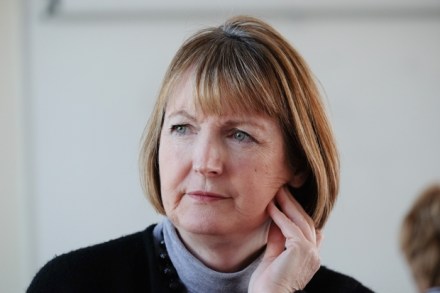
According to some of the more far-left members of the Labour Party, Harriet Harman is a Tory. The somewhat surprising claim came after she told her party to abstain on the Tories' Welfare Bill, leading 48 MPs to break whip and vote against it. However, seemingly keen to silence the naysayers -- in an interview with the Guardian -- Harman, who has three children with Jack Dromey, has given an account of the lengths she has gone to to avoid socialising with Tories. The acting Leader of the Labour Party says that she once hid in a side corridor to prevent Margaret Thatcher -- who she likens to a witch -- from meeting her baby son: 'Very early on, I brought in one of the babies to the Commons and I saw her at the other end of the corridor.

Man of many worlds

From our UK edition

By the kind of uncanny coincidence that would tickle his psychogeographically minded friends Iain Sinclair and Peter Ackroyd, Michael Moorcock’s publishers have recently moved offices to the same corner of London occupied by his latest novel, The Whispering Swarm; and just as their rather swanky embankment premises are called Carmelite House, so does the religious order provide Moorcock with one of his key characters. It is a Carmelite monk who leads the book’s teenage protagonist, one ‘Michael Moorcock’, from an ABC teashop to a mysterious enclave just off post-Blitz Fleet Street.

Remembering Robert Conquest, 1917 – 2015

From our UK edition

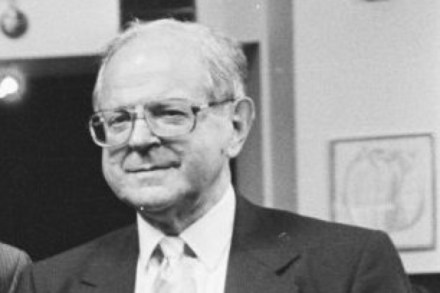
Last month, in Stanford, California, I had lunch with Robert Conquest, poet, historian, literary editor of this paper in the early 1960s, exposer of Soviet totalitarianism. After Conquest’s book The Great Terror (1968), it became impossible for all but the most crazed fanatic or fool to deny that Stalin had arranged the greatest system of mass murder in history (Hitler being at least his equal in iniquity, but a bit lower on the numbers). Bob turned 98 a week after I saw him. He was born just before the Bolsheviks he exposed came to power. His writing, and his advice to Margaret Thatcher, helped bring about the collapse of their horrible regime. On Monday, Bob died, cared for to the end by his wonderful wife Liddie (his fourth, and the one who lasted).

There’s nothing hip about Jeremy Corbyn’s beard

From our UK edition

Mr Corbyn has a beard. If he becomes leader, he will be the first bearded leader of any main party since Keir Hardie. The beard as a fashion item is now back, generally in shaped and even waxed form. But Mr Corbyn’s one owes nothing to fashion. It is a 1960s political beard, already obsolete when he first brought it into the House of Commons in 1983. Like Lord Hailsham who, as Mrs Thatcher’s Lord Chancellor, continued to wear a bowler hat long after it had disappeared from everything but hunt puppy shows, Orange parades and A Clockwork Orange, Mr Corbyn is undaunted by the passage of time. I must try not to get sentimental about him. This is an extract from this week's Spectator. Subscribe here.

William Waldegrave: too nice ever to have been PM

From our UK edition

‘Lobbying,’ writes William Waldegrave in this extraordinary memoir, ‘takes many forms.’ But he has surely reported a variant hitherto unrecorded in the annals of politics. The Cardinal Archbishop of Cardiff (‘splendidly robed and well supported by priests and other attendants’) had come to lobby him (then an education minister) against the closure of a Catholic teacher-training college. After discussion the archbishop suggested their respective entourages leave the room. Face to face and alone with Waldegrave, the archbishop told him he had a distinguished 16th-century ancestor, who was a candidate for beatification. The unspoken implication was left hanging.

The hatred directed at Tony Blair shows just how big Labour’s problem has become

From our UK edition

I know that the comments beneath online newspaper pieces aren’t exactly where you go if you want sane, balanced opinion, but the forum which followed the Guardian’s news story about Tony Blair’s speech yesterday nevertheless took me aback. Appropriately enough, there were 666 comments when I read them. And how many had anything positive to say about the former Prime Minister?  I counted one, possibly two, if you count calling him a ‘charismatic commentator’ before saying you think he is out of touch.

From Major to minor

From our UK edition

‘Lobbying,’ writes William Waldegrave in this extraordinary memoir, ‘takes many forms.’ But he has surely reported a variant hitherto unrecorded in the annals of politics. The Cardinal Archbishop of Cardiff (‘splendidly robed and well supported by priests and other attendants’) had come to lobby him (then an education minister) against the closure of a Catholic teacher-training college. After discussion the archbishop suggested their respective entourages leave the room. Face to face and alone with Waldegrave, the archbishop told him he had a distinguished 16th-century ancestor, who was a candidate for beatification. The unspoken implication was left hanging.

Political memorabilia

From our UK edition

My first reaction on hearing of Margaret Thatcher’s death in 2013 was: ‘Great — now my autograph from her will go up in value.’ This wasn’t callous. It was a simple application of demand and supply. As a child of the 1980s I had learned my lesson well. The Lady wouldn’t have objected to me viewing her signature as a pension plan. Indeed, it’s what she would have wanted. How many Caribbean villas, then, should I be thinking of buying? Because this is no ordinary autograph. I asked Mrs T. (as she then still was) to write out ‘There is no such thing as society’ and sign it. She embellished the quote, adding ‘…there are only individuals, it is we who bear the responsibility’.

Dear Sirs and Madams

From our UK edition

Those who write letters and send them by post are a dying breed. I was fortunate to have served as a newspaper columnist and received a great many. Often eloquent, sometimes humorous, their breadth and depth of experience was wonderful. With the exception of letters that were racist or completely mad, I tried to answer every one of them. If a reader took the trouble to write to me, it was the least I could do to send him or her a personal reply. There was the occasional correspondent from London, but most lived in the country or in provincial towns or cities. Most were Conservatives and many were lifelong readers of the Daily Telegraph.

Maestro maker

From our UK edition

When Margaret Thatcher imagined perfect power, she thought of the orchestral conductor. ‘She envied me,’ said Herbert von Karajan, ‘that people always did what I requested.’ Power, however, is a mirage that fades as you get close. What Mrs Thatcher saw were the trappings, never the essence. Great conductors might get the glory, but someone else pulled the strings. Behind every power there is a greater force. Behind every conductor, there was Ronald Wilford. It is hard to think of Wilford, who died last week, aged 87, without a sneaking admiration. A self-schooled Machiavellian, a Mandelson of music, he invented a chimera of ‘the great conductor’ and, as president of Columbia Artists (CAMI), sold it at unimaginable profit.

The Spectator’s Notes | 18 June 2015

From our UK edition

It is natural to assume that, if a majority votes No in the referendum on Britain’s EU membership, we shall then leave. It is not automatically so. After the vote, we would still be members. The government would then — morally at least — be mandated to negotiate Britain’s withdrawal. In theory, unlikely though it may currently seem, the EU could try to block this. Even assuming that it did not do so, the eventual terms of the withdrawal would not automatically be agreed by Parliament and would not necessarily correspond with the wishes of those who voted No. The context for our vote will be David Cameron’s presentation of a package secured with partners to persuade us to vote Yes. There is no negotiated package offered for those voting No.

If Cameron is deleting all No. 10 emails, who will write his history?

From our UK edition

This is an extract from Charles Moore's Notes in this week's Spectator, out tomorrow. Subscribe from just £1. In a few weeks, I shall have finished the second volume of my threepart biography of Margaret Thatcher. I am now at the checking and revising stage — 3,000 endnotes to be made shipshape, 2,000 quotations to be cleared with interviewees, 300,000 words to be re-imagined as if read fresh. This involves the exchange of scores of emails every day. The question arises, ‘How did enterprises of this kind ever happen before computers?’ The answer, I think, is that the sources used were much narrower than they are today. Authors were extremely dependent on where archives physically were. Interviews were a rarity.

Barometer | 11 June 2015

From our UK edition

Forty years on The forthcoming EU referendum has rekindled memories of the in-out Common Market referendum of 1975. But it seems a strange looking-glass world now. — Mrs Thatcher was a keen ‘yes’ campaigner, sporting a jumper with the flags of EC member states. Neil Kinnock campaigned for a British exit. The SNP and Plaid Cymru campaigned to leave the EC, the former calling it a ‘dangerous experiment in gross over-centralisation’. — The worry then was that England would vote to stay while Scotland and Wales would vote to leave. — But the most surprising supporters now seem the Daily Mail and the Daily Express, the latter declaring after the ‘yes’ vote had been confirmed that Britain was now ‘irrevocably’ European.

What can modern politics learn from Thatcher? Charles Moore will tell us

From our UK edition

The first volume of Charles Moore’s biography of Margaret Thatcher is one of the finest political books of recent times. With the second volume due out in October, Charles, a columnist for both the Telegraph and this magazine, has agreed to also become a visiting scholar at the think tank Policy Exchange where he will work on what lessons contemporary politics can learn from Margaret Thatcher’s career. Policy Exchange has long been the favourite think tank of the Tory modernisers. With Charles and Steve Hilton’s arrival, it will be at the centre of the debate about where the Tory party should go next. For a flavour of the discussions to come, do watch Charles interview Hilton about his new book.

Let’s drink to a Tory majority

From our UK edition

Most of my friends are still on a cloud of post-election euphoria. There is one exception: those involved with opinion-polling. They have all the conversational self-confidence of a director of the Royal Bank of Scotland, circa Christmas 2008. I have tried to cheer them up, because there are explanations for the polls’ systemic failure. Most of those involved in politics, including pollsters, are partisan and obsessive. They can remember how they voted in that Little Piddleton parish council by-election 20 years ago. Ordinary people — no, that sounds patronising — real people: that is not right either. Politicos, though odd, are real. But sensible people do not spend all their time thinking about politics. They are wondering what to have for supper, where to go on holiday.

The British public is about to make a big mistake

From our UK edition

On the weekend of 25 April 2015 I started to believe that the party I supported might not win an impending general election. I’m used to that. But I started to believe, too, that my fellow citizens might be about to make a stupid and unfathomable mistake. I’m not used to that at all. It has come as an awful shock. For the first time in my life I have understood how it must have felt to be a convinced socialist in Britain these past 36 years since 1979: to live in and love a country whose people had got it completely wrong. ‘Well, diddums,’ I can hear left-wing friends reply: ‘Welcome to our world.’ In the general election of 1979, as a parliamentary candidate, I knew the voters would return me and believed they would return a Conservative government led by Margaret Thatcher.