Margaret thatcher

Maxine Peake is wrong: Margaret Thatcher and Rebekah Brooks are feminist role models

From our UK edition

Margaret Thatcher has been out of power for twenty-six years and dead for three, but in our brave new world of virtue signalling (defined in this magazine by its creator James Bartholomew as ‘the way in which many people say or write things to indicate that they are virtuous…one of the crucial aspects of virtue signalling is that it does not require actually doing anything virtuous’) she has become the El Cid of politics, strapped to her trusty steed and sent out into the fray one more time. But interestingly, her corpse is being repeatedly trotted out by her enemies, rather than by those who guard her flame - and what they say tells us far more about their failings than it does about hers.

Oliver Letwin’s ‘racist’ memo proves two things: politics change and people change

From our UK edition

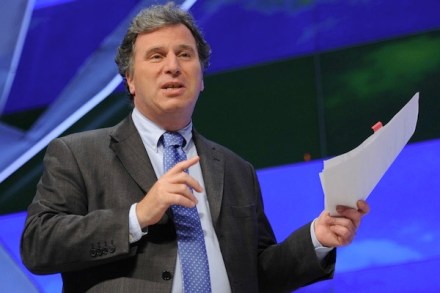
What Oliver Letwin wrote in that 1985 memo to Thatcher was ugly. But you know what is also ugly? The forced extraction of an apology from Letwin for the things he thought and said three decades ago, when the political world was a very different place. The attempt to drag Letwin’s name into the gutter for a memo he wrote in another era, when thinking on race and society was often a million miles from what it is today, has a nasty, mob-like, fatalistic feel to it. As Letwin himself now says, his memo was wrong. He was wrong to write off the rioting in Broadwater Farm as simply a matter of ‘bad moral attitudes’, and to suggest that encouraging black entrepreneurship would inflame the ‘disco and drug trade’.

Wear The Fox Hat looks innocent enough but try saying it in an Irish accent

From our UK edition

President Lyndon B. Johnson’s image never quite recovered in many people’s view from the photograph of him picking up his two beagles by their ears. Personally, I was nearly as affronted by the names he had given the two dogs: Him and Her. A dog is entitled to a good name, and so, for me, is a horse. The Tennessee novelist John Trotwood Moore once noted, ‘Wherever man has left his footprint in the long ascent from barbarism to civilisation we will find the hoofprint of the horse beside it,’ and while that may be going it a bit in the age of the drone and the mobile phone, racehorses are noble beasts and the names some people give them are an insult to their breeding.

Charles Moore vs David Hare: a one-act play

From our UK edition

  Charles Moore and David Hare sit in the editor’s office at The Spectator, Hare on a brown leather chesterfield, Moore opposite him on the striped sofa once favoured by the former editor Boris Johnson for naps. Hare and Moore disagree on everything from God to Thatcher; capitalism to the Iraq war. But as Moore has recently noted in his column, both men grew up in the same place, near Bexhill on the East Sussex coast. They’re here for tea and to see if there’s anything on which they can agree.… Act I, Scene I CHARLES MOORE: In your book [The Blue Touch Paper] you describe the Bexhill I knew, but my feeling about it was completely different. I thought Bexhill was romantic. I liked the sort of thing that people criticise, like privet hedges and net curtains.

The Spectator’s notes | 5 November 2015

From our UK edition

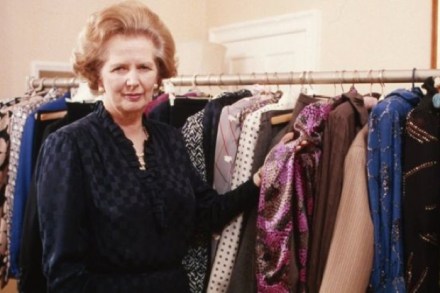
It is good to learn that the current management of the V&A want to reverse their predecessors’ lack of interest in Margaret Thatcher’s clothes. The museum’s original refusal showed a lack of imagination about how women have tried to gain greater power in a man’s world, and how clothes tell this story. Museums love to have suits of medieval armour. They reveal the amazing combination of defensive utility and elegant display which the age required. Even better if the armour was worn by a great warrior on a great occasion, like the Black Prince at Crecy. Mrs Thatcher’s clothes were her armour on her fields of battle — in Parliament, on television, in Moscow, at her party conference after the Brighton bomb. They helped her win.

Barometer | 5 November 2015

From our UK edition

Family business Justin Trudeau, son of Pierre Trudeau, was elected to his father’s old job as Prime Minister of Canada. Other descendants of former leaders currently in power: — The maternal grandfather of Shinzo Abe, Prime Minister of Japan, held the same job between 1957 and 1960. — Park Geun-hye, president of South Korea, is daughter of Park Chung-hee, president between 1963 and 1979. — Benigno Aquino III, president of the Philippines, is son of Corazon Aquino, president between 1986 and 1992. — Sheikh Hasina, Prime Minister of Bangladesh, is daughter of Sheikh Mujibur Rahman, Prime Minister 1972 to 1975. Safety drive Does the public expect driverless cars to make the roads safer?

The Imperial War Museum should consider accepting Margaret Thatcher’s wardrobe

From our UK edition

It is good to learn that the current management of the V&A want to reverse their predecessors’ lack of interest in Margaret Thatcher’s clothes. The museum’s original refusal showed a lack of imagination about how women have tried to gain greater power in a man’s world, and how clothes tell this story. Museums love to have suits of medieval armour. They reveal the amazing combination of defensive utility and elegant display which the age required. Even better if the armour was worn by a great warrior on a great occasion, like the Black Prince at Crecy. Mrs Thatcher’s clothes were her armour on her fields of battle — in Parliament, on television, in Moscow, at her party conference after the Brighton bomb. They helped her win.

There’s no shame in the V&A changing their mind about Thatcher’s wardrobe

From our UK edition

The news that the V&A had rejected an offer of Margaret Thatcher's wardrobe was met with dismay yesterday. 'Shame the V&A has turned down Thatcher’s personal collection. I for one would have loved to see it!' said the business secretary, Sajid Javid, on Twitter. Conor Burns MP suggested that the collection’s breakup would be a 'tragedy'. Even Vivienne Westwood, hardly a dyed-in-the-wool Tory, said on Radio 2 that while she was no 'fan' of Thatcher, the Iron Lady was 'certainly in her lifetime the best-dressed woman. She had terrific taste.' She also admitted that 'it would be lovely if the V&A showed her clothes.

The V&A must be mad to reject Margaret Thatcher’s wardrobe

From our UK edition

The V&A have defended their decision to turn down the offer of Margaret Thatcher's wardrobe on the basis that it only collects items of ‘outstanding aesthetic or technical quality’ rather than those with ‘intrinsic social historical value’. Yet in the same statement, they also suggest that the museum is responsible for 'chronicling fashionable dress'. I'm not entirely sure how the V&A believes it can fillet out the 'social historical value' from their aim of 'chronicling fashionable dress'. I'm also not sure I believe them. Thatcher is a divisive figure, and many people - some of them, presumably curators at the V&A, dislike her intensely.

I think I’ve found the perfect title for my Thatcher biographies

From our UK edition

One of the best of P.G. Wodehouse’s works is The Inimitable Jeeves, which I have recently re-read. In order to impress his friend Bingo Little’s rich uncle, Lord Bittlesham, Bertie Wooster has to pretend that he is the romantic novelist Rosie M. Banks, whose writing Bittlesham greatly admires. The trick succeeds. Eventually, when Bingo wishes to marry a waitress without being cut out of his uncle’s money, he begs Bertie to go and plead with Lord Bittlesham on his behalf. He advises him to ‘start off by sending the old boy an autographed copy of your latest effort with a flattering inscription’. ‘What is my latest?’ asks Bertie, who is unfamiliar with the oeuvre whose authorship he claims.

The Spectator’s notes | 29 October 2015

From our UK edition

An enjoyable aspect of parliamentary rules and conventions is that almost no one understands them. This has become acutely true in an age when the media no longer regularly reports proceedings in Parliament. So when the House of Lords threatened to derail the government tax credit cuts this week, no one, that I spotted, foresaw what actually happened. Knowing that the measure came forward as a statutory instrument, not a Bill, and was therefore (in both Houses) unamendable, its opponents in the Lords voted not to reject it but to delay considering it. They set conditions which had to be met before they would do so. Thus they defied the government without flatly breaking the conventions, which was clever, and unpredicted.

Why my book is no longer a bestseller at Eton

From our UK edition

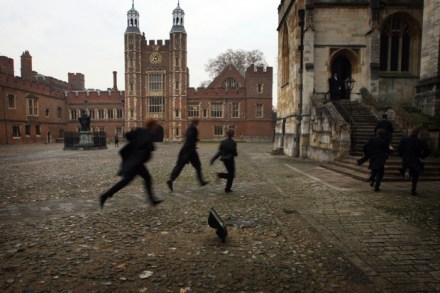
After my experiences promoting volume one of my biography of Mrs Thatcher, I had focused on boarding schools for sales of volume two (just published). This was because I discovered that pupils liked to buy the book to give to their parents for Christmas, secure in the knowledge that they could put it on their parents’ extras bill. As a result, sales were brisk. So imagine my dismay, shortly before addressing the Eton Political Society recently, when I received an email informing me that the ‘Lower Man’ (not a term of abuse, but the Eton slang for what other schools would call the deputy head) had just banned this practice. About 120 boys turned up to hear me. It is a credit to them that they bought eight copies; but under the old dispensation, they would have bought 80.

The lunch that began the end of the Cold War

From our UK edition

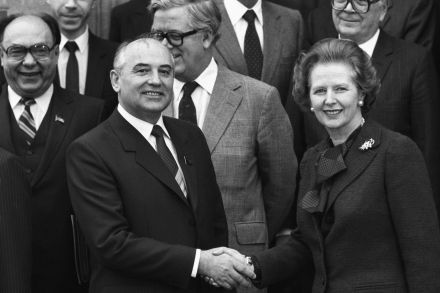
It is one of the great counterfactuals of contemporary history, what if Mikhail Gorbachev had walked out of that Chequers lunch with Margaret Thatcher in 1984? As Charles Moore explained at last night’s Spectator event to celebrate the launch of the second volume of his Thatcher biography, that lunch—where Thatcher and Gorbachev debated capitalism and Communism—was key to the ending of the Cold War. For Thatcher then persuaded Ronald Reagan that he should meet Gorbachev and that Gorbachev was someone they could do business with. But Gorbachev had almost left Chequers early, his wife had mouthed to him across the table ‘should we go now?

The end of feminism

From our UK edition

[audioplayer src="http://rss.acast.com/viewfrom22/thedeathoffeminism/media.mp3" title="Charlotte Proudman and Emily Hill debate whether feminism is dead" startat=35 fullwidth="yes"] Listen [/audioplayer]It would be easy to believe from the papers these days that women have never been more oppressed. From the columnist Caitlin Moran to the comedian Bridget Christie, a new creed is preached: that we are the victims, not the victors, of the sex war. Feminists claim we are objectified by the builder’s whistle, that a strange man attempting to flirt with us is tantamount to sexual assault. Suddenly, just as it seemed we women were about to have it all, a new wave of feminists has begun to portray us as feeble-minded — unable to withstand a bad date, let alone negotiate a pay rise.

The Tory party is now at ease with Margaret Thatcher

From our UK edition

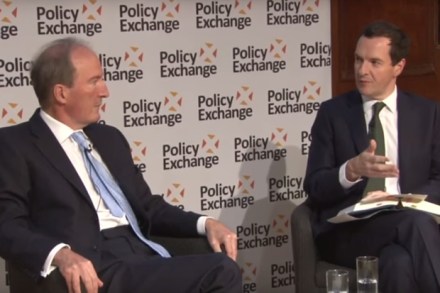
Last night, George Osborne interviewed Charles Moore to mark the publication of the second volume of Charles’s magisterial biography of Margaret Thatcher. You can watch the whole thing on the Policy Exchange website but one of the most striking things about the event, apart from Charles’s subtle needling of the Chancellor, was the questions that Osborne felt able to ask. He raised the issue of Thatcher’s legacy for the Tories in the north and Scotland, the poll tax and the question of when she should have gone. Even a few years ago asking these questions would have prompted a row, or at least some disquiet in the audience which had its share of veterans of the Thatcher years. But a proper, rounded discussion of Thatcher and her legacy is now possible.

Where will David Cameron end up in the history of Conservative Prime Ministers?

From our UK edition

At a large Tory breakfast meeting that David Cameron spoke to recently, the tables were named after all of the Conservative premiers of the past: the good, the bad and Ted Heath. So there were the Lord Salisbury, Harold Macmillan and Margaret Thatcher tables, for example. (I was delighted to be on the Winston Churchill table; the people on the Neville Chamberlain one looked suitably ill-favoured.) As Cameron — who was sat at the David Cameron table, appropriately enough — looked around the huge room that morning, he could be forgiven for wondering where he will wind up in the pantheon of past premiers.

Denis Healey was one of the most entertaining lunch guests I’ve ever had

From our UK edition

Denis Healey and my father Deryk Vander Weyer — a big cheese at Barclays and spokesman for the high-street banks during Healey’s chancellorship — had a lot in common. Both were clever, cultured, iconoclastic products of good Yorkshire grammar schools; both wartime majors and post-war socialists (my father finally turned right when he began to appreciate the merits of Margaret Thatcher); both formidable in argument. ‘Now then, young Deryk,’ the then chancellor used to say, only half joking, ‘You’re the man to run the state bank for us after you’re all nationalised.’ Thirty years later, the mellower Healey of old age came north to Helmsley to give a talk about his photography.

Come and see Charles Moore and Andrew Neil at Tory conference

From our UK edition

The waiting is over - the next volume of Charles Moore’s biography of Margaret Thatcher has, at last, been published. It follows the central, triumphal years of her premiership, from the Falklands to the 1987 election. Some of it has been serialised in the Sunday Telegraph today, with more in the Telegraph tomorrow. But if you’re at the Tory Party conference then do join Charles discussing the book with Andrew Neil at the Midland Hotel at 6pm– tickets are just £12, and are selling fast. There are just a few left: you can book them here. And there will be early copies of the book fro sale, too, as well as a free glass of wine.

Premier league

From our UK edition

At a large Tory breakfast meeting that David Cameron spoke to recently, the tables were named after all of the Conservative premiers of the past: the good, the bad and Ted Heath. So there were the Lord Salisbury, Harold Macmillan and Margaret Thatcher tables, for example. (I was delighted to be on the Winston Churchill table; the people on the Neville Chamberlain one looked suitably ill-favoured.) As Cameron — who was sat at the David Cameron table, appropriately enough — looked around the huge room that morning, he could be forgiven for wondering where he will wind up in the pantheon of past premiers.

Struggling to get on the property ladder? Qualifying for social housing may soon be your best bet

From our UK edition

That the Conservatives came up with the idea of extending the right-to-buy to housing association tenants was a symptom of their failure to believe they could win this year’s general election. Such an ill thought-out policy can only have made it into the manifesto in the expectation that it could be used as a bargaining chip in the coalition negotiations which were expected to follow. Today, communities secretary Greg Clark announced a significant weakening of the manifesto promise. He said he would consider an alternative scheme put forward by the housing associations themselves, which would exempt many properties, such as those funded by charitable donation.