Margaret thatcher

David Cameron has no choice but to defy Brussels

From our UK edition

If the European Commission had come to Britain demanding another £90 million because this country’s economy had performed better than expected, it would have been a political headache for David Cameron. The money would have been handed over and Ukip would have slapped it on to its election leaflets. But the Commission’s demand for £1.7 billion extra from Britain is so outrageous that it provides Cameron with a political opportunity. He can refuse to pay and hold up all other European business until the demand is dropped, rallying the country to his side as Margaret Thatcher did over the British rebate. One Cabinet Minister says excitedly of the row with the Commission, ‘This provides us with an opportunity to tell them where to get off’.

Margaret Thatcher would expect the Tories to retake control of Britain’s borders

From our UK edition

In a 1978 interview to mark her third year as leader of the Conservative Party, Margaret Thatcher addressed public concerns with immigration, stating that ‘people are really rather afraid that this country might be rather swamped’. Goodness knows what word she would use to describe the situation we face today. Anyone who has knocked on doors or surveyed their constituents in recent years will tell you the public have had enough. Immigration into the UK is the number one concern to the British public and, in my judgment, a party that does not address it will not win. In 2003 427,000 people arrived in Britain. In the years that followed it was 518,000, 496,000, 529,000, 527,000, 538,000, 528,000, 553,000, 531,000, and 426,000.

Mark Amory’s diary: Confessions of a literary editor

From our UK edition

Until recently I used to claim that I had been literary editor of The Spectator for over 25 years; now I say almost 30. The trouble is I am not quite sure and it is curiously difficult to find out. Dot Wordsworth arrived on the same day as me but she cannot remember either. Each of us assumed that the other was an established figure and so our superior. A similar imprecision may undermine other memories. In the early Eighties then, when Alexander Chancellor had reinvented the magazine after a bad patch, and it seemed daring, anarchic and slightly amateurish, I wrote theatre reviews and one late afternoon went round to Doughty Street, where The Spectator then was. I could find no one sober in the building. How did it manage to come out so promptly each week?

Can the Tory party locate its secret weapon?

From our UK edition

It used to be said that loyalty was the Tory party’s secret weapon. But this supposed strength hasn’t been very apparent in recent years. Indeed, at times, it seems that the Tory party hasn’t quite recovered from the demons unleashed by Margaret Thatcher’s ouster twenty-odd years ago.   Douglas Carswell’s defection means that Westminster, when it is not panicking about the Scottish referendum, is chuntering about whether his move to Ukip is the harbinger of a bigger Tory split to come, one that The Spectator explores this week. Worryingly for the Tory loyalists, there are people on all sides of the party are preparing for this fight.  As one Tory MP tells me, ‘It has that civil war quality to it: people just want to harm the other side.

A fitting exit for the self-publicising Lady Warsi

From our UK edition

[audioplayer src="http://traffic.libsyn.com/spectator/TheViewFrom22_07_August_2014_v4.mp3" title="Douglas Murray and Tim Stanley discuss Baroness Warsi's resignation" startat=462] Listen [/audioplayer]At the impressive Westminster Abbey vigil to mark the centenary of the first world war on Monday night, there was one big candle for each quarter of the Abbey, and one dignitary assigned to each candle. At different points in the service, each dignitary would extinguish his or her candle. Then the rest of us in the relevant area, all equipped with candles, would follow suit. The lamps went out, as it were, all over Europe. One thing niggled. I was in the South Transept, and our big-candle snuffer was Lady Warsi, Minister of State at the Foreign Office.

You can’t spin yourself into authenticity – as Ed Miliband is finding out

From our UK edition

For a politician to draw attention to his own deficiencies is a desperate attempt to curry favour with the electorate that has been tried before with dismal consequences. The most famous case is that of the former Tory leader Iain Duncan Smith who, at his 2002 party conference, addressed the problem of his dullness as a political performer by saying that no one should ‘underestimate the determination of a quiet man’. One result was that Labour backbenchers would raise a finger to their lips and say ‘shush’ whenever this croaky-voiced man was speaking in the House of Commons.

We are all numbers in Labour’s computer now

From our UK edition

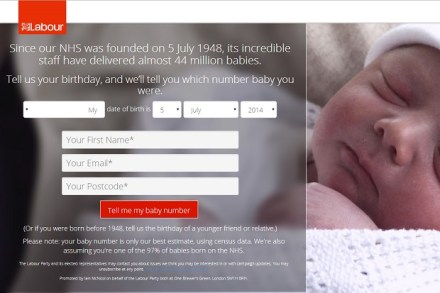
In 1975 Margaret Thatcher said in her 'Free Society' speech to the Conservative Party Conference: ‘Some Socialists seem to believe that people should be numbers in a state computer. We believe they should be individuals. We are all unequal. No one, thank heavens, is like anyone else, however much the Socialists may pretend otherwise. We believe that everyone has the right to be unequal but to us every human being is equally important.’ Mr S could not help but recall these fine words after an email arrived from the Labour Party asking him to enter chunks of personal data into its website, such as his postcode and date of birth, in order to find out his ‘number’. Since Labour created the NHS 66 years ago, croons the propaganda, it’s delivered 44m babies.

The speech that revealed what George Osborne believes

From our UK edition

It is a risky business for any serving Cabinet Minister to give a big picture political speech setting out their personal philosophy. It is all too easy for such a gesture to be seen as the start of a leadership bid. This was the fate that befell Theresa May when she made her big speech to the Conservative Home conference 15 months ago. But last week, George Osborne gave his own credo speech to the Centre for Policy Studies’ Thatcher conference last week. The address, delivered after dinner on the final night of the conference, was the fullest explanation yet of the Chancellor’s political philosophy. Osborne is far more of a Thatcherite than he is a Conservative and so he was among friends when he made the speech.

Petraeus: America can’t serve as an air force for a Shi’ite militia

From our UK edition

If conservatives had an answer to Woodstock, it would resemble the Margaret Thatcher Conference on Liberty held today by the Centre for Policy Studies. The lineup is stellar, and I’ve been here all day. General David Petraeus is one of the many guests and was asked what he’d do about the rise of ISIS. Here’s what he said, 3:30 into the below clip: ‘If there is to be support for Iraq, it has to be support for a government of Iraq. That is; a government of all the people; and that is representative of and responsive to all elements of Iraq. President Obama has been quite clear on this: This cannot be the United States being the air force for Shia militias or a Shia on Sunni Arab fight. It has to be a fight of all of Iraq against extremists.

My tax avoidance tip – win literary prizes!

From our UK edition

David Cameron is said to want a woman to be chairman of the BBC Trust, now that Chris Patten has had to retire early because of ill health. Perhaps he has a bad conscience about what happened last time. By far the best candidate then was the runner-up, Patricia Hodgson, a distinguished BBC veteran who is committed to its virtues and has always understood its vices. She would have led a return to the BBC’s core strengths, and saved licence fee money in the process. But the government did not know what it wanted, so it chose the nearest chum, Lord Patten, who accepted in that casual and complacent spirit and found himself plunged into crisis.

Charles Moore’s tax avoidance tip

From our UK edition

Last week, volume one of my life of Margaret Thatcher won the Elizabeth Longford Prize for Historical Biography. This made me feel greatly honoured, because I knew and loved Elizabeth — she was our country neighbour — and admired her own biographies greatly. It is also undeniably pleasant to get £5,000 without having to do any extra work, or even apply. This is the third monetary prize that my book has won, and I have been thrilled to discover that prizes attract no tax at all, so £5,000 is £5,000.

Michael Dobbs shuffles Cards in the House of Lords

From our UK edition

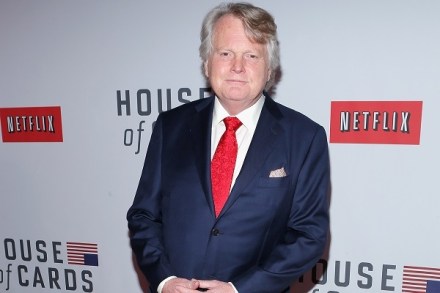
Filming of season three of Netflix’s House of Cards will begin in four weeks’ time in Maryland, creator Michael Dobbs revealed at Norman Tebbit’s book launch last night. Lord Dobbs, who was an advisor to Thatcher, said that he had to ‘tone things down a little bit’ to make the plot ‘credible’, although he’s clearly proud of his work, telling Mr S: ‘Kevin [Spacey] is wicked. It’s like the West Wing for Werewolves’. When he’s not the toast of America’s TV, Dobbs sits on the Lords’ standards committee.

Evangelically wishy-washy

From our UK edition

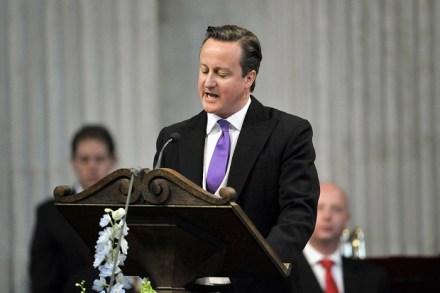
David Cameron has said Christians should be more evangelical “about a faith that compels us to get out there and make a difference to people's lives”. In an article for The Church Times he said he wanted to infuse politics with Christian values such as responsibility, hard work, charity, compassion, humility and love. In recent years politicians have often been shy about talking about religion, reluctant perhaps to invoke the authority of God to score a political point. William Ewart Gladstone had no such anxiety, saying in 1832: “Restrict the sphere of politics to earth, and it becomes a secondary science”.

Handbagged: if this is what luvvies think being ‘fair’ to Thatcher is, I’d like to see their idea of ‘unfair’

From our UK edition

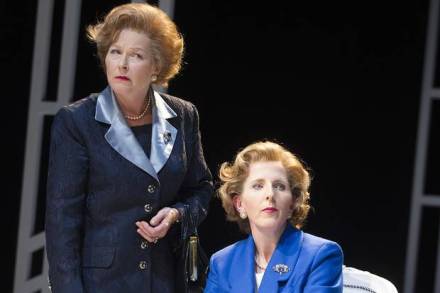
Why do the Left love the Queen? Sure, most of us agree she’s done an excellent job in a difficult role, only screwing up a few major life decisions: tricksy choice of husband, wintry education of her children, fastidious attitude to peanuts. But as one of the country’s richest women, a symbol of economic equality she ain’t.  So it’s a mark of just how willfully hostile theatreland is to Margaret Thatcher that in Moira Buffini’s new play about the two, Handbagged, it’s the Queen, not the grocer’s daughter, who emerges as the courageous voice of social justice. It’s a frustrating blindspot in an otherwise witty, watchable production, anchored by consummate performances from Marion Bailey and Fenella Woolgar.

Tony Benn – feminist

From our UK edition

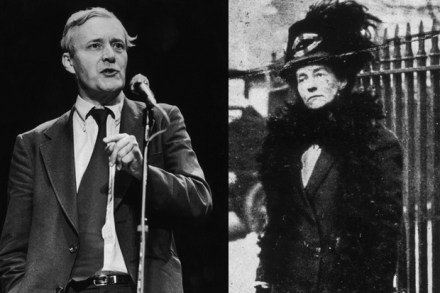
You may not have agreed with the late Tony Benn’s politics, but as Mary Wakefield points out in her interview with him, ‘his faith in humanity had deep roots’. And here’s an example of it. Back in 2001, Benn took it upon himself to erect a plaque in the broom cupboard where Emily Wilding Davison hid during the night of 2 April 1911, the night of the Census, so that she would be registered as a resident at the House of Commons. As a woman - with no right to elect who could stand in Parliament - it appealed to her sense of irony that she would be recorded as a resident. Speaking in the House of Commons in 2001, Benn said: 'I have put up several plaques—quite illegally, without permission; I screwed them up myself.

Death brings out everyone’s inner Mary Whitehouse

From our UK edition

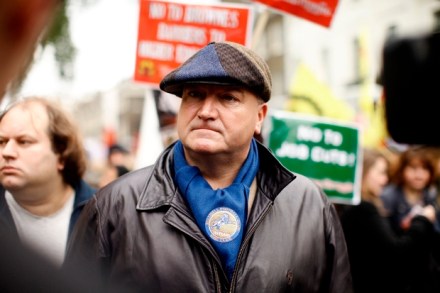
Shortly after Bob Crow’s death was announced on Tuesday, Nigel Farage sent the following tweet: ‘Sad at the death of Bob Crow. I liked him and he also realised working-class people were having their chances damaged by the EU.’ Cue a predictable storm of Twitter outrage. Farage was attacked for trying to make political capital out of Crow’s death. The following tweet, from the ex-FT journalist Ben Fenton, was typical: ‘Bit off-key for @Nigel_Farage to link a tribute to Bob Crow to his own anti-EU rhetoric, I think.’ Now, some of those criticising Farage had a political axe to grind. They were claiming Farage had broken an unwritten rule that they clearly don’t believe in themselves.

Behind the scenes at Spitting Image

From our UK edition

If Margaret Thatcher is remembered by many more as a caricature than as her actual self, then blame Spitting Image. The show, which ran from 1984 to 1996, portrayed her variously as a cross-dresser, a fascist and a bully but, to her credit, she never complained. Or, if she did, there’s no record of it. Of course it wasn’t just politicians who were targeted; anyone in the public eye was also ripe for a takedown, from Kylie to the Queen. Deference — what’s that? To mark the programme’s 30th anniversary, BBC4 has created an Arena documentary that takes viewers behind the scenes of the Spitting Image process; introducing us to the people who made the programme come to life, and the hellish hours they worked keeping the show on the road.

Imagine the uproar if a Tory minister proposed a “do-it-yourself” NHS?

From our UK edition

Consider these two stories. In the first the government approves new proposals to overhaul hospital outpatient care. For once there isn't even much of a pretence that this will improve healthcare. It's simply a question of saving money. Assuming the new proposals are implemented, many outpatients who had hitherto enjoyed (or endured) hospital appointments will be told to stay at home. Indeed they will be advised to "treat themselves". What contact they have with a consultant will be of the "virtual" kind. Perhaps a quick telephone call if they are lucky. More likely, they will be told to download an app to their phone which will tell them how to manage their condition or affliction. In other words, a DIY NHS. Or, if you prefer, some real privatisation.

PMQs sketch: Cameron kick-starts a Miliband recovery

From our UK edition

Cunning work from Milband at PMQs. He played Syria like a fixed-odds betting machine and came away with a minor jackpot. Last week he had urged the prime minister to accept a few hundred of the neediest Syrian refugees. Cameron duly said OK. Today Miliband was quick to claim a victory for decency, for humanity, and for Miliband. ‘I welcome this significant change of heart,’ he said. Choice word, heart. He’s got it. And Cameron hasn’t. That’s the implication. Miliband tried the same tactic with the 50p tax rate. When Ed Balls unfurled this this new policy he got a mixed bag of reviews. Economists put their fingers in their ears and ran around wimpering. The popular response suggested it was a top ten hit.

When Arthur Scargill tried to buy his council flat, he bought Thatcherism

From our UK edition

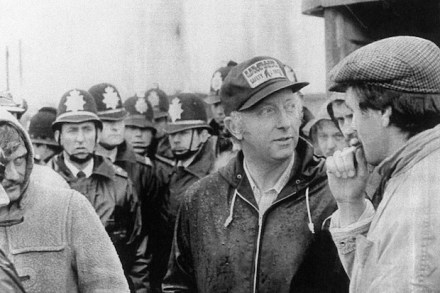
There’s a case for saying that the Thatcher government’s sale of council houses was the biggest redistribution of wealth this country has ever seen. I’m not so sure. I am pretty convinced it was a contributory factor in the vaulting property greed which has been with us ever since, and the propensity of people to view a home as nothing more than collateral, to be ever traded up. I would have expected the former leader of the NUM, Arthur Scargill, to have agreed with me about this – and then some. But, as a consequence of some digging by the BBC, we now know that Arthur tried to buy his Barbican flat under the right-to-buy scheme, back in 1993, so that he might likewise make a killing.