Manhattan

Colson Whitehead celebrates old Harlem in a hardboiled thriller that’s also a morality tale

From our UK edition

For modern America, Harlem is a once maligned, now much vaunted literary totem, which continues to occupy a gargantuan place both in the psychogeography of New York and the soul of the nation. Langston Hughes, Claude McKay, Zora Neale Hurston, Nella Larsen, James Baldwin and Chester Himes are just a few of the writers whose names are associated with the 50-odd blocks heading uptown from 110th Street at the northern end of Manhattan. Their echoes, traces and spirits can all be discerned in Colson Whitehead’s outstanding new novel Harlem Shuffle — a genre-defying blast from a bygone era, set between 1959 and 1964, yet one which urgently speaks to the present.


The man who made Manhattan: The Great Mistake, by Jonathan Lee, reviewed

From our UK edition

What makes a city? The collective labour of millions packed into its history; the constant forgetting of incomers who arrive to create their own version of a place, their own versions of themselves; the desires of great men, whose improvements are partly intended to secure a better life for their less fortunate fellows, and partly a plea for their own immortality. This is a novel about all three, disguised as one about Andrew Haswell Green. According to one of the few memorials to him still standing, he was the ‘Directing Genius of Central Park in its Formative Period’ and ‘Father of Greater New York’.

Is New York coming back?

New York Well, at least P.J. Clarke’s survived the lockdown ordeal. Founded as a ‘saloon’ by an Irish migrant in the late 19th century, the restaurant-bar is a Manhattan dining icon — and a defiant one at that: it’s housed in a modest two-story building, nestled among the skyscrapers of Midtown East, a relic of an older, redbrick Gotham, refusing to give way to the titans of law and finance who occupy the commanding heights of glass and steel nearby. Reality is a little more complicated than that, of course. These days, P.J. Clarke’s is owned by a consortium of financiers, and before the lockdowns, its patrons very much included the finance bros dressed in their standard-issue uniforms (button-down, slacks, Patagonia vest).

p.j. clarke's
protest

Can COVID-19 tell whether a protest is progressive?

New York City This past month shattered all my sense of stability and permanence in New York, the city I’ve called home since 2012 (though I’ve spent some of those years in London). The looting mobs that rampaged through Gotham’s streets put me in mind of my native Middle East, a phenomenon I thought I’d left behind ‘over there’, not to be encountered except on the occasional reporting trip to Iraq or Egypt. But no. An unjust police killing in Minneapolis — combined, no doubt, with the effects of a prolonged lockdown — Arab Spring’d the United States, if you will. Or rather, the riots revealed that America’s advanced liberal society isn’t all that different from the Arab client states Washington likes to lecture.

A tale of two tapas

In 146 BC, Scipio Aemilianus laid siege to and destroyed the city of Carthage, thus bringing the third Punic War to an end. Scipio made a gift of what remained of the Carthaginian library to the kings of Numidia, Rome’s old ally against Carthage. At the direction of the Senate, however, he held back one book, the agricultural treatise of Mago, which he sent back to Rome. It was duly translated into Latin, but all that remains are fragments, which is too bad, for Mago apparently had a lot to say about many exigent matters, including the cultivation of grapes and making of wine. It appears that it was the Phoenician precursors of the Carthaginians who, around 1500 bc, first planted grapes in the Iberian peninsula.

Tapas bar

Stop Andrew Cuomo’s war on restaurants

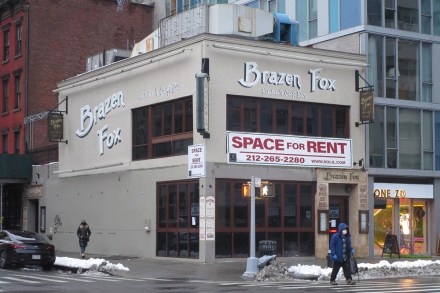
New York Cuomo to New York City restaurants: drop dead. This is the unmistakable message from Gov. Andrew Cuomo to the cornerstone dining industry in America’s premier city. Thankfully, Cuomo’s veritable kiss of death for these establishments is earning him nothing but rotten tomatoes. Cuomo is being fricasseed like a cartoon rabbit for his policy on Gotham’s eateries. New Yorkers across the political spectrum are baffled and revolted at his treatment of these signature local enterprises. Cuomo deserves every spoon of hot gravy ladled down his back. The Emperor of the Empire State has unleashed a policy that makes zero scientific, meteorological, or economic sense. Aside from that, it couldn’t be more brilliant.

new york city restaurants

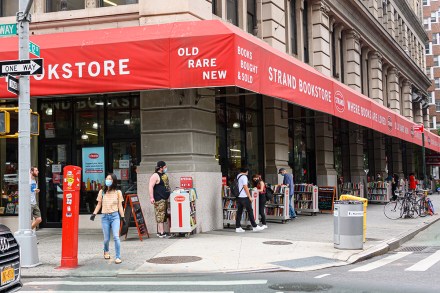
Why should The Strand survive?

On Friday book-loving New Yorkers got a shock as the city’s largest bookstore — The Strand — announced that it risked going out of business. A post on Twitter from the company said: ‘We need your help. This is the post we hoped to never write, but today marks a huge turning point in The Strand's history. Our revenue has dropped nearly 70% compared to last year, and the loans and cash reserves that have kept us afloat these past months are depleted.’ https://twitter.com/strandbookstore/status/1319686649798905856 What followed included an appeal to the public to return to the store to ensure that the 93-year-old business could keep trading. Prominent writers and pundits rallied around, and in recent days lines have appeared outside.

strand

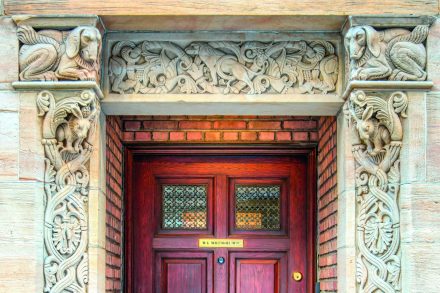
The perception of doors

The architectural historian Andrew Alpern has for decades done the dirty work when it comes to pre-war New York apartments. Others have presented glossy coffee-table books full of newly commissioned professional photographs. Alpern has focused on the practical details of apartment design, especially floor plans, which tell us so much about how people actually live in their apartments, or at least were originally meant to. His Apartments for the Affluent (1975), Historic Manhattan Apartment Houses (1996) and New York Apartment Houses of Rosario Candela and James Carpenter (2002) are essential compendia; anyone with an interest in New York residential architecture, especially of the magnificent variety, must have them. The more industrious uptown real estate agents also find them useful.

doors

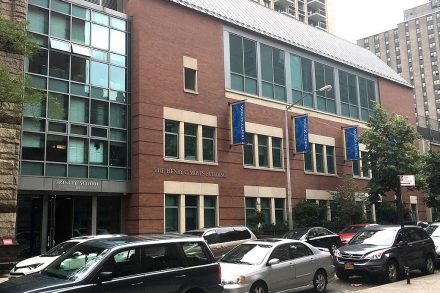
Creeping critical race theory in Manhattan’s private schools

Cockburn doesn’t have any school-aged children — that he’s aware of, anyway. But a number of his close associates do — and they’ve been complaining a lot recently about schooling. Here’s a brief note from a New York-based mother Cockburn often gets cocktails with, who has a grievance she’d like to air… The ‘closing of the American mind’ is a lament usually reserved for the indoctrination of college students, but it’s now starting far younger. By the time our American students arrive on campus, much of the damage has already been done. K-12 education has been infected with critical race theory, tenets of the 1619 Project, Black Lives Matter doctrine and other debunked, destructive ‘religious’ ideologies.

private schools

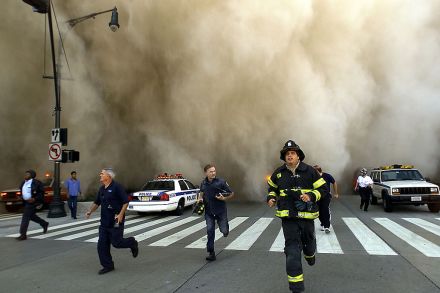
On the ground in Manhattan after 9/11

I joke, during this current lockdown, that I am glad I no longer take hallucinogens or mind alterers, but I’m serious. I don’t want to have to think too much about how the globe can pull itself back from this current economic pause, or what I would do if anyone I loved was dying and I couldn’t reach them, because of the new rules. A Taoist monk friend called it a ‘sacred pause’, and in so many ways she is right. Even though I know she was referring to more than wild nature having a rest, I wager it is noticeably nicer to be a bee or a fish right now, with a little more room to maneuver.

9/11 lockdown

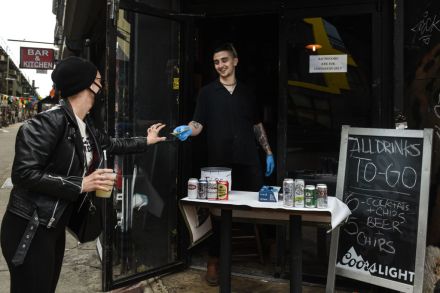
In defense of drinking in the street

A tiki bar opened across the street from my Upper West Side office shortly before all social life in Manhattan ground to a halt due to the pandemic. I visited once, had two to three of their specialty drinks and, despite a mild headache the next morning, could tell the place was going to be a hit. Then the shutdown came. Businesses of all stripes pulled and padlocked their security grilles. Helicopters and airplanes disappeared from the skies. Traffic, except for wailing northbound ambulances, all but disappeared. Genuine fear owned the spring.

lockdown drinking

Bill de Blasio unites cops and protesters — in disgust

New York City is crumbling into shambolic lawlessness and its citizens are growing more afraid and frustrated by the day.Why?Because Gov. Andrew Cuomo and Mayor Bill de Blasio have once again proven to be categorically incompetent leaders incapable of working effectively together in a time of crisis.On Tuesday, the Governor was forced to confront the glaring issue that the state’s top concern had shifted from COVID prevention to the demolition of its biggest metropolis by unruly riots. During his daily press conference, Cuomo took the opportunity to chastise the Mayor and the NYPD for the turmoil, calling Mayor de Blasio’s handling of it a ‘disgrace’.

bill de blasio

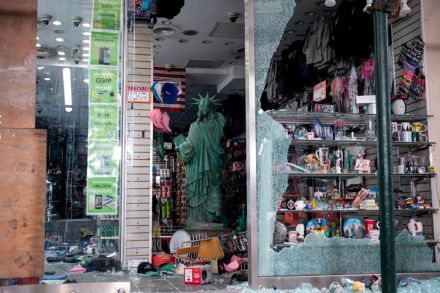
Mayhem in Manhattan

It’s important — and easy — to tell the difference between protesters and looters. Just as New York should have been opening up after the peak of the coronavirus lockdown, the city is instead retreating further indoors, hunkering down behind increasingly thick barriers of plywood as the evenings become free-for-alls for window-smashing rioters.New York City, America's cultural and economic engine, is rapidly degenerating into a scenario inspired by The Ωmega Man (1971), a post-apocalyptic movie in which Charlton Heston, seemingly the last unaffected survivor of a chemical-weapons attacks, wanders a deserted Los Angeles by day and fends off increasingly brazen bands of mutant hippies who torch the city every night.

manhattan

In Central Park, an unstoppable Karen meets the immovable Karen

If you’ve ever smugly pulled out your cellphone to record a confrontation with a stranger, hoping to publicly humiliate that person and even destroy their life, you’re probably a Karen of the worst ilk. Likewise, if approached by an insufferable busybody who lives to scold people minding their own business, and your first reaction is to call the police, you’re also a Karen. Manhattan is filled with Karens, the meme that once referred to the ‘can I speak to the manager’ lady with stacked hair and chunky highlights that evolved into a way to call out any very annoying person who loves rules and tattling. It is high Karen season across the country.

central park karen

Born again: My Year of Rest and Relaxation, by Ottessa Moshfegh, reviewed

The new novel by the author of the 2016 Booker shortlisted Eileen is at once a jumble of influences — Oblomov by way of Tama Janowitz and Elizabeth Wurtzl, Bartleby with a touch of Bright Lights, Big City, a lunatic psychiatrist who melds Ayn Rand and William Burroughs — and unnervingly original. It takes guts, after all, to spin a yarn out of a rich Upper East Side orphan who decides to put herself to sleep for a year in an attempt at rebirth. Beyond the evident — the death of her parents, an obnoxious man in her life — precisely why our narrator wishes to shed her skin remains unclear to us; but her tenacity in pursuing oblivion is unshakeable.