London

I offered Zac Goldsmith £50 to stay 20 feet away from me

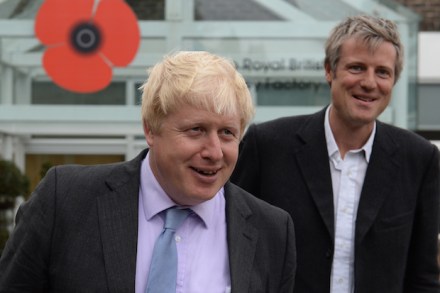
I once tried to bribe Zac Goldsmith with a £50 note, but he didn’t bite even back then. He was about 15 years old, and the reason for the hush money was pure self-preservation. He was already good-looking and I knew he’d be even more so at 20, so I offered him 50 quid to stay 20 feet away from me for the next 15 years if he saw me talking to a girl. My bribe worked with his younger brother Ben, who grabbed the loot and never kept his side of the bargain. That was in 1997, when Jimmy Goldsmith formed the Referendum party and I covered its first
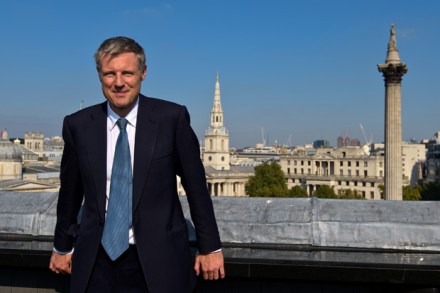
Zac Goldsmith is the Tory candidate for London Mayor. But is he too posh to push?

As expected, Zac Goldsmith has won the Conservative nomination for next year’s Mayor of London race with a sweeping 71 per cent of the vote – but on a distressingly small turnout. Anyone in London could vote by paying £1, so there had been hopes of a high turnout – figures of 60,000 were mentioned. But a pitiful 9,227 turned out to vote, from a city of ten million. Given the excitement caused by Labour’s leadership race, this is hugely disappointing for the Tories — and bodes ill for the race now in prospect. If the turnout was bad for Zac, it was worse for everyone else. Syed Kamall, an MEP for London, was second with

High steaks

Smith & Wollensky is a restaurant from The Shining: a terrifying American steak joint by the Thames, four months old, with a £10 million refurbishment and no passing trade; it sits opposite the Georgian houses in John Adam Street, like a cow biting into a wedding cake, wondering what went wrong. It seats possibly 400 people; when I went on Sunday evening four tables were taken — one by a pointy-beard convention — and a whole floor was closed but still lit. I love this: the spectral restaurant; the restaurant from your nightmares; the restaurant at the edge of an apocalypse, boasting of butchering — and ageing — its ‘patriotic’

At least these rioters hate the right people

I was unable to join the violent protests held by Class War at the Cereal Killer Café in London last week because I had to stay at home to supervise our gardener. Yes — I know what you’re about to say. It is indeed ridiculous that one should have to stand over workmen to ensure that they are doing a decent job. But there is a patch of lawn towards the rear of our grounds which the blighters always skimp on, believing that it is too far from the house for us to notice. So I stand down there, with a cheerfully expectant expression, as the surly little man goes

Coming up for air

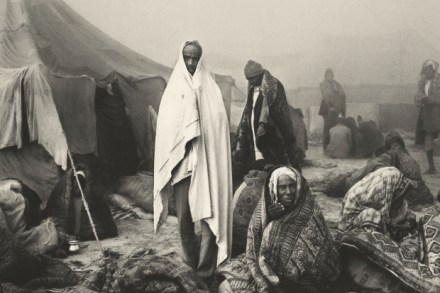
The thing that the photojournalist Don McCullin likes best of all now, he tells me, is to stand on Hadrian’s Wall in Northumberland in a blizzard. He made his name in conflicts in Vietnam, Cambodia, Biafra, Uganda — hot places full of fury, panic and death — but these days he finds his greatest solace in the English landscape. I can see why he is drawn to that wild part of Britain: its isolated beauty, the feeling of being roughed up by the elements but not destroyed by them. Clean air, too: you must get a cool, fresh lungful up there. He’s 80 years old in October: talking to him

From A to B, differently

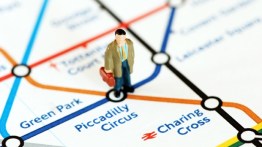
Afamily member is thinking of moving and asked for commuting advice. Well, first add 25 per cent to any journey time estimate containing the phrase ‘door to door’. When commuters cite journey time to work, the journey they have in mind is one which happens with the frequency of a solar eclipse: when every traffic light is miraculously green and the train draws in just as you reach the platform. Generally the words ‘door to door’ can be replaced by ‘in a parallel universe’ without altering the meaning of the surrounding sentence. I also advised asking the estate agent what is the second-best way to get to work. No one

Is my only choice to be a cynic or a sucker?

It’s all the rage to mistrust the powerful these days, to say politicians are scum, or all bankers are selfish. Journalists are considered particularly disgusting post-Corbyn, which encourages all manner of needling on Twitter: ‘I’m sorry, but if you’re a journalist you should get a better job.’ This from a Corbynite. ‘I’m sorry, but…’ — are there three more irritating words? All this sticking it to The Man. All this talk of real, kindly people versus the shifty elite. I think it’s bogus. Not because the elite isn’t greedy but because the implication is that we the people have some sort of solidarity; that we’re let down only by our

This will-they-won’t-they rate-rise saga has dragged on long enough

When news broke last Thursday evening that the US Federal Reserve had decided to keep interest rates on hold, I happened to be surrounded by serious economists representing a range of viewpoints and nationalities. None seemed surprised by the decision, though the media had declared it to be on a knife edge. But I did sense disappointment, not so much because the assembled sages thought technical data pointed to a rise but because the whole will-they-won’t-they saga of the first US rate rise since December 2008 (or March 2009 in the case of UK rates set by the Monetary Policy Committee) now feels as if it has dragged on far

George Osborne: engaging with China is better than ‘megaphone diplomacy’

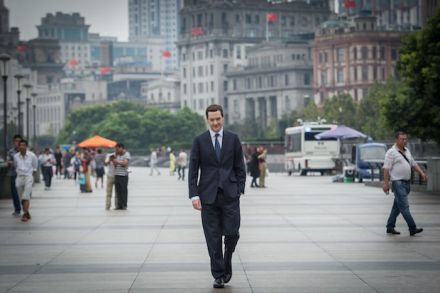
Britain and China must ‘stick together’ through the ‘ups and downs’ according to  George Osborne. The Chancellor is currently touring China to drum up support for a ‘bridge’ with the City of London, as well as attempting to reassure the markets. On the Today programme, Osborne said he is pursuing a close relationship because it will create ‘jobs and investment in Britain’ — but he is not ignoring the human rights concerns either: ‘This is primarily an economic and financial dialogue but of course we’re two completely difficult political systems and we raise human rights issues but I don’t think it’s inconsistent to do more business with more than one fifth of

Foodies without the faff

I cannot review the Gay Hussar every time the Labour party behaves like a self-harming teenager (‘I don’t want to be elected, anyway!’) so I went to Portland instead. Portland is a spectral restaurant on Great Portland Street; it is a good place to feel numb. The name is neutral, bespeaking nothing beyond a vague acknowledgement of its surroundings, which is Fitzrovia and its traffic pollution; Portland, on the whole, is so understated the critic struggles to get a grip on its mysteries, as if sliding down a glacier towards ducks. Even its Twitter presence is ambiguous: when I attempted to follow it, I mistakenly followed the loveless bastard whose

Bad winners

‘Jeremy Corbyn night’ at the Forum in Kentish Town on Monday should have been a scene of orgiastic pleasure for socialist Labour. Corbyn’s victory was the triumph the grand old reactionaries of north London have been waiting a generation for. But they weren’t happy; they were as angry and full of bile as ever. The scene took me right back to my childhood in Islington in the 1970s. My neighbours in the queue outside the Forum had posher voices than you hear at Annabel’s. The smart greybeards from the £2 million villas of Kentish Town and Islington were joined by a new generation of under-thirties: white, university-educated, also with upmarket voices.

Our drugs cheat

Do you want to see Paula Radcliffe’s blood? If so, you’re not alone. Radcliffe, three-time winner of the London Marathon has been outed as a drugs cheat by the Tory MP Jesse Norman. No proof, but proof is for wimps. Radcliffe’s name will now always have a certain stink. Norman used parliamentary privilege to talk about ‘the winners or medallists at the London Marathon, potentially British athletes… under suspicion for very high levels of blood doping.’ That was enough to tar Radcliffe as a possible druggie. It’s like accusing a public figure of paedophilia: the softest whisper will do for them. Pressure has been brought on Radcliffe to go public

Cabbies storm London City Hall over Uber row

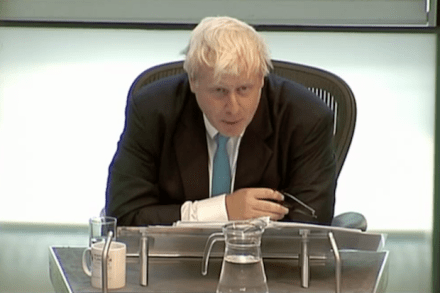
Boris Johnson’s war with black cab drivers stepped up a notch today. His monthly Mayor’s Question Time session was abruptly shut down after cabbies packed out the public gallery of London City Hall to protest about what they see as Transport for London’s unfair regulations for Uber. As the video above shows, Johnson’s description of the cabbies as ‘Luddites’ did not go down well at all and the London Assembly’s deputy chair decided it should end. Steve McNamara, general secretary of the Licensed Taxi Drivers’ Association, has told the Evening Standard Boris’s ‘Luddite’ was to blame, saying it was not ‘the smartest of moves but it escalated out of all proportion’. The fracas

Cheer up: we’re robust enough to withstand a shock from China

Home from the hot Aegean, huddled by the fire as rain ruins the bank holiday weekend, I’m thinking: what gloom has descended since I’ve been away — and doesn’t it call for a round-up of cheerful news? So here goes. The UK economy grew by 0.7 per cent in the second quarter and a respectable 2.6 per cent over the past year. US growth has been revised sharply higher to 3.7 per cent, scotching our claim to be the fastest growing western economy, but George Osborne can still say convincingly that ‘we’re motoring ahead’ — and weak first-quarter performance can be seen as a blip rather than the revelation of doom

Ukip wars: Party's London MEP blasts 'undemocratic' Mayoral and GLA selections

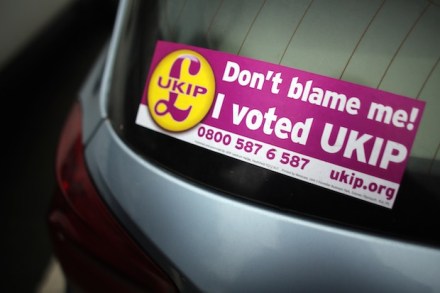
Ukip’s selection procedure for its London Assembly and Mayoral candidates is ‘undemocratic’, the party’s own MEP for London has told Coffee House. Gerard Batten has refused to take part in the selection procedure because it is ‘undemocratic’, with the party’s London membership getting no vote on the candidates. He said: ‘If Ukip is a democratic party, then it should allow the London members to select the candidate. Ukip is nothing if not a grassroots party. Activists who are not allowed to vote for a candidate may not feel motivated to campaign for that candidate. Ukip talks a lot about the undemocratic nature of the European Union, so we should practise democracy in

Could a row with Uber be taxi for a London mayoral candidate?

One of the striking things about the contest in Labour for the mayoral candidacy is how many of the candidates are keen to admonish private taxi firm Uber. Sadiq Khan has described it as a ‘problem’ and said he is ‘on the side of the back cab driver’, Tessa Jowell is ‘enormously concerned’ and doesn’t have an Uber account, while David Lammy wants to ‘protect the institution that is the black cab’ and wishes there had been a confrontation between the Mayor and Uber as there had been in Paris. But perhaps these candidates should take heed of what has happened to another mayor who confronted Uber. Bill De Blasio

Last orders | 27 August 2015

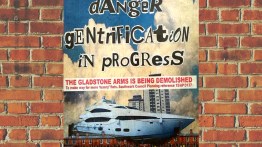
Lant Street would be easy to miss, if you weren’t looking for it. Charles Dickens lodged on Lant Street as a child, during his father’s stay in Marshalsea debtors’ prison nearby. The Gladstone Arms is about halfway down, doors open to the narrow street on a warm afternoon in August. Inside, an old man nurses a pint in late summer light that falls through mullioned windows. The grain of the oak floors has a dark patina of London grime. There is nothing spiffed-up about the place. But it’s beautiful, and in decent nick. A black and white cat sits on the piano. This tiny place is also a live music

Powder to the people

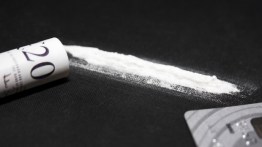
It’s Notting Hill Carnival this weekend. Two days of skanking, dutty dancing and daggering (the dance, rather than the weapon). No carnival experience would be complete without rum punch and jerk chicken, or for that matter crime, cannabis and cocaine. Drugs are part of the fun at Europe’s biggest street festival. There were 76 drug arrests at the festival last year, and 88 arrests made before the party even started as part of a dawn raid seizing machine-guns and crack. Not that partygoers are about to let a little thing like the law get in the way of their bank holiday. A survey earlier this summer from the European Monitoring

Spirits of the Blitz

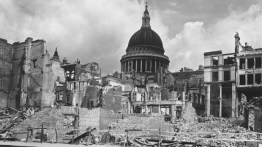
If the early Martin Amis is instantly recognisable by way of its idiosyncratic slang (‘rug-rethink’, ‘going tonto’ etc) then the later Pat Barker can be similarly identified by its finely wrought accounts of physical trauma. ‘Afterwards, it was the horses she remembered,’ runs a specimen sentence from the new novel, ‘galloping towards them out of the orange-streaked darkness, their manes and tails on fire.’ Noonday’s Blitz-era setting — the horses are in flight from a bombed-out brewery — gives Barker ample opportunity to do what she does best: intent descriptions of splayed limbs that are sometimes engaged in the act of love, occasionally the subjects of paintings or, more often,

An evening with Andy Burnham and his conventional Labour supporters

Andy Burham’s rally this evening had only one similarity with Jeremy Corbyn’s last week: it was held in a place of worship. At the St Pancras Parish Church in London, close to 1,000 people turned out to hear Burnham and take part in a Q&A session. There was no socialist magician, folk singer or rock band — just a few politicians and a lectern. It was a throwback to how Labour politics was done before Corbynmania blew onto the scene. Sir Keir Starmer speaks at an Andy Burnham rally at St Pancras Parish Church, 24 August 2015. Keir Starmer, the local Labour MP, opened proceedings by explaining his desire to win