London

Barometer | 2 March 2017

From our UK edition

And the losers are… La La Land was mistakenly announced as winner of the Oscar for best picture before the error was corrected in favour of the film Moonlight. Some other announcements which went terribly wrong: — In 2015 Miss Universe host Steve Harvey announced Miss Colombia as the winner. Two minutes after she had been crowned Harvey came back on stage to apologise that he had misread the card and in fact Miss Philippines had won. — In January 2016 Heart FM newsreader Fiona Winchester mistakenly announced that David Cameron, then prime minister, had died, before correcting herself and saying that David Bowie had died. — In December 2015 the FT announced that the European Central Bank had held interest rates. They had in fact been cut to 0.3 per cent.

Rich desserts

From our UK edition

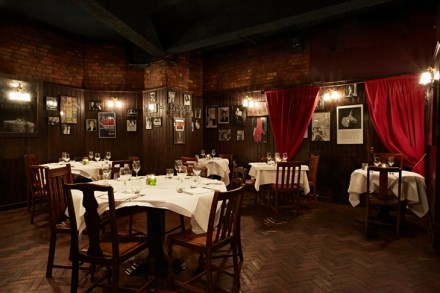
Ferdi is a café in Shepherd Market; I write about it only to comfort you, because you are not rich, and so you cannot afford to go there, because you would have to pay £140 for two courses without wine. It probably thinks it is a restaurant, wants to be a restaurant, but it isn’t. Its defining characteristic is claustrophobia, and even bad restaurants allow the critic to breathe as they polish their spite. It is a copy, or satellite, of a fashionable café in Paris. The Parisian Ferdi is popular with fashion models and ‘Kim and Kanye’ (Kardashian and West), which is always a terrible sign. Shepherd Market, in Mayfair, is a district that is losing its charm faster than Paul Nuttall.

London Stock Exchange picked a bad year to join a pan-European project

From our UK edition

The marriage of the London Stock Exchange and Deutsche Börse may not be stone dead but that’s the way to bet, as Damon Runyan would have said. This so-called ‘merger of equals’ — with the Germans holding the larger stake and the top job but with the head office in London, at least to begin with — has foundered over a demand from EU competition authorities that the LSE should sell its majority stake in MTS, an Italian bond-trading platform. Having had its alternative proposal (to sell a French clearing operation) rejected, the LSE refused to comply, allegedly without first consulting its German partners.

Building block | 23 February 2017

From our UK edition

What a strange affair it now seems, the Mansion House Square brouhaha. How very revealing of the battle for the soul of architecture that reached maximum ferocity in the late 1980s and which still echoes today. Where developers now jostle to build ever taller, fatter and odder-shaped City skyscrapers, this was a time when it took 34 years to get just one building built. An ambitious bronze tower and plaza by the German-American modernist pioneer Mies van der Rohe was finally rejected in favour of an utterly different post-modern corner block (with no plaza, but a roof garden) by Sir James Stirling. Both were shepherded by a man in search of his personal monument: the property developer Peter, now Lord, Palumbo.

American English

From our UK edition

Ralph’s Coffee & Bar is in the Polo Ralph Lauren flagship store on Regent Street. It is rare that fashion admits food exists and when it does, it usually does something insane with it, like when the Berkeley Hotel celebrated fashion week by inventing a shoe biscuit, so you could eat your shoe. But Ralph Lauren, who dresses Melania Trump because other designers will not — believing that the withholding of couture equals meaningful opposition to tyranny, a position that makes me laugh even as I place my head in the oven — goes beyond couture and into the weird lands of lifestyle. Don’t know who you are, but want to pretend that you do? Find a lifestyle brand that approximates who you think you might be, and follow it into a Polo Ralph Lauren coffin.

London By Night: an amusing homage to Victorian melodrama

From our UK edition

Spending an evening watching an homage to Victorian melodrama in the drawing room of a gentlemen’s club sounds like the conceit of a Wodehouse story. That being nothing unusual in my faintly ridiculous existence, I trotted to the Savile Club last Friday to watch London By Night, a collaboration between John Waters and Felix Rigg, a concert pianist-turned-property auctioneer. Spectator columnist Martin Vander Weyer took the villainous lead in this story of mystery and intrigue. Though he is renowned in Yorkshire’s thespian circles, news of his ability to combine George Sanders and Rex Harrison in a most convincing fashion had not filtered down to London until now.

Real life | 9 February 2017

From our UK edition

The builder boyfriend declared himself very happy with his £65 pee. He insisted it was good value for money because it was reduced from £130 if we paid within 28 days. Some would say that is still extortion, but the BB insisted he was a totally satisfied customer. He was also unfazed by the fact that Transport for London issued me with two fines for stopping on a red route in Elsynge Road for 30 seconds so he could relieve himself. This is because he didn’t have the bother of sorting it all out. The two fines had two different serial numbers so the total cost of the pee might have been £130 or indeed £260 if I had left it longer than 28 days to pay, and had I not rung up to challenge the error. ‘Welcome to Transport for London.

Who will be London’s next bishop?

From our UK edition

In typical theatrical style, the outgoing Bishop of London, Richard Chartres, he of the sonorous voice and imposing beard, ‘never knowingly underdressed’, ‘the last of the great prince bishops’, attended his final service as bishop at last Thursday’s liturgy at St Paul’s Cathedral for Candlemas — the day on which Simeon spoke the words, ‘Lord, now lettest thou thy servant depart in peace.

In this digital age, should we worry about bank branch closures? Yes we should

From our UK edition

Almost a decade after the financial crisis loomed, our high streets and town centres are full of life again: who ever thought consumers could sustain so many cafés, bakeries and nail bars? But the revival is being undermined by yet another wave of bank branch closures, leaving small businesses adrift and personal customers at the mercy of call centres and insecure, ill-designed online platforms. More than a thousand branches have closed over the past two years, and another 400 or so are scheduled to go soon. HSBC is showing the way with a savage cull of its network.

Real life | 2 February 2017

From our UK edition

As if by magic, a sign that I am doing the right thing by moving out of London arrived in the post. And not a moment too soon, for with all the to-ing and fro-ing over arcane anomalies in the floorplan of my flat I had become so heartily sick of the conveyancing process I was almost ready to jack the whole move in. Two identical, suspiciously thin and official-looking A5 sized envelopes arrived at the same time. This is either the Inland Revenue telling me I am going to jail for believing that half-asleep guy at their call centre who told me I shouldn’t worry too much about my tax bill, or it is something even worse, I told myself, fingering the envelopes gingerly. I ripped one open without further ado and a letter from Transport for London came out.

Don’t blame Brexit: the vote to leave the EU has had little effect on the housing market

From our UK edition

As a former property journalist I understand why the media uses Brexit to explain the performance of the UK housing market. Or even, at a stretch, Donald Trump. House prices are a national obsession, but a Brexit headline gives the story an extra dimension. Coverage of all three subjects is likely to intensify in 2017, as this morning’s Article 50 verdict reminded us, so it seems like an appropriate moment to examine how close the links are between house prices, the UK’s decision to leave the European Union and the new US President. First, let’s look at prime central London (PCL), where you would expect the biggest impact to be felt. Knight Frank’s PCL index recorded a -6.

Barometer | 19 January 2017

From our UK edition

Starting cold Why is US Presidential Inauguration Day always on 20 January? — The date was moved from 4 March in the 20th amendment to the US constitution, passed on 23 January 1933, but it is hard to find any significance to the date. The change was made in an attempt to reduce the lame-duck period of an outgoing president, though it did increase the risk of a repeat of what happened in 1841 when William Henry Harrison was sworn in. Choosing not to wear a coat, hat or gloves, he made the longest inaugural speech of any president, at two hours. Three weeks later he was reported to be suffering from a cold, which developed into pneumonia and then pleurisy, leading to his death on 4 April — although some doubt the connection with inauguration day.

An emperor’s inauguration

From our UK edition

Given that Donald Trump is not the most popular president the USA has ever seen, even among his own party, it is salutary to be reminded what induction ceremonies can be like for those who devised imaginative routes to power. Pertinax, who started life as a schoolmaster, was a governor of Britain and a highly respected consul before succeeding the ghastly Commodus as emperor on 30 December AD 192. But the military did not appreciate his immediate attempts to restore discipline and financial stability, and he was assassinated three months later.

Flight into Israel

From our UK edition

I’ve always lived in London. I grew up near Baker Street and went to school in Camden. Even when I was at college in Kent, I lived in Islington and commuted. Five years ago I moved to Belsize Park and I’ve been here, the nicest place I’ve lived, ever since. I didn’t mean to stay — I was going to see the world, but my father died and my mother said she needed me to be close. She said it with a tremor in her voice, so I stayed. London is in my heart and in my blood, but the wind has changed, like it did for Mary Poppins, and I think it’s going to blow me out of the city, all the way to Tel Aviv. The referendum result didn’t make me decide to leave, but it was a penny on the scales. This no longer feels like home.

Dear Mary | 12 January 2017

From our UK edition

Q. My son decided to go straight into work and has got a job. The problem is that it is in central London and none of his friends are available to share accommodation since they are all either on gap years or, if in London, in university halls. He’s been lucky enough to find a berth with a friend’s parents. He pays rent but, though they’ve given him his own small fridge, he doesn’t cook there — he doesn’t know how to and also he senses they would prefer he didn’t. Consequently he eats at Pizza Express every night using vouchers. He is a sociable boy and is used to holding court at home. How can he sustain a social life in these conditions, Mary? — K.L.,Dulverton, Somerset   A.

As the cab doors locked, I wanted to get out

From our UK edition

I meant to get the bus, but by the time I arrived at the stop at 5 p.m. last Tuesday, I was running late. I was relieved to see a Tic Tac of orange light floating towards me through the evening. The taxi stopped, I climbed in and said: ‘Just north of Angel please.’ Then: ‘I’m afraid I only have £25 so we’ll probably have to stop at a cashpoint.’ The driver had a flat cap, and in the paler oblong of the rearview mirror, I could see he was wearing sunglasses. I didn’t think to think this strange even though it was dark. ‘Oh don’t worry. I’ll take you for £25,’ said the driver. ‘One of my girlfriends lives up there.

Not owning a car

From our UK edition

On two occasions, sainted members of my family have offered me a car for nothing. Both times, I turned them down — and not out of selflessness or for green reasons. I said no because I knew it would mean me sitting still in a metal box for hundreds more hours every year. If I were the only driver in London, I’d have accepted the free cars in a second. Even if I could have been transported back to 1970s London — when in my memory the streets were largely empty — I’d have said yes. But driving in London — and in British cities, generally — has now got so popular that it’s become a victim of its own success.

A priest at the door

From our UK edition

It was October 2010 the night the priest came to our door. The knock startled Tim’s dullard beagle into a howl just as Tim’s mother was serving up dinner. She and her husband had flown in from New York a few weeks earlier to care for their dying son. Tim and I had moved to London the year before. Our friends — newsroom colleagues — visited sometimes, though only with advance notice. Tim’s brain tumour had severely blunted his wit. I was prone to crying jags. As a couple, we did not inspire drop-ins. Tim’s mother told us to start eating and went to answer the knock. The beagle ricocheted in frenzy between food and front door. ‘Charity collectors,’ Tim’s father guessed.‘They love targeting dinner time.

The sad state of Gare du Nord offers a miserable welcome to Paris

From our UK edition

Last week I took the Eurostar to the Gare du Nord in Paris. We had lunch next to the station at the Terminus Nord brasserie, unchanged since 1925. The art deco clock on the wall has literally stopped, and everything else is frozen in the world of Fred Astaire, from the mosaic floor to the mirrored walls, to murals of dancers in tails and flapper dresses. But my God the Gare du Nord is a dump. It has a fine 1863 iron-and-glass train shed, with a classical facade lined with statues of handsome women, representing destinations from Calais to the heart-stirring battlefields of Arras and Dunkirk. The station is now a wreck, haunted by lost souls, homeless, drunk and begging. In the station loos, a graffito reads, ‘Il y’a meilleurs toilettes en prison qu’ici.

How mass immigration is turning London back into a religious city

From our UK edition

The bewildering influx of immigrants into London has had one effect that no one could have predicted 20 years ago: it's making our capital city religious again. We've noticed – but only up to a point. Islam is visible: the women in niqabs, the new mosques, the Halal butchers. But the transformation of Christianity in London is harder to spot. If you asked the average Londoner how many Sunday churchgoers in the city were black, I suspect he or she would be startled by the answer: about half of them. My guest on this week's Holy Smoke podcast is Ben Judah, whose knowledge of the demography of London was picked up by living in and among immigrant communities while researching his eye-opening book This is London.