Lockdown

Why the government is concerned about a second wave

From our UK edition

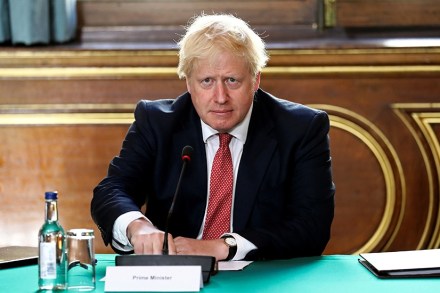
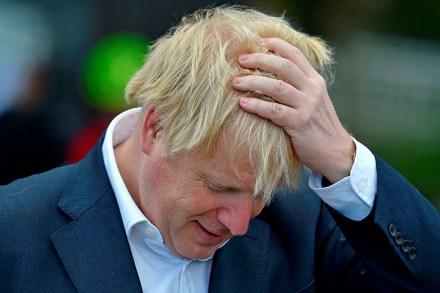
As the government struggled on Saturday with the question of whether to impose a quarantine on those returning from Spain, there was a hold-up: a key minister was unavailable. Transport Secretary Grant Shapps was on a holiday flight to Spain and hadn’t landed yet. When Shapps eventually made it on to the Zoom call from his holiday villa, one person who sat in on the meeting was surprised by the speed at which the quarantine decision was made. After being stung by accusations that the government moved too slowly in its initial handling of the pandemic, Boris Johnson now wants to show it is moving quickly.
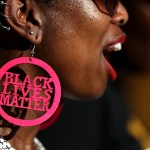
The brilliance of the ‘Black Lives Matter’ slogan

From our UK edition

Four years ago, I bought a ranch in Wyoming. Not that I was tired of New York, but I’m fascinated by the epic scale of this country, and I wanted to try something different. And different it is. The state of Wyoming is physically larger than the UK, but has much less than a hundredth of the UK’s population. I have to drive ten miles before I see a paved road. I stop there to pick up my mail, from a locked box on the shoulder. From there I have a choice of two supermarkets, one 40 miles north, the other 60 miles south. But distances are relative here. I told my friend C.J. Box, the great Wyoming writer, that I was moving, and where. ‘We’ll be neighbours,’ he said. ‘Really?’ I replied. I thought I must have misread the map.

Boomer and bust: Covid is fast-forwarding us into retirement

From our UK edition

It was on a foggy walk to Hell’s Mouth that the sea fret lifted and I looked down, down, down at sea smashing against rocks and yes, it felt like a sign. I was on a socially distanced hols — if we define ‘socially distanced’ as ‘a bunch of mainly metropolitan friends romping in north Cornwall’ — for my summer of 2020 epiphany, which was this. Of the dozen or so happy, shiny, busy fiftysomethings bodyboarding, yakking and stuffing down Kettle Chips in their wetsuits, only one had what a retired major in Tunbridge Wells might call a job — and that was the books editor of the Oldie.

On the ground in Manhattan after 9/11

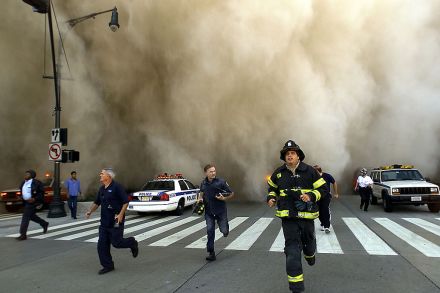
I joke, during this current lockdown, that I am glad I no longer take hallucinogens or mind alterers, but I’m serious. I don’t want to have to think too much about how the globe can pull itself back from this current economic pause, or what I would do if anyone I loved was dying and I couldn’t reach them, because of the new rules. A Taoist monk friend called it a ‘sacred pause’, and in so many ways she is right. Even though I know she was referring to more than wild nature having a rest, I wager it is noticeably nicer to be a bee or a fish right now, with a little more room to maneuver.

9/11 lockdown

My plans for a Covid inquiry

From our UK edition

The public inquiry into the government’s handling of the coronavirus crisis has already started. Not the official one, which won’t get under way until next year, but the unofficial ones. First out of the gate was the Sunday Times on 24 May, followed by the New Statesman and, last week, the Financial Times. In addition, there will be ‘inquiries’ by other newspapers and magazines, parliamentary select committees, television and radio programmes, think tanks and universities, scientific and medical journals. Few will be able to resist blaming the UK’s higher-than-average death toll on the government’s failure to lock down earlier.

Yard envy

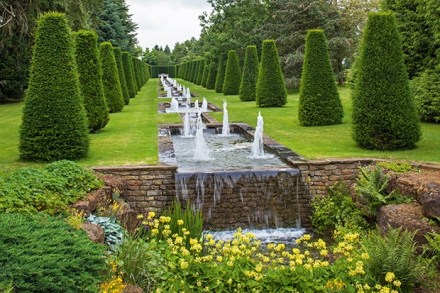
It is never easy to live next door to a retired Department of Agriculture employee. Quarantine has made it intolerable. I had always reassured the missus that our yard would look just like Mr Ray’s if I too spent all day at home. Coronavirus has exposed me as a liar. For four years I enjoyed my coffee and cigarette on the porch, digesting the New York Post’s reports of the calamities that had befallen the Mets in the previous 24 hours. Without baseball I spend my mornings staring out into the yard, reckoning with the fact that I am the New York Mets of landscaping. My wife has worked from home since 2011 and must have known all along. There’s a reason her office overlooks the front yard.

garden yard

Returning to what makes us happy: Brasserie Zedel reviewed

From our UK edition

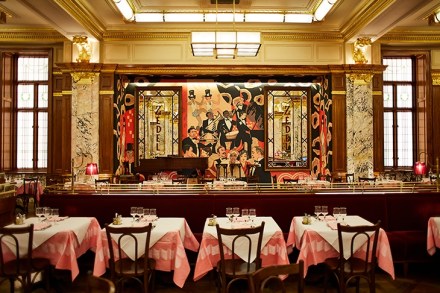
Brasserie Zédel is a grand salon under Piccadilly Circus and the only place I desired when lockdown (or lock-in) ceased and I was allowed to visit London. It is, for me — and everyone is different in their yearnings — everything a restaurant should be: very beautiful; well run (by Corbin & King of the Wolseley and the Delaunay); not insultingly priced; and, as it is windowless, pleasingly unreal: an enchanted basement, if you will — a depository for dreams. I arrive early on the first night, walking through silent London, resisting the urge to lie down in the road. This used to be the Regent Palace Hotel, the grand hotel of Soho. The restaurant was its dining room: Edwardiana at its most gilded and absurd.

James Graham’s small new drama is exquisite: BBC Four’s Unprecedented reviewed

From our UK edition

Let’s face it. Theatre via the internet is barely theatre. It takes a huge amount of creativity and inventiveness to make anything remotely like a theatrical drama in the digital sphere. The BBC’s Culture in Quarantine team have invited some talented writers and actors to try and crack it. Unprecedented begins with ‘Viral’, by James Graham, in which three 18-year-old lads enjoy a Zoom chat from their bedrooms. The craftsmanship in this small script is exquisite. The characters are united by a common purpose — creating a globally popular video clip — while each has to grapple with a personal crisis. One has a dying granny, one is coming to terms with his bisexuality, the third has a crush on his mate’s sister.

The politics of hair dye

From our UK edition

‘What are you going to put on my head to protect me?’ said the man outside the barber’s shop to the bemused looking barber. The builder boyfriend had been standing in the queue for a while and when he got to second in line, as the man in front was asked to step inside, he found himself delayed by a curious argument. ‘What do you mean?’ said the barber, who was wearing a visor, gloves and apron and was more than in accordance with the regulations. ‘I mean,’ said the man, who was one of those arch, self-satisfied types the builder boyfriend finds it all too tempting to make fun of, ‘I mean, what measures are you going to put in place around my head to protect me from Covid as you cut my hair, hmm?

Dear Mary: How can I help the host at a socially-distant dinner party?

From our UK edition

Q. As we attend socially distant events, we expect of our hosts a scrupulous accommodation of our preferences around physical interaction. What distinguishes a good guest right now is less clear For example, I know an offer to help clear the plates would be refused, and might even make other guests anxious about my getting too close. Yet remaining entirely static while the host works their magic around me does not feel right. So, Mary, how can I express my gratitude? — C.L., Cambridge A. Express the gratitude on arrival. Congratulate your host for having staged the much-needed social event in the first place ‘at a time when you, as host, effectively have to do double the work as none of the guests can help — for distancing reasons.

The missing link in the government’s lockdown easing

From our UK edition

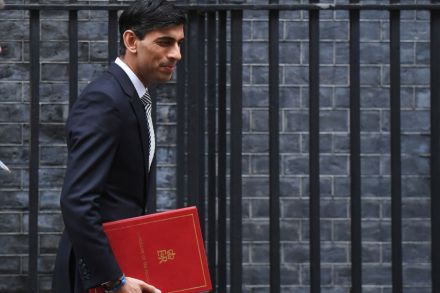
After Rishi Sunak's attempts to kickstart the economy on Wednesday, the government has announced plans to further unwind the lockdown. From this weekend, artists and musicians can perform live outside while outdoor pools will also be opened. As of Monday, beauticians, spas, tattooists, and tanning salons can reopen. Finally those looking to work off any lockdown pounds can celebrate the news that gyms, indoor pools and leisure centres will open on 25 July. As has become the new normal, each relaxation comes with new caveats on social distancing. The announcement suggests that, as things stand, the UK's roadmap out of lockdown is broadly going to plan. However, there are still missing parts.

SOS: Save our singers

From our UK edition

‘Musician’ is how I described myself to the nice Latvian lady interviewing me the other week for an ONS survey connected with the coronavirus, but that didn’t tell the government much. In economic terms, our profession embraces everyone from Sir Paul McCartney to the struggling garage band that may or may not be allowed back into your newly reopened pub. In terms of what we do, we divide into three overlapping categories — writers, administrators and performers, and our experience of pandemic and lockdown has been sharply different. I’m mainly a writer, and I guiltily admit that I have welcomed my first chance for years to work with minimal interruption on what I probably do best.

Will Zooming replace real-life socialising?

From our UK edition

‘Are you seriously telling me you would rather meet up on Zoom than in reality?’ I asked a friend as we got stuck into an argument about the future of our existence. ‘Well, it’s all we’ve got,’ he argued. No, it really isn’t. But how to explain to people who refuse to stop being locked down that lockdown is, to all intents and purposes, over? I get the distinct impression that a lot of people have so thoroughly enjoyed sitting on their backsides doing nothing — sorry, I mean finding themselves and getting in touch with their inner child and being close to nature — that they don’t want it to end, ever.

The fatal mistakes which led to lockdown

From our UK edition

Over the past few weeks, my sense of the surreal has been increasing. At a time when rational interpretation of the Covid data indicates that we should be getting back to normal, we instead see an elaboration of arbitrary responses. These are invariably explained as being ‘guided by science’. In fact, they are doing something rather different: being guided by models, bad data and subjective opinion. Some of those claiming to be ‘following the science’ seem not to understand the meaning of the word. At the outset, we were told the virus was so pernicious that it could, if not confronted, claim half a million lives in the UK alone. Its fatality rate was estimated by the World Health Organisation at 3.4 per cent. Then from various sources, we heard 0.

Anatomy of a fiasco: how Britain’s pandemic defences failed

From our UK edition

In October, a panel of 21 experts from across the world gathered for the first of what promised to be a series of reports assessing readiness for pandemics. ‘Infectious diseases know no borders,’ warned the Global Health Security Index. ‘So all countries must prioritise and exercise the capabilities required to prevent, detect and rapidly respond to public health emergencies.’ Every country was called to be transparent about its capabilities ‘to assure neighbours it can stop an outbreak from becoming an international catastrophe’. Two countries were held up as the best examples: Britain and the United States. If a league table were drawn up of countries that most failed to contain Covid deaths, the US and the UK would be pretty near the top.

Why Rebecca Long-Bailey had to go

From our UK edition

Do you remember where you were when the BBC showed a rerun of Bowie’s Glastonbury set? When we ask each other that in future, the answer is always going to be: ‘At home, recovering from a day of Zoom calls.’ It’s 100 days since lockdown and as we slowly emerge it’s hard to keep a sense of proportion about the events in between. I remember pricking my finger for a trial antibody test; I remember my delight at discovering that an old-time cockney butcher still exists on a nearby council estate; I remember the absolute stillness of the air as a sparrowhawk circled over south London. Best to fix these memories in writing now, because the cryogenic social frost is well and truly melting. I’m on a public webinar with Katja Kipping and Jagmeet Singh.

If Boris wants a New Deal he needs to end the lockdown

From our UK edition

The invocation of Franklin D. Roosevelt by Boris Johnson is welcome, but the conditions that greeted Roosevelt when he was inaugurated US president in 1933 and those in the UK today are very distinguishable. Roosevelt inherited a collapsed financial system; the stock and commodity exchanges and almost all of the banks in the country had been closed for up to two weeks. Almost a third of the country was unemployed (the states compiled the figures and they were not entirely reliable), and there was no direct relief for the jobless. For the first time since the Civil War there were machine-guns at the corners of the great federal buildings in Washington on Inauguration Day. The incoming president had a practically unlimited mandate to take drastic measures to deal with the crisis.

The pandemic’s invisible victims

From our UK edition

I sometimes pick up some food at Tesco for an 86-year-old pensioner who lives a few streets over. At the weekend, I brought him milk and cornflakes. He opened his front door; I put the bags down, retreated the required two metres, but when I looked up he was in tears. ‘I’m sorry,’ he said, quietly. ‘I’m just so lonely at the moment.’ Should I have moved closer, put my arm around him? At the moment the risk of passing on the virus is low in London. I’ve had the bug (I think) and I used hand gel after leaving the supermarket. It’s been said of the recent protests that distancing is irrelevant because racism is a deadlier epidemic than Covid. If that’s true of racism, isn’t it also true of loneliness in the old?

The bluff and bluster of Boris’s bland boy Brexiteers

From our UK edition

From the balcony where I take my daily exercise there is a view of the commercial centre of London that is so susceptible to changes of the light you feel you are in a different city every day. When the dying sun is reflected in its glass towers, the city looks like Las Vegas burning. Under a dark sky it could be Pittsburgh. The other day was so louring that I saw Moscow. ‘I’m looking at the Kremlin,’ I shouted in to my wife. She’s been worrying about me. She thinks it’s time I relaxed the promise I made myself not to go out until the virus has gone and the world is more to my liking. ‘You’ll have a long wait,’ she says. She knows I’m being ironical.