Lockdown

Mark Drakeford has made Wales a laughing stock

From our UK edition

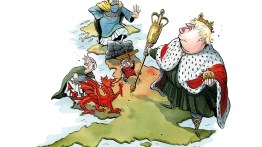
Imagine a country where you’re allowed to buy vodka and cigarettes but not baby clothes, because they are ‘non-essential’. A place where supermarkets can sell you socks but, mysteriously, neither tights nor lightbulbs. All right, you may plunge to your death down a dimly lit staircase in Pontarddulais, but at least you didn’t get that terrible Covid. Often the butt of ignorant jokes, my homeland Wales is now quite rightly a laughing stock. Supermarkets have been allowed to remain open during the 17-day ‘firebreak’ — or Llockdown as it could more honestly be described.

Finally a lockdown drama that will endure: James Graham’s Bubble reviewed

From our UK edition

Theatres can open if they want to. That’s the current position. The only factor keeping a playhouse dark is a lack of guts or imagination on the part of its leadership. A small pub in Vauxhall, The Eagle, is mounting new plays in its garden space to raise everyone’s morale. Punters must wear masks and sit in bubbles. ‘We’re adhering to the government guidelines,’ announced the artistic director before the start, ‘which are changing all the time.’ The show is a feelgood musical about drifters and dreamers in their twenties trying to make it in New York. Waverley wants to be an actress but her plans are blown off course by a tempting job offer from a law firm. What to do?

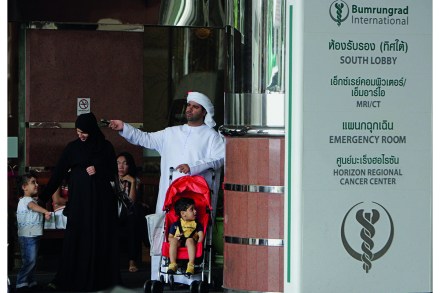
Killing time in Thailand

Thailand is famous for many things, some of which are unmentionable in these pages. It has long been considered the perfect location for ‘winter sun’, if you are the type of person to whom a piña colada on a white sandy beach appeals. In recent years, it has become a hotspot for hypochondriacs requiring non-essential medical care and hysterics after a nip-and-tuck (pre-COVID, the health-tourism industry was thought to be growing at 14 percent a year). Home to the orchid, pad thai, the Monkey Buffet festival (what it says on the tin), the Siamese cat and the bumblebee bat, Thailand’s gentle and healing culture has earned it a reputation as a cleaner, greener land.

thailand
scott atlas

Atlas shrugs

‘Trust the experts’ is the battle cry of America’s elitists. After President Trump’s shock election in 2016 showed that Americans are sick of hearing from politicians, the politicized classes adopted experts as their proxy for power. Climate change ‘experts’ justify AOC’s radical Green New Deal with prophecies of planetary extinction. Foreign policy ‘experts’ claim America will destabilize the Middle East if, as Trump wants, we withdraw troops from Syria and Afghanistan. Medical ‘experts’ are wheeled out to justify increasing control over the lives of everyday Americans through draconian lockdowns, mask mandates and stringent travel restrictions.

A circuit breaker would break the economy

From our UK edition

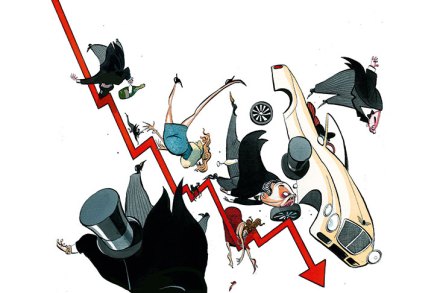
More jobs will be lost in the long run. Businesses will go under. And government debt will soar even higher. Labour’s Shadow Chancellor Anneliese Dodds is pushing the argument that a circuit breaker — that is a short, sharp national lockdown — will be cheaper in the long run. It will keep the virus under control, and therefore enable the economy to bounce back quicker. Channelling her inner Gordon Brown, she has even come up with a very precise figure for that. Apparently, not having a circuit breaker will cost us £110 billion. But hold on. Even leaving aside the point that precise estimates should always make us suspicious — is it really £110 billion, rather £107 billion, or £113 billion? — that is crazy.

Chess vs football: the vital distinction in lockdown strategy

From our UK edition

Nearly a month ago, I called for an urgent 24-day full national lockdown, arguing that the restrictions were unlikely to make a significant difference in reducing transmission. If we had acted strongly and decisively then, and implemented a circuit-breaker lockdown — as we now know that the government's scientific advisory group Sage also wanted — we would be in a much stronger position today. Many readers considered it a controversial and unwise strategy. The government agreed, declining Sage's advice and instead announcing the eventual rollout of a three-tier system covering areas of ‘medium’, ‘high’ and ‘very high’ risk, each with their own restrictions.

Angry Burnham takes on No. 10

From our UK edition

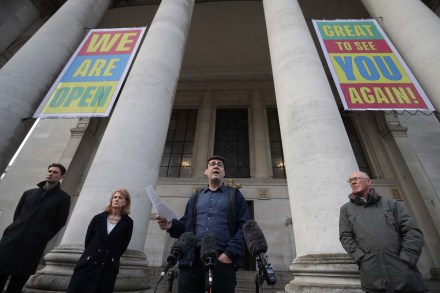
Keir Starmer has made life difficult for Boris Johnson this week with his demand for a circuit-breaker lockdown. But the Labour leader’s colleague Andy Burnham is currently presenting a far greater threat to the Prime Minister. On Thursday, the Mayor of Greater Manchester gave a furious speech in which he accused the government of being 'willing to sacrifice jobs here to save them elsewhere' while treating his area like 'canaries in the coalmine for an experimental regional lockdown strategy'. The government, he argued, was treating the North with 'contempt' by telling regional leaders there wasn't enough money to protect jobs during the new restrictions while spending large sums on consultants for the test and trace programme.

Portrait of the week: new alerts, birthday honours and fires on Kilimanjaro

From our UK edition

Home ‘The weeks and months ahead will continue to be difficult and will test the mettle of this country,’ Boris Johnson, the Prime Minister, said in the Commons. In a complicated new system meant to be a simplification, English regions were put into one of three tiers of alert level: 1, medium; 2, high; or 3, very high, according to the proportion of coronavirus cases there. In tier 3, further local restrictions could be added. Liverpool was selected for tier 3, in which betting shops and libraries would close and pubs too, unless they sold main meals. Sir Keir Starmer, the leader of the opposition, called for a two- or three-week circuit-breaker national lockdown, with closure of pubs and restaurants, but not of schools.

How new Covid restrictions are stalling the economy

From our UK edition

The theory behind a V-shaped recovery relied on the assumption that the economy would open up almost as quickly as it shut down. This did not happen. The UK moved at a much slower pace than its European counterparts exiting stringent lockdown measures. And already restrictions are being implemented again. August's GDP figures were surprisingly dismal, and now all future monthly updates for economic growth will be affected by a longer list of restrictions that are bound to impact recovery. As a result, scenarios for the UK’s economic recovery are being revised to reflect this. In the last day, we’ve had two updates: one from the IFS’s Green Budget (in association with Citi), the other from Capital Economics.

Chris Whitty: tier three alone will not be enough

From our UK edition

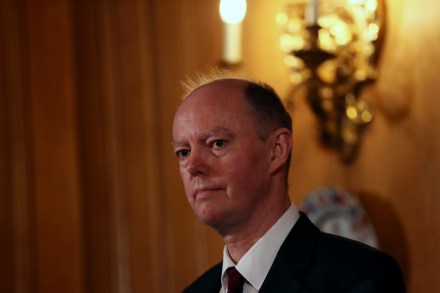
Chris Whitty made clear at tonight’s press conference with the Prime Minister and the Chancellor that he doesn’t think that the tier three restrictions are enough to get on top of the virus in the worst hit places. He was explicit that local councils will need to go even further in terms of closures in some places. Later in the press conference he said that the government ‘knew full lockdown works’ but it was also aware of the societal and economic harm it does, and the government rightly wants to keep schools open. Taken together, the answers strongly implied that Whitty thinks that in Covid hotspots everything apart from schools should be under consideration for being closed. https://www.youtube.com/watch?

lockdown world health organization

The incredible vanishing World Health Organization

The lockdown is dead...long live the lockdown?In an interview last Thursday on Spectator TV, WHO special envoy David Nabarro warned seven months too late that the ubiquitous global response to the coronavirus pandemic might be a bit of an oopsie-daisy: https://twitter.com/spectator/status/1314573157827858434 ‘We in the World Health Organization do not advocate lockdowns as the primary means of control of this virus,' Nabarro said. ‘Lockdowns just have one consequence that you must never ever belittle, and that is making poor people an awful lot poorer... It seems that we may well have a doubling of world poverty by next year. We may well have at least a doubling of child malnutrition.’Now, there was nothing astonishing about Dr Nabarro’s claims.

What happens when a US president dies?

From our UK edition

Vice squad Donald Trump catching Covid-19 has concentrated minds on what happens if a US president dies in office. Normally, the vice-president will take over — which is why it matters who is on the ballot. In 1972, however, Americans had no idea who would end up president by the end of what should have been Richard Nixon’s second term. Nixon’s vice-president was Spiro Agnew, but he was forced to resign after pleading ‘no contest’ to charges of tax evasion. Nixon then appointed House leader Gerald Ford as vice-president. Ford became president when Nixon himself resigned before he was impeached over the Watergate scandal in August 1974. Ford lost to Jimmy Carter in the 1976 election and so was never elected by the American people in a national election.

East Anglia is the place for birds

From our UK edition

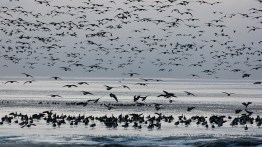
I first visited Orford in 1970, at peak Cold War when this stretch of the East Anglian coast was one of the most dangerous places to be, so that for three months of each winter living in Aldeburgh, I was perfectly positioned for maximum danger between Orford Ness with its secret atomic weapon testing, and Sizewell’s nuclear power station. I was too busy writing books to worry but Orford, bristling with military security and terrifying ‘Keep out’ notices, gave me nightmares. Now it is quiet save for some magnificent gales and rain battering the windows of this house overlooking the water. I am in mid-book as usual, and Orford Ness is an innocent nature reserve, with some access, though one area is still worryingly out of bounds.

All these lockdown puppies come at a price

From our UK edition

‘Book H in for a colonoscopy at a private clinic,’ begins one entry in Sasha Swire’s enjoyable diaries about her husband (which she should have called What Hugo Did During Term-Time.) She accompanies him to his appointment — whether for juicy material or moral support, we are not told — and relates how the bored consultant bangs on in detail, not about her hubby’s bum, but about the time his pointer swallowed a budgie. ‘As for their fees, simply extortionate!’ the expensive consultant whines in conclusion of a ‘violent diatribe’ against our world-beating veterinarian profession. At this flagrant pot and kettling, Lady Swire flares up: ‘It’s a racket — not unlike your game.

Divided nation: will Covid rules tear the country apart?

From our UK edition

‘From this evening, I must give the British people a very simple instruction — you must stay at home,’ Boris Johnson declared on 23 March. At the beginning of the pandemic, when infection levels first began to rise, the country was all in it together. The prescription was a national one, and the Prime Minister could speak to the nation as one. Though infection levels have begun to surge again, the restrictions are now specific and local. The PM can no longer address the country as a whole, and this poses a problem for him. Last time, at least, there could be no claims that the Tories were favouring one particular area at the expense of the rest.

Are politicians abandoning the ‘circuit break’?

From our UK edition

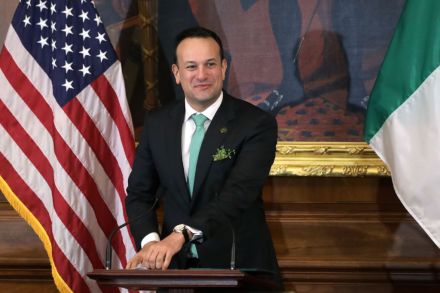
How popular are circuit breakers? The latest Covid-19 news from Ireland would suggest support varies dramatically between the scientists and politicians. Speaking on RTE, Leo Varadkar revealed the National Public Health Emergency Team had recommended moving to ‘level 5’, which would have amounted to a ‘circuit break’ and another shutdown of the Irish economy. Pushing back, Varadkar told the national broadcaster that outstanding questions about the effectiveness of a temporary shutdown could not be answered to his satisfaction: ‘We didn’t feel it had been thought through properly. For example, we asked for some comfort that four weeks might be enough… They weren’t able to give us that comfort.

california

California won’t let a good crisis go to waste

Oakland, California In April, when spring fever ran high and California saw protests against the unending lockdowns, Gov. Gavin Newsom promised that ‘politics and protests will not drive our decision making. Science, data, and public health will drive our decision making. #StayHomeSaveLives.’ As it turns out, the anti-lockdown movement was right to be suspicious of tyranny. Not only are the decisions about opening up — or, more accurately, not opening up — political, but local and state governments are intent on taking the crisis as an opportunity to alter our way of life forever. Newsom has now tied reopening to ‘racial equity’, through reduction of COVID rates in black, Hispanic and Pacific Islander communities.

Inside the anti-lockdown rally

From our UK edition

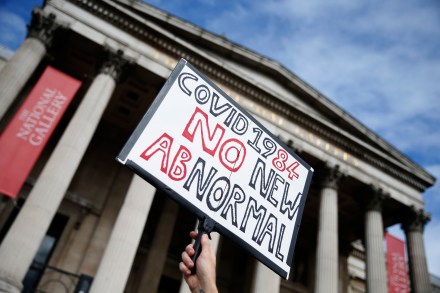
The anti-lockdown rally at Trafalgar Square was organised by Save Our Rights UK. This embryonic organisation is so new that its website only has a single page. And it seems inexperienced at staging large demos. The amplification on a windy day needed to be cranked up to the max but the sound was inaudible from many parts of the square. Dozens of protesters were parading hand-made placards – which is standard practice at a rally – but the slogans were unusually aphoristic and politically astute: ‘Quarantine is locking up the sick. Despotism is locking up the healthy.’ ‘Compliance with stupidity is consent to tyranny.’ ‘When dictatorship becomes law, resistance becomes duty.

Should a Good Citizen snitch on neighbours?

From our UK edition

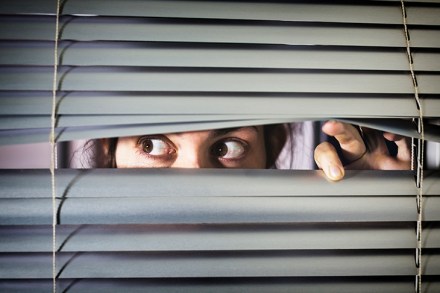
If neighbours break whatever new Covid rules might soon emerge, it has been suggested that the Good Citizen might snitch on them to the authorities. Though not perhaps our cup of tea, it was certainly the ancient Greeks’. The Athenian lawgiver Solon (594 bc) was responsible. In the absence of a police force or a state prosecutor, Solon put the responsibility for bringing criminals to justice into the hands of citizens. They brought their complaints before legal authorities who established procedures for bringing them to court. This was all very well when litigants had been personally harmed, but it raised a problem when the state’s, rather than the individual’s, interests were concerned (e.g. accusations of treason). Who brought the case then?

The true cost of coronavirus on our economy

From our UK edition

When future historians look back on 21st-century mortality statistics, they will struggle to find anything out of the ordinary in Britain in 2020. When they look at the economic data they could be forgiven for thinking we were hit by an asteroid. The Office for Budget Responsibility predicts a fall in GDP of around 12 per cent in 2020, the equivalent of having the 2008-09 recession twice in one year. The second quarter saw GDP fall by 20.4 per cent, breaking the record set during the Great Frost of 1709. The economy rallied by 6.6 per cent in July — which sounds impressive until you consider that it only took the economy back to where it was in the spring of 2013.