Lockdown

What we need is social media distancing

Nearly three months into lockdown, 40 million Americans were unemployed. Kids lost out on three months of schooling. Businesses shuttered, many never to open again. Mental health suffered. People lost their homes. Tens of thousands died alone in hospitals, family members were prevented from holding the hands of their loved ones in their final days, and in many cases they weren’t allowed to bury them or hold a funeral. Parents struggled to balance distance learning and work. Teachers worried that their most vulnerable students weren’t logging in to class. People couldn’t receive medical treatment or attend birthdays and graduations. But humans are creative, resilient creatures, and it didn’t take long before we adjusted to living online.
distancing

Where are the deaths?

The coronavirus doomsayers could not even wait until the fall for the apocalyptic announcements of the dreaded second wave. Because the red states recklessly loosened their lockdowns, we are now told, the US is seeing a dangerous spike in coronavirus cases. ‘EXPERTS SKETCH GLOOMY PICTURE OF VIRUS SPREAD: FAUCI TELLS OF “DISTURBING” WAVE, WITH A VACCINE MONTHS AWAY,’ read the front-page lead headline in the New York Times on Wednesday. ‘VIRUS SPREAD AKIN TO “FOREST FIRE”’ read another front page headline in the Los Angeles Times on Monday, quoting Michael Osterholm, one of the media’s favorite public health experts.

deaths

Portrait of the week: Lockdown eases, debt rises and three killed in Reading

From our UK edition

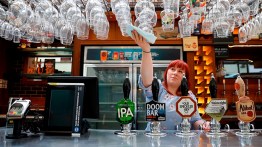
Home Pubs in England would be allowed to reopen for table service from 4 July, Boris Johnson, the Prime Minister, told the Commons, his words being met by an exclamation from one MP of ‘Hallelujah’. But drinkers would be expected to supply names and addresses before being served. Restaurants, museums, galleries, cinemas, hotels and hairdressers could also reopen, but not bowling alleys. Churches could reopen for services, including weddings, with a limit of 30 people, provided no one sang. The ‘two-metre rule’ was reduced by way of advice to one metre, to be combined with mitigating measures, such as facing in different directions. The government discontinued its daily televised briefings.

Britain is reopening. Now it needs rebuilding

From our UK edition

The Prime Minister’s announcement that pubs, restaurants and many other facilities will be able to re-open on 4 July amounts to a significant and welcome easing of lockdown. As this magazine hoped, the Prime Minister has taken back control from the scientific advisers — who have been unable to resolve their lively disagreements — and put his faith in the British public. This includes moving towards a voluntary system, rather than asking police to enforce edicts. A recent study found only three countries have been more reluctant to leave lockdown than Britain: Nicaragua, Algeria and iran. It's a sad state of affairs - but reflects the failures of recent months.

Who watches the broadcast watchdog?

From our UK edition

At the beginning of April, I became so frustrated by the supine coverage of the government’s response to the coronavirus crisis, particularly on radio and television, that I decided to start a blog called Lockdown Sceptics. The idea was to create a platform for people who wanted to challenge the official narrative. In addition to publishing original material by Covid dissidents, many of them eminent scientists, I include links to critical papers and articles, and write daily updates commenting on the news. One of the things that puzzles the contributors is why the coverage on broadcast media has been so hopelessly one-sided. The BBC, in particular, seems to have become a propaganda arm of the state.

The private school advantage has never been greater than in lockdown

From our UK edition

When Boris Johnson announced the easing of lockdown this week, there was nothing for schools. Pubs, yes. Theme parks, even. But the education of children? There is no great rush for that, it seems. First things first. I have a 14-year-old daughter at a state grammar and like so many parents, I am in despair. The two-metre rule, which had presented such problems for schools, is finally being relaxed. But far from cheering the move as a crucial step towards getting children into the classroom, the teaching unions are still cavilling — advising headteachers to ensure they have contingency plans for bringing only half of pupils back, on a rotating basis. The Prime Minister has said all pupils should return in September.

Two bottles to help eradicate cabin fever

From our UK edition

The virus is in retreat, the lock-down is crumbling, the sherbet dispensaries will shortly reopen and there is a second spike of summer. Every prospect pleases, and only demonstrating man is vile. In London, we have been subjected to the most ridiculous public protests since the Gordon riots or the agitation in favour of Queen Caroline. During the latter follies, Wellington, riding back to Stratfield Saye, found his way blocked by a crowd of yokels who declared that they would not let him pass until he had toasted the Queen. ‘Very well, sirs, if you will have it so, God bless Queen Caroline and may all your wives be like her.’ He then spurred away, leaving open mouths in his wake. In recent weeks, it has been less about open mouths, more a matter of empty minds.

Tinkering with VAT won’t make us trust the government

From our UK edition

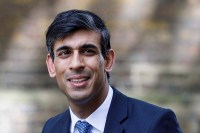
Should Chancellor Rishi Sunak cut VAT as an emergency stimulus to the consumer economy? When Labour’s Alistair Darling made a 2.5 per cent £12 billion cut after the 2008 crash, I called it ‘an unconvincing and expensive gambit’, on the basis that shoppers would barely notice and that ‘far more significant will be the general level of confidence as it is affected by business failures and job losses… and the general grimness of global economic news’. The same applies today only more so, given that inflation is dormant, households’ pent-up spending power has in many cases been boosted by lockdown and the top VAT-cut winner would likely be Amazon. By all means relax Sunday trading laws and restrictions on outdoor food and drink service.

The abominable selfishness of the Surrey middle classes

From our UK edition

‘Have you met the man who keeps his horses in this field?’ said one silver-haired lady to the other, as the pair stood by the gate of the builder boyfriend’s smallholding. ‘No, but I hear he’s not very nice.’ ‘He’s an oaf. He won’t even let us walk our dogs through his field.’ This vignette was captured on one of the game cameras we have dotted around the fields where we keep our horses. We’ve captured thieves in the act of loading up feed, fly-tippers in the process of dumping rubbish and we’ve now found out what the locals think of us. The BB was flicking through footage when he came across the two well-dressed ladies having a chinwag on the footpath and decided, on a whim, to play the video.

Which former prime minister earns the most for corporate speeches?

From our UK edition

Voyage into history How did the Labour government respond to the arrival of the Empire Windrush on 22 June 1948? While the ship was at sea, Prime Minister Clement Attlee tried but failed to have it diverted to East Africa so that its passengers could work on the groundnut scheme. He later wrote to concerned MPs that it was ‘a great mistake to regard these people as undesirable or unemployables. The majority of them are honest workers, who can make a genuine contribution to our labour difficulties at the present time.

Royal Ascot was a triumph – even without the cheers and the hats

From our UK edition

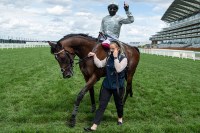
Royal Ascot it wasn’t: for the first time in her 68-year reign, thanks to Covid-19, the Queen was not there. Nor were the owners, the crowds, the hats or the morning suits. But just as the Cheltenham Festival gave us the last great sporting spectacle before lockdown, so Ascot celebrated the behind-closed-doors return of sport with five days of supreme skill and drama. As the no-nonsense Hayley Turner put it after a 33-1 victory: ‘It’s still an Ascot winner. Still the same race, the same grade of horses. It’s just as hard to ride winners whether anyone is here or not.’ The smooth Ascot operation provided a masked-up, biosecure environment in the open air with never a slip and it has done all sport a favour.

Britain must begin its recovery – before more damage is done

From our UK edition

The discovery in Britain that a £5 steroid, dexamethasone, can be effective in treating Covid marks a potential breakthrough in our understanding of the virus. Much remains to be learned about the wider potential of the drug but the claims made about its success are striking: that it reduces deaths by a third in patients on ventilators and by a fifth in patients receiving oxygen only. It has not been shown to benefit Covid patients who do not require oxygen. But this can still, in a global pandemic, mean thousands of lives saved. There are two further points to be made. With Covid-19, there is a better chance of finding a treatment for the virus than of finding a vaccine.

We are living through a frenzy of conformity

From our UK edition

Reality seems thinner these days. As I walk along the high street, passers-by drift apart as though afraid of crossing auras. Three months of lockdown has made this repulsion of human contact a matter of instinct. I can’t help but see this tendency reflected in the escalating intolerance and hostility on social media. So at the start of the week I decide to spend a few days away from Twitter. It’s not the ideal forum for civilised debate at the best of times, but even some of those I respect are now behaving like poorly socialised children who’ve just learnt some flashy new expletives. J.K. Rowling is bombarded for holding views about biological sex differences that would have been considered self-evident only a decade ago.

Made to measure: where did the metre come from?

From our UK edition

Made to measure The government started reviewing whether we should stay two metres apart while social distancing or whether one metre would do. What is a metre? — Since 1960 it has been defined as the distance travelled by light in a vacuum in 1/299,792,458th of a second. — But it was originally defined by the post-revolution French government as one ten-millionth of the distance between the Equator and the North Pole, on a meridian through Paris. — The signing of the Metre Convention on 20 May 1875 by representatives of 17 nations officially established the metre as an international unit of measurement. — If everyone in Britain joined the queue for Primark it would go 1.6 times round the Earth with social distancing at one metre, and 3.

School’s out: the true cost of classroom closures

From our UK edition

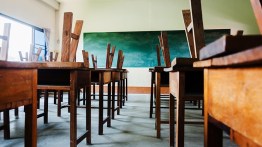
It’s Monday at 9 a.m. and secondary schools in England have just re-opened their gates to students in Years 10 and 12. I have been looking forward to this moment for 13 long weeks, since that frightening afternoon in March when my colleagues and I gathered around a computer in the staff room and saw a healthier-looking Boris Johnson declare he was shutting schools. But today I’m not at the comprehensive in Hackney where I teach economics welcoming back my students with a rousing lesson on the financial devastation caused by the crisis. I’m surplus to requirements and am still marooned at home.

In lockdown, green privilege is real

From our UK edition

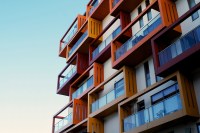
Long ago, a friend warned me I was living in a J.G. Ballard novel, but only in lockdown has the plot of High-Rise started to unfurl on the banks of the Thames. Developers are forced to build a certain number of homes for Londoners who could never otherwise afford anything, and height comes at a premium. So we’re stuck on the lower floors, in small, airless flats, overlooking land we’re not allowed to stray on to, as the rich exist in splendid corona-isolation above, peer down from their balconies and call security — to persecute us by making hints and suggestions. Ten days ago, a letter was stuffed underneath my door.

In defense of drinking in the street

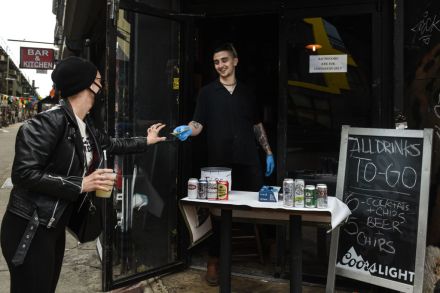
A tiki bar opened across the street from my Upper West Side office shortly before all social life in Manhattan ground to a halt due to the pandemic. I visited once, had two to three of their specialty drinks and, despite a mild headache the next morning, could tell the place was going to be a hit. Then the shutdown came. Businesses of all stripes pulled and padlocked their security grilles. Helicopters and airplanes disappeared from the skies. Traffic, except for wailing northbound ambulances, all but disappeared. Genuine fear owned the spring.

lockdown drinking

You can’t rally. We can riot

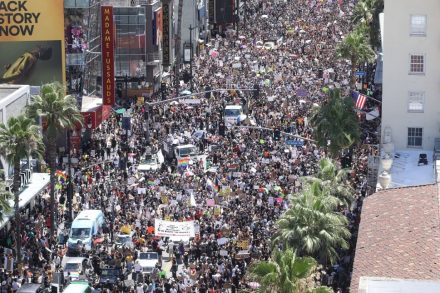
Are you ready for the second blame wave? As the country braces itself for an inevitable repeat surge in COVID-19 infections, we’re told red-state governors 'opened too soon'. The next outbreak, we can be sure, will be something to do with the fact the President decided to resume his political rallies, approximately two weeks from now. What nobody says is that individual or social behavior is the cause. It can’t possibly be the thousands of people closely together marching down city streets yelling and chanting, some with masks, some not. The guidelines fell completely by the wayside for the Democrats and much of network cable news. In the middle of May, DC Mayor Muriel Bowser extended her lockdown order through to the June 8.

protest rally covid democrats