Lockdown

‘Inessential’ workers have helped keep the country afloat

From our UK edition

A common sight across Britain these past ten months has been those rainbow flags fluttering in urban and village streets: ‘Thank you NHS.’ Many add an afterthought: ‘And other key workers.’ And who would dispute either sentiment? To these expressions of gratitude are added ministers’ and their medical advisers’ thanks to everyone who just ‘stays home’. We are saving granny. We are, if only by inaction, doing our bit in a great national effort, pulling together with the team. We join the ranks of the public-spirited, the selfless, the just. And again, who would cavil? Prudence, caution, carefulness… in a pandemic these are needed qualities.

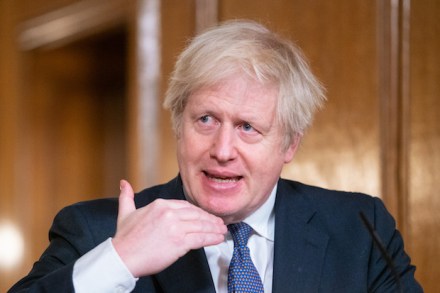
Boris confirms schools will not reopen before March

From our UK edition

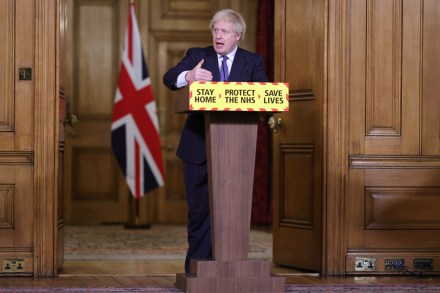
England's national lockdown is set to run on until at least March. Speaking in the Commons chamber this afternoon, Boris Johnson confirmed that the return of pupils to the classroom would be the first thing to be eased – and this would not happen in February as he had previously hoped. Addressing the House, Johnson said 'it will not be possible' to reopen schools in England after the half-term break next month. However, he remained hopeful that so long as the UK's vaccination programme remained on track, the return of pupils to the classroom would be able to begin from Monday 8 March. Given that No. 10 have no plans to relax any restrictions prior to schools reopening, this means the lockdown is here for the foreseeable.

PMQs: Starmer’s opposition is strangely muted

From our UK edition

Boris Johnson had a very difficult backdrop to today's Prime Minister's Questions, having marked 100,000 deaths in the coronavirus pandemic last night. But, strangely, he didn't have a particularly difficult session in the Commons. Sir Keir Starmer did, as you might expect, lead on the death toll, asking the Prime Minister repeatedly why he thought the UK had such a high death rate, and why he wouldn't learn the lessons from the pandemic now so that the government didn't repeat its mistakes. Johnson was able to deal with this reasonably easily, arguing that while he did think there would be a time to learn the lessons of what happened, that time wasn't now. The public, he said, want politicians to come together and focus on rolling out the vaccine and protecting the health service.

Inside the Dutch anti-lockdown riots

From our UK edition

Images of Dutch rioters throwing stones and fireworks at police, looting shops and facing water cannon have been published all around the world. This is not the typical image of a nation that likes to think of itself as nuchter and normaal — sober and sensible — in contrast to other parts of Europe, it sees as impulsive or, even worse, undemocratic.  But in the last four nights, after the Netherlands imposed a 9 p.m. curfew to combat the spread of coronavirus, elements of the country appear to have gone entirely off-script.

When will unemployment peak?

From our UK edition

Unemployment continues to rise. Today’s update from the Office for National Statistics estimates that unemployment in the three months to November hit 5 per cent — that’s an estimated 1.7 million people out of work, a 0.6 per cent rise on the previous quarter.    Not every figure is as positive as the surface data would suggest The gradual climb suggests that the furlough scheme continues to hold off mass redundancies and provides further evidence that England’s second national lockdown didn’t hit as hard as the first. But the unemployment rate is set to worsen before it improves, with more optimistic forecasts estimating a peak of around 6 per cent later this year, while others (including the Bank of England) estimate around 8 per cent.

Captain Hindsight strikes again

From our UK edition

A third stint in self-isolation and some extra time alone doesn't seem to have given Keir Starmer time to reflect on his opposition strategy. Last night Labour called on the government to prioritise the reopening of schools when the time comes to lift lockdown restrictions.  https://twitter.com/labourpress/status/1353832519913906177?ref_src=twsrc%5Etfw Clearly a good idea — so good in fact that it's already government policy. Boris Johnson has spent the best part of a year making clear that he will prioritise face-to-face education above almost all other social activity, telling the Commons three weeks ago that schools would be the first thing to reopen.

Lockdown learning is no match for the joys of the classroom

From our UK edition

Schools in January are usually full of life, but not this year. At the start of my day, I walk alone down silent corridors to an empty classroom. There are no children lined up outside; the bustle of school life is gone and the only voice I hear is my own. Welcome to lock down learning where my pupils are miles away at the far end of fibre optic cables. Teachers like me are doing our best to make it work but, although we are not teaching blind, our vision is so restricted that we might as well be looking at our classes down long cardboard tubes. We never did have eyes in the back of our head, but we had peripheral vision and we are missing it. It was from the corners of our eyes that we noticed the children who were confused or unmotivated or upset.

Matt Hancock’s tests for lifting lockdown

From our UK edition

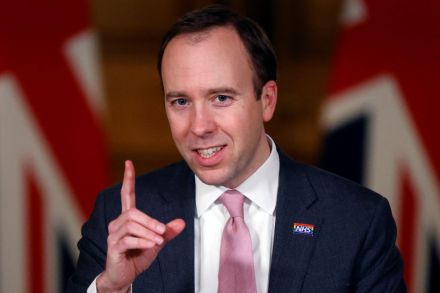
As the government comes under pressure from Tory MPs to provide a timeline for pupils returning to school, the Health Secretary remained tight-lipped in the Monday government press conference on when lockdown will be eased. Asked whether any guidance could be offered on the issue, Matt Hancock cited the number of people admitted to hospital – twice as many as in the first peak – and on ventilators to show there is a long road ahead. The Health Secretary said that the majority of people understand why it is difficult to put a timeline on ending lockdown. He did though point to the factors that would decide when it could be lifted: the death rate, the number of hospitalisations, the effect of new variants and the success of the vaccine rollout.

What role do schools play in the spread of Covid-19?

From our UK edition

Schools were the last institutions to close and can be expected to be the first to reopen. But just how big a part do schools play in the spread of Covid-19? The European Centre for Disease Prevention and Control has published a review of the evidence from 17 countries and concluded that the reopening of schools cannot be blamed for a resurgence in the virus. Most countries closed their schools during the first wave of the epidemic in spring 2020. From 15 April, Denmark reopened schools – with social distancing – for 2 to 12 year olds. There was no increase in cases following this reopening, according to the ECDC.

Could Britain close its borders once lockdown ends?

From our UK edition

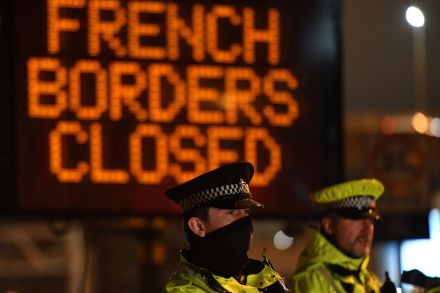
The government’s most important economic policy is its vaccination programme, I say in the magazine this week. The speed at which people are immunised will determine when — and how quickly — the economy can reopen. ‘The advantage the vaccine has given us is so huge that we have to protect that’ But even when the so-called ‘non-pharmaceutical interventions’ are lifted domestically, there will likely continue to be restrictions on those entering from abroad. The view is that testing and tighter procedures at the border will be needed to protect the UK from the danger of any vaccine-resistant strain.

What’s a squashed dog between neighbours?

From our UK edition

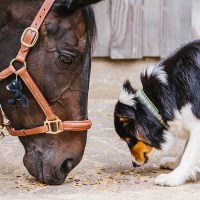
Not long after he took on a smallholding for his cobs, the builder boyfriend found a couple walking through his fields with their dog. They had appeared out of nowhere, apparently by squeezing through a small hole in the hedge with a neighbouring property. As there is no footpath through his land, the BB was perplexed. ‘Can I help you?’ he called. But the smartly dressed couple waved him away. ‘No, thank you!’ the man called back politely enough, as he and his wife walked on with their spaniel, which darted this way and that, soon entangling itself with Jimmy and Duey, the builder b’s black and white cobs.

Vaccination is the only way out of this catastrophe

From our UK edition

Monday started with me opening my bedroom windows to let what little light there is come through, only to find two workmen on my balcony looking surprised that anyone lived in the building. Since my shooing gestures weren’t understood, I had to step outside, putting myself inside the regulatory two metres, to tell them to ‘get off my land’. As they weren’t even wearing masks, I now am worried they could have been carrying Covid. My landlord is carrying out external redecorations. Is this truly ‘essential’ work? I asked.

It’s time to vaccinate teachers – and start planning a great school reopening

From our UK edition

At the start of the Covid-19 crisis, Chris Whitty often made the point that a pandemic kills in two ways: directly and indirectly. Locking down society also costs lives — and stymies life chances. Ever since the government moved to embrace lockdown, neither ministers nor the chief medical officer have talked much about the collateral damage it inflicts. This is odd, because it is perfectly defensible to say that lockdown is the least damaging course of action while still acknowledging the harm it causes, particularly for the young. Not since Victorian times have so many children spent so little time in school. As ever, it is the poorest who will be most affected by the lack of education over the past year.

What makes us think they’ll release lockdown after vaccines?

From our UK edition

Has the coup happened yet? You have the advantage over me. It was supposed to have taken place on Sunday. Then it slipped back to Monday morning. When Monday morning came and went in a markedly coup-less state the date was revised to Wednesday. Anyway, there was to be a worldwide media blackout after which President Donald Trump — for it is he — would announce to the world that he was still in control and that Joe Biden and a whole bunch of others had been arrested for their various roles in covering up election fraud. The rapidly shifting date of this coup reminds me a little of my mother-in-law’s frequent assertions that the world is going to end on, for example, 12 October.

Bad influence: Instagramming from Dubai isn’t ‘work’

From our UK edition

January is when the difference between the rich and the poor becomes most evident. Whereas many people face a month plagued by the three Ds — debt, divorce and doldrums — the famous tend to take off for more clement climes. Simon Cowell famously frolics at the Sandy Lane Hotel in Barbados at the start of each new year, and I myself have spent many January days at the Ritz-Carlton — but only the one in Tenerife, because I believe in keeping it real. This winter, subdued British airports have also seen a mass exodus of a particular youth tribe recognisable by their bright white teeth and deep mahogany tans — the hordes of youngsters who are reality TV stars and/or create content for Instagram. And most of them are going to Dubai.

Johnson is learning to curb his vaccine enthusiasm

From our UK edition

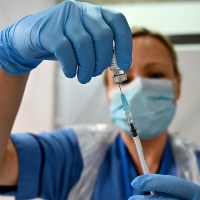
Boris Johnson had a few positive things to offer this evening's coronavirus briefing. Speaking alongside chief medical officer Professor Chris Whitty and chief scientific adviser Sir Patrick Vallance, the Prime Minister announced that 3.3 million people had received their vaccines, including nearly 45 per cent of the over-80s. Whitty, meanwhile, had the sort-of good news that the government thinks the peak of infections has now passed in London, the South East and East of England. The considerably less cheery flip side of that, of course, is that we have yet to reach the peak of hospitalisations and deaths in these regions, let alone the rest of the country.

Boris can’t afford to move slowly on lifting Covid restrictions

From our UK edition

At 3.48pm on Thursday the Sun’s political editor tweeted out an explosive story that Steve Baker, the co-convenor of the Covid Recovery Group of Tory MPs, had warned that Boris Johnson’s party leadership would soon be under threat if restrictions were not lifted soon. Less than 100 minutes later, Baker put out his own tweet as follows: ‘What this country needs is the complete success of Boris Johnson… I am clear Boris is the only person to lead us out of these difficulties and I support him in that endeavour.’ In short, Baker had overplayed his hand to an embarrassing extent – much to the delight of those parliamentary colleagues who regard him as insufferable.

Has the economy developed lockdown immunity?

From our UK edition

This morning’s update from the Office for National Statistics has boosted optimism about the prospect of the UK’s economic recovery. GDP fell 2.6 per cent in November last year, reversing the trend of six consecutive months of increases since April’s significant contraction. This takes GDP back down to 8.5 per cent below last February’s levels — wiping out the recovery gains made between roughly the end of July and November. Not, on the surface, good news — but there is a case for optimism. Cast your mind back to the economic conditions in November: England’s second lockdown had just been announced and there was a host of fire-breakers and circuit-breaks throughout the UK.

Portrait of the week: Queen gets vaccinated, Trump supporters riot and gorillas catch Covid

From our UK edition

Home The government, in the face of overwhelming numbers of people with Covid-19 being admitted to hospital, told everyone to stay at home and threatened them with unspecified harsher measures. The law brought into force on 6 January allowed any amount of exercise and visits to food shops, dry cleaners, takeaway restaurants, banks, pet-food suppliers, off licences, public lavatories, garden centres, bicycle shops and libraries (for collection of books ordered in advance) or anywhere for the purpose of picketing. The Speaker asked MPs to wear masks in the House, except when speaking.