Lockdown

Portrait of the week: New year, new lockdown

From our UK edition

Home Boris Johnson, the Prime Minister, announced harsher coronavirus restrictions in England, resembling those last March, except that bubbles continued. People must work from home if they could; schools were closed and this year’s exams cancelled. Another £4 billion was directed to businesses in retail, hospitality and leisure. At Westminster, parliament was recalled. In Scotland, golf courses remained open and churches were closed. In England, churches remained open and golf courses closed. The actions came in response to a sharp rise in Covid infections, many from a variant virus. One in 50 were estimated to have the disease. At first, 44 million in England were put under newly-invented Tier 4 restrictions, but hospitalisations increased.

Sub-ready-meals of salt and tears: Simply Cook reviewed

From our UK edition

Welcome to the sunlit uplands which, for me, contain small plastic tubs of stock, which is just the opening to the year I wished for. Even local restaurants are closed for takeaway now and I cannot face my husband’s excellent British cooking (roasts, stews, pies, like a speaking Regency cookbook). When each day is Christmas Day its lustre declines; it is like being bored and rich. I should not have ordered two ribs of beef for three people. Even Virgil Dog is off beef now, and that is disgraceful. So I subscribe to Simply Cook, a bestselling meal kit that is delivered by post. We are in danger of existing by post, and I am taken in with a pretty website and the promise of that which is lost: spurious variety.

A race against time: can the vaccine outpace the virus?

From our UK edition

The next three months may well prove to be the hardest of the whole pandemic. The new variants of Covid-19 appear to be the wrong type of game-changer. After our national lockdown in March, infection levels started falling because of extreme measures — including closing schools, places of worship and non-essential retail. But the infectiousness of the ‘Kent strain’ suggests that as it becomes prevalent, a new lockdown might be unable to contain it. When ministers first locked down, they did so in the expectation of taming the virus. This time, it’s more in hope. Boris Johnson didn’t show us any graphs when he announced the latest lockdown. He didn’t need to; the situation is clear.

MPs overwhelmingly back third Covid lockdown

From our UK edition

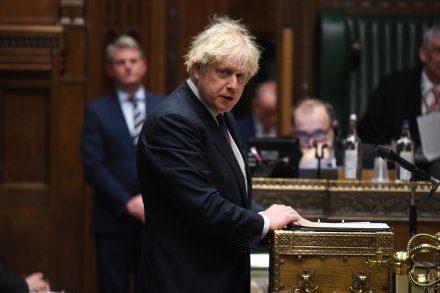
Boris Johnson's decision to impose a third national lockdown in England has won approval in the Commons by an overwhelming majority – with 524 MPs voting for the measures to just 16 against. It comes after only a handful of Tory MPs suggested they would oppose the lockdown measures in the debate on the issue today. This means that the new national lockdown will be in place for at least seven weeks – with many MPs expecting it to roll on longer. However, while the legislation allows for the lockdown to remain in place until the end of March, Johnson has signalled to MPs that he will return to the Commons for a vote if that is deemed necessary by the government.

The censorious war on lockdown sceptics

From our UK edition

Britain at the start of 2021 doesn’t only have a Covid problem — it has a censorship problem, too. The germ of intolerance is spreading. Anyone who dissents, however slightly, from the Covid consensus will find him or herself branded a crank, even a killer. They will be hounded and demonised; online mobs will demand their expulsion from media platforms and from public life. I fear that this Salem-like hatred for sceptical voices will, like Covid itself, have a long-lasting and severely detrimental impact on this country. In recent days, the censorious fury over Covid scepticism has intensified. The pitchforks are out for experts and commentators who query the seriousness of the pandemic or who suggest that lockdown is not an ideal policy.

Can the PM sustain his vague lockdown timetable?

From our UK edition

Boris Johnson doesn't have as angry a Conservative party to deal with as he might have expected after announcing his third national lockdown. The Covid Recovery Group of MPs has largely moved on from opposing further restrictions to putting pressure on the government over its vaccine timetable, meaning any revolt on tonight's vote will be much smaller than the 55 who rebelled against the tiered system in December. But that's not to say that the Prime Minister can afford to be careless with the way he communicates with MPs, and his statement in the Commons today showed that.

Lockdown sceptics should support this lockdown

From our UK edition

Scepticism is supposed to be the bedrock of science. But where scepticism shades into cynicism it can be as blind to changing events as the unexamined credence it claims to displace. Scientific belief should be based on informed supposition which is then rigorously tested against the evidence — that is the basis of the scientific method. There should be no shame in changing opinions and assumptions when facts change. We start with assumptions, test them against the evidence (which itself changes) and then use that conclusion to repeat the process, ad infinitum. So if conclusions don’t change when facts change, something might have gone awry. As an example: your view on the merits of the current winter lockdown versus the Halloween lockdown.

Boris Johnson’s justifications for lockdown

From our UK edition

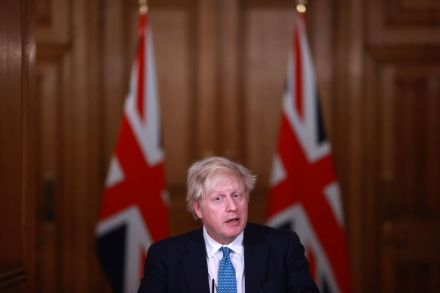
Boris Johnson this evening tried to give a little more background to why he had called England’s latest lockdown – and why he had confidence that this really was the darkness before the dawn. The Prime Minister told the Downing Street coronavirus briefing (yes, we are back in that sort of lockdown) that more than 1 million people in England are now infected with Covid – around 2 per cent of the population, according to the ONS – but that as of today, the same number of people in England, and a total of 1.3 million people across the UK, have received the vaccine. He had to explain why he had changed his tune on schools so rapidly, going from insisting that most schools should return to cancelling face-to-face teaching within 36 hours.

Sweden’s Covid Christmas farce

From our UK edition

Sweden has become an international phenomenon for its relaxed response to the Covid-19 pandemic – which some critics describe as careless. Its no-lockdown strategy has been based almost solely on personal responsibility. This point has been made to Swedes by solemn-faced politicians, most recently before Christmas. It’s up to every Swedish citizen to maintain social distancing and, if possible, work from home. Restaurants, bars, cafés, shops, and even malls have stayed open throughout the crisis. Face masks have not been recommended nor encouraged (although in a surprising change of heart from the authorities, masks will be made mandatory from January 7 in certain situations, such as on public transport during peak hours).

Covid statistics suggest schools are likely to be closed soon

From our UK edition

Here are the numbers that show why schools are very unlikely to re-open any time soon in London and the south east, and why within a week or so the whole country may be in a lockdown that includes school closures. Tier 4, the so-called "stay-at-home tier", is broadly equivalent to the two-week circuit-breaking lockdown that was imposed in November. It did not include school closures, but it suppressed the rate of transmission of Covid-19 to 0.85 or 0.9. In other words it led to the infection gradually shrinking in the community. Unfortunately, since then we’ve witnessed the explosive growth of the new strain of Covid-19.

Sunday shows round-up: primary school children should ‘absolutely’ return, says Boris Johnson

From our UK edition

Boris Johnson - Restrictions 'probably about to get tougher' The Andrew Marr Show returned this morning, and with it came an in-depth interview with the Prime Minister. It will surprise no one to hear that the bulk of the interview focused on the coronavirus, and Boris Johnson signalled throughout that the new year could see fresh restrictions being brought into place. He did not go into any detail about what measures could be introduced under a potential 'Tier 5', but it was clear enough that his 5pm Downing Street press conferences were not yet a thing of the past: https://twitter.com/BBCPolitics/status/1345670653463191552?ref_src=twsrc%5Etfw BJ: It may be that we need to do things in the next few weeks that will be tougher in many parts of the country.

Stop Andrew Cuomo’s war on restaurants

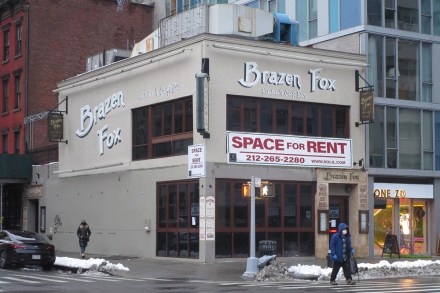
New York Cuomo to New York City restaurants: drop dead. This is the unmistakable message from Gov. Andrew Cuomo to the cornerstone dining industry in America’s premier city. Thankfully, Cuomo’s veritable kiss of death for these establishments is earning him nothing but rotten tomatoes. Cuomo is being fricasseed like a cartoon rabbit for his policy on Gotham’s eateries. New Yorkers across the political spectrum are baffled and revolted at his treatment of these signature local enterprises. Cuomo deserves every spoon of hot gravy ladled down his back. The Emperor of the Empire State has unleashed a policy that makes zero scientific, meteorological, or economic sense. Aside from that, it couldn’t be more brilliant.

new york city restaurants

Christmas single

Single at the holidays: an infamous drag, and this year worse than others. Singles got especially hosed during the COVID pandemic. Sure, uncoupled millennials are generally not grappling with remote learning, limited childcare or the actual virus, but dating is no walk in the park — except, I guess, when walking in the park is the only permissible date. Take me. I’ve just crossed that Rubicon where well-meaning friends and family have changed their tune about my romantic prospects. It used to be that no one was good enough for me; now, the refrain is ‘No one’s perfect!’ And no one is. After my ’rona- related evacuation from New York, I decided to explore the options near my parents’ home in Pennsylvania.

single

Portrait of the year: Coronavirus, falling statues, banned Easter eggs and compulsory Scotch eggs

From our UK edition

January Boris Johnson, the Prime Minister, signed the EU withdrawal agreement, sent from Brussels by train. Sajid Javid, the Chancellor of the Exchequer, promised ‘an infrastructure revolution’ in the Budget. An American drone killed Qassem Soleimani, an Iranian Islamic Revolutionary Guard commander, near Baghdad airport. Iran carelessly shot down a Ukrainian airliner taking off from Tehran, killing 176. Bush fires raged in New South Wales. Cases of acute viral pneumonia were noticed in Wuhan in central China. February Eighty-three British evacuees from Wuhan were quarantined on the Wirral. The Department of Health classified Covid-19 as a ‘serious and imminent threat’. In Hubei 68 million people were made to stay at home.

Ring out, wild bells: 2021 will be a year of renewal

From our UK edition

Save for those old enough to have lived through the second world war and its immediate austere aftermath, it would be hard to remember a Christmas which felt less festive. Or a new year that brings such foreboding. In spite of the severe restraints on our lives, which have been in place for months now, it seems likely that we will see some sort of third coronavirus wave with a third lockdown also on the cards. And at the same time, Britain will be embarking on a Brexit adventure that many people still see as reckless and unwanted. Yet if we look a little beyond the immediate future, things begin to appear brighter.

Is zero Covid achievable? A scientific debate about the virus

From our UK edition

Throughout the year Carl Heneghan, professor of evidence-based medicine at Oxford, and Simon Clarke, associate professor of cellular microbiology at Reading, have written for The Spectator about the virus and the government’s measures to contain it. They have had very different outlooks, but can they agree about what will happen next? They start by looking back at their early predictions. CLARKE: During the first wave I said: don’t lock down too quickly because there will be a cost. People won’t like it. But if we had acted sooner, perhaps we wouldn’t have been locked down for quite so long and the death toll probably wouldn’t have been so high.

The many good things to come out of lockdown

From our UK edition

Laikipia I was drinking in the fresh air on the high earth wall of my farm dam last week, when I saw a low white cloud coming straight at me from the northwest. The distances you can see up here are immense, across tawny savannah towards blue hills on the horizon, an unfenced land stretching for days and days of travel to the Ethiopian frontier. As I was standing there, filling my lungs and feeling free and happy, the white mist got ever closer and began to resemble confetti. The low, fluttering cloud was entirely silent. And then I saw it was a multitude of white butterflies, all flying on exactly the same southeasterly bearing. In the days since, they have migrated in never-ending millions from dawn to dusk, pausing on flowers to fill up on nectar, before taking to the skies again.

Cressida Bonas: My perfectly imperfect lockdown wedding

From our UK edition

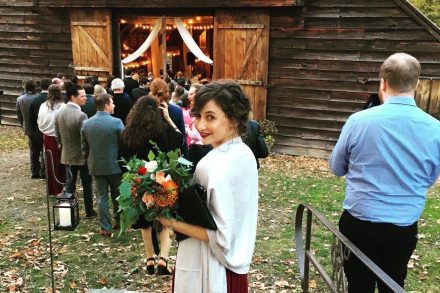
I had a lockdown wedding. A 30-person, socially-distanced, sanitised church service was organised in under two weeks. Restrictions meant no hymns, no wind instruments and no speaking too loudly. A disappointment for a musical family. Not what we’d envisaged, but a more intimate and special day than we could ever have imagined. Imperfect yet perfect — a day we will never forget. Four days before the big day, I marched up and down Oxford Street on the hunt for a wedding dress. Finding nothing, I remembered an old Whistles dress I once wore for a James Arthur music video. I went home and found the dusty frock at the back of my cupboard. After some ironing, it looked good as new. Two days before the wedding, I woke up with a stye on my eyelid.

Joan Collins: The politics of Christmas trees

From our UK edition

To say that the past nine months have been tough is like saying a hurricane felt like a spring shower. For many people it must have been utter hell, particularly those who own hospitality businesses. I simply cannot imagine how they could plan and manage ahead when our government refused to give anyone a clue whether either of the lockdowns was genuinely going to end. It all reminds me of the silly children’s game Grandmother’s Footsteps, in which players attempt to creep up behind ‘Grandmother’. If she turns and catches them moving, they must return to the beginning. We always seem to be returning to the beginning. Lockdown all over again. Except the rules of Grandmother’s Footsteps are at least clear.