Lockdown

Greek PM’s lockdown larks

From our UK edition

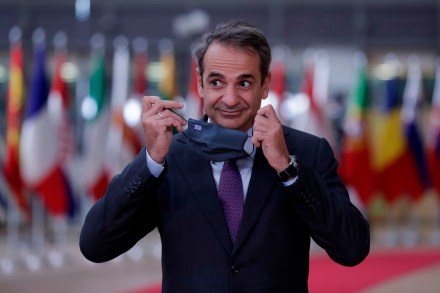
To break your own lockdown rules once could be seen as a mistake, to do it twice might suggest a hint of arrogance. Although who could blame Greek PM Kyriakos Mitsotakis when faced slap-up Mediterranean lunch on an Aegean island? Well, it seems quite a few Greeks can and do.  The centre-right politician was also snapped in December, stood side-by-side with a group motocross racers sans masks (against his own rules) — at a time when his government was inforcing a €300 fine for those who left their homes on non-essential journeys. https://www.youtube.com/watch?
The class of Covid will pay the price for years to come

From our UK edition

Schools in England, it seems, will reopen fully on 8 March at the earliest – a full two months after they closed. The Prime Minister has declined to bring this forward, in spite of new Covid cases falling at a rate of 25 per cent per week. The Scottish and Welsh governments have both said they will partially reopen schools in February. What was looking like being half-a-term's lost schooling is now looking to be closer to a full term's worth. That comes on top of over two months of school closures last year – and some interrupted education in the autumn terms as teachers and pupils were forced to self-isolate on many occasions. What will be the long-term cost of the lost months of education? The OECD has had a go at estimating it.

Isolation nation: how Australia is dealing with its pandemic

From our UK edition

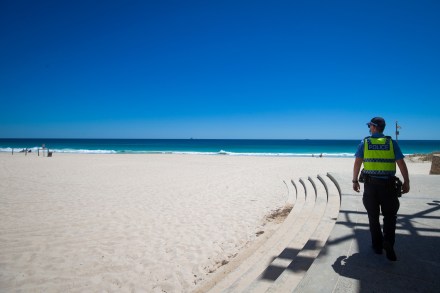
At 6.20 p.m. on Friday evening, Scarborough Beach, an oceanside suburb of Perth, looked like it always does: families picnicked on grassy dunes overlooking the Indian Ocean, queues were forming outside bars lining the shore, and inside restaurants, groups chatted casually over cold beers. Given the bustle, it’s hard to believe a city-wide lockdown ended only 20 minutes earlier, triggered on the Sunday before after Western Australia recorded its first domestically transmitted case of coronavirus in ten months. The country’s pandemic strategy would look alien to many in Europe, which has been more akin to New Zealand’s or Asian countries like South Korea and Taiwan.

Lockdown has added to the pain of my mum’s Covid death

From our UK edition

Last week, my mum died. In just a few short minutes, she went from being a living, breathing human, to a mere number on the list of daily Covid stats. She’d been on a ventilator in ITU for three weeks, unconscious and fighting for her life. But then, on Thursday, her organs failed, and the machines were switched off. Her name was Mary and she was 74. My overriding feeling is one of immense grief, obviously. No matter how old you are, nothing ever prepares you for losing your mum. But I also feel sadness that she had not been able to properly live her life for the past nine months, and then she died anyway. She got the call up for her vaccination just last week. It’s the kind of irony that would once have made us both laugh out loud.

Do May elections hint at faster lockdown easing?

From our UK edition

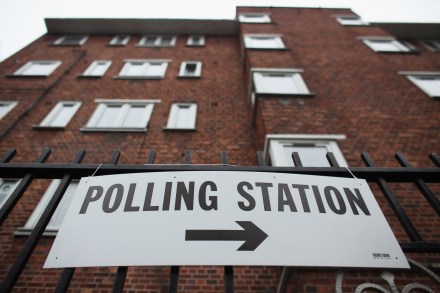
The news that the local elections will go ahead as planned on 6 May has increased optimism in the Conservative parliamentary party about the roadmap out of lockdown. Despite rumours that the vote could be postponed on the grounds that Covid restrictions would prevent them from effectively campaigning, UK Constitution Minister Chloe Smith has said it will go ahead on the grounds that 'democracy should not be cancelled because of Covid'.  But MPs aren't just pleased because the vote is on. Several are taking it as a sign that the lockdown will be eased sooner rather than later.

Lockdown easing is a tricky balancing act for Boris

From our UK edition

The progress of the vaccine programme — and the falling death toll — will reopen the debate in the Tory party about how quickly restrictions should be eased, as I say in the magazine this week. This will be tricky for Boris Johnson. He is inclined to go slowly to ensure that this is the last lockdown; just look at how he is now talking about a national tier system, not a local one, to avoid once more over-promising and under-delivering. But Tory MPs see the fast pace of vaccination as meaning that it will soon be safe to open up again. One long-time ally of the Prime Minister admits that as deaths start to fall there will be increased pressure for easing up.

Had the kitchen shop assistant been drugged and handcuffed?

From our UK edition

The kitchen tap began dripping as if it knew perfectly well that this would land me in a predicament whereby I would have to brave a phone line. I tried a friend who is a plumber but he confirmed that getting a new valve would involve contacting the kitchen shop where I bought the tap, and he didn’t fancy it. ‘Fine,’ I said, ‘I’ll call them. But if I’m going to do the worst bit, then I might as well get him to fit it for nothing.’ By which I meant the builder boyfriend. My plumber friend agreed and then abandoned me to my fate.

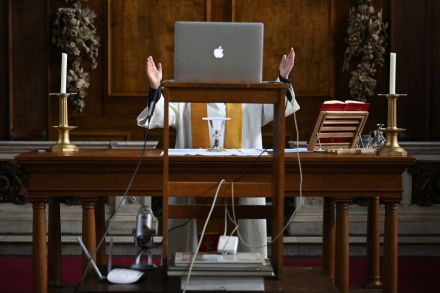
Holy relic: what will be left of the Church of England after the pandemic?

From our UK edition

A clergyman admitted to me that he’d recently burst into tears. He’d received an email from his diocese in this latest lockdown ‘strongly urging’ vicars to close their churches. He has an elderly working-class congregation in a poor area. Coming to church was ‘the one thing keeping them going’. Local vicars like him represent the best of the Church of England. They are loving, kind, and they know their flock. Before the pandemic, the C of E had seen attendance halve in a generation. Weekly religious attendance is highest among non-Christian faiths (40 per cent), followed by Roman Catholics (23 per cent) and all other Christian denominations (23 per cent).

The misguided priorities of church authorities

From our UK edition

This has been a tough year for everyone. Death, mental collapse, grief, unemployment. In my church we’ve lost people to Covid — one of the earliest victims was a regular at our 9 a.m. Communion. We’ve lost people to mental health — one of the homeless men who came to our services, and who used to delight us by playing the piano, hanged himself over the summer. Money is tight, and ancient buildings need constant repairing. Our Lady Chapel roof costs £280,000 and I still have to raise £100,000, without the help of any fundraising events. Most parishes are staring at deficits of tens of thousands of pounds, so they listened intently when, in November, the new Archbishop of York unveiled ‘A vision for the Church of England in the 2020s’.

What if Covid had struck in the 1970s?

From our UK edition

We have reached Covid-19’s first anniversary in the UK — and I really think we should do something fitting to mark the occasion. The actual date is pretty much a moveable feast. The first patient in the UK known to have died of the disease was Peter Attwood, aged 84, on 30 January. But we didn’t know then that he had Covid, finding out only about six months later. On 4 February, the government instructed all Brits living in China to get the hell out and return to the UK sharpish and breathe all over us, as I believe the press statement had it. On 11 February, the little baby was actually christened Covid-19. Perhaps we should commemorate the anniversary of something more down-home and folksy.

Johnny Mercer takes another swipe at Rishi

From our UK edition

Oh dear. Rishi Sunak is the subject of criticism from lockdown supporters everywhere this morning over a Telegraph front page detailing the Chancellor's apparent concerns that scientists are moving the goal posts on when lockdown ought to end. Treasury sources are keen to play down the report – but the aspect that has Mr S's interest isn't so much the contents but one MP's response to the news, Step forward Johnny Mercer. The defence minister was quick to 'like' a tweet by commentator Dan Hodges suggesting Sunak 'needs to get back in his box and stay focussed on the economics'. While everyone is allowed the occasional accidental like on social media, this appears to fit into a pattern.

Could lockdown lift sooner?

From our UK edition

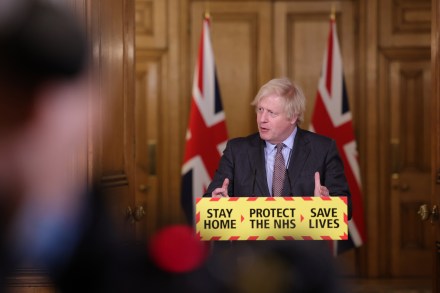
Wednesday's very upbeat Downing Street coronavirus briefing underlined the optimism that Boris Johnson feels about the way the Covid crisis could work out for him. The Prime Minister was celebrating the UK passing the ten million mark for the number of people who have received their first dose of the vaccine, and thanked the NHS for the programme, which he described as 'the most colossal in the history of our National Health Service'. He also very pointedly thanked the Vaccine Taskforce, which the Prime Minister sees as another vindication of his approach to the pandemic. For Johnson, the first part of the coronavirus crisis was bruising and the government made a series of mistakes which were obvious at the time and even more so with hindsight.

What the latest vaccine news means for lifting lockdown

From our UK edition

As more good news about vaccine efficacy rolls in, questions are already starting to be asked about what it means for the Prime Minister’s lockdown timetable. Boris Johnson has committed to publishing his ‘roadmap’ out of lockdown — but news from the last few days may be influencing what that roadmap looks like, especially the PM's top priorities of getting children back to school and lifting major social distancing restrictions. Today’s antibody survey from the Office for National Statistics shows 15.3 per cent prevalence in England, up from 10.7 per cent last month. This time around, the increase is not just due to infections: vaccines are playing their part too.

How alcohol deaths hit a record high during lockdown

From our UK edition

Almost a year after the statistics were first published, the country remains horrified by the daily total of Covid 19-related deaths. Meanwhile, we are rather less apt to notice other statistics related to harm and death, which may be an unintended by-product of the fight against Covid-19.  The Office of National Statistics' (ONS) latest figures for the number of deaths related to alcohol-specific causes, published yesterday, received little attention. But they make for dreadful reading. There were 5460 such deaths in the first three quarters of 2020, a shocking rise of 16.4 per cent compared with the same nine-month period in 2019.

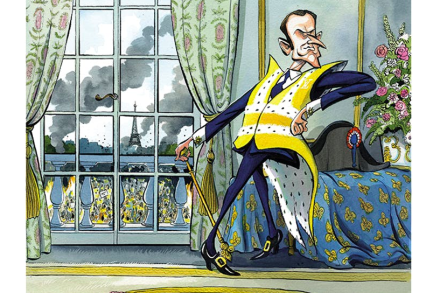
Is this the reason Macron avoided a third Covid lockdown?

From our UK edition

In these dreary days one of my few remaining distractions is perusing the readers' comments at the foot of online articles about Covid in French newspapers. It's like being ringside at a ferocious boxing bout. In the blue corner the Millennials, and in the red corner, the Soixante-Huitards, the 68ers, the French term for Baby Boomers. Neither generation is pulling their punches. The Millennials are fed up with their sterile existence in which bars, restaurants, cinemas and theatres have been closed since October. Liberte! they cry. They've seen the stats, that of France's 76,000 Covid deaths, the overwhelming majority are aged 65 or above; only 0.5 per cent are from the 15 to 44 demographic.

Vicars like me are struggling in lockdown

From our UK edition

A year of living through a pandemic has taken its toll on the best of us. Vicars like me are no exception.  As a healthy and normally upbeat 52-year-old, this feeling of gloom is frighteningly new. Anecdotal stories from clergy friends tell a similar story to my own: the urge is to curl up and mask the misery with binge marathons of Netflix box sets. But this brings only short-term relief. A cursory look at social media posts show that a good number of vicars are struggling to keep it together.  The pressures on vicars come from every quarter. Some vicars have been landed with the impossible task of maintaining empty churches as elderly volunteers withdraw to shield or isolate.

The rise of Zoom cooking: which classes to try online

From our UK edition

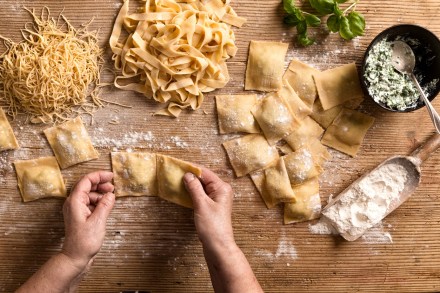
Pasta proficiency from Italy, noodle knowledge from Thailand, dumpling education from Georgia, taco tips from Mexico. We might have lost something in the intimacy, the sociability, the hands-on help when it comes to virtual cooking courses, but what we have gained is access to culinary masters from ardour the world, encompassing an extraordinary diversity of cuisines and techniques. There are plenty to get stuck into, but here are a few of the best, taking your tastebuds and your techniques from Tbilisi to Koh Tao. Pasta with an Italian Nonna For the last few years, on the outskirts of Rome, Nonna Nerina has been initiating cooking enthusiasts into the art of pasta.

The horrifying toll of lockdown on the poor and mentally ill

From our UK edition

I start the week with someone throwing faeces at me. I thought people were supposed to clap for doctors these days, not hurl poo at them? Never mind. Thankfully I’m fast on my feet despite it being the early hours of the morning, and dodge the mess, which hits the wall behind me. I’m working a week of nights covering A&E for mental health and this kind of mayhem is not as unusual as you might expect. The naked man, covered in excrement, runs around screaming. The nurse with me doesn’t even flinch. I love A&E nurses. They’ve seen and heard it all. I’m sure if there were a nuclear Armageddon, it would only be cockroaches and A&E nurses who would survive.

Quarantine and the freedom paradox

From our UK edition

Who would have thought, this time last year, that the British government would be planning to detain British nationals at the airport and keep them under guard in a hotel room for a ten-day quarantine? It’s quite a departure for a country whose values have always been defined by the defence of liberty. But we’re living in exceptional times, with the Covid death count at more than 100,000 — a bigger hit, as a proportion of population, than almost anywhere else in the world. This requires deep reflection about the mistakes made and the changes needed. When the sick are still dying — at a rate of more than 1,000 a day — it’s hard to have a calm political discussion about what went wrong and how to get it right now.