Lockdown

My plan to kick off life after lockdown

From our UK edition

The last time I went to a football game was on Saturday 7 March last year when my 12-year-old son and I went to see QPR play Preston North End. When we got there we were handed a certificate, signed by the manager, congratulating us on having travelled 228 miles. Pretty heroic given QPR’s record on the road is so poor the fans have a song they sing after away games, adapted from ‘The Lion Sleeps Tonight’: ‘We’re the Rangers, the mighty Rangers, we never win away… a win away, a win away, a win away…’ etc. But on that occasion we won 3-1, in spite of going a man down. The scenes on the train back to Euston were something to behold.

How real is the performing arts exodus?

From our UK edition

Think back 12 months to when you first felt the pandemic. Not when you first read about Covid-19, but the moment of impact — the lurch in the stomach as it hit you that this time, it really wasn’t going to be OK. For Emma Cook, a freelance stage manager on the John Cleese farce Bang Bang!, the moment came during a rare week off. ‘I was sitting in a restaurant near the Bush Theatre in London, waiting to go and see The High Table, and I got a message from a friend who had just flown back from overseas: “Why are the theatres all closed?”. I thought, no they’re not, I’m about to see a show. So I walked over to the theatre and they told us: “No, sorry. We’ve had to stop everything.” And that was when Covid suddenly became big and real.

Why I’ve gone right off the police

From our UK edition

‘Welcome to Victims First. Please leave your name and number and we will return your call. Beeeeeeeeeeeep!’ I had rung the number given to me by the police to pay my fixed penalty fine for not having an MOT. This £100 I was trying to pay was coming out of an increasingly tight household budget, incidentally, so I decided that the fairest thing to do was to claw it back from the state. I had, of course, deeply apologised to the officer who pulled me over for forgetting the MOT after the Covid extension period ran out. And I begged him to let me drive straight home, park off road, and take the Volvo to be tested the very next morning. But he insisted I had to be fined.

Why isn’t Britain adopting the Danish roadmap?

From our UK edition

Denmark’s greatest philosopher, Søren Kirkegaard, experienced only one epidemic in his lifetime, the cholera outbreak of 1853, which occurred after Denmark foolishly lifted the coastal quarantine that had saved the country from Europe’s miserable 19th century cholera pandemics. Yet he aptly sensed our response to indeterminate lockdowns: ‘the most painful state of being is remembering the future, particularly the one you'll never have’. Danes and Britons are keenly ‘remembering’ summer 2021 and are desperate for lockdown to be over.

The UK economy is suffering worse than most

From our UK edition

Last week The Spectator highlighted new data from the OECD that offers a weekly update comparing a country’s current GDP levels to the previous year. It continues to show the UK experiencing some of the highest levels of economic damage. If you factor in lockdown stringency, you can also make out a rough correlation between countries under the strictest lockdowns and countries taking the biggest hits to GDP. Just how reliable are these calculations? A cross-check between the OECD data and the Office for National Statistics' monthly GDP update would suggest it’s pretty spot-on, if not slightly more positive. Today’s update from the ONS shows the economy to be 9.2 per cent below where it was in January 2020.

I never considered sending my daughter to boarding school – until the pandemic hit

From our UK edition

Last summer, we joined the sharp-elbowed ‘exodus’ that saw demand for places at independent schools increase by up to 30 per cent. We were guilty, according to the Observer, of creating ‘an even larger divide between affluent and disadvantaged pupils’. Not to be out (middle) classed, we went one better, enrolling our 15-year-old daughter as a boarder. Home for the holidays, she so animatedly regaled us with her experiences that we might have smugly congratulated ourselves on our selfless financial sacrifice were it not for one qualification: ‘But I’d rather be here, with you.’ We’d never countenanced boarding.

Science is not an instrument of patriarchal oppression

From our UK edition

Safe spaces, diversity quotas, gender-neutral pronouns, culturally relative facts, heteronormative hegemony. Are my right-on credentials right on enough? Am I sufficiently penitent for being white, cis and male? Will I be cancelled or de-platformed by the Pronoun Police? What is my woke-quotient? At least as far as science is concerned, it’s a satisfactory zero. Science is not a patriarchal instrument of colonial oppression. Nor is it a social construct. It’s simply true. Or at least truth is real and science is the best way we have of finding it. ‘Alternative ways of knowing’ may be consoling, they may be sincere, they may be quaint, they may have a poetic or mythic beauty, but the one thing they are not is true.

Why egrets keep making headlines

From our UK edition

There’s an unwritten rule in newspaper journalism that any story about egrets must have one of two headlines. Either ‘no egrets’ if numbers are dropping or ‘egrets, we’ve had a few’ if they are booming. At the moment, fortunately, it’s the latter. The little egret (egretta garzetta) can be seen as something of a trailblazer. The first only nested successfully in England as recently as 1997, on Brownsea Island in Dorset, and there are now up to 1,000 pairs in the country, according to the RSPB. They compete for food with herons and cormorants on the Thames and even have been known to venture into cities and towns.

Lockdown is making a criminal of me

From our UK edition

‘Have you had your jab, Margery?’ said one Surrey lady to another in the queue for take-away coffee at the chintzy, shabby chic coffee shop. ‘Oh yes, I’ve had it for my country,’ said her friend. ‘I just can’t understand these people who won’t have the jab. I mean, how selfish…’ I looked at them and they looked at me, pointedly, because they had decided what sort of person I was thanks to the altercation we had all just had. ‘Margery, are you feeling all right after your jab?’ said one to the other, more quietly. ‘Well, now you ask, no, I’ve been rather ill for two weeks now. I’m sure it’s nothing.’ ‘Yes, I feel dreadful too. I’m sure it’s nothing.

Will reopening schools set back Boris’s lockdown timetable?

From our UK edition

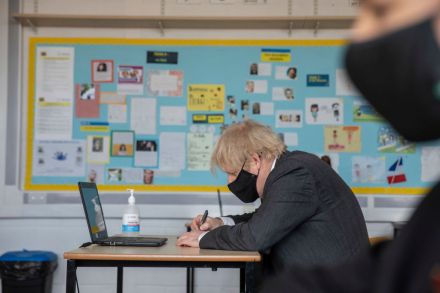
Schools in England have gone back today, with pupils taking lateral flow tests and being asked to wear masks in order to keep the risk of infections as low as possible.  Today Boris Johnson held a special press conference to mark what he described as an 'emotional' moment in the exit from lockdown. He said that the 'overwhelming feeling is one of relief' and that the 'greater risk now is keeping them out of school for a day longer'.  There are rumblings about whether the current plan for lifting restrictions is sustainable He praised teachers for getting schools ready and for teaching throughout the lockdown period, and parents for homeschooling while trying to hold down their own jobs.

The weekly cost of lockdown

From our UK edition

Lockdown has always been a matter of trade-offs. The impact of suppressing the economy to also suppress a deadly virus has had consequences on every aspect of life, from non-Covid health treatment, to rising unemployment, to the impact on children’s education. But these costs can be calculated in something much closer to real time. New data from the OECD, analysed by The Spectator and unveiled in this week’s magazine, shows the weekly difference between a country’s economic activity now and how it compares with the year before.  First, let's look at change in lockdown stringency — as measured by Oxford University's Blatavnik School of Government. When the second wave struck, Britain ended up with the tightest lockdown in the developed world.

Sunak’s Covid budget offers a glimpse of Britain’s Brexit freedoms

From our UK edition

Rishi Sunak’s planned corporation tax hike is a reminder of the importance he sets by trying to put the public finances on a sounder footing. He think that his room for manoeuvre in this crisis has been, in part, because the public finances were in reasonable shape before it.  The vaccination programme remains this government’s most important economic policy As I say in the magazine this week, his concern about debt has long been about the cost of servicing it (which remains low) rather than its precise level. But the debt pile is now so large that small movements in interest rates have big consequences. But straightening out the public finances will need growth.

Glory Hallelujah for Texas!

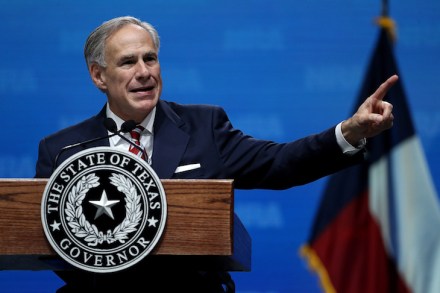
Even in the quick-as-a-wink world of democratic politics, where calculations change at slot-machine speed, you can feel major moments growling and growing. You don’t know precisely where things and events are going. You just know they are going. We're in one of those moments now, with Texas and its 29 million people poised to move out of the heavy shadow of government control over their lives and movements as we head towards what we must hope is the late stages of this so-called 'war' against COVID-19. On Tuesday March 2 — otherwise known as Texas Independence Day, when Lone Star flags decorate staves everywhere, honoring Texas’ successful struggle in 1836 for freedom from Mexico — Gov. Greg Abbott announced he was letting life return to normal.

texas

Perhaps it is time to nationalise our failing railways

From our UK edition

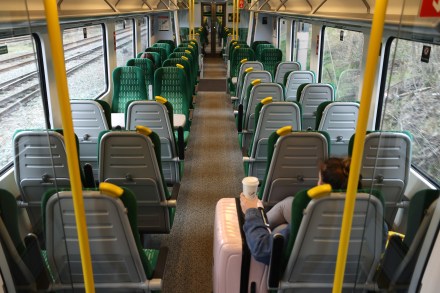
We mustn’t abandon the railways to market forces, many on the left asserted when British Rail was broken up and privatised in the 1990s. They needn’t have worried. A quarter of a century on and we have yet to see a market force take to the tracks. Wasn’t the whole purpose of privatisation supposed to be to transfer financial risk from the taxpayer to private finance?  Instead, as soon as the Covid crisis struck, while other industries were offered loans, furlough payments and business rate relief but were otherwise left to fend for themselves, the rail industry was propped up as if nothing was wrong. The government simply suspended the franchise system and paid the industry directly to lug fresh air around the country.

Are people tiring of lockdown?

From our UK edition

Is the decline in new Covid infections slowing down? That is the picture painted by the government’s figures for confirmed infections, arrived at via the NHS Test and Trace system. The most recent figures show that the 71,320 cases recorded in the seven days to Wednesday are 15 per cent down on the previous seven days — a substantial fall, yet over the previous few weeks numbers had been declining at around 25 per cent every week. The fall in deaths, on the other hand, appears to be accelerating. The figure for the past seven days — at 2,684 — is 30 per cent down on the previous seven days. Hospitalisations are declining at a rate that falls between the two — down 20 per cent over the past week.

Too much good news could spell trouble for Boris

From our UK edition

Tory MP’s reaction to the lockdown easing plan is a mixed bag. In general, they would have preferred a quicker timetable. But, as I say in the magazine this week, there is also relief that Johnson has explicitly ruled out going for a zero-Covid strategy and that there is an end date for all restrictions. A big fear on the Tory benches was that unless a date was set, restrictions could drag on for years in the way that rationing did after the second world war.  If the data on vaccine take-up and efficacy continues to beat the government’s models, there will be some very impatient Tory MPs One senior Conservative backbencher from the more libertarian wing of the party observes that the plan ‘could have been worse’.

Why aren’t exams going ahead?

From our UK edition

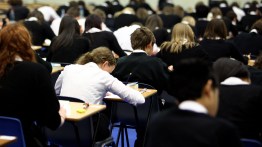
When Boris Johnson talked about trusting teachers, I suspected that the government must be desperate. Trust is not a word I have head much in my 25-year teaching career. I am no longer trusted to go into a GCSE exam hall to look at the paper that my class is sitting in case I somehow manage to undermine the integrity of the exam. But that was 2019. This morning Gavin Williamson confirmed that this year, it will come down to me and my colleagues in school. There will be no exam papers, no external markers, and certainly no algorithms. Before the pandemic we weren’t even trusted to mark coursework for fear that we gave too much help, now we have been left in charge of the whole process.

For lovers who live apart, it’s been a long year

From our UK edition

Spring is coming, the roadmap out of lockdown is here, and the faint signs of an End To All This can be seen, in smoke rings, on the horizon. I scan the list of freedoms with impatience: schools, if you must, parental visits in parks, fine, fine, but when will I get to see my girlfriend indoors? If you express some level of frustration with lockdown life, the worry is that you will be taken for someone who believes the right to spread plague is enshrined in the Magna Carta or that society took a wrong turn with the suspiciously foreign antics of Louis Pasteur. I am keen neither to catch Covid nor give it to others. That said, it has been illegal for me to hug my girlfriend since March and I’m starting to go mad.

What will life look like after 21 June?

From our UK edition

‘Alas’ is a word used many times by Boris Johnson during the pandemic. It is how he prefaces announcements that the data is getting worse and so the government has to impose further restrictions. In recent weeks, though, the numbers have been going in the right direction. The first stage of the vaccination programme was completed two days ahead of schedule. For the first time in this crisis, government targets are being moved forward, not back. Early results seem to show that the jabs are more effective than expected: a Public Health Scotland study suggests that the Oxford-Astra-Zeneca vaccine, the workhorse of the UK immunisation programme, cuts the risk of hospitalisation by 94 per cent. At the same time, take-up has been higher than predicted.