Lockdown

Zoomers like me don’t realise how lucky we are

From our UK edition

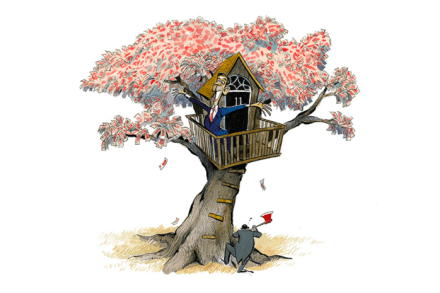
For millennials like me, talkin' 'bout our generation usually involves complaining. We Generation Zs – or zoomers – can’t seem to catch a break. Even before the pandemic, we were on track to be the first generation worse off than our parents since the Great Depression. It takes us twenty-somethings six times as long to save for a deposit as forty years ago. Having been told by Tony Blair a university education was essential, we leave, saddled with debt, to confront an over-stuffed and unwelcoming graduate market. After spending 2020 locked up against a disease that has a limited impact on young people, we face unemployment and decades of higher taxes to pay off Dishi Rishi’s debt mountain. Unsurprisingly, we’re a tad cross.

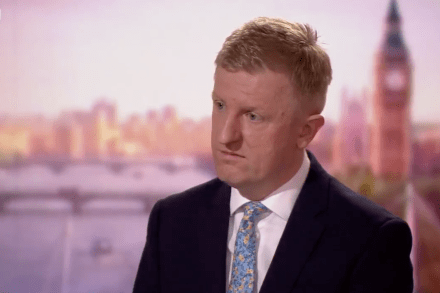
Sunday shows round-up: ‘every confidence’ future lockdowns can be avoided, says Dowden

From our UK edition

Oliver Dowden – We have ‘every confidence’ there will not be future lockdowns The Culture Secretary Oliver Dowden was in the hot seat this morning amid reports that a third wave of Covid-19 is engulfing much of continental Europe. Many of the UK’s close neighbours, including France, Germany and the Netherlands, are re-introducing or extending measures to combat the so-called ‘Kent variant’ of the disease. Andrew Marr sought to get reassurance from Dowden that the government would not end up plunging England back into a fourth nationwide lockdown: https://twitter.com/BBCPolitics/status/1376097151437135876?

Are we ready for Britain’s looming cancer crisis?

From our UK edition

Cancer, cardiac and countless other patients are crying out for help – but are ministers listening?  Over the last year, politicians have been adopting untried and untested policies, the consequences of which none of us can yet fully grasp. The main aim, of course, of these extraordinary lockdown measures has been to suppress Covid-19 in order to reduce pressure on our hospitals. That has been the metric on which Government approval has been judged. Whether or not you agree with every restriction, it is clear that this focus has sucked the oxygen away from other pressing health issues. Covid-19 required a response unlike anything we have seen in modern times.

Kids will thank us for shortening the school summer holidays

From our UK edition

Oh for a normal summer – so close now, but Covid remains capricious, a wave across Europe threatening to wash it all away. But just think: for some schoolchildren, and their parents, the normality of the long six-week summer break may not be such an appealing prospect. Sure, the middle-classes are able to pack it with enriching activities – exciting new skills, friendships and memories. But, for kids in families with stretched budgets, it can be isolating, impoverishing, boring. And, as quite a substantial body of evidence now shows, very bad for their emotional and cognitive development – some studies even conclude that the majority of the attainment gap between rich and poor children can be explained by the cumulative impact of successive summer breaks.

Does the data support renewing Covid emergency powers?

From our UK edition

Last night MPs voted by 484 to 76 to renew the Coronavirus Act, which grants the state emergency powers to further control – and shut down – most parts of society. The Liberal Democrats voted against the extension, along with 35 Conservative MPs who rebelled and voted against the government, citing as their main concern the widening gap between these unprecedented powers and the danger Covid-19 presents in the UK. The latest iteration of the bill has been renewed until September – three months after the last date in Boris Johnson’s roadmap – and includes the toughest restrictions on international travel yet.

MPs back extending Covid powers until September

From our UK edition

MPs have voted to extend emergency coronavirus powers for another six months by 484 to 76 against. This means the government has retained wide-ranging powers including those given to police and immigration officials when dealing with people suspected of carrying Covid. In the debate ahead of the vote, the Health Secretary insisted that the powers will stay in place 'only as long as necessary'. Discontent is growing in the Tory party over the government's approach However, when pressed, Matt Hancock would not rule out MPs being asked to renew them again in six months' time.

Watch: Charles Walker’s ‘pint of milk’ lockdown speech

From our UK edition

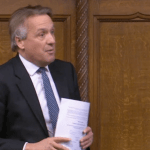
Sir Charles Walker has earned himself the reputation of being one of the most consistent and outspoken critics of the government's lockdown policy. The 1922 Committee stalwart has previously gone viral for passionate clips lambasting Matt Hancock's 10 year imprisonment plan for returning holidaymakers dodging quarantine rules, attacking Boris Johnson for treating MPs like 'dogs' and describing lockdown as 'studied and deliberate cruelty for a nation under pressure.'  Today Walker's ire was directed at what he considers to be Britain's slide into authoritarianism, promising in a four minute speech to carry a pint of milk around London in the next few days as a silent protest: 'That pint will remind me that the act of protest is a freedom and not a right.

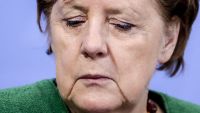
Merkel’s blundering lockdown U-turn

From our UK edition

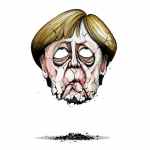
During her 16 years in office, Angela Merkel has produced a couple of memorable sentences that will be imprinted into her legacy. She added a few more on Wednesday, when she announced that the government rescinds plans of a radical Easter shutdown, saying: ‘This mistake is my mistake alone.’ Merkel’s CDU is rapidly losing the support of voters — their approval rating has dropped 9 per cent to just 26 within a week It is quite remarkable to see a leader taking the full blame for what has been perceived as a hasty and impetuous decision. Merkel and Germany’s 16 state premiers had agreed on a radical lockdown over the Easter holidays in yet another attempt to curb the rise of coronavirus infections.

Inside Boris Johnson’s Zoom call with the 1922

From our UK edition

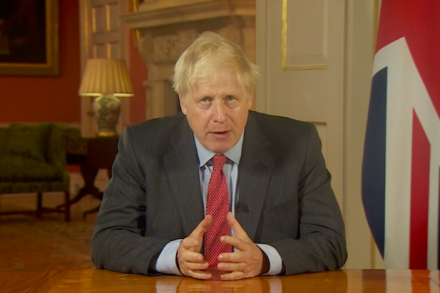
Boris Johnson has tonight addressed the 1922 committee of Conservative backbenchers over the government's roadmap for ending lockdown. The Prime Minister told MPs that a third wave of coronavirus reaching the UK from Europe was 'inevitable'. However, he insisted that the UK had built up resources to deal with any such threat and the country's roadmap for ending the lockdown remained on track. Discussing recent criticism of the Oxford/AstraZeneca vaccine, Johnson defended the jab, pointing out that it was produced at cost. He told MPs he had 'nothing against big Pharma' or big farmers – this was a reference to the Chief Whip and Nottinghamshire farmer, Mark Spencer, who was sitting beside him.

Merkel declares a ‘new pandemic’ as Germany locks down again

From our UK edition

A year on from the onset of the Covid crisis, Angela Merkel had grim news for Germans this morning: our country is in the midst of a 'new pandemic'. 'The British mutation has become dominant,' she warned, as she announced a strict new lockdown, which will shut almost all shops and churches over Easter.  The new lockdown rules were thrashed out in a tetchy 12-hour meeting between the chancellor and Germany’s state premiers. It used to be EU summits that prevented Merkel from catching some sleep. Not any longer. The leaders struggled to find common ground on an approach to contain the spread of coronavirus, amidst a worrying spike in infections which has seen cases climb to 7,500 a day.

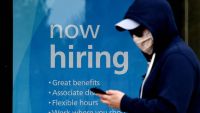
Why did unemployment dip as Covid restrictions tightened?

From our UK edition

Slowly but surely, forecasts for unemployment in the UK have been revised downwards. Alongside Rishi Sunak’s Budget earlier this month, the Office for Budget Responsibility significantly changed their prediction for peak unemployment: from the 11.9 per cent predicted in the July forecast down to 6.5 per cent. This was spurred on by an extension of the furlough scheme, a growing economic resilience to lockdowns and, of course, the spectacular rollout of the vaccines (over half the adult population has now been vaccinated with at least one dose). But the latest update from the Office for National Statistics, published today, has provided an early surprise. The headline unemployment figure has fallen slightly again: from 5.

flying

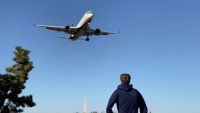
How to overcome the new fear of flying

Back in another lifetime when I was getting certified to become a yoga instructor, my teacher always asked us, ‘Is this a fear that’s keeping you alive or a fear that’s keeping you from living?’ She would pose this question as we hesitated to try a headstand or a handstand. It was a hard question to answer then. It’s even harder now, in the middle of a global pandemic when your most irrational fears could be justified. In early January of this year I was going insane. We were approaching almost a full year of lockdown here in California, the state with arguably the most stringent lockdown measures in the nation. At the time, all the restaurants were closed. You couldn’t get a haircut. Again.

Is Boris right about a third wave?

From our UK edition

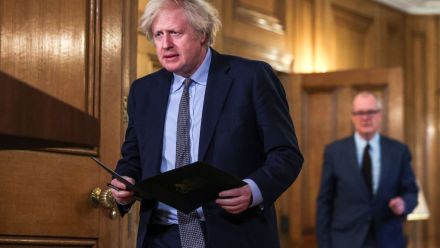
Covid deaths fell to 17 on Sunday, the lowest daily figure since 28 September and no higher than the levels being recorded throughout much of last summer. Deaths are down over 40 per cent on the week, hospitalisations down 21 per cent. Yet the better the news on vaccinations and serious illness, the longer the road seems to be out of lockdown. The latest potential roadblock seems to be the threat of a third wave in Europe. The Prime Minister said this lunchtime: 'On the Continent right now, you can see, sadly, there is a third wave under way. And people in this country should be under no illusions that... when a wave hits our friends in Europe it washes up on our shores as well. I expect we will feel those effects in due course.

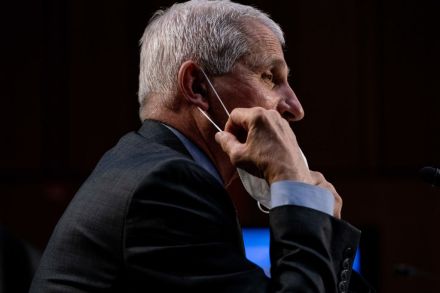
The mask is slipping, Dr Fauci…

To echo my friend Michael Warren Davis, I’m a big old centrist when it comes to masks. There are limits to my acquiescence, of course: the guy who yelled at me last week for not wearing one while jogging can go gargle with road salt. But generally speaking, if fogging up my glasses in public makes it a little less likely that even one person will contract the coronavirus, then I’m willing to do my part. The question is: is that good enough for the great Dr Fauci? These days, it can be hard to tell. Last week, our Hippocratic high priest got into a heated tiff with Sen. Rand Paul, a fellow doctor who was puzzled that Fauci was wearing a mask at their congressional hearing. Paul pointed out that Fauci had been fully vaccinated. ‘You want to get rid of vaccine hesitancy?

fauci

Let’s call time on Britain’s gerontocracy

From our UK edition

The boomers are eating their grandchildren. They don’t see it this way, of course, but they are doing it nonetheless. Covid, or rather the British state’s response to the pandemic, is just the latest evidence of this. Whatever you make of Boris Johnson's handling of the pandemic, one thing is clear: the cost of lockdown will be funded by young people in taxes for years to come. But it will most of all be paid for with time. We can find ways to minimise the impact of the government debt, but we can’t give people a year of their lives back. It is a natural part of history that good fortune is not distributed evenly. That some generations are lucky and others are not is obvious, as is the fact that some will be called upon to make greater sacrifices.

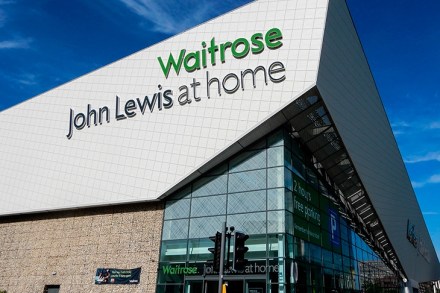
Can John Lewis and Waitrose really remain partners?

From our UK edition

Historians of unforeseen crises talk about ‘chaos theory’ and the ‘butterfly effect’, in which a small perturbation far away — the flapping of a butterfly’s wings in Australia, as it were — have impacts across much larger connected systems. More usually applied to weather events, the theory had its 2008 moment when the collapse of AIG, a US insurer whose name meant little over here, threatened to cripple so many banks that, without immediate bailouts, our high street ATMs (we were told) might have been switched off there and then.

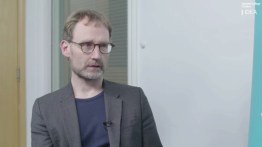
Has Neil Ferguson been proved right about Covid?

From our UK edition

Calculated risk It is a year since Neil Ferguson’s Imperial College team published the paper that inspired the government to call the first lockdown. How good were its scenarios? — It modelled four Covid-suppression measures: isolating cases for seven days, their household contacts for 14 days, social distancing to reduce household contacts by 75 per cent and the closure of schools and hospitals. It assumed these measures would be repeated for 12-18 months before a vaccine became available. — The model was run with different values for the basic reproduction number, which it estimated to lie within the range 2 to 2.6. If the government introduced none of these measures it estimated there would be between 410,000 and 550,000 deaths.

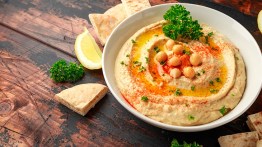
The finest humous in England: Arabica food boxes reviewed

From our UK edition

Restaurant-goers who cannot let go of restaurants — for professional or other reasons — are floating on a sea of takeaway boxes, which have none of the glamour. Which of us fell in love on a takeaway? I wish I did not have to write about them, nor you to read about them, but if this is the worst thing that happened to you this year — packaging — it is not so bad. I have already begun a small counter--revolution by shopping at the greengrocers and the cheesemongers, and I suggest you do the same. Even so, they are faintly mesmerising by volume: a box-themed version of the Rumpelstiltskin myth, which is familiar to all children, and adults with an eating disorder. Perhaps it is a metaphor: we float on glut and are lucky, if not happy.

Awards season loses its shine when no one can go to the cinema

From our UK edition

Here it is again, a couple of months later than usual but back nevertheless. It’s the time of the annual jamboree that is film awards season, a three-month extravaganza that predominantly revolves around three key events: the Golden Globes, the Baftas and the Oscars. All three of these celebrations of artistic excellence and mutual backslapping have been delayed due to Covid. The Globes took place — virtually — three weeks ago, Bafta revealed its shortlist last week and the Oscar nominees were announced on Monday. The starting gun has been fired — while all our cinemas remain closed. Have you seen Nomadland, The Father or Promising Young Woman? Of course you haven’t. No one, apart from the critics, has been afforded the opportunity.