Lithuania

Vampires, werewolves and Sami sorcerers

From our UK edition

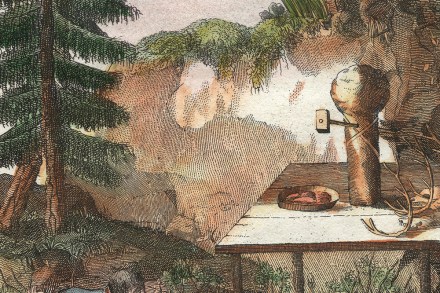
I have to be honest: I’ve never been much concerned with what happened in the Grand Duchy of Lithuania in 1387. I suspect that may even be true for many Lithuanians. In Silence of the Gods, Francis Young pinpoints this year – of the conversion of the duchy to Christianity – as the official triumph of Christianity in Europe over paganism and idolatry. But he then goes on to examine the debris – and the survivors of paganism and their traditions in the northern regions of Europe. The first difficulty is defining and identifying paganism. The book is published by Cambridge University Press, so there is an unmistakably academic, seminar-ready, conference-hardened edge to the text.

Misfits unite: The Emperor of Gladness, by Ocean Vuong, reviewed

From our UK edition

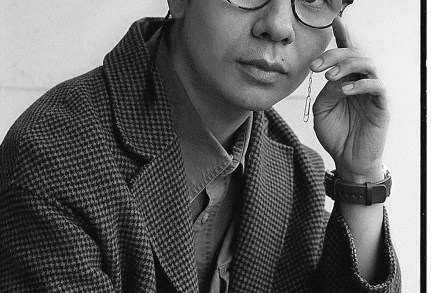
As a poet, Ocean Vuong has won every prize going. Now here’s The Emperor of Gladness, his second novel. His first, On Earth We’re Briefly Gorgeous, a coming-of-age story, is currently being filmed. This latest oneis wild, unwieldy and too long. It is fiction/autofiction mixed with 19th- and 20th-century warfare, plus contemporary angst and craziness. It has one preposterous scene that you wish were true, and never has a title been so misleading. It’s a book of moral, imaginative ideas with gripping stories, wonderful characters and writing that’s poetic and witty. I loved it. It opens with an introduction to the rural town of East Gladness, Connecticut, its citizens ‘not ambivalent to hope’.

A month in the Baltics

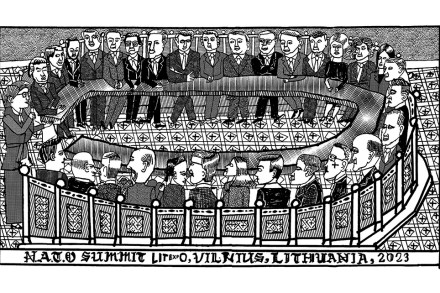
On Joe Biden’s first day in Lithuania, he skipped the opening dinner of world leaders at the NATO summit and made a beeline from the airport to his suite at the opulent Kempinski Hotel for a plate of spaghetti bolognese and some quality sack time. My introduction to the country a couple of weeks later involved no fanfare, but was far more memorable. I woke up in the 700-year-old Jaunpils Castle, in a fantastic, out-of-the-way place, lost to my teenage son in an archery competition there and then drove south on winding country roads to northern Lithuania’s Hill of Crosses, a place that better symbolizes the victory of faith over communism than any other. The Baltic countries — Lithuania, Latvia and Estonia — are often lumped together.

Lithuania

Lithuania’s PM: ‘If Russia is not defeated it will come for somebody else’

From our UK edition

Vilnius In July, Lithuania’s Prime Minister Ingrida Simonyte will welcome Nato leaders to Vilnius for one of the most important summits in the alliance’s history. Top of the agenda will be how to help Ukraine push back Vladimir Putin’s forces. But a more thorny problem will be whether to formally offer membership to Kyiv – a move that would make Ukraine’s front lines Nato’s own. Simonyte believes that the war could have been avoided if Nato had accepted Ukraine and Georgia’s membership bids back in 2008. Before Putin invaded Ukraine last year, she says, ‘western leaders and western organisations were ready to abandon their positions every time Russia was pressing’.

The Baltic nations show the world how to defend freedom

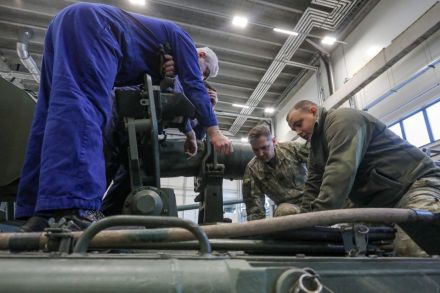
It is not inevitable that the Baltic States of Estonia, Latvia, and Lithuania would be among freedom’s most potent defenders. Nestled between the Russian mainland and Moscow’s exclave of Kaliningrad, their only direct connection to their NATO allies is through the vulnerable Suwalki Gap. For its part, NATO only has small rotational forces stationed in the three countries. At first glance, one would expect these tiny nations (Lithuania is the largest at 2.8 million people) to prefer flying under the radar. Instead they have become some of the most vocal and powerful defenders of the Western way of life. Tiny though they may be, the Baltic countries have managed to stand up to the two greatest enemies of freedom at work today, Russia and China.

If Sister Nijole can be happy, so can you

From our UK edition

In the past five years I’ve met many people who’ve had direct, sometimes horrific, experience of communist rule. But I was more excited about doing a recent interview than I had been about any of the previous ones. It was going to be with a nun in a convent in Lithuania. I had imagined the scene: we would enter a large, gloomy, medieval stone convent. We would be cautiously admitted into a cavernous hallway and then ushered by a silent nun into a small, bare room for visitors. Then, dressed in black nun’s garb, Sister Nijolė Sadūnaitė would enter the room, head bowed, and sit in a plain wooden chair, her face lit only by a candle.

‘China is all-out against us’: an interview with Lithuania’s foreign minister

From our UK edition

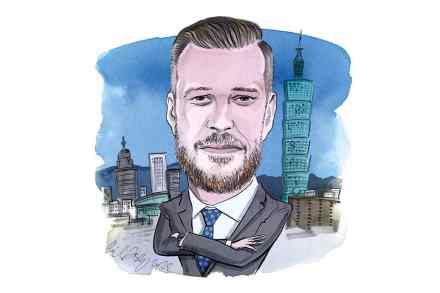
On the 16th floor of a tower block in Vilnius, Lithuania, is an office with a nameplate so incendiary that it has started a trade war. The ‘Taiwanese Representative Office’ violates a rule that China imposes upon its trade partners: never allow Taiwan to open official offices. Call it ‘Taipei’, or anything, just not ‘Taiwan’. Lithuania recently decided that an important principle is at stake: should small countries be bullied by big ones? It thought not – and has allowed Taiwan to use its own name at what is regarded as a de facto embassy. This was Vilnius going out on a limb, saying it was time to defend democracies and support freedom, and it is now looking to build an alliance of like-minded countries. This has made Beijing very angry.

Britain’s duty to Taiwan

From our UK edition

It’s not often that a brass plate sparks a diplomatic incident, as happened this week in Vilnius. Lithuania invited Taiwan to establish a ‘Taiwan representative office’ in the capital. Beijing told Vilnius that the name was unacceptable, and ordered the government to replace the word ‘Taiwan’ with ‘Taipei’ or ‘Taipei City’. Lithuania held its ground, whereupon Beijing withdrew its ambassador and simultaneously expelled Lithuania’s woman in Beijing. There is more to this, as you might imagine, than meets the eye. Since its election of a centre-right government last October, Lithuania has been steadily reaching out to Taipei.

The EU’s growing migrant war with Belarus

From our UK edition

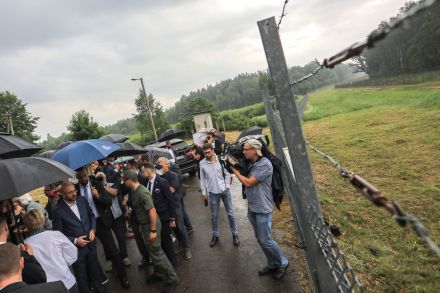
The EU is building a wall — and they’re going to make Belarus pay for it. This week, the tiny Baltic nation of Lithuania began erecting a barbed-wire border fence on its frontier with its neighbour, Europe’s most notorious autocracy. Meanwhile, Brussels is ramping up economic sanctions against Belarus. Lithuania’s parliament has declared a state of emergency, citing a sharp rise in migrants attempting to illegally cross the border. More than 800 made the journey in the first week of July alone, coming from countries like Iraq, Iran, Syria and the Congo. In response, hundreds of troops have been deployed and construction of a 340-mile barrier is underway.

Lukashenko’s migrant warfare against the EU

From our UK edition

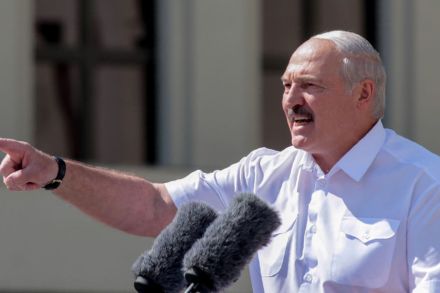
When you have already forced a plane down with spurious claims of a bomb threat, just to arrest one dissident journalist, where do you go from there? For the Belarusian dictator Alexander Lukashenko, a man looking to punish the European Union after it imposed sanctions on Belarus, it seems that exploiting would-be migrants and asylum seekers is the way forward. Last week, the dictator threatened to send masses of migrants to the EU, in retaliation for the bloc’s sanctions against Belarus. ‘We will not stop anyone’, Lukashenko said, saying migrants would be on their way to a ‘warm and comfortable Europe’ soon.

‘We are not cattle, we’re people’: everyday hell in Stalin’s labour camps

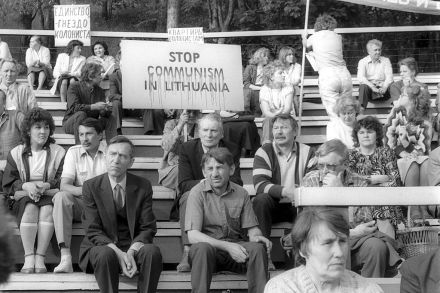
‘No testimony from this time must ever be forgotten,’ the great Lithuanian poet Tomas Venclova says in his afterword to Dalia Grinkeviciute’s memoir. The author was 14 in 1941, when the Soviets deported her with her mother and brother from their native Kaunas, Lithuania’s second largest city. In 1949, the women escaped from Siberia and went into hiding. Grinkeviciute began writing about her ordeal, but soon, facing another arrest, she buried the unfinished manuscript in a garden. More prisons and camps followed before she eventually returned home in 1956. Found in 1991 after her death, the memoir was published and became part of the school curriculum in Lithuania.