Libya

What kind of Libyan justice?

From our UK edition

Tory MP Dominic Raab has a piece in The Times today (£) about the need for Libyans to rely on the International Criminal Court in the Hague, rather than seek retribution and revenge against Colonel Gaddafi and his loyalists in Libya. A former Foreign Office lawyer, Raab knows his subject well. But I can’t help but quibble with a few of his points. For the history of the International Criminal Tribunal in Yugoslavia, a precursor to the ICC, raises questions about how societies can best deal with such crimes. The ICTY allowed space for the post-conflict consolidation to take place before indicting criminals. In contrast, the ICC issued an indictment against Gaddafi very quickly, which left the Libyan dictator little room for manoeuvre.
A day in NATO’s wars

From our UK edition

It was a classic gaffe. Andrew Mitchell’s briefing notes have been photographed outside Downing Street and, according to Sky, they say that the government "welcomes the fact that Hamid Karzai is leaving office" in Afghanistan. This is not altogether surprising. Karzai has already indicated that he will not seek a third term and is expected to stand down in 2014. While the usually fraught relations between NATO and Karzai have been deteriorated further as his administration continues in its corrupt ways. But Mitchell’s slip will probably intensify the speculation that the Western allies are already preparing for the post-Karzai and post-NATO era by talking to, among others, the Taliban.

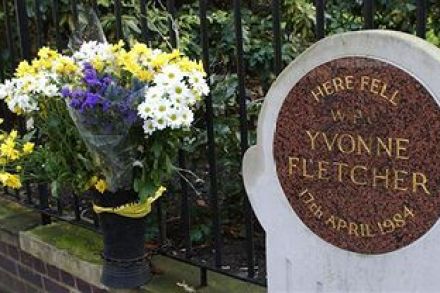
The government turns its attention to the Fletcher case

From our UK edition

The Lockerbie bomber, Abdel Basset al-Megrahi, is at death’s door. His relatives told journalists that he is ‘comatose’ at a family house in Tripoli. There have been calls to extradite Megrahi in recent days; last week, the ubiquitous William Hague said that he hoped the Scottish authorities were considering the matter. The Libyan National Transitional has since indicated that Megrahi will remain in the country to die. Mohammed al-Alagi, the NTC justice minister, said: “We will not give any Libyan citizen to the West. Al-Megrahi has already been judged once and he will not be judged again … We do not hand over Libyan citizens, (Muammar) Gaddafi does.

A weekend in Libya

From our UK edition

There’s no respite in Libya, where there have been significant developments this weekend. There have been reports (and harrowing images) of mass graves being uncovered in Tripoli, the latest suggestion that pro-Gaddafi forces have committed appalling atrocities in what is now a purely callous struggle. The National Transitional Council says it has evidence of further crimes. On the other hand, Channel 4 has found a handful of Nigerians (presumably mercenaries) in captivity, who are terrified that they will be shot by their rebel captors. Meanwhile, rebel forces have taken control of most of Tripoli and are now setting up a civil administration there.

From the archives: Cowards colluding with terrorists

From our UK edition

The Libyan National Transitional Council has obtained official recognition from numerous countries this week, but the African Union has refused to acknowledge it. Speaking earlier this afternoon, South African President Jacob Zuma said that ongoing fighting has created a “fluid” situation. The union also said that it wants “an all-inclusive transitional government” incorporating members of Colonel Gaddafi’s administration, which is a bizarre requirement given that so many of the NTC are former Gaddafi stooges: Chairman Jalil, for instance, was Libya's Justice Minister between 2007 and 2011.

Need Libya be another Iraq?

From our UK edition

“It’s not over yet.” That has become the government’s Libyan mantra, delivered with a tone of sombre sobriety. However, James Kirkup reports that, in private, ministers are cock-a-hoop, already dreaming of photo-ops and triumphant flyovers. You wonder what Ed Llewellyn makes of the celebrations. Allegra Stratton has written a revealing profile of David Cameron’s chief-of-staff, ‘the most powerful man you rarely hear about’. Llewellyn is a foreign policy expert, a veteran of tours in the Balkans and the Far East. Stratton says he is: ‘Discreet personally and cautious politically, he will have insisted on megaphone caution from the PM and his cabinet ministers who duly took to the airwaves.

Cameron winning over the Libya doubters

From our UK edition

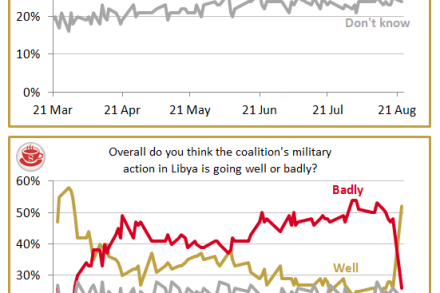
"They'll like us when we win," the West Wing's Toby Ziegler said of the Arab world. David Cameron might have said the same when public opinion was turning against the intervention in Libya. And, judging by today's YouGov poll, he'd have been right. Public support for military intervention has mirrored the public’s view of how well the action is going. In the first two weeks, when optimism prevailed, the public were largely in favour. However, as that optimism wore off and people increasingly doubted that the rebels could succeed, more and more began to oppose our involvement. Before the weekend, just 26 per cent thought the intervention was going well, and only 31 per cent were in favour of it.

Winning the peace

From our UK edition

The sight of rebel troops kicking a statue of Gaddafi round the colonel’s compound is another sign that the rebels are taking control of the capital. But the whereabouts of Gaddafi remain unknown. I understand that the British government is doing what it can to help the rebels locate him. But, until Gaddafi and his sons are detained there’ll be uncertainty about the situation. There’ll be much discussion of where Gaddafi should be tried if he is captured. Personally, I think it is entirely understandable if the Libyans want to try their old oppressor themselves. But the crucial thing is that the Transitional National Council prevents a wave of revenge killings.

Gaddafi in Tripoli as the <em>entente cordiale </em>flourishes

From our UK edition

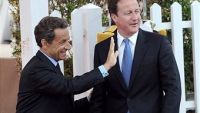
The imminent success of the Libya intervention was, to a remarkable degree, down to Anglo-French cooperation. Though the media has been keen to play up, and even conjure up, rifts and disagreements between Paris and London — and the hyper-active Nicolas Sarkozy can't help but act first and coordinate later — the fact is that the two states worked closer and better together than they have done for years. Probably not since the Suez operation have the British and French militaries cooperated so closely. But the intervention, even if it is coming to a (deadly and protracted) end did show up a number of deficiencies in materiel and command and control arrangements, as well as problems of political coordination.

A grateful nation

From our UK edition

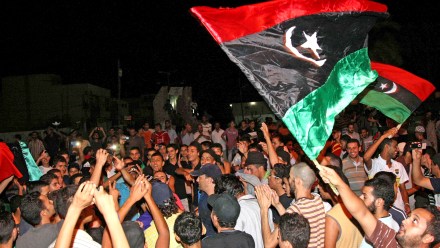
This picture from Libya is doing the rounds on the internet this morning. Italian, French and British flags are also being hoisted in Benghazi. This spontaneous display of gratitude suggests that some of the Libyan rebels won't forget who saved them from annihilation. It's something of a PR coup for NATO; a sign that there is life in the alliance and that it can still be a force for good.  On the other hand, reservations about the character of the Libyan rebels as a whole and the fragility of the present political situation remain. John R. Bradley has a piece in today's Mail, reiterating the points he made in the Spectator some time ago.

Saif al-Islam Gaddafi: We’re winning

From our UK edition

Despite the claims of rebels and the International Criminal Court yesterday, Saif al-Islam is not in captivity, not any longer at any rate. He drove to the Rixos hotel, where western journalists and a handful of US Congressmen are incarcerated, in the early hours to give a press conference. “We’re winning,” he said in that insouciant, cultured manner of his — the effect ruined only by his unkempt beard. NATO spokesmen have been across the airwaves this morning, saying that the military situation in Tripoli is confused but the outcome of this battle is not in doubt. NATO commanders insist that they are not pursuing regime change, a claim that causes an involuntary snort of irony.

From the archives: the perils of bringing Gaddafi to trial

From our UK edition

Mustafa Abdel Jalil, the leader of the National Transitional Council, has indicated his hope that Colonel Gaddafi will be tried in Libya. But the far reaching tentacles of the International Criminal Court may claim Gaddafi from the Libyan people. Judge Richard Goldstone, former chief prosecutor at The Hague, told the BBC World Service earlier this afternoon that those who capture Gaddafi “will be under an obligation to put him on an airplane and send him to The Hague.” Meanwhile, the internationally renowned human rights lawyer Philippe Sands was less certain. He told the World Service: “It shouldn't be assumed that anyone is automatically going to The Hague…There are still a range of different possibilities.

An encouraging start for the new Libya

From our UK edition

The press conference by Mustafa Abdel Jalil, the head of the National Transitional Council, was encouraging. Jalil stressed that he wished Libya to be a country governed by the rule of law and urged his supporters not to indulge in revenge attacks. He also stressed that Gaddafi will be given a ‘fair’ trial. In an echo of the text message that the rebels sent out last night, Jalil encouraged Libyans to protect both private and public property. There is clearly a desire to avoid the kind of post-liberation looting that was so corrosive to public order in Baghdad. In terms of the broader political framework, Jalil emphasised that he wanted Libya to be a democratic state with equality under the law but within a moderate Islamic framework.

Cameron: No transition is ever smooth

From our UK edition

David Cameron’s statement on Libya just now was cautious in tone and content. The Prime Minister stressed that "no transition is ever smooth or easy." Cameron said that he wanted to see Libya become a "free, democratic and inclusive" country. He emphasised that the NATO mission there would continue for as long as necessary. In an attempt to reassure the country that the liberation of Tripoli will not be followed by the chaos that followed the fall of Baghdad, Cameron repeatedly mentioned the post-conflict reconstruction planning that has been going on. He also said that he had stressed to the National Transitional Council that there must be no reprisals. Noticeably, Cameron decided to reiterate his "necessary, legal and right" formulation in this statement.

A victory for the Libyan rebellion, and for NATO

From our UK edition

The regime of Colonel Gaddafi appears to be over. In a matter of hours, we hope, the Libyan dictator will be located and captured, assuming he does not flee Libya. Finally, after 42 of evil rule, the Libyans can build a free nation. The tumultuous events of recent days are, first of all, a victory for the brave Libyan rebels who took arms against Gaddafi. They defied the odds, underwent setbacks but carried on. But, secondly, today's events are a vindication for David Cameron and Nicolas Sarkozy. Keen to learn the lessons of Bosnia, Kosovo and Rwanda, they saved Benghazi from a massacre and helped to build up the Transitional National Council. In the process, they suffered the opprobrium of realists, armchair generals and so-called "experts".

Through the gates of Tripoli

From our UK edition

After a summer of discontent, David Cameron must be counting his blessings this morning. He has broken his holiday because Colonel Gaddafi is about to fall. Rebel forces swept into Tripoli's Green Square overnight and members of the regime were captured as Gaddafi’s militia vanished into the night. Gaddafi’s son Saif al-Islam, who was being groomed as his successor, fell into rebel hands; the International Criminal Court is in touch with his captors. Another Gaddafi family is also understood to have been detained. Of the Colonel himself, though, there is no sign. Rebel forces are moving to encircle Tripoli, cutting off his line of retreat. Rebel spokesmen told the Today programme that they want to take Gaddafi alive in order to try him.

Libya: mission accomplished?

From our UK edition

If David Cameron breaks his holidays yet again, you'll know it's because he expects Gaddafi to be a goner pretty soon. It's been a busy old night in Tripoli, with Twitter reports suggesting that Gaddafi is already dead. Mind you, William Hague et al have learned to treat Twitter reports with a mountain of salt. Let there be no doubt: Cameron pushed for the Libyan intervention, averting what looked certain to be a massacre in Benghazi. The Prime Minister took a principled stand. In so doing, he reminded the world that the West can still intervene when it so chooses and will not stand by to watch slaughter. This was a decisive moment. Averting a Benghazi massacre was in itself a victory.

At the gates of Tripoli

From our UK edition

The end is nigh for the Mad Dog, or so reports suggest. After what Alistair Burt described as ‘substantial’ NATO bombing overnight, rebel ground forces began to lay siege to the Libyan capital this morning. According to ABC, the assault has come at three points around the capital. It was a concerted effort by all accounts, although Sky’s Alex Crawford reveals that the rebels have since retreated from Tripoli’s western gate. It’s unclear whether the decision was made out of choice or necessity. Gaddafi's splenetic outbursts of defiance continue, but the regime is visibly shaken. Backed by a montage of smiling children, Moussa Ibrahim appeared on state TV this afternoon to call for another immediate ceasefire and the withdrawal of NATO forces.