Libya

The Colonel’s end

From our UK edition

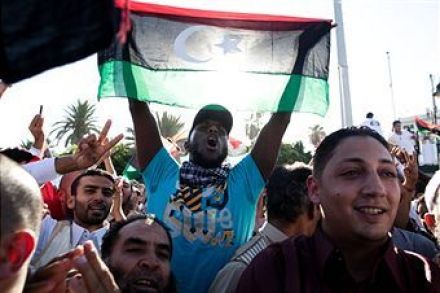
After more than 40 years of murderous rule and months fighting his own people, Colonel Muammar Gaddafi has finally been caught, and killed, in his hometown of Sirte. This marks the end of the formal struggle against the Colonel's regime, and, as such, is a great event for all Libyans. But Col Gaddafi's death does create some complications for the new Libyan authorities. They have avoided a drawn-out judicial drama — like Slobodan Milosevic's — which could have rallied people in the ex-dictator's support. But his death also robs the new Libyan government of an opportunity to show that they are better than he was, by allowing a process of justice to take place.
Gaddafi’s Warning to Other Dictators: Shoot First & Shoot Them All

From our UK edition

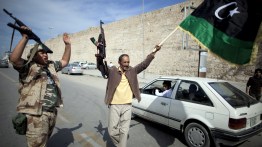
Now that Colonel Gaddafi is dead, there's a lot stuff flying about Twitter along the lines of Are you watching Mr Mugabe/Assad/Ahmadinejad? I'm sure they are. Few people are likely to mourn Gaddafi's death but one should not, I fear, suppose that his eclipse weakens other distatorial regimes or vastly emboldens their respective opposition movements. It would be grand if this were so but foolish to presume it must be. Indeed, one can plausibly argue that a quite different message has been sent by this Libyan uprising and that this message warns other ghastly regimes to crack down harder and faster to ensure that dissent is suppressed before it has time to build. In other words: Gaddafi's fate is certainly exemplary but it may actually work against reform.

The post-Gaddafi future | 20 October 2011

From our UK edition

We tweeted a link to this earlier, but thought CoffeeHousers would appreciate this Spectator article from August on the future of Libya. The question for Libyans, as they take their first momentous steps into the post-Gaddafi era, is whether they can now build a government and country worthy of their heroic struggle against one of the world’s worst tyrants. For decades, conventional thinking about Arab nations, especially among the experts, argued that they were best ruled by ‘strongmen’, a western euphemism for pro-western dictators such as the deposed Egyptian president Hosni Mubarak and his former counterpart in Tunisia Zine el Abidine Ben Ali. According to this line of thought, Arabs don’t do democracy.

Gaddafi dead?

From our UK edition

Let's keep the question mark in the headline for now, but it does sound as though Colonel Gaddafi's elusion from his opponents may have come to an end. Representatives of Libya's National Transitional Council (NTC) are claiming that the deposed dictator was captured in Sirte this morning, and is possibly now dead. There has been no independent verification thus far, but the city is said to be echoing to the sound of celebratory gunfire. UPDATE: Still no confirmation from anyone beyond the NTC, although Al Jazeera is showing gruesome video footage of what's claimed to be Gaddafi's corpse being rolled around a street in Sirte. And there's this photo too.

MoD to-do list

From our UK edition

A day into his new job, Phillip Hammond would be excused for sitting back and wondering what he has let himself in for. The job of defence secretary is every Tory's dream, and the businessman-turned-politician is well-placed to excel in it. But the armed forces and the Ministry of Defence face a number of challenges that would test even history's greatest defence and war secretaries. Six challenges stand out: 1) To reshape the military's structures, systems and capabilities. This should be done according to the decisions taken in the SDSR to place defence on a surer financial footing.

Fox hunt

From our UK edition

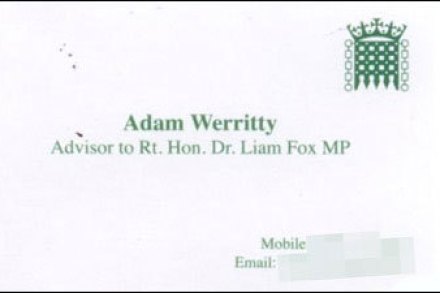
This is one Fox who doesn't have the benefit of a hole to bolt into. He is on open ground, and exposed even more this morning by fresh revelations surrounding his relationship with Andrew Werritty. A business card and a self-aggradising title, that certainly smelt of impropriety. But now we're talking about sensitive business meetings arranged by Werritty, and attended by both him and Fox. It's a whole different level of concern. And it leaves Fox in a most difficult position. The FT has the full story, but basically Werritty arranged for Fox to meet a group of businessmen in Dubai looking to transfer "communications technology" to the Libyan rebels. One of the suits present at the meeting tells the paper that, "His business card looks very official.

Hague’s European dilemma

From our UK edition

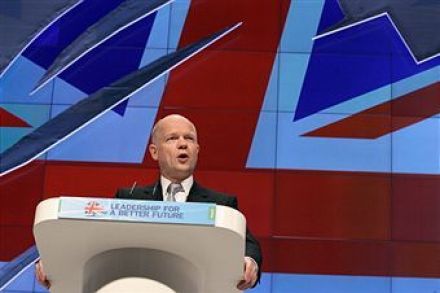
William Hague’s conference speech caps a revival in his political fortunes, and it also showed how far the government has come since the pre-election period, when Tory foreign policy was indistinct. After one year in office, the government’s roster of foreign policy achievements is noteworthy. The coalition has overseen institutional innovations in the form of the National Security Council and organisational improvements at the Foreign Office. Embassies are opening, not closing. Diplomats are again being taught traditional skills, not trying to follow the latest foreign policy fad. Cooperation between DfiD and the Foreign Office is also much better than it was under Labour, with Andrew Mitchell and William Hague conferring regularly on key issues.

From the archives: On liberal wars

From our UK edition

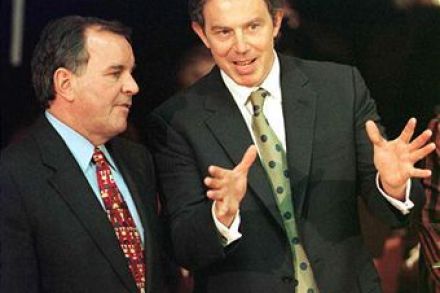
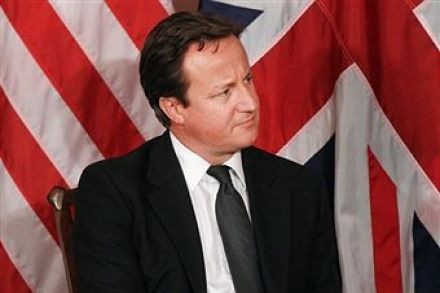
David Cameron’s speech to the United Nations yesterday was, among other things, a defence of liberal intervention. It reminded numerous observers of Tony Blair’s famous speech in Chicago in, the setting for the so-called Chicago Doctrine that guided his foreign policy thereafter. The Spectator said surprisingly little about Blair’s speech, perhaps because it wrote the following 5 days before the speech was made on 22 April 1999. End this liberal war, The Spectator, 17 April 1999 We can now see how liberals start wars, and wage them. First, they notice on television that people are being ill-treated or murdered.

Cameron’s foreign frustrations

From our UK edition

David Cameron’s much trailed speech to the UN is tinged with frustration. He will say, “You can sign every human rights declaration in the world but if you stand by and watch people being slaughtered in their own country, when you could act then what are those signatures really worth? The UN has to show that we can be – not just united in condemnation, but – united in action acting in a way that lives up to the UNs founding principles and meets the needs of people everywhere." That seems to be a fairly thinly veiled reference to the global community’s indifference to oppression in Syria.

Cameron’s Libyan gamble

From our UK edition

It is conventional wisdom that David Cameron won't get much of an electoral bounce from the Libya intervention, despite emerging as a bold and competent interventionist. People, the argument goes, are tired of warfare. A senior figure in Tony Blair’s No 10 told me yesterday that he did not think the PM would earn a lot of kudos, because with all the problems at home there is less tolerance for overseas adventurism. But this narrative overlooks a number of key points. First, the success of the operation has dealt with the charge that the government is less competent than it pretended to be. This was a serious charge, as the Prime Minister (and by extension the Conservative party) cannot withstand being called incompetent.

Sarko and Dave go to Tripoli

From our UK edition

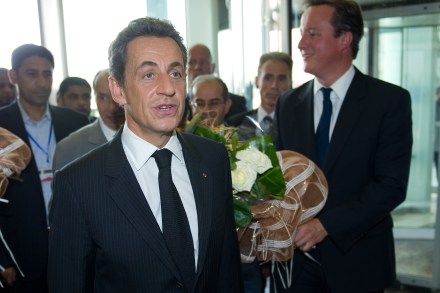
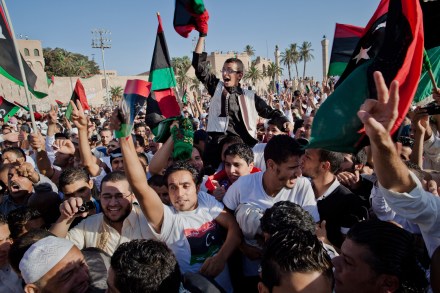
"This is your revolution," said David Cameron to the mass of rapturous Libyans who welcomed both him and Nicolas Sarkozy in Tripoli this morning. Obviously this is a PR coup for the two leaders, who both face difficulties at home. But, although these were scenes of jubilation, both leaders were keen to say that the situation in Libya is still delicate. Gaddafi is still at large and there are reports that his supporters have drifted into the desert, where they are conducting a guerrilla campaign against rebel targets. This is of great concern to the National Transitional Council and its allies, who want to reopen Libya's remote oil industry to ensure that the country’s economic recovery can begin. Sarkozy and Cameron pledged their assistance to the NTC.

“Tripoli is our capital”

From our UK edition

Tripoli East is East and West is West, as Kipling once reminded us, but in Libya at least the twain have certainly met. For the past six months Free Libya has been headquartered in eastern Libya, or ancient Cyrenaica. When Tripoli started sliding out of Gaddafi's control on 20 August, the dribble from east to west began. It was given added oomph on Wednesday with the arrival in Tripoli of the interim prime minister Mahmoud Jabril. Now we're going to see if Libyans can upset the gloomiest predictions once again. There have been all sorts of received wisdoms about Libya and the NATO campaign since the revolution kicked off in February. We have heard how Al-Qaeda was infiltrating the freedom-giddy rebels. Journalists were quick to diagnose a military "stalemate".

Black gold: the key to Libya’s future

From our UK edition

Tripoli The Roman theatre in Sabratha simmers in the afternoon sun, glowing a warm terracotta. It is a magnificent site as we head west from Tripoli to the Mellitah Oil and Gas Complex. Dating back to the irrepressibly commercial Phoenicians, who founded a trading post here sometime between the fourth and seventh centuries BC, Sabratha is essentially a Roman creation, built in the late second century AD at the outset of the Severan dynasty. Septimius Severus was Africa’s first Roman emperor and he liked to build big. The word imperial scarcely does justice to his finest creation, Leptis Magna, east of Tripoli towards the wreckage of Misratha.

I spy a BBC bias

From our UK edition

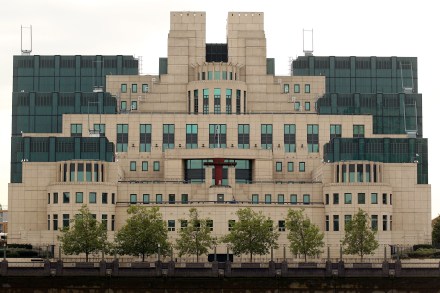
With Colonel Gaddafi's compound lying in ruins and every self-respecting reporter combing through the wreckage, it was only a matter of time before documents of a dictatorship became public. Most explosively, the BBC's Jeremy Bowen has found letters to and from the Secret Intelligence Service which suggest complicity in extraordinary rendition and, as was suggested on the Today Programme yesterday, an unseemly chuminess with Libya's spies. If any part of the British state took part in illegal acts – which extraordinary rendition is – then this is a very serious matter. But it should be said no evidence has hitherto been found of this by any number of inquiries.

Revealed: Essays of a tyrant’s son

From our UK edition

Tripoli Someone somewhere must have decided it was worth keeping. Like many parents around the world, Colonel and Mrs Gaddafi were probably terribly proud of their child’s progress at school. But you can't take everything with you when the mob is storming the barricades. So there it was strewn on a patch of sun-parched lawn, next to a bizarre take on a Swiss chalet. For your average Tripoline indulging in some light pilfering of the abandoned Bab al-Aziziya compound, it wouldn't have been worth a second look. For anyone hunting down incriminating intelligence files linking the UK to torture in Libya, it wouldn’t have been up to much, either.

A day out at Gaddafiland

From our UK edition

Tripoli What to do on a weekend in revolutionary Tripoli? There’s no doubt about the city’s most popular family day out. Hundreds of cars and thousands of Tripolines drive into Bab al-Aziziya, the Gaddafi family fortress. A vast compound strictly off limits for ordinary Libyans until only a few days ago is now the scene of the unlikeliest traffic jams. Threading their way through shot-up, burnt-out armoured BMWs, drivers wind down their windows, honk their horns and shout out anything that comes to mind, “Free Libya!”, “Fuck off Gaddafi!”, “The rat is finished!” Gaddafi’s house resounds to cries of “Allahu akbar! God is great!” Crowds mill through with mobile phone cameras to the fore.

Libya’s next battle

From our UK edition

Tripoli Two months ago Mazin Ramadan, senior advisor to Ali Tarhuni, the oil and finance minister recently promoted to deputy prime minister, was, in his own words, fire-fighting a liquidity crisis in Benghazi. Today, after the first tranche of the £1.8 billion frozen Libyan dinars sitting in Britain finally reached Libya after five months, he’s feeling more relaxed. It arrived in the nick of time. Another reason for his bonhomie? He says he’s just received $300 million in frozen assets released by the US. The most immediate challenge is tomorrow. Literally. The million dinar question is whether Tripoli goes back to work on Saturday. On paper it’s the first day for civil servants to return to their desks.

Cameron: I’m a common sense Conservative

From our UK edition

David Cameron weathered an awkward interview on the Today programme earlier this morning, in which the Strategic Defence Review was savaged and the recent riots were compared to the Bullingdon Club, of which Cameron was once a member. He stood by the defence review, with reference to the successful British contribution to the Libyan intervention, and he blithely ignored the Bullingdon Club question. He reiterated his belief that parts of society have undergone ‘a slow motion moral collapse’.  His gruff tone might have surprised some listeners. The interviewer, Evan Davis, offered Cameron the chance to retreat from the firm, almost draconian line he took at the height of the riots.

The warmest of welcomes

From our UK edition

Tripoli It would probably be stretching the truth a little to say that the British prime minister runs Allah a close second when it comes to expressions of gratitude at checkpoints on the way into Tripoli from the Tunisian border, but there’s no doubting his popularity. “David Cameron, veery, veeeery good!” is a typical reaction to the discovery that a vehicle is carrying a British journalist. “The Brits are number one among all the expat Libyans who’ve come back to join the revolution,” says Ahmed, recently returned from San Antonio.

Duncan of Benghazi

From our UK edition

Junior ministers rarely get to influence high-level policy or be seen publicly to have done so. So Development Minister Alan Duncan must feel particularly pleased that his brainchild, the so-called "Libya oil cell", was set up to block fuel supplies to Tripoli; and that its work – as well as the Tory MP’s role – has now become public. On the day that David Cameron jets off to the Paris Conference no less. The BBC reports that a six person team was set, taking in people from the Cabinet Office and the MoD, but working out of the Foreign Office. The team focused on depriving Gaddafi’s regime of oil by cutting off smuggling routes and operations in order to cripple the Libyan military machine and create popular pressure on the government.