Libya

General outspokenness 

From our UK edition

Recent wars have given rise to an unusual phenomenon in British civil-military relations: frequent, and often high-profile interventions, by serving or recently retired senior military officers in public debates. The latest has been the intervention of Britain's chief naval officer, Admiral Sir Mark Stanhope, who questioned the Navy’s ability to sustain the Libya campaign. Different prime ministers have dealt with this kind of outspokenness in different ways. Tony Blair was too weak to rein in Army chief Sir General Richard Dannatt, while Gordon Brown did not have the credibility, vis-à-vis the military, to do so either. David Cameron is different. He is at the height of his powers and determined that he, not the military leadership, should exercise command.

Mars and Venus Revisited

From our UK edition

Bruce Bartlett offers this chart (via Andrew) demonstrating that the United States is the only NATO country basically to have maintained it's Cold War defence spending. Indeed, the US accounts for roughly 43% of global defence spending. Bartlett is not the only conservative who thinks domestic fiscal concerns - to say nothing of foreign policy matters - mean this kind of spending is unsustainable in the longer-term. No wonder Bob Gates lambasted european allies last week for their failure to spend more on defence (and especially on equipment).

Night of the generals

From our UK edition

Last night, Admiral Sir Mark Stanhope, the First Sea Lord, said that the aircraft carrier and the jump-jets that were scrapped in last year's strategic defence review would have made the mission in Libya more effective, faster and cheaper. His comments follow Robert Gates' assertion that Britain and France were struggling to lead the Libyan operation without substantial American support. It follows, in the mind of Stanhope at least, that defence cuts are impeding Britain's military capability. This morning, Rear Admiral Parry (rtd) supported Stanhope.

Gates’ flawed valedictory

From our UK edition

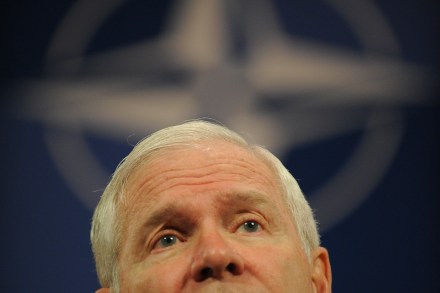
Robert Gates may be one of the best defence secretaries the United States has had in modern times. But in slamming European allies, like he did in Brussels on Friday, he was wrong. I have since long upbraided Europeans for under-investment in defence capabilities and making the wrong kind of investments. And defence expert Tomas Valasek published a fine pamphlet a few weeks ago, showing how European governments could do more for less, including by cooperating better. But they chose not to. This is not only foolish — as we live in an uncertain world where the ability to defend territory, trade, principles and people is paramount — but it also puts at risk Europe's greatest defence mechanism: the goodwill and cooperation of the United States.

The end of Assad

From our UK edition

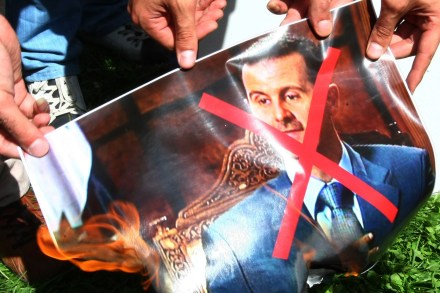
After weeks of violence, the end of the Assad regime is now inevitable. It may take weeks, months or years, but the kind of damage that President Assad has inflicted on his domestic credibility and international standing cannot be repaired. The country's two most populous cities, Aleppo and the capital Damascus have remained calm, but now protesters are defying the army. More than 300 members of the governing party have resigned and publicly condemned the crackdown. Crucially, the army's loyalty is now in doubt. It is said some military units have refused to quell the protesters in Damascus.

Sanctioning Gaddafi

From our UK edition

Yesterday, Foreign Office minister Alistair Burt went to Chatham House to explain the UK's Libya policy. It was a mildly painful experience. A particular gem: "Where we will end up nobody quite knows." Well-spoken Lindsey Hilsum easily skewered UK policy, talking of the "indecent haste" of the ICC investigation and raising the ICC's proposal to focus on a political deal. Sir Richard Dalton, an ex-mandarin, remarked that the "tone of optimism of the minister needs to be questioned further." Burt got a lot better during the Q&A, but the event did not make for a particularly compelling argument for what the UK is doing, which is a shame, not least because Alistair Burt can do better. More so as Libya policy may be in better shape now than it has been for weeks.

Attention shifts to Yemen

From our UK edition

Since last week’s attack on Yemen’s President Saleh and his subsequent flight, Sana’a has been on the cusp of anarchy. Perhaps as many 400 people were killed in riots last week and the killing continues. Western diplomatic services fear for the safety of their citizens in Yemen. The MoD has been preparing contingencies. Forces and materiel deployed in the Libya are moving east. Two fleet auxiliary ships, equipped with helicopters and landing craft, and 80 Royal Marines have been stationed off the Yemeni coast. Should the 800 or so British nationals in Yemen need to be evacuated, the marines will secure a bridgehead. A further detachment, currently on exercises in Albania, is poised to join the task force.

Preparing for a post-Gaddafi Libya

From our UK edition

The Libya intervention has been in operation for a few months and the rebels have been making gains, most recently in Yafran. But progress remains slow and perhaps it is time to look again at how the lessons of Bosnia, Iraq and Afghanistan might have a bearing on Libya. The first lesson is simple: assume the worst. If you think that a regime will collapse quickly, plan for it to last a long time. If you expect a peaceful transition, plan for a violent one. And if you hope that unarmed monitors will be enough once hostilities are over, prepare for a well-armed peacekeeping force to be deployed. Optimistic predictions of the post-Saddam Iraq encumbered the planning process and meant the US-led coalition was unprepared for the contingencies that arose.

Unseating Gaddafi

From our UK edition

The pressure is being turned up on Colonel Gaddafi, but it may still take a while to have an effect. The Libyan dictator retains some form of power and has told the only person who has been granted access to see him, South Africa's Jacob Zuma, that he intends to stay on in Libya. He wants a ceasefire before anything else is discussed. The rebels in Benghazi, meanwhile, want him to go before anything else is discussed. And so the bombing goes on. At the UN, people talk of negotiated settlement, fearing that chaos would follow Gaddafi's killing. That may be true, but there has been little evidence so far that the colonel is willing to negotiate in anything approaching good faith.

Flying into a known unknown

From our UK edition

British Apache and French Tigre attack helicopters flew into action over Libya yesterday, the Ministry of Defence confirmed last night. As when news of the deployment first broke, parliamentarians and military talking heads have warned that this is an escalation of the conflict. Some MPs have called for parliament to debate the issue when it returns from recess on Monday. NATO commanders are at pains to stress that the scope of the operation has not changed. Lieutenant General Charles Bouchard, commander-in-chief of Operation United Protection, told reporters at his headquarters in Naples. “It’s an additional capability to pinpoint these [military] vehicles that are much more difficult to see from aircraft at high altitude.

Gaddafi’s position weakens

From our UK edition

As Noman Benotman predicted, Colonel Gaddafi’s relations with his military are disintegrating. Reuters is reporting that 120 loyalist officers have defected and arrived in Rome. Details are scant, but this is a major success for Britain and France’s attempt to effect regime change without intensifying their military deployment. There will be doubts as to how long the resilient dictator can survive without loyal military leadership. Gaddafi now has to choose how to respond to this treachery – rough justice may be tempting, but that might deepen the rebelliousness of his officers, increasing the likelihood of a coup. NATO will be trying to exploit this stroke of luck, encouraging further defections.

The spectre of jihad in Libya

From our UK edition

While Britain agonised over deploying attack helicopters to Libya, the conflict seems to have escalated of its own accord. Noman Benotman, a former member of the Libyan Islamic Fighting Group, has described the current dispositions for the Times this morning (£). He has learned that many of Gaddafi’s military leaders are planning a coup to save their skins; Colonel Gaddafi is reluctant to arrest their nascent treachery for fear of triggering open rebellion. Other officers are following the example of civilian administrators like Moussa Koussa, feeling that now is the time to cut and run. News of Gaddafi’s withering power will please NATO, even if it is exaggerated. However, Benotman’s other revelations will unnerve the alliance.

Yemen implodes

From our UK edition

Sometimes you wait and wait for an event, and nothing ever happens. Pakistan is always said to be teetering on the brink of collapse but never quite edges over the precipice. The same used to be the case with Yemen. In fact, Coffee House predicted that Yemen would implode last year, but Yemeni President Ali Abdullah Saleh managed to hold the country together in the face of terrorism, irredentist movements, insurgency and, recently, pro-democracy protesters demanding his resignation.   Now, however, the wily leader may finally have run out of road. Heavy clashes have erupted in the capital Sanaa, a day after Saleh again refused to sign a Gulf-brokered power-transition.

Grading Obama’s visit

From our UK edition

It was a good state visit. Actually, it has been an excellent visit. Much better than George W Bush's and even Barack Obama's 2009 trip to London. The US president got his photo with Wills 'n' Kate. The Prime Minister got his presidential high-fives. There were some odd points. The personal chemistry between David Cameron and Barack Obama made the ping-pong match better than it would naturally have been. For, let's be honest, table tennis is not a natural US-UK sport. There were policy differences between the two leaders too, for example on Libya and deficit reduction. In the end, though, the way to judge visits is not to think about Evening Standard covers or how much of the Today programme was devoted to the US president, but to look at strategic issues.

Cameron and Obama’s mutual appreciation has its limits

From our UK edition

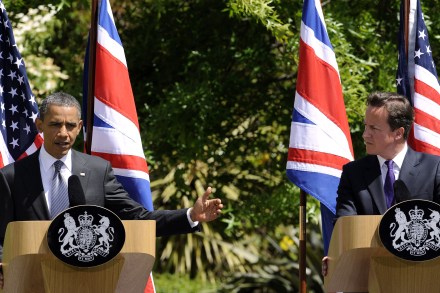
And the Word of the Day is "we". Both David Cameron and Barack Obama deployed it liberally in their joint press conference just now, as they ran through all the mutual pleasantries and backslapping that attends these events. "We have discussed the two things we care about the most," flushed Cameron, "getting our people jobs, and keeping our people safe." From there on in it was first name terms — "thank you, David" — and claims about the strength of our two countries' special, essential, unique relationship, etc. With the sun blazing down on the garden of Lancaster House, I'm sure the photos will turn out nice. Cameron appeared to be the more eager of the two men, however.

A good day for Cameron

From our UK edition

Today is one of those days when David Cameron gets full political benefit from being Prime Minister. He is basking in the president of the United States’ reflected glory. The papers this morning are full of him playing table tennis with Barack Obama and tonight’s news bulletins will lead on their joint press conference at lunchtime. As Cameron stands next to Obama, he’ll look both a statesman and a centrist. It’ll be hard for Labour to attack Cameron as an extremist on deficit reduction when he keeps stressing how he and Obama agree on a sensible level and pace to get their budgets heading back into balance. There are, obviously, substantive foreign policy issues for the two men to discuss. Both Libya and Afghanistan are in need of urgent attention.

Choppers add to the Libyan fog of war

From our UK edition

There was much ado about choppers in Westminster earlier today. Yesterday, French Defence Minister Gerard Longuet told reporters that Britain and France were to deploy attack helicopters to Libya; and that the British had instigated this move. The fog of war then descended. Labour’s defence spokesman Jim Murphy called on the British government to explain why the conflict is escalating. Armed Forces Minister Nick Harvey contradicted Longuet's account; and a source at the Ministry of Defence told me that this was the first he’d heard of helicopters being deployed to Libya in that role. The implication was that the French were trying to force the issue. Then again, a separate MoD source has told the Guardian that the “chances are it is going to happen”.

An especially businesslike relationship

From our UK edition

The ash cloud nearly claimed its first victim last night: Barack Obama had to leave Ireland early in order to fly to Britain. The Palace’s insistence on protocol has been upset and the President's entourage has been advised not to risk the tap water; other than that, all is well. However, the visit has set sceptical tongues wagging. Some diplomats wonder why the President is here. Afghanistan, the Middle East, joint national security and the world economy are on the agenda, but there is no unifying theme to discussions. Some ideologues fear that the eternal bond between Britain and America is relaxing into a union of convenience.

Cathy Ashton beats UK ministers to Bengazi

From our UK edition

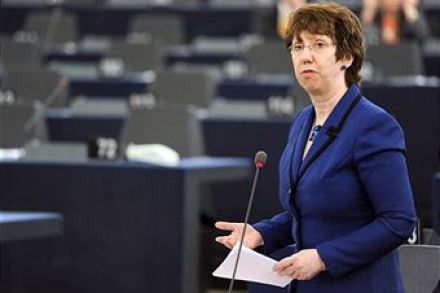
EU foreign policy Tsar Catherine Ashton has come under a lot of criticism, much of it unfair and/or put forward by those who want the EU to supplant the member-states. In this piece, I have tried to defend her. I argue that her realistic take on the EU’s role is in the UK’s interest: the last thing London needs is someone who ignores member-states to build an independent foreign policy. And she has managed to get Europe’s SAHEL policy in a better shape, worked closely with William Hague and Guido Westerwelle to coax Serbia into negotiations with Kosovo and helped to solve, at least for the moment, a crisis in Bosnia. For these reasons, she retains the support of David Cameron and William Hague.

A special relationship | 22 May 2011

From our UK edition

The visit of President Obama on Tuesday has not yet inspired rapid British soul searching about the ‘special relationship’, not by comparison to David Cameron’s trip to America last July at any rate. After an awkward beginning, the Obama administration has been at pains to stress that America’s alliance with Britain is inviolable even in a changing world. The administration’s deputy national security adviser, Ben Rhodes, said “there’s no closer ally for the US than the UK” last week. But like all close alliances, the two parties have their differences.