Libya

Gaddafi’s coming victory is a huge strategic setback for the West

From our UK edition

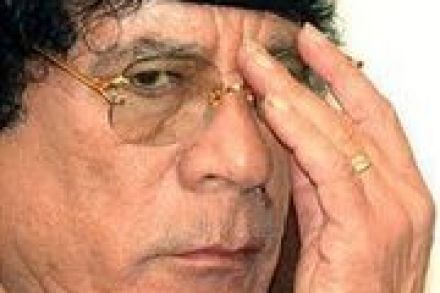
It now seems almost certain that Colonel Gaddafi will now not only survive in Libya but reassert control over the whole country. With the fall of Ajdabiya, there is no break between Gaddafi’s forces and the rebel capital of Benghazi. The window for international action is shutting rapidly, even if it has not yet closed. But, as so often, there seems to be no multilateral desire for action. Gaddafi’s triumph is a disaster for the Libyan people but also one of the biggest strategic set-backs the West has suffered in the post 9/11 world. Every dictator will now know that they can suppress a revolt with violence without fear of retribution.
Cameron’s call to the White House

From our UK edition

David Cameron’s statement on Libya today reflected his growing frustration at the pace at which the wheels of diplomacy are moving on this issue. In his statement, Cameron warned that ‘time is of essence’ and that Gaddafi staying in power, something Cameron had previously called ‘unthinkable’, would send a ‘dreadful signal’. Time, really, is of the essence. If we don’t see movement in the next few days, it seems almost inevitable that Gaddafi will crush the revolt. One of the things that Cameron stressed is that Gaddafi continuing in power would be more than a moral and humanitarian disaster.

The case for a Libyan No-Fly Zone is, at least in part, based on aesthetics.

From our UK edition

I don't know what we - that is Britain/NATO/the West/Whoever - should do about Libya. But while I think Brothers Korski and Nelson make many valid points I'm not sure that the case for any kind of military action has yet been made persuasively. That doesn't mean one must be happy to see Gaddafi blitzing the Libyan rebels, merely that the calls to do something or anything seem long on justified emotion but desperately short on practical application. Andrew Rawnsley, for instance, asks "Are we content to let Colonel Gaddafi win?" But this is a false question. No, we are not content to let Gaddafi win but few, if any, of the measures proposed seem likely to stop the Mad Dog from destroying his enemies. We may not like the notion of Gaddafi's victory but are we prepared to prevent it?

The coming war with Libya

From our UK edition

If the West is not ready to intervene decisively against Colonel Ghadaffi, it needs to get ready for a post-revolutionary Libya, where the dictator and his bloodthirsty family seek revenge on pro-democracy activists and countries like Britain. Think of Ghadaffi's previous record: the Lockerbie bombing, targeted assassinations like in the 1970s, and attacks on US soldiers in Germany. Libya could in future represent a threat to Britain akin to al Qaeda. So, the British government needs to think how it will deal with Ghadaffi MK II. Its policy should draw on past examples of containment and isolation. Libya's neighbours will have to be incentivised to bolster European - and especially Italian - attitudes.

Cameron’s principled stand over Libya

From our UK edition

Slowly, David Cameron seems to be mutating into a hawk over Libya. I've been increasingly impressed with the way he has made the case for a no-fly zone - knowing that it is an unpopular cause outside of the Arab world. Since the evacuation chaos, which he apologised for, he has pretty much led calls for some form of military intervention to stop Gaddafi bombing his own people back into submission. He was laughed at to start with; accused of making it up on the hoof. But now the 22-nation Arab League backs this position, as does Sarko. It may have been messy at first – but that’s how these things go. From the offset, Cameron was articulating a basic principle: we need to help the Libyan rebels, not sit and watch them get butchered.

The Arab League adds its weight to the calls for a no-fly zone

From our UK edition

We're pushing for a no-fly zone. France is pushing for a no-fly zone. And now the Arab League is pushing for a no-fly zone too. The news fresh out of Cairo is that the organisation has voted in favour of restricting airspace above Libya. It will now push the UN to do the same, which is a considerably more proactive than the stance it adopted earlier this week. While one vote doesn't really seal anything, this is potentially a crucial moment. NATO has made regional support a key condition of a no-fly zone – and now it has it, officially. Those who have been sniffing around for alternatives to the UN and its resolutions will regard this as a positive step.

The family plot

From our UK edition

Hisham Matar is a Libyan-American writer whose father, Jaballa — an opponent of Gaddafi — was kidnapped in Cairo in 1990. Hisham Matar is a Libyan-American writer whose father, Jaballa — an opponent of Gaddafi — was kidnapped in Cairo in 1990. He is believed to be in jail in Libya; Matar campaigns from London for his release. If you already knew this, it’s probably because of the attention that came Matar’s way when he published his first novel, In the Country of Men (2005). That book, set in Tripoli in 1979, is told from the point of view of a dissident’s young son. Although the details don’t match Jaballa’s case, many readers took it as lightly fictionalised memoir.

The growing clamour for intervention

From our UK edition

In the last two days, Nato and European leaders have declared that Gaddafi must go, but both have baulked at taking unilateral action. Their reticence has sparked a response from those in favour of intervention. Speaking in Brussels today, David Cameron said that situation on the ground may be getting worse and that Europe and the West in general “must be ready to act if the situation requires it”. Liberal interventionist Bill Clinton went further. Speaking at the Women in the World summit, he said: “I wouldn’t do it if they [the rebels] hadn’t asked… [But] it’s not a fair fight. They’re being killed by mercenaries.

What the Libya crisis means long-term

From our UK edition

The multiple crises in North Africa, from the revolution in Tunisia, through the protests in Egypt and to the conflict in Libya, has reinvigorated British foreign policy. In the last couple of years classic international issues have been pushed to the side by a need to focus on economic statecraft. Foreign ministers became less important as finance ministers gained prominence. This will now change, as leaders shift their focus onto the Libya crisis. The UN is again in focus, not the G20. The second change may be on East/West dynamics.

Is Sudan next?

From our UK edition

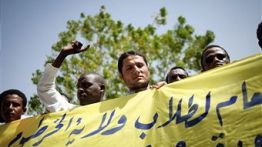
The momentum behind the Arab Spring revolutions appears to have been checked – for now. The Libyan domino hasn't fallen. But there's more unrest to come in North Africa. On March 21, a group called Youth for Change will hold mass protests throughout Sudan. Youth for Change (sinister name) are inspired, obviously, by what has happened in Egypt and Tunisia. Their aim, they say, is to ‘to rewrite the constitution with the voice of the people in order to hold national general elections: '[We march] to reclaim our dignity as human beings first and second as Sudanese ...that has been violated by the regime when it killed thousands of our brothers in Darfur, the north, the east, and all the documented incidents to dishonour the Sudanese nation.

Clegg ushers in the next phase of the coalition

From our UK edition

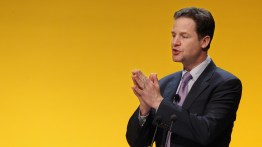
What have the Lib Dems ever done for us? That's the question that Nick Clegg sets about answering in interview with the Independent today — and he does so with righteous vigour. "Brick by brick, policy by policy, decision by decision, sometimes almost invisibly," he insists, "we are putting in place good policies that will make a long and lasting difference." He dwells, and rightfully so, on the pupil premium and raised personal allowance. "All these things will outlive the immediate task of dealing with the deficit." This salesmanship is only to be expected from Clegg, speaking on the eve of his party's spring conference and in the aftermath of their electoral cremation in Barnsley.

Without intervention, Gaddafi will triumph in Libya

From our UK edition

The tragic truth is that in Libya Colonel Gaddafi appears to be on the way to regaining control. As the US director of national intelligence said today The tragic truth is that in Libya Colonel Gaddafi appears to be on the way to regaining control. As the US director of national intelligence said today, the regime’s superior military strength makes it likely that “over longer term, that the regime will prevail." Realistically, the only way to stop this from happening is through intervention of some sort—with the most plausible option still a no-fly zone which would deny the regime air superiority. Without this, the regime’s all out-war tactics—as declared by Saif Gaddafi today—will prevail.

Liberal hawks

From our UK edition

From the moment David Cameron started agitating for a no fly-zone, he's been looking for allies. France and Denmark look like they will support him, with Russia and India opposed and China perhaps willing to abstain at the United Nations. But what about closer to home, inside the coalition? Since the formation of the coalition, every policy has been tested by what will it do for relations between the parties? Oddly, however, there has been no such test about Libyan policy. Newspapers have not been writing about splits, differences and agreements. That may be because Lord Ashdown went on the Today Programme and voiced conditional support for a no-fly zone. But the Lib Dem peer has always been a hawk.

To strike or not to strike?

From our UK edition

The situation in Libya is still uncertain, but the fog of war is clearing to expose a depressing picture. Forces loyal to the Gaddafi regime are conducting a successful offensive. The Times’ Deborah Haynes confirms reports (£) that Zawiya has fallen and rebels have been forced from the oil town of Ras Lanuf. William Hague has spoken to Mahmoud Jabril, Special Envoy of the Libyan Transitional Council. The Foreign Office has issued a communiqué on the conversation and some of Jabril’s emotional concern escapes the bland text. In the words of the Foreign Office, he wants ‘the West to act to hinder Qadhafi's ability to inflict further violence on the Libyan people, including through a no fly zone.

The hunt for Hague’s mojo

From our UK edition

All hands to the Defence Select Committee this afternoon, for questions about the nation's security apparatus. Of course, most onlookers were not remotely interested in the answers. For them, this gathering was convened to see if William Hague might regain his "mojo". He didn’t get the chance. This was Letwin Hour. Or Letwin's Two Hours, to be precise. After a difficult fortnight for the government, the brain behind Cameron's premiership high-jacked proceedings. In insouciant tones, he explained the manifold complexities of the government's security policy to the committee. Real terms defence spending is likely to increase after the next spending round and Trident will be replaced; both are a response to perceived threats and Britain’s aspirations abroad.

UN or not UN?

From our UK edition

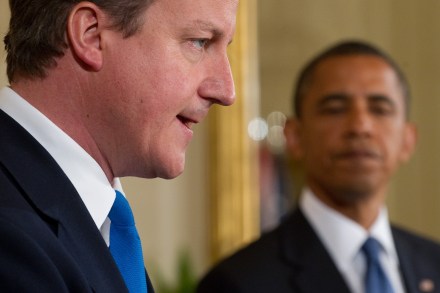
The garbled horror stories just keep on rolling out of Libya. According to the latest reports, Gaddafi's troops have attacked the rebels in Zawiyah with redoubled violence and force. Aircraft, tanks, bombs, mortars – all have been used against the city and its people, with what one assumes are bloody results. As one resident puts it to Reuters, "Zawiyah as you knew it no longer exists." It is unclear whether the rebels have now lost control there, but that is a strong possibility. Unsurprising, then, that the West is positioning itself to act. David Cameron, we are told, has been speaking with Barack Obama about the full spread of options before them.

Libya has not been Cameron’s finest hour, but it’s not been a disaster

From our UK edition

The government has been damaged by its response to the Libyan crisis and the SAS incident in particular. William Hague has been branded a 'serial bungler', and the FCO’s response was condemned as slow and ill-prepared. The consensus is that heads should roll at King Charles Street. Many commentators have also argued that the Prime Minister was too quick to call for a no-fly zone over Libya. Nobody, not even government loyalists, could argue that the last few weeks have been David Cameron’s finest.   However, one can be too critical. Let’s start with the SAS mission. Something obviously went wrong, but it is hard to believe that ministers could have done anything differently. Their job is to set direction, not to micromanage operations.

What were the SAS doing in the eastern desert?

From our UK edition

When the official files are opened in 30 years time, we will see what series of decisions led the government to send a helicopter-born SAS team into eastern Libya when they could have sailed in on HMS Cumberland, disguised themselves as reporters or rung up Mustafa Abdel Jalil, Libya’s ex-justice minister who is said to head the “Transitional Government”. But it is easy to see how it happened. The perfectly sensible idea of sending a British emissary to Benghazi to make contacts must have clashed with bureaucratic protocol and the FCO’s duty of care arrangements. “What?” You can just imagine the officials exclaiming to the ministers. “You intend to send a single person to Libya. But what if he got killed? Or hurt?

Hague statement does little to clear up SAS mystery

From our UK edition

William Hague’s statement to the Commons this afternoon did little to clear up the mystery behind how a bunch of SAS soldiers ended up being detained by the Libyan opposition. Hague’s explanation was that they were accompanying diplomats trying to make contact with the opposition and it is a dangerous neighbourhood. But if that was the case, then why didn’t they just make contact with the transitional council based at the courthouse and why were the soldiers carrying multiple passports and explosives rather than just normal weapons?