Libya

The view from the Middle East

From our UK edition

I'm in the Middle East, albeit in a revolution-free corner. And from the Royal Meridien hotel in Abu Dhabi it is hard to know what the region is going through. But a number of points have already come through from my conversations. First, there is an obsession about US power. The government-controlled media are busy saying that US influence is waning but every conversation focuses on what the US will or will not do. The US is clearly present ­ and although its power may be changing, it is doing so more slowly than the newspaper headlines would have you believe. The second thing is this: the Middle East will never be the same again. Even if the revolutions fail, or falter, the region is being transformed and no corner, however rich, is immune.
From the archives: Saif Gaddafi in conversation

From our UK edition

No need to explain why we're disinterring this interview with Saif Gaddafi, by Justin Marozzi, from out of the archives. Given his "rivers of blood" warning this week, his claim that "I'm very enthusiastic to see Libya as an oasis of democracy, a society that respects the environment and human rights and so on, and is a model in the region," below, is now blackly hilarious. Son of Mad Dog, Justin Marozzi, The Spectator, 27 July 2002 Saif al-Islam Gaddafi glides into the Royal Suite at Claridge's looking like an Italian football manager: all suit and no hair. A white handkerchief sprouts from his breast pocket. His silk tie is a muted red and green, and the slim black lace-ups look hand-made.

What the Libyan debacle reveals about the Civil Service

From our UK edition

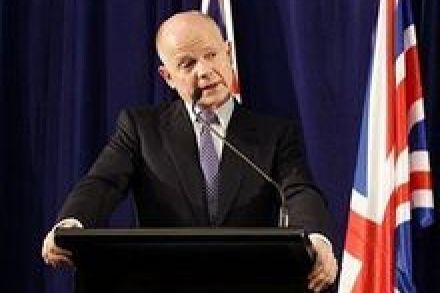
The headlines about Nick Clegg forgetting that he was running the country and the botched evacuation of British nationals from Libya have combined to make the coalition look rather incompetent, the most dangerous thing for a government to appear as. Certainly, the effort to get British people out of Libya has been a national embarrassment. The whole evacuation debacle is, though, more a tale of bureaucratic incompetence than anything else; a painful reminder that the Civil Service machine, upon which the government relies, is in bad repair. I hear that William Hague has already carpeted senior officials in the department over the whole episode.

Chaos thy name is Libya

From our UK edition

Colonel Gaddafi’s strength appears to be diminishing: Foreign Office sources suggest that the latest YouTube footage suggests that the rebels are now 30 miles from Tripoli, there are reports of Libyan servicemen spiking their guns rather than fire on their compatriots and members of the Gaddafi family have failed to present a united front to the dissent that intends to depose them. But, chaos thy name is Libya. Communications have long been silent, except for the savage drone of state radio, conduit for Gaddafi’s prophesies of victory or martyrdom. Evacuees from Tripoli’s now hellish airport relate a city bristling with arms and testosterone – the fear is that Gaddafi and his dogs of war are sufficiently mad to fight to the last bullet.

What to do about the Gaddafi family?

From our UK edition

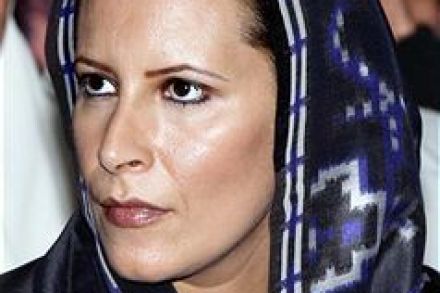
The Al-Jazeera live blog has a fascinating report that the Gaddafi’s daughter Ayesha has unsuccessfully attempt to leave Libya for Malta, the Maltese refused her plane permission to land. There are also reports that a Libyan plane that wanted to land in Beirut contained one of Gaddafi’s daughters-in-law. The question raised by this is whether it is a sign that the family is splitting or just an attempt to get various members out before the violence becomes even worse. Unpalatable as it is, one option that should be explored is whether Gaddafi might step down in exchange for asylum for him and his family somewhere. Persuading him that there is a better option than the martyrdom he was talking about yesterday is one way of preventing mass blood-shed.

Lunching with Gaddafi

From our UK edition

I counted Gaddafi in on a journey to Tripoli to interview him early in his reign and now I am counting him out. At the time the young Libyan was still a mysterious newcomer to the international scene. For years it had been foretold that one day some unknown colonel would appear Nasser-like to overthrow the monarchy and drag Libya kicking and screaming into the brutal world of Arab socialism. Now the prophesy was fulfilled by the arrival of the man of destiny, a Bedouin, a lieutenant-colonel who modestly promoted himself only one grade. After many requests and endless oriental coffees consumed, I finally received the summons to Revolutionary HQ in Tripoli for an audience with Brother Colonel as he then styled himself.

The EU should impose sanctions on Gaddafi’s Libya

From our UK edition

The EU spends €460 million a year in operational costs alone on its new foreign policy department, the External Action Service, headed up by Catherine Ashton. This body - created by the Lisbon Treaty - was Europe’s ‘great white hope’ for the global stage, finally allowing it to speak with one voice and therefore giving it leverage where it previously had none.   It hasn’t quite worked out that way. Caught between Cairo and Tripoli, the EU has received yet another reminder that its bureaucracies and institutions cannot magically replace 27 individual foreign policies, as EU leaders continue their bickering over what to do.   The EU’s response to the turbulence in Libya has been fragmented at best, and contradictory at worst.

The emergence of a Cameron doctrine

From our UK edition

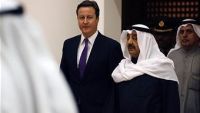
Daniel Finkelstein makes a simple but important point in the Times today (£): a Prime Minister’s foreign policy is determined by events more than by instincts. The revolts in the Middle East are defining David Cameron’s diplomacy. The emerging policy is a realistic expression of Britain’s current domestic and international capabilities. Cameron’s speech to the Kuwaiti parliament did not match Harold Macmillan’s ‘winds of change’ speech because Britain no longer disposes of continents. Likewise, Tony Blair’s messianic tendencies belong to a past era. Colonel Gaddafi’s murderous stream of conscious could have given cause to evoke the moral certainty of an 'ethical foreign policy'.

Libya on the brink

From our UK edition

Tonight, Libya appears to be on the verge of a full on civil-war. The interior minister has defected to the opposition and urged the army to do likewise. The interior minister has also warned that there are half a million mercenaries in Libya under Gaddafi’s orders. This seems further grim confirmation of just how far Gaddafi is prepared to go to hang onto power. If Gaddafii does step up his campaign of violence against his own people it raises the question of what the international community can—and should—do. There’ll be some who say that this is no one but Libya’s business. But this argument is flawed strategically as well as morally as slaughter in Libya will have a spill-over effect.

Gaddafi’s lethal sort of madness

From our UK edition

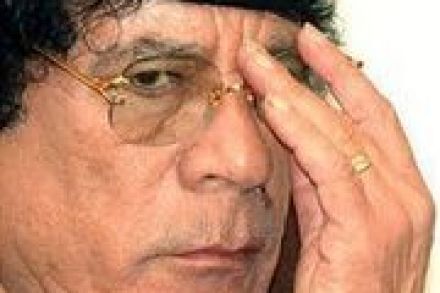
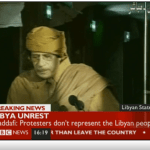
If Muammar al-Gaddafi weren't still in charge of a country, then his speech for Libyan State TV would have been straight-up hilarious. There he was, all spittle-flecked bombast, rattling on and on about the "bunch of rats and cats" who are trying to depose him, and blaming their actions on, erm, hallucinogenic drugs. "We Libyans have resisted the US and Britain in the past," he said, "and will not surrender." He also, predictably, mentioned Israel. It was like some living caricature of a mad dictator. As it is, though, we ought to dwell on some of the more ominous aspects of Gaddafi's address. He is not standing down, he said – giving the remarkable excuse that, as he is not a President, he has no position to resign from.

Cameron’s fine, liberal speech

From our UK edition

David Cameron’s speech in Kuwait today did not take on his hosts in the way that Harold Macmillan’s ‘winds of change’ speech did. But it was a still fine, liberal speech. The key argument of the speech was that: ”As recent events have confirmed, denying people their basic rights does not preserve stability, rather the reverse. Our interests lie in upholding our values – in insisting on the right to peaceful protest, in freedom of speech and the internet, in freedom of assembly and the rule of law. But these are not just our values, but the entitlement of people everywhere; of people in Tahrir Square as much as Trafalgar Square.” This is the crucial point: crude realism is not realistic.

Libya catch-up: Gaddafi on the precipice

From our UK edition

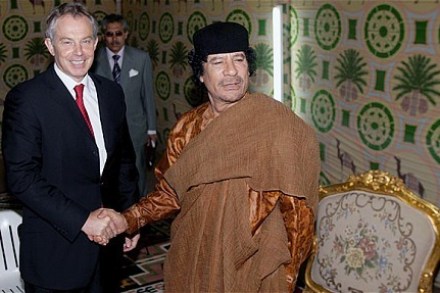
Aside from official – and provocative – proclamations from Saif al-Islam Gaddafi, the news from Libya is still arriving piecemeal. The latest reports are that the protestors have prevailed in Zawia, in the west of the country, to add to their "liberation" of Benghazi last night. And there is some speculation that Gaddafi Senior has fled the country, which would certainly reinforce the sense that his power is being whittled down, potentially to naught. As for Britain, the questions about our prior relationship with Libya still hover awkwardly over proceedings, and over the heads of the last government in particular. There was the al-Megrahi deal, of course, as well as all those meetings in Gaddafi's tent.

Endgame in Libya?

From our UK edition

Who the hell knows and who can tell what might follow if the Gaddafi regime really does collapse? On Sunday night there were all manner of rumours swirling through cyberspace. Some said the Mad Colonel was fleeing to Venezuela. So far that does not seem to be the case. Nor does the speech given by Gaddafi's son Saif last night offer much encouragement. We are in front of two choices, we can reform now, this is an historic moment, without it there will be nothing for decades. You will see worse than Yugoslavia if we don't choose the first option. Gaddafi is not Mubarak or Ben Ali, a classical ruler, he is a leader of a people. 10,000s of Libyans are coming to defend him...Libyans are coming to support Gaddafi. The army is also there, it will play a big part whatever the cost.

Is the Libyan military about to dump Gaddafi?

From our UK edition

There’s an intriguing Sky News report this evening which suggests that the Libyan Army might be about to turn away from Gaddafi. The channel is reporting that soldiers in the second city of Benghazi have turned from the regime and have told locals that they have ‘liberated’ the city. If the bulk of the military abandon him, then Gaddafi is done for. This combined with the news that the demonstrations have spread to Tripoli and that several of the tribes are joining the cause suggests that the revolution is Libya is gaining momentum. Certainly, the live resignation of the Libyan Ambassador to China live on air indicates that the governing class is split. Set against this though is that Gaddafi is nothing if not a survivor.

The Bahraini challenge

From our UK edition

The debacle in Bahrain cuts close to the British bone. The Ministry of Defence has helped train at least 100 Bahraini officers and supplied a range of equipment to the Gulf state. Egypt was important because of its regional role and ties to the United States. But there was no link to London, anymore than there was one to Paris or Berlin. Bahrain is different. Only a few months ago, British officials were applauding the Khalifa dynasty for taking steps towards democracy. But the fact is simple: the steps were insufficient – not by British standards, but by Bahraini ones. It should serve as a wake-up call to the Foreign Office and those in government with close ties to Bahrain.

Uproar on Arab Street

From our UK edition

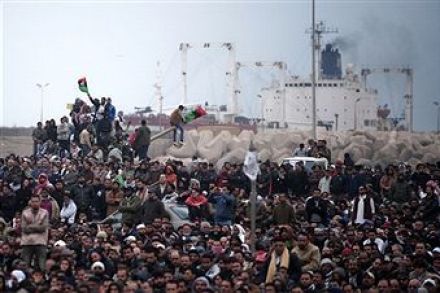
Deaths continue to mark the protests in Bahrain and Libya. Reports are inaccurate because communications have been broken, especially in Libya. YouTube is, again, invaluable. https://www.youtube.com/watch?v=4fP387pzEAA https://www.youtube.com/watch?

The Mad Dog lies in wait

From our UK edition

The Bahraini regime will not yield peaceably before protest, as Hosni Mubarak did. This morning, Bahraini police opened fire on demonstrators with live rounds; four people were killed. There were also reports that Saudi Arabian troops were involved, which would mark a clear change in the Arab establishment's tactics following Mubarak's fall. In the uncertain atmosphere, Twitter resounded to claims that Shiites were seeking reprisals and that the military was ‘taking control of parts of the capital’. The agony of choice: a military coup or a religious massacre?   This morning's news has forced Western powers to drop their hesitant approach.

Doubts remain over al-Megrahi

From our UK edition

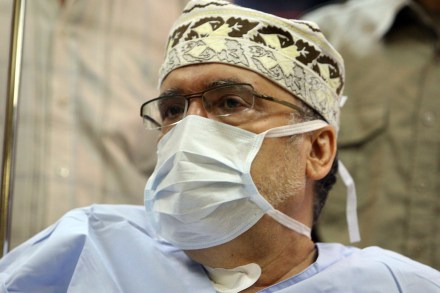
The morning after the day before, it seems that some of the murk around Abdelbaset al-Megrahi's release has lifted. In particular, one thing is explicit that wasn't before: that the policy of the Brown government was to "do all it could" to facilitate the convicted Lockerbie bomber's transfer to Libya. We might have surmised the same from David Miliband's statements at the time. But now, at least, we know for sure. Naturally, this is tricky news for Labour, and especially for the Ghosts of 2008 whose names are splashed across the papers today: Brown himself, Jack Straw, Des Browne, etc. And yet Gus O'Donnell's report has also absolved them of the worst sin of all: lobbying the Scottish government to release al-Megrahi.

When will mass protest come to Libya?

From our UK edition

As several seemingly permanent Middle Eastern autocracies tremble, Colonel Gadaffi’s Libya rolls on. So far, there have been reports of minor protests in the localities about housing shortages, nothing more. With unemployment standing at 30 percent, the Libyan people are just as impoverished as those in neighbouring Tunisia and Egypt. Gadaffi’s dictatorship is scarcely benevolent, and, as for liberalisation, Libya remains one of the few completely dry countries on Earth. The secret of Gadaffi’s success then would appear to be expressing aggressive anti-American sentiment, whilst suppressing Islamism and democratic opposition at home. And all the while he entices rich Western powers (Britain) with the allure of Libya’s virginal natural resources.