Libya

Dave’s rave

From our UK edition

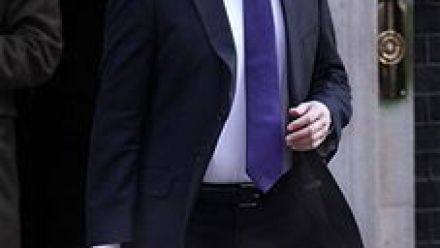
Friskier than a spaniel. That’s how Cameron seemed at today’s PMQs. The Gadaffi debacle has given him a Falklands bounce – prematurely one senses - and he was glowing like freshly made toast from the praise lavished on his performance on Monday. He seemed to want to share the good cheer with everyone else, even his opponents, and he offered thanks to Ed Miliband for his contribution, ‘which I thought was extremely powerful.’ Miliband sensed that attacking Cameron today would be like serving a writ on a man at his birthday party. He tried to pester the PM for ‘removing the mobility element from DLA’ but Cameron cut him down glibly. ‘The short answer is we haven’t,’ he said.

Ending Cameron’s War

From our UK edition

The coalition is now in danger of coming unstuck — not because of failure, but because of its success. It needs to urgently decide how to run itself and what its aims are. Before it runs out of targets. Neither is easy to do. The US may want to handover control of the mission but there is not really anyone they can transfer authority to. NATO is being blocked from assuming control, the EU does not have the wherewithal — its naval mission off Somalia's coast is already run out of Permanent Joint Headquarters in north London — and the UK and France would struggle to run the mission, either jointly or individually.

Removing Gaddafi is key

From our UK edition

The question of whether Gaddafi should be targeted and what the exit strategy should be in Libya are intimately linked. In truth, there is no exit strategy that does not involve Gaddafi’s fall from power. As long as he is there, the threat to those that the international community is now pledged to protect will remain. Even a de facto partition of Libya with Gaddafi in charge of the west and the rebels the east would require — at least — an over the horizon presence to ensure that Gaddafi did not attempt to raid across the line or invade the east. At the moment, the British government appears to be relying on Gaddafi being toppled by his own military in an act of self-preservation.

War aims

From our UK edition

A few days into the no-fly zone and the initial aim of the intervention has been achieved: Colonel Ghaddafi no longer controls his own airspace and cannot use airpower for close-air support, intimidation or murder. But success has bred a new problem - what now? Should the coalition turn itself into the airborne wing of the resistance, providing support to a rebel advance on Tripoli? Or should it just continue patrolling the skies above Libya as the rebels fight on? If so, how should the coalition react when the rebels face military set-backs? Should they stand back or prevent Libyan forces from taking advantage of their tactical victories and just have DfiD deliver humanitarian assistance?

The Commons votes to support the intervention in Libya

From our UK edition

The House of Commons has just voted by 557 to 13 to support Britain’s participation in the enforcement of UN Security Council Resolution 1973. This came at the end of six and a half hours of respectful debate rounded off by a speech from the Foreign Secretary that reminded us why he was for so long regarded as the best parliamentary performer on either side of the House. Hague offered an assurance that if the mission changes, the government will return to the House. This was widely understood to mean that no ground troops would be committed without the support of the House. He also confirmed that the costs of the operation would be met from the reserve. Having watched much of the debate, I would say that the mood of the House was not quite as the vote suggests.

Putin rages against the “crusading” West

From our UK edition

A gold star for Vladimir Putin, for providing us with one of the most extraordinary interventions of the day. While we knew that the Russian Prime Minister is opposed to military action in Libya — and also that he is no natural friend of the West — it is still striking to hear him talk as he does in the video above. "It reminds me," he says of the UN resolution at hand, "of the medieval call for a crusade." Ever the pacifist, he then goes on to rail against the "steady trend in US policy" to get involved in conflicts abroad. Meanwhile, our government is doing its part to assure Parliament, and the public, that their policy on Libya is more multilateral than medieval. Their note on the legal basis for action in Libya has just been published.

Targeting Gaddafi

From our UK edition

The press is currently making great play of an apparent difference between General Richard and Liam Fox on whether or not Gaddafi can be targeted. The whole debate flags up one of the absurdities of international legal convention. If it is legitimate to hit a Libyan tank crew moving on Benghazi, why it is not legitimate to target the person who is ultimately giving these orders?     Given the whole nature of the Libyan state, the fastest — and, I would say, most humane — way to end this conflict would be to kill Gaddafi.

The Yemeni domino totters

From our UK edition

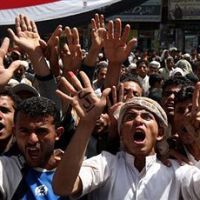
Call it the domino effect, if you like. After Tunisia, Egypt, and Libya, Yemen is the latest country to drag its rulers to the precipice — and it could push them over, too. The latest news is that several Yemeni generals have joined the protesters in calling on President Saleh to stand down. One source tells al-Jazeera that 90 per cent of the army could do likewise by this evening. The broad consensus is that the current regime is wheezing to a close. So what next? From this vantage point, Yemen is certainly one of those countries where change should be greeted warily. It's not so much the emerging prospect of a military junta, but more the encroaching presence of al-Qaeda in the margins (aka "the mountains").

Moussa’s mess

From our UK edition

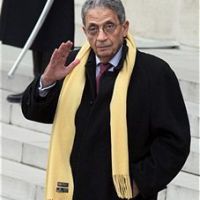
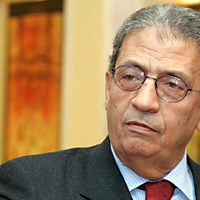
Just as the world thought the Arab League had entered adulthood its Secretary-General, Amr Moussa, threw a teenage tantrum, voicing concern that the coalition bombing of Libya went beyond a no-fly zone. He had wanted the protection of civilians, he said, not the bombardment of more civilians. But it is hard to see what Moussa had in mind. Did he want to micromanage operations from his desk, picking targets as Lyndon Johnson did during the Vietnam War? Or is the temptation to play to the Arab gallery too much? Could it be that Moussa's presidential ambitions in Egypt are better served by not being too close to the West? Either way, his behaviour is disappointing.

Obama’s nervousness makes life difficult for him and his allies

From our UK edition

Gingerly, gingerly — that's how the Americans are approaching the presentational battle over Libya, if not the actual campaign itself. There is no bombast in the official broadcasts from Washington, nor categorical intent. Instead we have Robert Gates emphasising, as he did yesterday evening, that the US will soon handover "primary responsibility" for the mission to us or the French. Or there's Mike Mullen, the Chairman of the Joint Chiefs of Staff, saying that "potentially one outcome" is for Gaddafi to stay in power (see video above). The idea of regime change, or of deeper US involvement, is being downplayed all round. What's clear, perhaps even understandable, is that Obama & Co. are eager not to exhume the ghosts of Iraq.

Allied strikes hit targets in Tripoli

From our UK edition

Tonight’s news of major explosions in Tripoli shows that the allies are putting little store in the Gaddafi regime’s unsubstantiated claims of a ceasefire. Some of the targets appear, from reports, to have been in the same area of the city as Gaddafi’s barracks and residence. The US military, though, says the allies are not targeting the dictator specifically. Judging from comments made by the US Defence Secretary Robert Gates, the Americans are looking to hand over control of the operation to the French and/or British in the next few days. Pentagon fears over US military overstretch, which are part of the reason that Obama has sounded such an uncertain trumpet on Libya, are still playing a large part in determining the American response.

War Aims Matter, So What are We Trying to Achieve in Libya?

From our UK edition

I know it's tedious to bang on and on about this but it does seem quite important that we have some idea of what we're actually trying to achieve in Libya. Until we have a goal it seems most unlikely that we can have a coherent strategy. At present no-one seems to know what the goal is and the Americans are busy contradicting one another. For instance, here's Admiral Mike Mullen, chairman of the Joint Chiefs of Staff insisting, again, that the operation is strictly limited: "The goals are limited. It's not about seeing him go." And here's National Journal's Marc Ambinder, quoting an administration official who says "We have multiple scenarios but none of them end with Qadaffi in power.

The Arab League puts a spanner in the works

From our UK edition

According to Sky’s Tim Marshall, the Arab League is to meet in emergency session to discuss events in Libya. It seems that some of its members are opposed to the action being taken by the French, which it believes exceeds the remit of the UN Resolution for a no-fly zone. The bombing of tanks in particular has raised the ire of its General Secretary Amr Moussa. The Arab League’s assent was crucial to obtaining the Resolution, so Moussa’s reservations are significant – although quite what he thought he was agreeing to in the first place is anyone’s guess. Moussa is a probable candidate in the forthcoming Egyptian presidential election, so perhaps Sarkozy is not the only leader using Libya for personal gain.

Sarkozy’s game

From our UK edition

I'm hearing more reports about the rather peculiar behaviour of Nicholas Sarkozy, and how he is playing the Libya campaign thus far. Obama wants to hand over leadership of this mission quick. He was never really into it, but the US Navy was overwhelmingly the best placed to do the first phase of the mission (ie, fire Tomahawks into 20 Libyan targets). The Tomahawk team constituted 11 US ships and submarines, plus one British submarine. Anything other than American leadership would have been a joke. Phase Two is to take out Gaddafi's surface-to-air missiles as soon as he dares to move them. Obama wants to hand over the baton to NATO, with its bases in southern Italy and other Mediterranean nations. But Sarko objects. He likes the idea of US, UK and France as a triumvirate.

The allies converge on Gaddafi

From our UK edition

George Osborne appeared on the Andrew Marr show this morning to introduce the Pledge of his Budget magic trick. But Marr and his viewers wanted talk about the show of military strength over Libya. Osborne reiterated that the government is committed to enforcing the UN Resolution and had no plans to deploy ground troops at this stage. He refused to rule out the use of British ground forces in the future. Privately, officials are trying to dispel the perception that the UN Resolution forbids the use of Special Forces commandos to assist the bombing campaign. The Resolution does not permit an occupation, but it would be very surprising if covert operations were not already being planned against Gaddafi's military installations and logistical infrastructure.

Cameron’s achievement

From our UK edition

Just last month, David Cameron declared that you “can’t drop democracy from 40,000 feet.” He’s right. It’s more like 400 feet: this is the cruising altitude of the 112 Tomahawk missiles fired from British and American submarines earlier this evening, low enough to dodge Gaddafi’s radars and take out some 20 targets. Given that Obama and Cameron have both ruled out ground forces this will be, as Kosovo was, a bombing-only campaign. And launched on the eighth anniversary of the Iraq war. The US Navy, which was always itching to proceed with the no-fly zone, is now leading the operation; hence its briefing, on CNN, above. There is one British submarine and 11 other US warships in the region.

Come on, NATO, get a move on

From our UK edition

NATO's top decision-making body is meeting in emergency session to review military plans for a no-fly zone over Libya. The alliance is expected to issue the order to launch the operation. But the action now is taking place not inside NATO, but in a coalition-of-the-willing led by France and Britain. Germany and Turkey are said to be blocking swift action. For NATO Secretary-General Rasmussen, this should be disconcerting. Only a few months ago, NATO celebrated the agreement of a new strategic blueprint which said: 'NATO has a unique and robust set of political and military capabilities to address the full spectrum of crises  – before, during and after conflicts.

Allied military intervention in Libya has commenced

From our UK edition

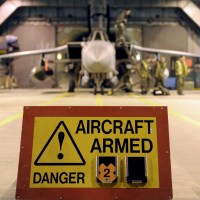
Reports are coming in that French jets have fired the first shots in the UN-supported intervention in Libya. The coming conflict will determine, in the short term, whether the Gaddafi regime is toppled and, in the longer term, whether the international community rediscovers its appetite for intervention which had been so diminished by the controversies over Iraq and the difficulties of the Afghan mission. That there is intervention at all in Libya is down in no small part to David Cameron and William Hague. Hague played a key role in ensuring that Arab countries were prepared to commit to putting planes in the air in this operation, something that was crucial to moving the vacillating Obama off the fence.