Law

Real feminists stand up for women

From our UK edition

As Edmund Burke wrote: ‘Manners are of more importance than laws. Upon them, in a great measure, the laws depend.’ Testify, brother – and if our lawmakers have no manners, then we are really up a creek. As Spectator columnist James Forsyth noticed yesterday: ‘Quite remarkable that no MP has offered Jo Swinson, who is seven months pregnant, a seat. Really shocking manners and decency.’ Swinson didn’t help matters when, according to the Mail, she said it would have been ‘quite sexist’ to suggest she was not capable of standing. I wonder how damaging that sort of attitude is to feminism in general?

Britain’s abortion laws are inherently absurd

From our UK edition

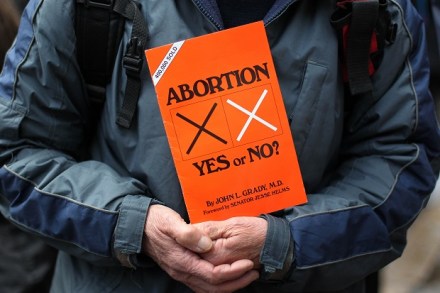
The Director of Public Prosecutions, Keir Starmer, yesterday declared that it was right not to prosecute doctors who authorised abortions which, according to a Telegraph investigation, were requested because of the gender of the foetus. It seems that the women mentioned more than one reason for the abortions so it wasn’t possible to isolate the gender selection element from the other factors. ‘The only basis for a prosecution would be that although we could not prove these doctors authorised a gender-specific abortion, they did not carry out a sufficiently robust assessment of the risks,’ he said. And just what might a ‘robust’ assessment of risk amount to?

Ed Miliband ducks the question. If squaddies are victims, who or what is threatening them?

From our UK edition

A country’s laws say much about its people’s character, though not in the way its lawmakers intend. Perhaps the oldest written law in English history, dating back to King Ethelbert of Kent, decreed strict punishments for anyone who attacked Church property, which suggested that either they were very pious folk or, more likely, quite a few people were stealing from churches. The idea of sacrilege predates Christianity; in ancient Rome violence against some officials was punished more severely because their positions were sacred. The modern advent of hate crimes has reinvented this idea, with certain people granted protection because of group victim status, victimhood being the closest thing we now have to the sacred, offending someone’s identity a blasphemy.

We must revisit the Equality Act to stop vexatious court cases

From our UK edition

What have the Churchill £5 note, the Home Office ‘racist vans’ and the ‘Bedroom Tax’ got in common? All were alleged breaches of section 149 of the Equality Act 2010, which provides that public authorities are under a duty to have ‘due regard’ to preventing discrimination and advancing equality. Dropping Elizabeth Fry from banknotes was said to be a breach of s149 by the campaign to bring a judicial review. They quickly secured the £10 note for Jane Austen. But as litigants, they would have been in good company. Section 149 was used by the Fawcett Society to challenge the 2010 Budget’s impact on women.

Why bikers need a better deal from the EU

From our UK edition

Since I was elected to Parliament in 2010, I have taken every opportunity to push back against the EU’s move towards ever closer union. I have also been a long-time supporter of offering the people a say on our membership of the EU and was delighted when the Prime Minister led the way in pledging to hold that referendum after renegotiation before 2017. I am proud to be a member of the only party offering that choice. Now that the Prime Minister has taken the bold step of pledging a referendum, he must be no less ambitious in the renegotiation he seeks. When we talk about our membership of the EU, we hear from the usual suspects who have dominated the discussion for so long: corporate big business and professional lobbyists.

When is corruption not corrupt? When the establishment says it isn’t

From our UK edition

Mr Justice Tugendhat delivered a ferocious verdict last week. Undercover reporters from the Sunday Times claimed they had found Peter Cruddas, co-Treasurer of the Conservative Party, offering influence in return for wodges of cash. With damning language, the judge found against the paper, leaving it with costs and damages of around £700,000. I don’t want to discuss the merits of the case. Cruddas, who had to resign when the story came out, may have been unjustly maligned. Conversely, the Sunday Times is going to the Court of Appeal, so it may be that the paper is the true victim. I want to look at the judge’s reasoning instead, because it unconsciously reveals how platitudes, evasions and logical fallacies hide corruption in British public life.

Government fights misinformation over shale planning process

From our UK edition

The government is busy quelling worries about the planning process for exploratory shale drilling, following this disobliging article in yesterday’s Observer. The government stresses that its planning guidance document, which was published last month, contains a list of environmental risks that planning officers ‘should address’, together with an explanation of the competences of other relevant government departments and agencies. The government rejects any insinuation that it is placing shale above renewables. Indeed, aides have taken the opportunity to reiterate the coalition’s commitment to reducing greenhouse gas emissions.

The “bedroom tax” judgment has implications far beyond bedrooms

From our UK edition

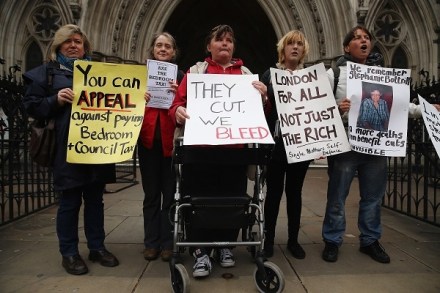
The High Court has rejected the "bedroom tax" claimants' case. In a ruling issued earlier this morning, Lord Justice Laws said that ‘the PSED [Public Sector Equality Duty on the benefit reforms] was fulfilled; and the effects of the HB [Housing Benefit] cap were properly considered in terms of the discipline imposed by the requirement of proportionality.’ On the point of the government providing additional help for disabled people affected by the cap, the judge wrote: ‘provision of extra funding for DHPs ['discretionary housing payments'] and advice and guidance on its use cannot be said to be a disproportionate approach to the difficulties which those persons faced.

The judicial review row should not be about lawyers – it is about democracy

From our UK edition

The stooshie over judicial review is not about lawyers, although one should be forgiven for thinking otherwise given much of today’s coverage and reaction. Really, it is about the rule of law and representative democracy. So much of the debate around legal reform (not just judicial review) has been skewed by familiar obsessions with ‘human rights’, ‘lefty lawyers’ and ‘right-wing bastards’. Such media tropes are not created ex nihilo. Public administration has become highly politicised, and all sides play the game. I’ve heard government-types talk about the need to break 'lefty lawyers’' perceived monopoly over legal aid and some corners of the judiciary.

Boris the ironist treads a careful path through immigration row

From our UK edition

Boris Johnson’s Telegraph columns are often works of mischief, but today’s is a carefully constructed piece of politics. His subject is immigration – about which the political nation has been warring over the weekend. Boris is, famously, pro-immigration – as one would have to be to win elections in London, irrespective of whether one was a Conservative. And his attitude to illegal immigration is pragmatic: illegals need to be brought into the fold or deported. Boris treads this line again today. First, he writes a paean to the runner Mo Farah – who personifies a ‘sermon as to what immigrants can achieve if they work hard’. Then he says that illegal immigrants cannot run for their country, for they live beyond society and outside the law.

Employment tribunal changes a prelude of what’s to come over legal aid

From our UK edition

Changes to the legal system come into force today, with workers being charged for bringing cases against their bosses to employment tribunals. Employees will pay £150-£260 initially, and then there will be a further charge of between £230 and £950 for the hearing. You can read all of the guidance here. The politics of this are relatively clear: business groups, especially those representing small businesses, welcome the effort to tackle ‘vexatious claims’, which impede their operation and confidence. Trade unions say that there are no reliable figures on the number of vexatious claims; and they point out that the number of cases being brought is declining. The government talks of the need to protect business and the public purse.

Soldiers’ right to protection remains, and so it should

From our UK edition

Last week’s Supreme Court ruling in the Snatch Land Rover / Challenger II cases, which allowed the families of four soldiers who lost their lives while serving in Iraq to sue for damages, has provoked some strong opinions. Some say that the MoD is in all ways different from other employers and that it should not therefore be held accountable in the courts. Of course soldiering is not ‘just another job’, but surely it does not follow that we should tolerate the deaths of young British citizens if those deaths are caused by the Government’s failure to provide adequate training or equipment. Soldiers should be no less entitled than the rest of us to protection against negligence and human rights abuses.

Ancient and modern: Cicero on tax havens

From our UK edition

David Cameron wants the international community to do something about big business avoiding paying tax. If only it were as simple as that. Ancient philosophers, beginning with Aristotle (4th C BC), made a distinction between man-made law, which was peculiar to a state that made it and derived its validity simply from its adoption by that state, and natural law, which was universally valid. One could say that the former was right because it was law, the latter was law because it was right. Cicero (1st C BC) called this universal ‘world’ law ius naturale, identified it with divine reason and associated it with another concept, that of the ‘law of nations’, ius gentium. Fine for philosophers.

Hail Caledonia: Fantasy Justice and Offensive Behaviour at Football. The Horror Continues.

From our UK edition

Two years have passed since the SNP won its landslide election victory, leaving Alex Salmond master of all devolved territories. Two years notable for the absence of significant legislative achievement. Given the consequences of government legislation this is not necessarily something to be regretted. Nevertheless, Mr Salmond is no FDR or LBJ (again, a good thing too you may say). The exception to this record of legislative lethargy is, of course, our old friend the Offensive Behaviour at Football and Threatening Communications Act. Readers may recall that I am no fan of this illiberal, pernicious, dismal piece of legislation (my most recent post on it is here). Nothing that has happened since it was pushed through Holyrood has persuaded me to grant it a second chance.

Bring on the drones – the Supreme Court has changed the way we fight wars

From our UK edition

On the face of it, the Supreme Court’s decision to allow three suits to be brought against the Ministry of Defence is surprising, almost shocking. My colleague Alex Massie has castigated the judgment; but, while I don’t necessarily disagree with Alex’s sentiments, the judgment merits very close attention. It is a politically far-reaching decision. The Court was asked to consider whether British military personnel on active duty overseas are under the jurisdiction of the European Convention of Human Rights. If they are, then the British state has a duty to secure the human rights of its overseas personnel (specifically their right to life under article 2 of the Convention) as if they were at home. In short, is there some corner of a foreign field that is forever Europe?

Take it from a former barrister: Chris Grayling is right to reform legal aid

From our UK edition

Shakespeare took it a little far in Henry IV, Part II, when Dick the Butcher said, ‘Let’s kill all the lawyers.’ Chris Grayling hasn’t made the same proposal but you could be forgiven for thinking otherwise, listening to the howls of anguish and indignation coming from the Inns of Court. Grayling, the first non-lawyer to be made Lord Chancellor since the 17th century, has simply said he wants to make some savings in the legal aid bill. To the lawyers, unaccustomed to having their privileges and subsidies challenged by anyone, this means war. Already, 90 millionaire QCs — poor, impoverished Cherie Blair among them — have written a letter to the Telegraph attacking legal aid cuts for judicial review cases.

Why Sweden has riots

From our UK edition

  Stockholm  ‘All of them should have been very happy,’ Robert A. Heinlein begins his 1942 novel Beyond This Horizon. The material problem has been solved on this future earth, poverty and disease have been eradicated, work is optional. And yet parts of the citizenry are not enthusiastic. Some are bored, others are preparing a revolt. Why should that be, in such a utopian world? A similar puzzlement has been the dominant reaction from commentators after riots broke out and cars and buildings were burned in heavily immigrant-populated suburbs of Stockholm in late May. Sweden?

How social media helps authoritarians

From our UK edition

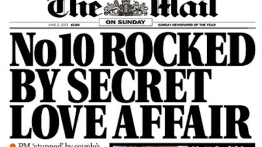
Have you heard? Do you know? Are you, as they say, ‘in the loop’? When the Mail on Sunday said a ‘sensational affair’ between ‘high profile figures’ close to Cameron had ‘rocked’ No. 10, did you have the faintest idea what it was talking about? I did, but then I’m a journalist. Friends in the lobby filled me in on a story which had been doing the rounds for months. I even know which law stopped the Mail on Sunday  following the basics of journalism and giving its readers the ‘whos’, ‘whats’, ‘whens’, ‘whys’ and ‘hows’. (Although with most affairs the ‘whys’ are self-evident.

Theatre review: Below par Mamet is still more fun than a personal-best performance from a second-rater

From our UK edition

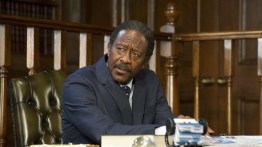
Mamet is back. His 2009 play Race is an offbeat courtroom drama set entirely in a lawyers’ office before the trial begins. Jack and Henry are two hotshot attorneys, one white, one black, who must decide whether to accept the case of a prosperous banker, Charles, accused of raping a black woman in a hotel. Jack and Henry have a young black trainee, Susan, whose ethnicity and gender may help them sway the jury. The case against Charles turns on sequins. The victim swears that her dress was torn off during the attack but a hotel cleaner found no sequins on the floor. Sequinned attire is naturally deciduous, or, as Jack puts it, ‘a sequined dress, you look at it wrong, they start to fall off’.

What can society learn from the ‘grooming’ scandals?

From our UK edition

The verdicts have been delivered in the Operation Bullfinch trial. Seven of the nine men have been found ‘guilty’. The case involved the highly organised sexual and physical abuse of underage girls in the ‘care’ system. This was carried out by a gang of men in Oxfordshire over the course of nearly a decade. As I wrote of one of the most shocking aspects of the case: ‘One of the victims sold into slavery was a girl of 11. She was branded with the initial of her "owner" abuser: "M" for Mohammed. The court heard that Mohammed "branded her to make her his property and to ensure others knew about it".’ There is bound to be considerable debate now around this case.