Law

Jimmy Savile Is Innocent…

From our UK edition

Now then, now then. How is this for the most inappropriate publicity stunt going? The Bread and Butter gallery in Islington is opening an exhibition tomorrow provocatively called 'Jimmy Savile Is Innocent'. Artists are invited to bring works on the subject to the opening tomorrow night: ‘In an age when the dead can't defend themselves Jimmy Savile has been found guilty. Lets remember that Jimmy is innocent and can only be found guilty by a court of law, perhaps its time for a posthumous trial?’ Trial by artistes. Is that better or worse than trial by media?
The government kicks the Sharia debate into the long grass

From our UK edition

Because our Parliament discusses little of significance anymore, most of the public tend to ignore it. The perception that the weekly silliness of Prime Minister’s Questions constitutes Parliamentary business is enough to put any normal person off.  And apart from that weekly bun-fight, even the media barely bothers to report on the work of either House any longer. Occasionally something still happens in the Commons or the Lords that is worthy of serious attention but because of its form elsewhere, such occasions fail to get the attention they deserve. Such is the Bill proposed by Baroness Cox, which had its second reading in the Lords on Friday.

Britain’s illiberal state

From our UK edition

It can seem surreal, almost otherworldly, to read about our judiciary these days. Just a few days ago my colleague Douglas Murray wrote about the peculiarity of imposing a custodial sentence on Matthew Woods for posting bad-taste jokes on Facebook about the abduction of April Jones. As if to confirm that the Bar is indeed trading in absurdities, another court has now sentenced Barry Thew to eight months in prison (four of which relate to a bail offence) for wearing a t-shirt on which he scrawled the crude message: ‘One less pig; perfect justice’ and ‘killacopforfun.com haha.’ It should be obvious that one need not laugh at the jokes of Mr Woods or support the sentiments expressed by Mr Thew to recoil at their treatment by the state.

The Myth of the European Court of Human Rights’ “War on Britain” – Spectator Blogs

From our UK edition

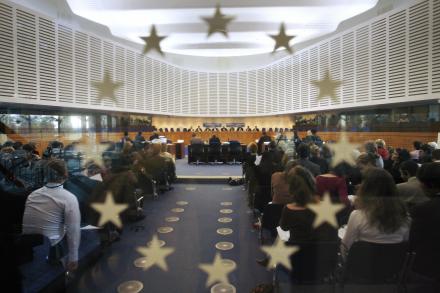
You rarely hear people defending the European Court of Human Rights. It is, according to British mythology, a meddlesome beast populated by dimwit judges of dubious foreign provenance whose rulings are invariably ninnyish, ignorant and intolerable in equal measure. I prefer to think of the court as the last protector of individual rights often threatened by hostile governments. Sometimes that hostile government is our own. The court - and really this cannot be stressed often enough - offers protection from the state. Restraining government's worst instincts is a noble calling and if our judges cannot or will not do it then praise be that the european justices are not so feeble-minded. As for the charge the European court is unelected and unaccountable.

Briefing: the Christians taking their fight to Europe

From our UK edition

Away from the drama of the reshuffle, the European Court of Human Rights is hearing the pleas of four British Christians, who are arguing that UK law inadequately protects their right to manifest their faith under articles 9 and 14 of the European Convention on Human Rights. The applicants’ cases are well known. Nadia Eweida, a British Airways employee, was asked to remove or conceal the crucifix that she wore around her neck in line with new uniform prescriptions. She did so on several occasions, but eventually refused and was sent home. She lost her workplace discrimination claims on grounds that she had breached her employer’s regulations without good cause.

Was the new squatting law necessary?

From our UK edition

Squatting in residential properties became a criminal offence today under the Legal Aid Sentencing and Punishment of Offenders Act 2012, with a penalty of 6 months' imprisonment or a £5,000 fine. The new offence applies where a person knowingly trespasses in residential premises with the intention of living there. Potentially it could happen to any of us who own or rent a house or flat. Some people even fall prey to squatters when they simply leave the country for an annual holiday. Justice minister Crispin Blunt told parliament that the new law ‘will bring relief to those whose lives are blighted by having their homes occupied.’ This comment demonstrates two fundamental problems at the heart of Whitehall.

Galloway and Murray’s smears ignore how simple the Assange case is

From our UK edition

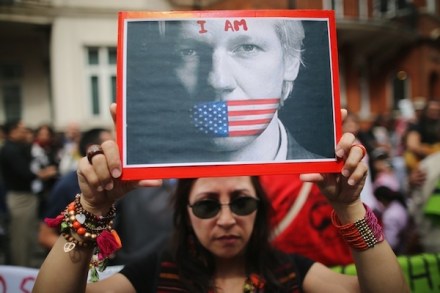
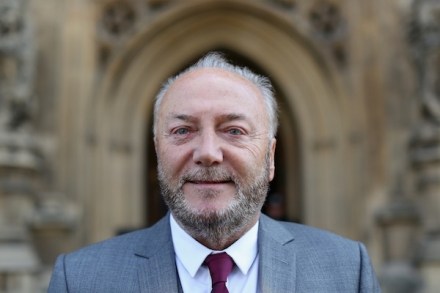
The remorseless smears of the alleged victims of serious sexual assault by George Galloway MP and Craig Murray, our former ambassador to Uzbekistan will have serious consequences for the victims of sexual assault on British shores. Both men are guilty of some of the most callous behaviour of modern political times in their intemperate outbursts, which are about much more than Julian Assange. The victims of these crimes in this country already suffer from a unique combination of trauma and stigma. It is no surprise that rape and associated crimes are perennially underreported. An authoritative study commissioned by the Home Office in 2007 found that 'between 75 and 95 per cent of rape crimes are never reported to the police'.

‘Rape as most people understand it’

From our UK edition

George Galloway got a spade out today and made a statement in which he attempted to clarify his comments about the allegations against Julian Assange. He dug himself a little deeper, saying that 'what occurred is not rape as most people understand it'. Assange is wanted in Sweden - but not yet charged - on allegations of rape, unlawful coercion and sexual molestation. Rod Liddle blogs that he thinks Galloway has a point. The law says he does not. There is a lesson to be learned from Galloway's comments, though, which is that rape is not well understood at all. When he says something is 'not rape as most people understand it', this is because society still largely imagines rape as an unexpected attack on a woman walking down a dark alley late at night.

Victory for ministers on ‘slave labour’ schemes

From our UK edition

Ministers were relieved today when the High Court ruled that the Work and Pensions Department's back-to-work schemes are not 'forced labour' and do not breach human rights. The case had been brought by two people: Cait Reilly and Jamieson Wilson, who argued that the unpaid schemes they had been put on violated article four of the European Convention on Human Rights. Ms Reilly, 23, was given 'unpaid menial work' at Poundland, while Mr Wilson, 40, was told that he would be required to undertake 30 hours' unpaid work each week cleaning furniture. Both had been subjected to sanctions for refusing to take part in the schemes, and were facing losing their jobseekers' allowance for six months, too. Had the DWP lost the case, its back-to-work schemes would have been ruled invalid.

Why we should trust trial by jury

From our UK edition

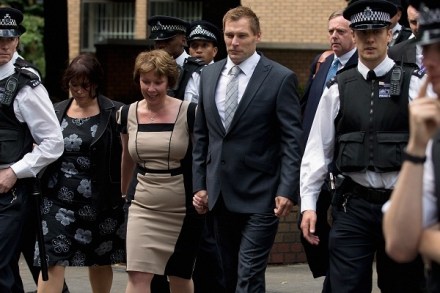
The acquittal of PC Simon Harwood on Thursday for the manslaughter of Ian Tomlinson provoked a strong reaction in the press. Leading the charge, the Daily Mail's headline summed up the mood: 'Freed, the 'thug in police uniform': what jury weren't told about the PC cleared of G20 killing.' The criticism was aimed at not only Simon Harwood, but also the Metropolitan police for re-employing the officer with a string of complaints against him, and the court for not allowing evidence of his disciplinary record to go before the jury, the insinuation being that there must be something wrong with a trial process that keeps the jury in the dark about a defendant's background.

We can’t just bury Bloody Sunday

From our UK edition

I have a piece in today’s Wall Street Journal about the case for prosecuting certain of the Bloody Sunday soldiers. I am aware that it is not a popular argument, and one that most British people tend to shy away from. It also seems to provoke a certain amount of confusion. On a radio programme the other day, discussing potential prosecutions, the interviewer went so far as to ask how or why somebody who is ‘right-wing’ could be making these points. Firstly of course, this is a straightforward category error (‘right-wing’ equals bad and mean and therefore any ‘right-winger’ must be in favour of shooting civilians). Secondly, I think that there is in fact a vital conservative case for carrying this through to the stage of prosecutions.

Legally blonde

From our UK edition

A touch of glamour at the High Court this morning as N-Dubz singer turned X-Factor judge Tulisa won an apology from her ex-boyfriend for leaking a rather intimate tape of the pair. Revealing a newly dyed blonde mop for her day, presumably in homage to Legally Blonde, she told the waiting pack that her leaky ex had messed with the wrong girl. ‘I'm just really happy that the truth is out. It's a fresh start for me today after this, and it's my birthday, and now, of course, I'm off to Ibiza.’ Of course. A happy ending you might say.

Obamacare and the Supreme Court: Partisan goose for the partisan gander

From our UK edition

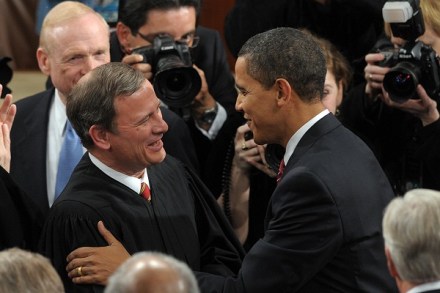
Like the French Revolution it remains much too soon to say what the consequences of the United States Supreme Court's decision to uphold Obamacare will be. Except this: defeat would surely have been a catastrophe for Mr Obama. The more one considers John Roberts' pivotal argument, however, the more it seems as cunning as it is undoubtedly neat. There is something for everyone in his judgement and something for everyone to fear too. Roberts, who appears to have changed his mind, produced an elegant solution: the federal government lacks the power to force citizens to purchase health insurance but it may tax them if they don't. So Obamacare survives and American liberals (not to be confused with, you know, proper liberals) may postpose their jihad against the court.

Rodney King and compensation

From our UK edition

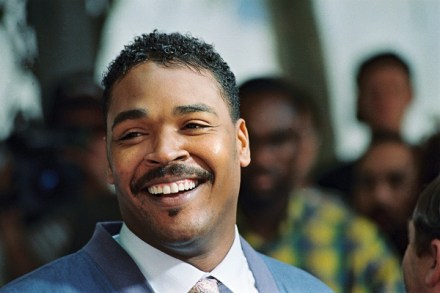
The late Auberon Waugh advised his readers to reflect on the case of David Flannigan when considering the munificent compensation often awarded to people after awful events. Mr Flannigan had been estranged from his parents for two years before the night of 21 December 1988, when Pan Am Flight 103 fell onto the family’s house in Lockerbie, killing all but one other member of his immediate family. Through a thoughtless, inhumane, process of compensation Flannigan (who had been a spray-painter) became a millionaire. Just over five years later, at the age of 24 — after fast cars, drink and drugs — he was found dead at a beach resort in Thailand.   I thought of Flannigan again this morning when reading reports of the death of Rodney King.

A day for celebration, but more must be done to protect free speech

From our UK edition

It’s not often that three relatively small NGOs can change politics. So today’s parliamentary debate on the Defamation Bill is cause for considerable pride, among my former colleagues at Index on Censorship and their partners at English PEN and Sense about Science. In November 2009, we began a campaign to reform England’s unfair libel laws. The claimant cabal, those law firms who encourage the rich and famous, particularly those from abroad, to use London’s indulgent courts, assumed that the campaign would fizzle out. It didn’t, picking up steam as it went along. So today’s events should be a cause for celebration. They are, but only in part. The legislative process has been a long and tortuous one.

A Victory for the ECHR

From our UK edition

As Pete said yesterday, the arrest and presumed deportation of Abu Qatada to Jordan is worth a cheer or two. So too is the fact that the British government orefers to act within the law, not outside it. The government insists it has received assurances from the Jordanians that Qatada will face a fair trial (or, perhaps more accurately, as fair a trial as can reasonably be expected). This is also worth a cheer, even if one cannot be wholly confident of the worth of these assurances. Most of all, however, these developments are a victory for the too-often-maligned European Court of Human Rights. Granted, this assumes the Court will eventually rule that Qatada can be deported to his homeland but, presuming this is the case, far from impugning the court's worth the Qatada saga justifies it.

How Clegg outmanoeuvred Cameron over the ECHR

From our UK edition

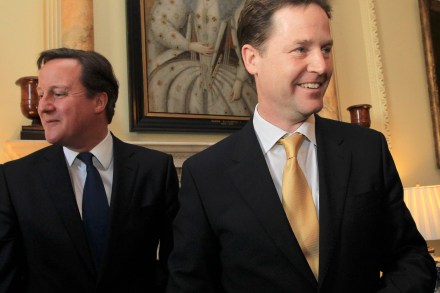
News that Nick Clegg has brilliantly outmanoeuvred Cameron over the British Bill of Rights will come as no surprise to CoffeeHousers — we told you so last March. The panel was stuffed full of ECHR enthusiasts, balanced by Tories most of whose competence lay in other legal areas. Perhaps Michael Pinto-Duschinsky, the most clued-up of the Tory appointees, didn’t realise this when he joined the panel. He has twigged now, and has quit (or was eased out, depending on whose version of events you believe); observing that the ‘Lib Dem tail is wagging the Conservative dog’. As was evident from the start.

Holy law

From our UK edition

In the autumn of 1347, the Black Death arrived in Egypt. In the 18 months that followed, mosques turned into mortuaries across North Africa and the Levant. By the time the pestilence had subsided, up to a third of the Muslim world lay dead. Theologians delved into their books and found a comforting spin: infection was a blessing from God, they pronounced, and all believers touched with it were bound for paradise.  The hordes who fled their villages to escape the disease were apparently unconvinced. So too was an Andalusian scholar named Ibn al-Khatib, whose observations showed it to be spread by human contagion, not the hand of the Almighty. Proof taken from the traditions, this man retorted to the jurists, had to yield to the perception of the senses.

Raab’s early hits

From our UK edition

The Commons will debate the UK’s controversial extradition treaty with the US and the European Arrest Warrant later today. The debate has been brought by Dominic Raab MP. He was on the Today programme this morning, explaining that he wanted to introduce a ‘forum clause’ to the UK-US treaty. Forum is a principle that could apply in cross-border cases like Gary McKinnon’s, which Raab has been championing. Raab wants to end the ‘sort of haggling between prosecutors behind closed doors’ that governs extraditions at present, and reform the process by placing it before open court in Britain. He argues that numerous other countries enjoy such an arrangement with the US, why shouldn’t its ‘stalwart’ British allies?

A crucial week for the cause of free expression

From our UK edition

For those who care about free expression in the UK, and particularly the reform of our invidious libel laws, this is a crucial week. Today and tomorrow, the UK Supreme Court hears the Times’s attempt to overturn an appeal court ruling in a libel case brought against it by Metropolitan Police officer Gary Flood.   On Wednesday the Joint Committee on the Draft Defamation Bill produce its first report. There are grounds for hope that it will suggest strengthening some key areas, paving the way for full legislation early in 2012 — if the government can be persuaded to find parliamentary time.