Law

The Queen’s speech can’t repeal the Law of Unintended Consequences

From our UK edition

Last week, the European Commission voted to ban three pesticides which are said to harm bees. Everyone loves bees, so perhaps we should all be rejoicing? Well, I’m afraid my reaction was not joy, but to think: here we go again, this is bound to mean more dead bees. It’s inevitable: whether it’s a ban, an order or a reform, it doesn’t matter. When governments act they almost always forget the golden rule of public policy: the Law of Unintended -Consequences. And guess what? Just a few days after the vote, scientists are pointing out that the ban will mean farmers using older chemicals that are even more harmful to bees. For good measure, the alternative pesticides are more expensive to use and not as good at protecting crops.

Reform human rights to save human rights

From our UK edition

The European Convention of Human Rights is developed and interpreted as times change; but is there a democratic imbalance when only lawyers and judges can do this? Particularly where the rights being litigated are not just matters of strict law but properly political issues. It is a valid democratic concern that the Human Rights Act, which brought the European Convention into our own law, may encourage political questions to be converted into legal questions, taken to an unelected judge rather than to Parliament. Such wider political questions affect not just the rights of the individual but of society at large – and many consider that their voices on such matters are not being heard in the appropriate forum: Parliament.

Another weird sacking

From our UK edition

Another teacher has been sacked for what looks like a wholly fatuous and unjust reason; these stories come in at the rate of about two a week. Christopher Hammond, head of German at a private girls’ school in Reading, was booted out for having taken photographs of his pupils on a school trip. Or, at least, on the technicality of taking them on his own camera rather than using a ‘memory card or school-owned device’. None of the photos were remotely indecent, nor was there any suggestion he might be a bit of a wrong ‘un on the quiet. Leaving Mr Hammond’s case aside, I wonder if these weird sackings are the consequence of employers not being able to get rid of people on perfectly good grounds, eg that they are utterly bloody useless at their jobs.

Vicky Pryce and the Usefulness of the Not Proven Verdict

From our UK edition

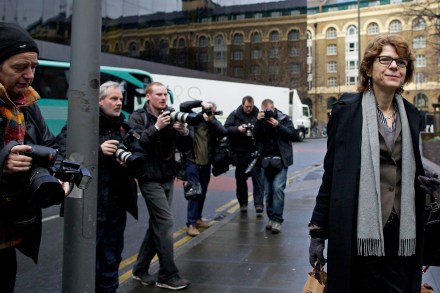
Like John Rentoul, I think much of the scoffing and chortling at the expense of the poor jury asked to consider Vicky Pryce's guilt (or innocence!) is misplaced. This was an unusual case. The questions* they asked - which have been much mocked - seem entirely reasonable to me. More than that, they're quite intelligent. "Reasonable doubt" for instance is not necessarily an obvious thing to measure or define. As for their conduct demonstrating that the Great British public is incapable of jury service, well, phooey to that. In any case, in both the legal systems that apply on these islands, the vast majority of trials do not involve juries at all. We do not actually believe juries are necessarily necessary for criminal proceedings.

Arraigning a corpse

From our UK edition

Part 1 “Russian Justice” A judge at Moscow’s Tverskoi District Court stopped the trial of Sergei Magnitsky (above) yesterday – but not because the defendant was dead. Magnitsky’s demise was of no concern to the judge. It did not bother him in the slightest. The court merely postponed proceedings until 4 March when the world will see something rarely seen since the Middle Ages: a prosecutor arraigning a corpse. The Putin regime – that mixture of autocracy and gangsterism – is desperate to discredit the late Mr Magnitsky and his employer, Bill Browder of Hermitage Capital. If you don’t know the story, I’ll explain why. Browder exposed corruption in Russian companies. The Russian authorities did not approve.

Government will appeal controversial immigration decision

From our UK edition

Further to the row that has erupted between Theresa May and some judges over the deportation of foreign criminals, the government is understood to be applying to appeal the case of MF. The Home Secretary is plainly confident that her arguments will be well received in the Court of Appeal, having been found wanting in the Upper Tribunal (Immigration and Asylum Chamber). The issue of deporting foreign criminals has been cast by some as a disagreement between senior judges and their more activist juniors, and not merely a clash between different arms of government. Theresa May’s team have been at pains to point out that the majority of senior judges support her case.

Adultery and the same-sex marriage bill

From our UK edition

Nadine Dorries said during the debate on same sex marriage last week that 'This bill in no way makes a requirement of faithfulness from same-sex couples. In fact, it does the opposite'. Her rather surprising claim stems from the government's plans to maintain the current definition of adultery in the equal marriage bill. Although not defined in statute, case law defines adultery as sexual intercourse between persons of the opposite sex. So while a heterosexual man can be divorced on the basis of unfaithfulness with another woman, a homosexual man could not on the basis of unfaithfulness with another man. The definition of adultery has caused legislators a collective headache as they have tried to adapt current marriage legislation so that it is capable of extending to same sex couples.

Scientologists trap us in the closet

From our UK edition

Whenever I give lectures on my book on censorship – Whaddya mean you haven't read it? Buy it here at a recession-beating price – I discuss the great issues of the wealthy to silence critics, the conflict between religion and freedom of thought and the determination of dictators to persecute dissenters. These themes have animated great philosophers. None more so, I continue, than Trey Parker and Matt Stone, the creators of South Park, who managed to get them all into one cartoon. In a 2005, they broadcast an episode entitled Trapped in the Closet. The little boy Stan goes to one of the Scientologists' personality testing centres.

When will the government confront the EU?

From our UK edition

Here is a story that should have got far more attention. A story that perfectly epitomises the corruption and anti-democratic activity of the EU. In 2010 the group NGO Monitor – which seeks to hold NGOs to account – petitioned the European Commission to reveal details of the NGOs it has funded in recent years.  As readers will know, much of the government-funded NGO business is a racket, and one which pushes highly specific political agendas. And so it has been in recent years with funding from the EU. In particular, as NGO Monitor has previously shown, there is the little matter of the European Commission funding rabidly anti-Israel groups in Europe and the Middle East.

Gordon Wilson, a hero for our times

From our UK edition

If there was any justice in the world, Yorkshire pensioner Gordon Wilson would feature in the New Year’s Honours list – but I suppose it’s too much to hope for. The Wilkcockson family, from Hunmanby,  kept noticing that their pussycats were going missing, never to return – but they did not suspect the kindly old gentleman living next door. Mr Wilson, however, was outraged that these noisome creatures were crapping all over his lovely garden and had constructed special wood and steel mesh traps baited with tuna fish. Having ensnared Tibbles et al he would then release the animals “in the countryside”, ie presumably in close proximity to an arterial road or dual carriageway.

In praise of the bloody-minded Paul Chambers

From our UK edition

What freedoms we have in Britain have not come as a rule from revolutions and thunderous declarations of the rights of man. More often than not, our liberties have come because bloody-minded and obstinate men and women have squared their shoulders and decided to fight an arbitrary decision, when others would have surrendered. Paul Chambers has the right to claim a good deal of credit for compelling the Director of Public Prosecutions to stop treating offensive but harmless remarks as crimes. I won’t go through his case in detail because I have told his story elsewhere. But in brief Paul was planning to fly to Belfast to visit a woman friend. He saw on the news that snow had closed Robin Hood Airport and tweeted to his friends, “Crap! Robin Hood airport is closed.

‘The first thing we do, let’s kill all the lawyers’

From our UK edition

Given that David Cameron, rightly, seems to believe Lord Leveson’s recommendations are a crock of shit, what was the point of the inquiry in the first place? To show that something was being done? To give people like the hilarious Coogan a day in the sun, and that smug prolix lawyer who thought he was James Mason in The Verdict? We have to stop handing things over to lawyers and judges. Journalists are bad enough, but these people are even more thieving, grasping, self-righteous and utterly out of touch with public opinion. Too much time is given over to what they have to pronounce, too much weight given to their usually fatuous perorations. For all their flaws, I prefer the MPs – at least you can get rid of them.

Rotherham’s ‘political commissars’ reinforce the need for a free press

From our UK edition

'Clearly she has morphed somewhere in her career from social worker to political commissar.' These are the words of Minette Marrin, writing of the social worker at the centre of the fostering scandal at Rotherham Council in the Sunday Times. Marrin’s article unpicks Rotherham Council’s position, turns it over and concludes that: ‘[The] thoughtless, obstinate political correctness of the Joyce Thacker (Rotherham’s senior social worker) variety is rampant throughout social services. Many of them are highly politicised in plain party-political terms as well. It’s a national disgrace and a national disaster. In adoption, for instance, it is such misguided attitudes that make it so very difficult for a child in need to find adoptive parents.

How easy would it be to withdraw from the European Court of Human Rights?

From our UK edition

As James says, the prisoner votes row will return to parliament before lunch today. The government is expected to offer the Commons three choices: The retention of the blanket ban, in defiance of the European Court of Human Rights (ECtHR) Enfranchising prisoners serving up to six months. Enfranchising those serving up to four years. Parliament is expected to vote for retention, as it has done so previously. Such an outcome would, obviously, set the UK government on a collision course with the ECtHR and leave it open to very costly compensation suits. Damages of around £1,000 per case have been awarded in other jurisdictions, and leaked documents published last year showed that the government’s lawyers estimate the cost of compensation suits could exceed £140 million.

Cabinet row over imprisoned SAS soldier

From our UK edition

A lunchtime spat has broken out over Sergeant Danny Nightingale, the SAS serviceman who was sentenced to 18 months in prison by a court martial after pleading guilty to possession of a prohibited firearm (a 9mm Glock pistol) and ammunition. Sgt Nightingale's case has attracted wide public support. His friends and family said that the pistol, which was a ‘war gift’ from Iraqi soldiers he mentored in 2007, had not been packed by him, and added that a brain injury had made him forget that it was among his possessions. Supporters say that, owing to these facts, the sentence is unduly harsh. The government's hand has been forced. The Defence Secretary, Philip Hammond, wrote to the Attorney General, Dominic Grieve, asking for a review of the case.

Abu Qatada walks free at our expense

From our UK edition

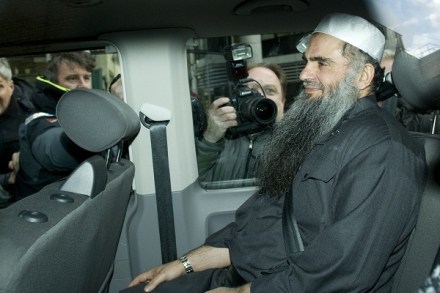
Just last month I wrote about the inverted priorities of our judiciary and police who busy themselves with the arrest of individuals for things posted on social networking sites. Earlier today police bailed a 19 year old man after he was arrested for posting a video of a burning poppy on Facebook. The video was allegedly accompanied by a statement which read: ‘How about that you squadey c****.’ The sentiment is undoubtedly crass and offensive, but I suspect few would support his prosecution for offences under the Malicious Communications Act 1988. In itself this is a remarkable indication of just how inverted the police’s priorities have become. Yet, he is not the only suspect to be bailed today.

Abu Qatada’s victory proves how low we have been laid

From our UK edition

For years a collection of politicians and commentators said that the ECHR and ECtHR would have no impact on British justice. Then they said that they would have no negative impact on British justice. Then it was said that while they might have some negative impact on British justice this would be out-weighed by the good done. Now some say that though the good may be outweighed by the bad the ECHR and ECtHR are still worth something anyway. They, and we, should be plain. It no longer matters what the British government or Home Secretary wants. It no longer matters what the British courts want. It no longer matters what the British public wants. Because the Prime Minister, Home Secretary, Parliament, British courts and British people no longer have power in this country.

What can Theresa May do to deport Abu Qatada?

From our UK edition

Theresa May gave a defiant statement to the house on the Special Immigration Appeals Committee’s (SIAC)  decision to uphold Abu Qatada’s appeal against deportation to Jordan on grounds that he would not receive a fair trial. She vowed to fight on by ‘appealing the decision’, which prompts the question: how will she do that? It’s necessary to understand what the SIAC considered (here is its judgment and here is a précis). First, it examined whether or not evidence given by Qatada’s former co-defendants in an earlier trial (from which Qatada was absent), Abu Hawsher and Al-Hamasher, is admissible in Qatada’s retrial.

Abu Qatada and the problem of freedom-stomping friends – Spectator Blogs

From our UK edition

And so, once again, the judges are in the dock for insisting that due process be followed even when, as in the case of Abu Qatada, it is inconvenient to do so. On the face of it, the decision to thwart Qatada's deportation to Jordan seems unreasonable. But the truth is that few of us are in any position to judge the worth of the Jordanian government's assurances that none of the evidence used against Qatada will have been tainted by torture. It may be that, as the ECHR ruled, those assurances are credible (and if so, that's in part thanks to the work of bodies such as the ECHR) or it may be that, as the Special Immigration Appeals Commission has determined, they are not.

Another Hateful Decision by the European Court of So-Called Human Rights – Spectator Blogs

From our UK edition

How much longer must we put up with this kind of thing? A bus driver who was fired for being a member of the BNP has won a long legal battle claiming his dismissal was a breach of his human rights. Arthur Redfearn, 56, was sacked from his job in Bradford, West Yorkshire, where he drove mainly Asian adults and children with disabilities. Judges at the European Court of Human Rights in Strasbourg ruled today his employer Serco Ltd dismissed him only because of his membership of a political party. This breaks Article 11 of the European Convention on Human Rights – the Freedom of Assembly and Association, the chamber of the court ruled.  The seven judges came to this conclusion on a 4-3 majority.