Law

Grieve tucks into May

From our UK edition

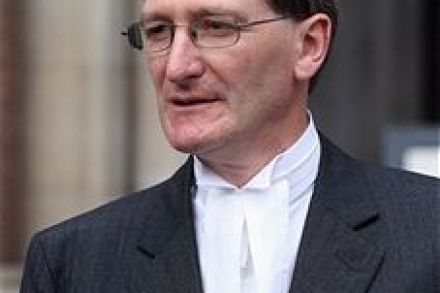
A fringe debate on the Human Rights Act hosted by the Tory Reform Group might not have been a crowd puller. But yesterday’s feline foul-up and the presence of Attorney General Dominic Grieve, a firm advocate of human rights, ensured the event was a sell-out. If Grieve had been advised against deepening internal animosity on the 'cat flap' furore, he ignored the direction. The TRG’s Egremont blog quotes Grieve as saying: "We need to have a rational debate. We must be more productive than just going for the ‘meow’ factor." Then he added: “The judicial interpretation and case workload of the European Court ought to be a concern for the UK and other European countries.
May’s cat story is nonsense

From our UK edition

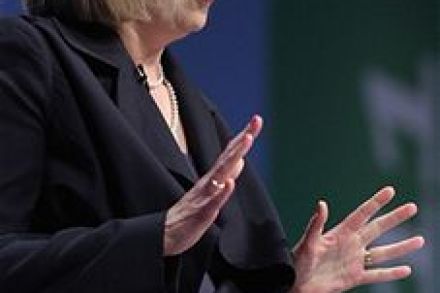
If Theresa May took Ken Clarke up on his wager that no one has avoided deportation because they had a cat, as May claimed in her speech earlier, she should pay up. According to the Guardian's Andrew Sparrow, a spokesman for the Judicial Office has explained: 'This was a case in which the Home Office conceded that they had mistakenly failed to apply their own policy - applying at that time to that appellant - for dealing with unmarried partners of people settled in the UK. That was the basis for the decision to uphold the original tribunaldecision - the cat had nothing to do with the decision.' This is backed up by the UK Human Rights Blog run by 1 Crown Office Row.

The human rights smokescreen

From our UK edition

Today’s papers resound with the news that Theresa May is resisting Liberal Democrat opposition to close the loophole over the “right to family life”, Article 8 of the European Convention on Human Rights. This change, it is argued, will ensure that foreign criminals are deported so that the courts protect, as David Cameron put it, “the United Kingdom”.  The announcement is a carefully choreographed step to differentiate the Tories from the Liberal Democrats.

An EU ruling that Cameron must fight

From our UK edition

A showdown with the EU may come sooner than we expect. The European Commission has today threatened to sue David Cameron’s government unless it starts letting EU citizens come here to claim benefits. Until now, any EU citizen could live here, but if they couldn’t find work, they were not entitled to claim benefits. This was widely accepted. Today, the EU has issued a statement saying: ‘Under UK law, certain social security benefits - namely Child Benefit, Child Tax Credit, State Pension Credit, Income-based Allowance for Jobseekers, Income-based Employment and Support Allowance - are only granted to persons with a "right to reside" in the UK. Other EU nationals have to fulfil additional conditions in order to pass a so-called 'right to reside' test.

Your Lying Eyes

From our UK edition

I don't know, just as you don't know, whether Troy Davis is innocent. I do suspect that his conviction would, in this country, be considered unsafe. Not that this, or anything else, matters to the Georgia Board of Pardons who have denied Davis's last appeal for clemency. No-one should be surprised by that. Nevertheless, the case highlights a major problem in criminal trials: eye-witness testimony is often unreliable. According to the University of Virginia's Brandon Garrett: The federal court that finally reviewed evidence of Davis' innocence agreed "this case centers on eyewitness testimony." Yet that court put to one side the fact that seven of the nine witnesses at the trial have now recanted, and new witnesses have implicated another man.

Our Crazy Drug Laws, Part XVI

From our UK edition

As legal entertainments go Man facing jail after reporting his cannabis plants stolen is a pretty good one. The Edinburgh Evening News reports: Police were called to David Williamson's home to investigate reports that he had been assaulted and robbed. But after Williamson volunteered that it was two of his prized cannabis plants which had been stolen, suspicious officers got a warrant to search the 34-year-old's Edinburgh home and discovered a further 20 plants. Williamson was immediately arrested. The case caused barely disguised mirth among lawyers and officials at Edinburgh Sheriff Court today, when Williamson admitted producing a controlled drug at his Sighthill home in May this year. So far, so mirthful.

What kind of Libyan justice?

From our UK edition

Tory MP Dominic Raab has a piece in The Times today (£) about the need for Libyans to rely on the International Criminal Court in the Hague, rather than seek retribution and revenge against Colonel Gaddafi and his loyalists in Libya. A former Foreign Office lawyer, Raab knows his subject well. But I can’t help but quibble with a few of his points. For the history of the International Criminal Tribunal in Yugoslavia, a precursor to the ICC, raises questions about how societies can best deal with such crimes. The ICTY allowed space for the post-conflict consolidation to take place before indicting criminals. In contrast, the ICC issued an indictment against Gaddafi very quickly, which left the Libyan dictator little room for manoeuvre.

From the archives: the perils of bringing Gaddafi to trial

From our UK edition

Mustafa Abdel Jalil, the leader of the National Transitional Council, has indicated his hope that Colonel Gaddafi will be tried in Libya. But the far reaching tentacles of the International Criminal Court may claim Gaddafi from the Libyan people. Judge Richard Goldstone, former chief prosecutor at The Hague, told the BBC World Service earlier this afternoon that those who capture Gaddafi “will be under an obligation to put him on an airplane and send him to The Hague.” Meanwhile, the internationally renowned human rights lawyer Philippe Sands was less certain. He told the World Service: “It shouldn't be assumed that anyone is automatically going to The Hague…There are still a range of different possibilities.

Capital punishment to be debated in parliament?

From our UK edition

Sir George Young has graced the pages of the Daily Mail this morning, arguing that MPs cannot ignore the clamour for a debate on the death penalty, as examined in depth by Pete last weekend. The Leader of the House’s intervention is the greatest indication yet that parliament will discuss the issue for the first time since the passage of the Human Rights Act in 1998. This has not come as a bolt from the blue. A string of e-petitions will mature soon and capital punishment is expected to be near the top of the list, as it always is when the public is asked for its opinion.

Sickly Mubarak in court

From our UK edition

As an accompaniment to the unique photo-history of the Egyptian revolution currently being shown on the Books Blog, here is Channel 4's latest footage of the invalid Hosni Mubarak being brought to trial. This is a momentous moment in Egypt's rebirth as a nation, but one denuded of dignity if these images are anything to go by.

Moving slowly towards the future

From our UK edition

Yesterday’s leak of Vince Cable’s response to the Hargreaves report into the Digital Economy Act (DEA) set tongues wagging. The headline was as expected: ‘web-blocking’, the practice whereby copyright infringers are barred from internet access, will be dropped because it is unworkable. In line with Hargreaves’ recommendations, Cable also plans to remove restrictions on using copyright material to create parodies, which is excellent news for Downfall enthusiasts. And he will rationalise copyright law to legalise supposedly forbidden practices like copying CDs onto an i-Pod. Finally, Cable has permitted an exception from copyright for data mining for research purposes.

Cameron needs to move fast to regain the initiative

From our UK edition

Westminster is rife this afternoon with rumours that there’ll soon be a high-profile arrest in the phone hacking case. For David Cameron, this issue is going to remain incredibly difficult as long as the focus remains narrowly on News International. But Cameron has one tool he can use to try and broaden out the issue, the inquiries he mentioned yesterday at PMQs. If Cameron were to move quickly on setting up judge-led public inquiries into the police and into journalistic abuses, he would regain some of the initiative. These inquiries are really the only tool he has, given that the government is hemmed in on the takeover of BSkyB as it is a quasi-judicial issue and on the cases itself he can’t say anything that might risk prejudicing a trial.

Schooling the judges

From our UK edition

The judges are judging the judges, or at least judging by the cover of this morning's Times (£) they are. "Radical reform of the selection of judges," some leading figures tell the paper, "is needed to break the stranglehold of white Oxbridge males at the top of the judiciary." The story continues inside the paper, with a tranche of statistics on just how white, Oxbridge and male the judiciary actually is (i.e. very). It all reminded me of a table we put together for Coffee House some months ago, and which I thought I'd excavate this morning. Here it is, with judges sitting firmly at the bottom: Of course, some caveats apply to those figures: the state sector isn't just made up of comprehensives; this refers to the schools system of some decades ago; and so on.

The dirty secrets of ‘no win no fee’

From our UK edition

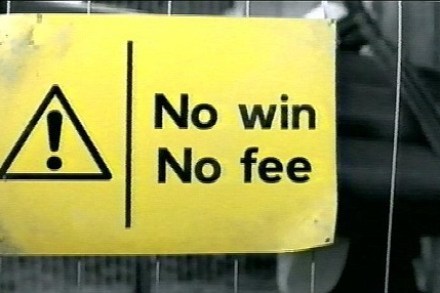
Jack Straw’s column in the Times today (£) contains the following revelation: ‘Our records indicate that you may be entitled to £3,450 for the accident you had. To claim free reply CLAIM to this message,” went the text that my pal Phil Riley received last week. This “accident” was, in truth, a minor prang. Phil had stopped in traffic. The chap behind drove into him, with minor damage to Phil’s car; no personal injuries. The other driver’s insurer paid Phil’s repair bill. Within days of this prang, 18 months ago, Phil was bombarded with texts and personal calls to tell him that if he would make a claim, three or four thousand pounds would be his for the personal injury he had suffered.

How will the government respond to Thursday’s strikes?

From our UK edition

Activity in Whitehall becomes more fevered as the day itself approaches. Michael Gove wants to see off the NUT with as little bloodshed as possible, honouring David Cameron’s decree that ministers tread softly. To that end, he has already written to headmasters urging them to keep calm and carry on. And this morning, news emerges that Gove is asking parents and retired teachers who have passed CRB checks to fill in on Thursday to ensure that children have a constructive day at school. The Department of Education has not yet approached former members of the flagship Teach First scheme to return to school for a day; it’s probably too late to do so on this occasion, but doubtless there will be others.

Gove steps in to keep the schools running

From our UK edition

A letter is bouncing around Whitehall, and I thought CoffeeHousers might care to see a copy. It has been penned by Michael Gove, and is being dispatched to all headmasters today. It urges them to Keep Calm and Carry On during the impending strikes over teachers' pensions. "My view," pens the education secretary, "is that we all have a strong moral duty to pupils and parents to keep schools open, and the Government wants to help you achieve that." You can read the full thing below. While much of this missive is dry, dry stuff — certainly drier than Gove's usual prose — it's also quite revealing of the government's approach to strikes.

The coalition has to ‘reconsider’ another policy

From our UK edition

One of the many problems with the equalities act is that it requires a level of consultation and a number of equalities impact assessments that are not compatible with speedy decision making. Word is seeping out tonight that the coalition is now having to ‘reconsider’ its decision on Academy funding because the Treasury, the Department of Education and the Department for Communities and Local Government did not tick all the right boxes before announcing the new settlement. The reverse is the result of a legal challenge by various local authorities. But this is a pyrrhic victory as the likely result of it is that local authorities actually receive less money than they would have done because a whole set of decisions on Academy funding are now being rethought.

Vince Cable dances with the unions

From our UK edition

The Business Secretary’s words to the GMB union today about the government’s reluctance to reform Britain’s antiquated trade unions laws could hardly have been more modest. He called for a ‘mature and productive relationship’ with the trade union movement. Given the reception he received, this seems like wishful thinking (we at Policy Exchange had a dose of the GMB’s approach when it described our recent report on public sector pay as ‘propoganda [sic] in the tradition of reports by Joseph Goebbels’). Despite the heckles, Vince Cable was keen to emphasise that the government has no plans to reform strike laws and that it would only do so if pushed. It may well soon be. Things have changed a great deal in the past thirty years.

From the archives – the Butcher of Belgrade

From our UK edition

As Ratko Mladic faces his accusers at the Hague, it’s instructive to revisit the fallout from one of the atrocities he is alleged to have committed. The Srebrenica massacre was both a horrendous tragedy and a horrendous failure of internationalism – a point the Spectator made cautiously as news of the war crime emerged. No End of a Lesson, The Spectator, 22 July 1995 The tragedy in Bosnia is so harrowing, the United Nations’ failure so all-embracing, the West’s humiliation so total that it is difficult as yet to see beyond them. But for the Bosnians themselves, the worst may now be passed. Whether the defeated international powers stage some dramatic military feat before their departure is largely irrelevant to those they were sent to protect.

A show trial with a difference

From our UK edition

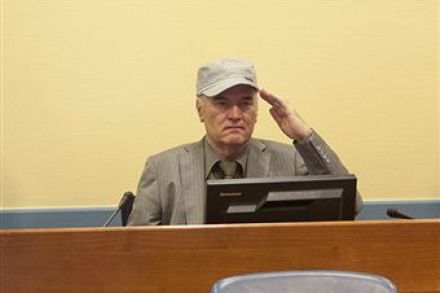
It’s a sleepy morning in Westminster. Fleet Street is exercised by the arrival of a new strain of e-coli in Britain and there’s also the promise of a sweltering day’s Test cricket at Lords. The Hague, by contrast, woke to the prospect of seeing Ratko Mladic, the Butcher of Belgrade, arraigned before the international court. Mladic was in hospital over night, being treated for his cancer. In view of Mladic’s ailing health, the chief prosecutor, Serge Brammertz, shortened the list of charges to ensure that the trial is shortened. In other words, those charges that might not easily stick are to be dropped so that sentence can be passed quickly. The same expeditious ruse was used during the trial of Radovan Karadzic.