Law

The Problem of the Supreme Court

From our UK edition

Readers in England and other less-fortunate lands may not have been following the latest stushie in Scotia new and braw. This time it's the law that's the problem. Or rather, the UK Supreme Court's ability to rule on Scottish appeals on Human Rights and other EU-related business. Last week this led to the conviction of Nat Fraser, imprisoned for the murder of his wife Arlene, being quashed on the not unreasonable grounds that the Crown had failed to disclose vital evidence that cast some doubt on the most important part of the case against Mr Fraser. Kenneth Roy, sage of Kilmarnock, has an excellent summary of the affair. Cue much rumpus and uproar and the predictable sight of politicians embarrassing themselves on television and in the popular prints.

Brennan comes to Balls’ aid

From our UK edition

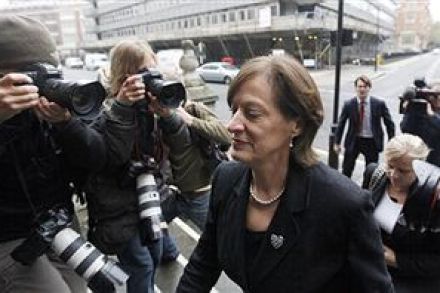
To present the government side in the Shoesmith case, former minister Kevin Brennan MP has written an extensive defence of Ed Balls' decision to sack Sharon Shoesmith. Brennan's argument is predicated on Ofsted's report. Brennan writes: 'Faced with such a report, the Secretary of State had to act decisively. Anyone who doubts for a moment the decision Ed Balls took should look again at that report and its implications for the leadership of child protection in that borough.' Shoesmith has cast doubt on Ofsted's report, asserting that its authors had been leant on after they had conducted their research and found her department to be under pressure but in good order. The appeal to the Supreme Court will clearly have to test the independence of Ofsted's report.

Shoesmith strikes at Balls and executive power

From our UK edition

Sharon Shoesmith cut into Ed Balls on the Today programme this morning. She said: "Why don’t we ask Ed Balls why he acted on November 12, 2008 when he knew for 15 months that Peter Connelly had died and I was working with his officials, I was going to the government office, they were reading the draft reports. Haringey council knew all about it. We examined the conduct of our social workers, we found a disciplinary against them, but they weren't sacked - all of that was open and clear and on the table and everyone knew everything about that. It wasn’t until the spat in the House of Commons when David Cameron taunted Gordon Brown that everything changed overnight. That is the one occurrence that changes all of this story.

Michael Gove to appeal Shoesmith verdict

From our UK edition

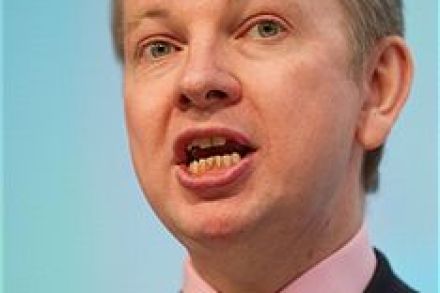
Whitehall sources say Michael Gove will appeal the Court of Appeals judgement which decided Sharon Shoesmith’s dismissal was so ‘legally flawed as to be null and void’ to the Supreme Court. Although Gove recognises that Balls blundered in the way he dismissed her, he also believes that there are important constitutional principles at sake in this case about how Ministers make important and urgent decisions and what the role of the courts is in challenging such decisions. Gove wants the Supreme Court to consider these issues because of the huge importance of judicial reviews, which are being used repeatedly by opponents of the government to try and stymie its agenda.

Shoesmith in line for up to a million in compensation following sacking over handling of Baby P case

From our UK edition

Sharon Shoesmith, who was head of children services in Haringey at the time of the Baby Peter case, is set to receive a sum that could be as large as a million pounds in compensation. The Court of Appeal has ruled that the way Ed Balls, then the secretary of state, and Haringey took the decision to dismiss her was procedurally unfair to Shoesmith and so she was not lawfully removed, entitling her to compensation possibly including full pay and pension for the last couple of years.    Shoesmith might be legally entitled to this money. But given the circumstances in which she is receiving it and the institutional flaws exposed by Haringey’s approach to the Baby Peter case, the honourable thing to do would be to not accept it.

Clegg: No MP is above the law

From our UK edition

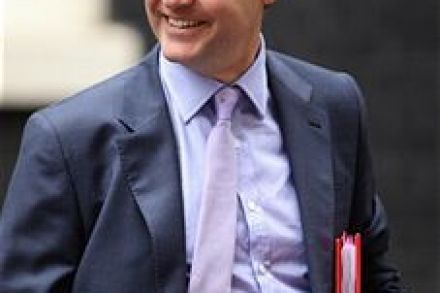
The sun shone on the deputy prime minister at DPMQs earlier today. Nick Clegg usually wears a grimace at the despatch box; but he was assured this morning, successfully defending a Labour onslaught on the NHS reforms. There were even flashes of, well, Flashman. He replied to a question from Chris Bryant by quipping, “Every time the Honourable member asks a question, I wonder why anyone bugged his phone.” Clegg also rebuked John Hemming for breaking the Giggs super-injunction yesterday; a popular move among those MPs who think Hemming degraded parliamentary privilege. Clegg said: “I don’t think anyone should be above the rule of law. And if we don’t like the law in this place then we should act as legislators to change the law, not flout it.

Hemming divulges

From our UK edition

‘Mr Speaker, With about 75,000 people having named Ryan Giggs on Twitter it is impractical to imprison them all and with reports that Giles Coren is facing imprisonment’ This was as far as John Hemming got in his question to the attorney general before the Speaker interrupted him to warn that he should be talking about the principles involved in super-injunctions not the people. But now that it has been said in parliament it can be reported by the press, although I do not believe any newspaper is allowed say which super injunction he has taken out or whether those naming Giggs on Twitter are correct. There were gasps in the chamber as Hemming mentioned Giggs by name and there was cold anger in John Bercow’s voice as he upbraided him for mentioning him.

What the attorney general needs to do

From our UK edition

I’m sure that all CoffeeHousers know who the footballer is with the super injunction preventing newspapers from publishing anything about his affair with the Big Brother contestant Imogen Thomas. But if you didn’t, the papers would have made pretty odd reading over the past few days because the press keeps making little in jokes that are only funny if you know the player’s identity. David Cameron this morning announced that he knew the identity of the player.  This highlights one of many ironies of the situation, which is that far more people are now aware of who the errant footballer is than would have been if the news had just come out and been a two day tabloid story.

Hugh Grant and Low Life

From our UK edition

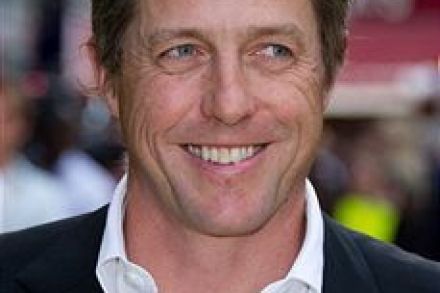
I’ve always rather admired Hugh Grant, so it was almost a pleasure to be beaten up by him on Newsnight last Friday. He was attacking the celebrity-hunting media, whereas I set out to defend free press and self-regulation of the media. If you’re going to have sympathy with any Hollywood figure, you’d have sympathy with Hugh: he’s a single man who has never tried to moralise, and has cameras pointing at him everywhere he goes. Besides, he made an impassioned and powerful case against the intrusion of the paparazzi — while yours truly was left defending the Press Complaints Commission. But I didn’t know, until I met him that night, that Hugh is also a Spectator subscriber — and has been for years.

What has Ken done wrong?

From our UK edition

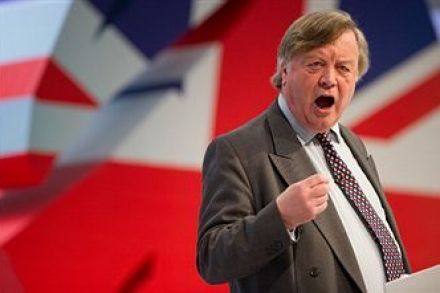
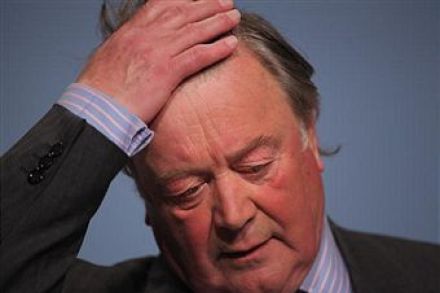
What has Ken Clarke done wrong — other than commit the political sin of making a media gaffe? Nothing. In yesterday’s now infamous BBC interview, he was simply attempting to explain his position on rape sentencing, which may or may not be the right one. It’s a difficult question — and, under some antagonistic interrogation, he stumbled and got flustered. “Rape is rape,” said the radio interviewer. "Not it’s not," the Justice Secretary replied. He later talked about “serious, proper rape.”   Bad phrasing? Certainly. Injudicious? Sure. But Clarke’s essential argument — that not all rapes are the same, that some rapes are worse than others — is quite obviously true.

Clarke’s calamity

From our UK edition

Has Ken Clarke just signed his own political death certificate? Whether you agree with his liberal sentencing reforms or no', there's little doubting that the Justice Secretary has just stumbled quite emphatically on Radio 5. It looked bad enough for him when, discussing an idea to cut the sentences of those who plead guilty to sex attacks, he blustered that, "No, I haven't put this idea to women who've been raped because I haven't met one recently." But then it turned even worse when a rape victim called in to describe her tragic case: she had been dragged through the courts for almost two years in search of justice, only for her attacker to plead guilty, have his sentence cut, and then go on to reoffend. Through tears, she described Clarke's proposal as "a disaster".

The Law vs Gaddafi

From our UK edition

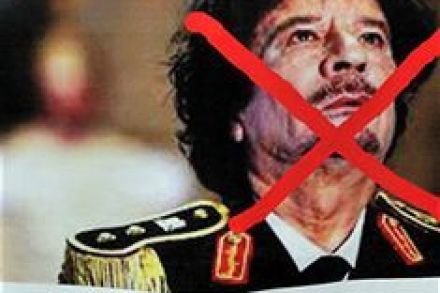
Luis Moreno-Ocampo of the International Criminal Court has said that Colonel Gaddafi, Saif al-Islam Gaddafi and spy chief Abdullah al-Sanussi have the greatest responsibility for the "widespread and systematic attacks" on civilians in Libya. The prosecutor has therefore asked the ICC to issue warrants for their arrest. The move comes as rebels claim they now have full control of Misrata and scored victories in Zintan, south-east of Tripoli. A senior officer told me he thought Colonel Gaddafi would be toppled in less than six months. But if he does not fall, the ICC move may become problematic. For if  warrants are issued, the Libyan dictator has little way out but to fight to the very end.

Back to the start on a military covenant

From our UK edition

I suppose you could call it an O-turn. First, the Prime Minister declared, in a speech aboard HMS Ark Royal last year, that a new military covenant would be enshrined "into the law of our land." Then, there seemed to be a U-turn, with the government committing only to review the covenant annually, not to lend it legal force. Yet, now, a U-turn on the U-turn, with the news that it will be etched into the staute books after all. The defence minister Andrew Robathan tells today's Telegraph that, "we are putting the military covenant on a statutory basis for the first time." The formal announcement is expected in the House on Monday, pending the outcome of some "final discussions".

Baleful Bosnia

From our UK edition

Bosnia has been getting more attention recently, as analysts predict gridlock (or worse) in the coming weeks. The reason is a move by the country's Bosnian Serb leader, Milorad Dodik, to challenge parts of the Dayton Peace Agreement, which ended the hard-fought war in 1995. Few people outside Bosnia know who Dodik is. Those who knew him during the Bosnian War or immediately afterwards saw him as a moderate businessman-turned-politician. But since then, Dodik has either changed or shed his cover. Now he wants to hold a vote next month on whether to reject Bosnia's federal institutions, especially the war crimes court. He has accused the court of bias. A Berlusconi-style attack on the court is probably related to ongoing investigations into his business dealings.

MacShane’s contradictory testimony to the Iraq Inquiry

From our UK edition

A trickle of documents from the Chilcot Inquiry have been released today, among which is the written witness statement of former Europe Minister Denis MacShane. It's rather intriguing. MacShane told the inquiry that it was his understanding that France 'would not leave the US, Britain and other allies alone in any action against Saddam' and that President Chirac then vetoed military action in the UN at the stroke of the twelfth hour, apparently against the wishes of his colleagues and France's political establishment. MacShane says he gained this impression after speaking to a senior French official at the Anglo-French summit at Le Touquet on 4 February 2003, six weeks before the invasion.

The press becomes the story

From our UK edition

The power of the press has, almost from nowhere, become one of the defining leitmotifs of this Parliament. Only two years ago, the Telegraph exerted that power to (partially) clean out British politics, and won general acclaim in the process. But now, it seems, the media is more likely to have its actions attacked, or at least questioned and contained. Whether it is the Press Complaint Commissions's censure today for those clandestine Cable tapes, or the continuing hoo-hah over super-injunctions and their infraction, there is a question hanging unavoidably in the air: how much does the public have a right to know? This is a precarious political issue, not least because of the immediate problems it has thrust upon the coalition.

Crimes committed in a just cause

From our UK edition

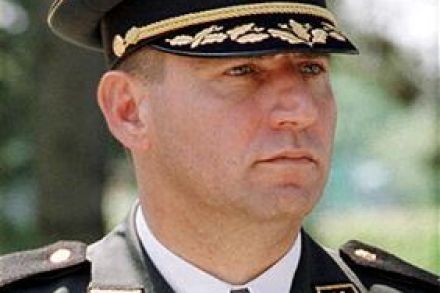
Last week, the International Criminal Tribunal for the Former Yugoslavia (ICTY) found former Croatian General Ante Gotovina and a fellow officer, Mladen Markac, guilty of war crimes during the Yugoslav Wars. The news has been greeted with dismay in Croatia. Tens of thousands of war veterans and citizens rallied under the slogan "For the Country" in Zagreb's main square, Trg Bana Jelacica, over the weekend to express their outrage against the verdicts. The Croatian government has followed suit, calling the verdict "unacceptable" and vowing to "do everything in our power to change it." The verdicts are understandably difficult for some Croats to bear.

What to do with Gaddafi?

From our UK edition

The charge sheet against Colonel Gaddafi in any trial would be a long one. There are his crimes against his own people, his support of terrorism overseas and his wars in Chad. But, however morally right it would be to make Gaddafi face justice, the door should be left open to him to go into exile. Gaddafi and his family leaving Libya would make possible an end to this conflict and prevent huge bloodshed as Gaddafi attempts to cling on to power street by street. The unpleasant truth is that if dictators are left only with the choice between fighting to the bitter end and a trial in the Hague, they will pick the former option as they have little to lose.     This war in Libya can only be ended by Gaddafi’s departure from power.

Putin rages against the “crusading” West

From our UK edition

A gold star for Vladimir Putin, for providing us with one of the most extraordinary interventions of the day. While we knew that the Russian Prime Minister is opposed to military action in Libya — and also that he is no natural friend of the West — it is still striking to hear him talk as he does in the video above. "It reminds me," he says of the UN resolution at hand, "of the medieval call for a crusade." Ever the pacifist, he then goes on to rail against the "steady trend in US policy" to get involved in conflicts abroad. Meanwhile, our government is doing its part to assure Parliament, and the public, that their policy on Libya is more multilateral than medieval. Their note on the legal basis for action in Libya has just been published.