Law

The government has been the author of its troubles

From our UK edition

In his Spectator column this week, James Forsyth painted a picture of a government taken by surprise by enemies who have, in effect, ambushed them - the civil service, the civil service's lawyers and the European Union in particular. Clearly the government is frustrated by the “forces of conservatism” and the “enemies of enterprise”, but the difficult truth is that a lot the government's problems are of its own making, and in its own hands to put right. When it comes to the civil service, the government hasn't simply inherited an uncooperative Whitehall. It has strengthened its position, as a conscious policy decision. Francis Maude said it in terms at one of Reform’s post-election conferences.

The threat to a British liberty

From our UK edition

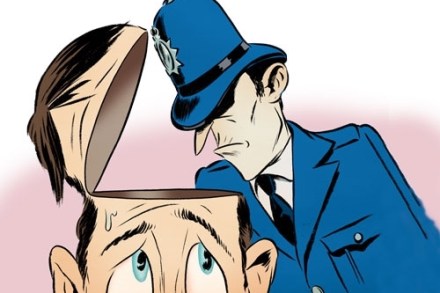
It’s a funny old world. I have now been contacted by two journalists informing me that Bedfordshire Police are investigating The Spectator. Why? Because of the Melanie Philips blog where she referred to the “moral depravity” of “the Arabs” who killed the Fogel family in Israel. CoffeeHousers can judge for themselves if they agree or disagree with her language and views – but should this be illegal?  The Guardian has written this story up, claiming The Spectator is being investigated by the Press Complaints Commission. This is untrue. The PCC tell me that a complaint has been lodged, but that’s as far as it has gone. They investigate only if they believe there is a serious prospect that their code has been breached, and it hasn't.

Clegg’s coup

From our UK edition

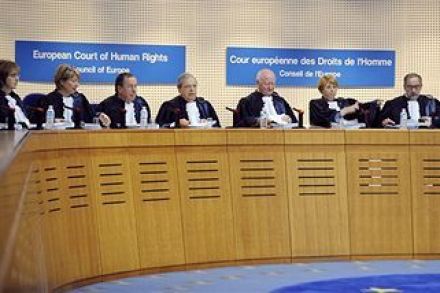
Libya is not the only scene of conflict today. Nick Clegg has just won a powerful victory over the Conservatives, appointing a Bill of Rights commission which is certain to leave the ECHR intact. When you see the names Philippe Sands, Helena Kennedy and Lord Lester on the list — even alongside Tories — you know that this review is over before it has begun. Clegg is a firm believer in Europe, and has played his hand very well — outmanoeuvering the Conservatives who thought that a British Bill of Rights should supplant edicts from Strasbourg. Upshot: there may still be a Bill of Rights, containing various declarations inserted by the Tories on the panel. But what the BoR says will matter not one jot.

This Country Needs More Daffodil Police

From our UK edition

You will notice that the little girl pictured here is a) in a park and b) skipping merrily through the daffodils. Being a well-brought-up type she is not c) pulling up daffodils just for fun. She is not, that is to say, one of Jane Errington's children. Miss Errington, a resident of Poole, is most aggrieved that her children - aged four, six and ten - were cautioned by police and warned that destroying daffodils in a public park could be construed as criminal damage and, were said flowers then removed from the park, theft. The Daily Mail uses the story to have a go at the Peelers who, we are meant to presume, should be doing more important things than policing this kind of juvenile vandalism. I must say that it's odd to see the Mail so relaxed about this sort of anti-social behaviour.

The British Bill of Rights stalls

From our UK edition

A British Bill of Rights has long been the Tory leadership’s sticking plaster solution to the problems posed by the ECHR. The idea is that a British Bill of Rights would give this country a greater margin of appreciation in interpreting the convention. But this morning this plan is in tatters.   The long-awaited commission on the British Bill of Rights is clearly going nowhere.  Any commission which includes Lord Lester and Helena Kennedy, two of the Lib Dem appointees to it, isn’t going to improve the situation.   The failure of this commission even before it has started is a reminder that this problem isn’t going to be solved in coalition.

A landmark judgment for the security services on torture

From our UK edition

The Court of Appeal made a momentous judgment this afternoon. It was hearing the appeal of Rangzieb Ahmed, the first man to be convicted on terror-related charges in this country, for which he is serving 10 years. Ahmed’s appeal was based on the allegation that British security services had been complicit in his torture and that the evidence for his conviction, gained by Pakistan’s ISI, was obtained by a series of extreme measures culminating in the slow removal of his finger nails. The appeal judges rejected Ahmed’s suit, saying that there was no evidence that his nails had been pulled out or that British officers ordered beatings. Ahmed’s claims had been proved ‘not to have occurred’.

On the basis of this legal advice, the government is not planning to defy the ECHR

From our UK edition

As I wrote this morning, the Times has obtained a copy of a government legal memo (written before last week’s prisoners’ debate in parliament) examining non-compliance with the ECHR’s infamous judgment. The newspaper argues that the government plans to defy the Court; and there are plenty rumours swirling around Westminster to that effect, which is hardly surprising given that the Times chanced upon this document. But it’s mostly hot air. The government lawyers actually advised against non-compliance on four separate grounds and revealed that British officials are working towards compliance. First, here are the recommendations of the advice: 1).

It’s a knock out: judicial activism versus the sovereignty of parliament

From our UK edition

The prisoner voting debate is coming to a head, and Dave has turned once too often. The Times has received (£) what it describes as a government legal memo, urging the government to defy the demands of the European Court of Human Rights. After last week’s parliamentary debate, the government’s lawyers calculate that the ECHR can only put ‘political pressure rather than judicial pressure’ on British institutions. This is a seminal moment: political will has not been met by administrative won’t. But would non-compliance succeed?

The Commons rejects prisoner voting rights

From our UK edition

The Davis Straw motion on keeping the ban on prisoner votes has just passed by 234 votes to 22. It is a crushing victory on what was a very good turnout given that both front benches were not voting. The 22 against the motion were a bunch of Liberal Democrats plus the Ulster MP Lady Hermon, the Plaid MPs Jonathan Edwards, Elfyn Llwyd and Hywel Williams, the Green Caroline Lucas,   Labour MPs Barry Gardiner, Kate Green, Glenda Jackson, Andy Love, Kerry McCarthy, John McDonnell, Yasmin Quereshi  and  one Tory Peter Bottomely, David Cameron now finds himself between a rock and a hard place. His MPs hate the idea of giving prisoners the vote and if he tries to force them to do it, he’ll end up in a very messy fight.

And Ilsley goes too

From our UK edition

Following the jury’s decision in the Jim Devine case, Eric Ilsley has been sentenced to 12 months in jail having pleaded guilty to charges of false accounting.   As I wrote this morning, prison sentences for expenses offenders are both appropriate and constructive. They dictate that parliament should conduct itself with dignity and probity; and they express the absolute supremacy of the rule of law. It is right that those whose abuse of the expenses system was criminal are being incarcerated.

Looks like Devine’s going down

From our UK edition

Twitter has exploded at the news that former Labour MP Jim Devine has been found guilty on two counts of false accounting, and is likely follow to David Chaytor to the slammer - another argument against votes for lags. Sentence will be passed in four weeks As James Kirkup wrote at the time of Chaytor’s sentencing, this is a victory for the British justice system; proof that those who make our laws and subject to them also. The purge on the most heinous expenses cheats is a painful but necessary passage for restoring dignity to parliament and probity to public life. And the process is far from over. News of Devine's imminent fate will make several MPs shift uncomfortably in their seats.

Parliament is expected to deny prisoners the right to vote

From our UK edition

These are hard times for the government and there is no respite. Today, parliament will debate a prisoner’s right to vote, in accordance with the wishes of the resented European Court of Human Rights. The Guardian’s Patrick Wintour writes what many suspect: on the back of a free vote, the House will deny prisoners the right to vote in all cases and outlaw compensation claims. Such a result would seem a set-back for the government, which was thought to favour a limited franchise on prisoner voting. If it became law, then the government would apparently be at odds with the ECHR - precipitating an ignominious procession of grasping lags, searching for compensation at Strasbourg.

Bringing rights back home

From our UK edition

Thursday’s debate on the backbench motion on prisoner voting tabled by Jack Straw and David Davis is set to be a real parliamentary event – a rare occasion where the will of the elected legislature might just make a big difference.  The real news will not be how many endorse the ban, but which MPs – aside from those abstaining Government Ministers and Denis MacShane – choose to bow to Strasbourg.   MPs preparing to speak out against Strasbourg are now armed with a powerful academic case.  A new Policy Exchange report authored by the political scientist Michael Pinto-Duschinsky – Bringing Rights Back Home – outlines how the UK can address the growing problem of conflicts between judges and politicians in human rights cases.

Act 3 in the prisoner voting farce

From our UK edition

An ingenious man, John Hirst. First he achieved the considerable feat of committing manslaughter with an axe; and he has since proceeded to cause governments no end of trouble. The prisoner voting saga is nearing its end and a fug of ignominy is descending on the government. The BBC reports that the coalition is to dilute its policy of enfranchising prisoners serving less than four years. Now ministers will be seeking to enfranchise only those serving a year or less. This u-turn is the result of the alliance between Jack Straw and David Davis and the slew of assorted backbench dissent. Tim Montgomerie argues that this is yet another example of Downing Street’s inability to communicate with the parliamentary Tory party.

Davis and Straw unite against prisoner voting rights

From our UK edition

David Davis and Jack Straw have joined forces to resist the enforcement of prisoner voting rights, an emotive issue bequeathed to the hapless coalition by the previous government. Beside the obvious moral question concerning prisoners’ rights, Davis hopes to open a second front in the struggle over sovereignty with the European Union. He told Politics Home: ‘There are two main issues here. First is whether or not it is moral or even decent to give the vote to rapists, violent offenders or sex offenders. The second is whether it is proper for the European court to overrule a Parliament.’ Unless Davis has confused his articles, his second point is invalid. This decision has nothing to do with the European Court or the European Union.

Let’s hope the paternity revolution stalls

From our UK edition

Nick Clegg’s announcement on the extension of paternity leave has been drowned by the cacophony surrounding NHS reform. The government is keen to describe itself as family friendly – with the exception of Vulgaria in Chitty Chitty Bang Bang, all government's do. Clegg hopes to bring flexibility to the workplace and relieve young mothers who would like to return to work. It’s an admirable aim, but there is only so far socially manipulative legislation can go before it becomes grossly counter-productive. David Frost, Director General of the British Chambers of Commerce, has made a strong case against further law. “Last week we saw changes to the default retirement age, in April we've got changes to the right to request flexible working.

Opposing the EU Bill

From our UK edition

The EU Bill is back in parliament today, amid speculation that Cameron has a Europe-fuelled rebellion on his hands. Despite the talk, the chances are that the Bill will go through Parliament wholly unscathed in its first test.   Today’s debate is about the so-called ‘sovereignty clause’ – or Clause 18 – within the EU Bill. Of the Bill’s 17 pages, the clause only takes up four lines, but has still managed to cause the most fuss (the vast majority of the text relates to the EU ‘referendum lock’).

A tale of ego and hypocrisy

From our UK edition

Sarah Ellison has profiled Julian Assange and his relationship with the Guardian for Vanity Fair. Read the whole piece for each petulant tantrum, sordid disclosure and twist of hypocrisy, but here are the opening paragraphs to get you started. ‘On the afternoon of November 1, 2010, Julian Assange, the Australian-born founder of WikiLeaks.org, marched with his lawyer into the London office of Alan Rusbridger, the editor of The Guardian. Assange was pallid and sweaty, his thin frame racked by a cough that had been plaguing him for weeks. He was also angry, and his message was simple: he would sue the newspaper if it went ahead and published stories based on the quarter of a million documents that he had handed over to The Guardian just three months earlier.

High Court rejects temporary immigration cap

From our UK edition

The High Court has just declared the government's temporary cap on non-EU immigration is unlawful. Its ground was that the cap was not introduced with proper parliamentary scrutiny. However, the annual cap, which will not be in place until April next year, is not affected by this decision. But without a temporary cap there'll be a spike in applications as people try and beat the cap. It'll be fascinating to see how the PM and the Home Secretary respond to this ruling. At the moment, the government is playing it softly, softly. But there are Tories who think that the government cannot just allow a key part of its flagship immigration policy to be struck down by the courts. The combination of judges and immigration is a red rag to large sections of the Tory party.

What were the CPS and the courts thinking? 

From our UK edition

A mother jailed for retracting allegations of rape by her husband, (allegations she now says were truthful) has been freed. A few days ago, appeal judges overturned the eight-month sentence of which she had served seventeen days, ordering her immediate release.  A triumph for common sense and compassion, but why was she jailed in the first place? Yes, the CPS thought she’d lied under oath and invented a rape claim - and that’s serious – but, as it turns out, her husband intimidated her into retracting the claim. In any event, an eight-month sentence is excessive.