Language

Why must every ‘accident’ be an ‘incident’?

From our UK edition

I had thought that the saying ‘Accidents will happen in the best regulated families’ was a vulgar reference to children born unexpectedly. The Oxford English Dictionary records accident being used in just that way in the middle of the 19th century. On its own, ‘accidents will happen’ dates from at least as far back as 1705, and the Lady’s Magazine for 1791 gave this humorous version: ‘Mistakes will happen in the best regulated families; I have taken my opera fan to church.’ Ever since, it has been in common use, with Mr Micawber (1850) taking it up as ‘Accidents will occur in the best regulated families.’ You’d think it might have originated in a play or poem, but no such origin has been traced.

Dear Mary: How can I stop my future son-in-law saying ‘must of’

From our UK edition

Q. My future son-in-law has been successfully house-trained in the use of upper-middle-class English over the years that he has been walking out with my daughter. However, one bad habit remains. How can I cure him of saying ‘must of’ when he means ‘must have’? He always says ‘of’ very clearly, as though he really means it. I dare not correct him for fear of making him feel inadequate. —Name and address withheld A. First disarm him with praise. Find an excuse to praise the fluency and elegance of his conversation, perhaps by comparing him with a less articulate contemporary. Then add, ‘And I don’t think I’ve ever caught you making a grammatical error — except of course for “must of”.

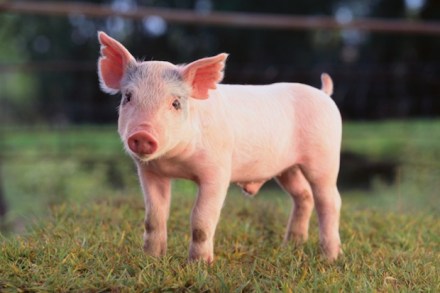
Should ‘suicide’ mean pig-killing?

From our UK edition

There was a marvellous man in Shakespeare’s day known as John Smyth the Sebaptist. ‘In an act so deeply shocking as to be denied by Baptist historians for two and a half centuries,’ Stephen Wright, the expert on separatist clergy wrote, ‘he rebaptised first himself and then his followers, and set out his new views in The Character of the Beast (1610).’ His former confederate Richard Bernard fired a counterblast in that year showing (to his own satisfaction) that ‘the Church of England is Apostolicall, the Separation Schismaticall’. Reading a word like sebaptist we take the prefix se- to indicate a reflexive act, a self-baptism, as we would if reading French or Spanish. But that is not how ancient Romans used se-.

‘Community leader’, ‘call out’, ‘dreamer: The worst words and phrases in the English language

From our UK edition

In this week’s magazine Rod Liddle has a piece on the worst ‘clichés, lies, evasions, obfuscations, PC euphemisms and disingenuous balls words and phrases which, in recent years, have annoyed me the most’. He was inspired by Brook Newmark’s recent shenanigans with a phantom lady and a computer, which were explained as the MP ‘battling his demons’. Rod also includes vulnerable, community, ‘bravely fighting cancer’, vibrant, diversity and, of course, ‘wrong side of history’. For a while I’ve been collecting my own worst words and phrases in the ever-evolving English language, a sort of dictionary of political cant that I work on to keep me sane.

Why you might not want corridors in your historical novel

From our UK edition

I read C.J. Sansom’s novel Dissolution on the train recently with pleasure. For an historical novel narrated in the 1530s, what was the author to do about language? He eschewed godwottery (which Fowler, in a dated term, called Wardour Street, after the old furniture once sold there). But I did gulp at page 273: ‘I got up, waving my arms and stamping my feet to restore the circulation.’ The what? The word circulatioun is first recorded from 1535 in the sense ‘movement in a circle’. It wasn’t till 1630 that James Primrose published a commentary, De Motu Cordis et Circulatione Sanguinis, on the theories of William Harvey.

Rod Liddle: The top 10 most fatuous phrases in the English language

From our UK edition

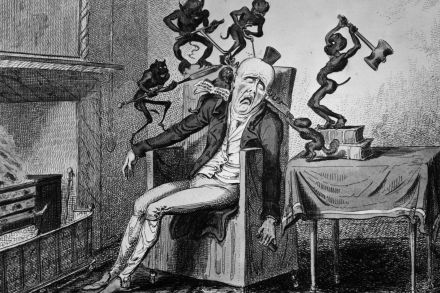
An apology. A few weeks back, in my blog, I promised a regular series called ‘Fatuous Phrase of the Week’. Like so many publicly uttered promises, this one has failed to materialise. There has been no update to the Fatuous Phrase of the Week. This is because for the past two weeks I have been battling my demons — and horrible, vindictive little bastards they are too. While I would have been happy to fulfil that promise, and had plenty of phrases at the ready, the demons crowded around. Nah, they said, take the dog for a walk instead. Jabbering in my ear, poking me with their little pitchforks. Forget the phrase thing, they insisted. Instead try to get to 400,000 points on Bejewelled (Lightning mode): you can do it, Rod. You got 375,000 only a couple of days back.

How Ebola got its name

From our UK edition

It should perhaps be called Yambuku fever, since that was the village in Zaire (as it was then, now the Democratic Republic of the Congo) where it was identified in 1976 by Peter Piot, a scientist from the Institute of Tropical Medicine in Antwerp. He is now director of the London School of Hygiene & Tropical Medicine, and went back to Yambuku earlier this year, meeting a survivor of the 1976 outbreak. Professor Piot decided to name it after the river Ebola, 60 miles from Yambuku, because he realised the stigma that would attach to the disease. In that, Yambuku is luckier than the German town of Marburg in Hesse, where seven people died of a haemorrhagic fever identified there in 1967, or Lassa in Borno state, Nigeria, where another haemorrhagic fever was described in 1969.

What’s good for the goose is bad for the proverb

From our UK edition

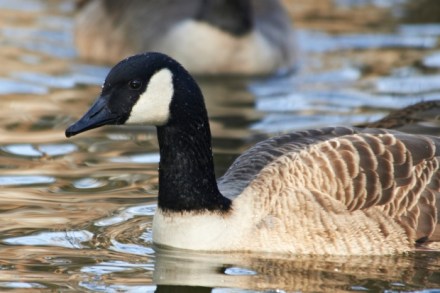
‘Goosey, goosey gander,’ my husband shouted at the television, like someone from Gogglebox. It’s not so much that he thinks the television real as that he thinks himself an unreal part of the television. The cause of his outburst was something that had caught my attention, too. Someone had said: ‘What’s good for the goose is good for the gander.’ We both thought this a mere garbling of the proverb: ‘What’s sauce for the goose is sauce for the gander.’ It is not the benefit of either the goose or the gander that is under consideration but the delectation of their flesh. Certainly, the oldest books of proverbs mention sauce. Chief among these is John Ray’s collection from 1670. What a labour it must have been to compile.

Fatuous phrase of the week

From our UK edition

Every day, without fail, some celebrity or public figure will be quoted spouting a meaningless or disingenuous off-the-cuff cliché, to either big himself up or excuse some misdemeanour. Or simply to gull the public. From now on, then, we’ll be highlighting this sort of egregious shit in this brand! new! 'Fatuous Phrase of the Week' spot. This week it’s one that has always got my goat: 'battling my demons'. I hate this phrase partly for its ubiquity and partly for political reasons. Slebs are always telling us they’re 'battling with their demons' and by so doing are attempting to get themselves off the hook.

The fascinating history of dullness

From our UK edition

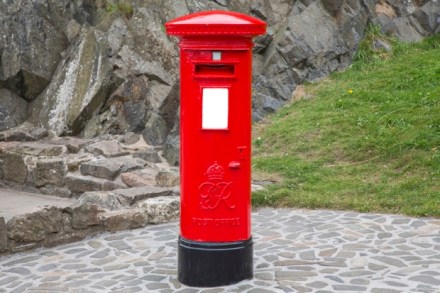
At least I’ve got my husband’s Christmas present sorted out: the Dull Men of Great Britain calendar. It is no doubt intended ironically, as travelling the country photographing old pillar-boxes, for example, does not strike me as being in the least bit dull. I had thought that dull, in reference to people, was a metaphor from dull in the sense of ‘unshiny’. ‘Dieu de batailles!’ as the Constable of France in Henry V exclaims of the English, ‘where have they this mettle?/ Is not their climate foggy, raw and dull?’ But I was quite wrong, as so often. It started off (in the form dol) meaning ‘foolish’. In English almost as old as you could care to have it, the author of The Seafarer declares: Dol bith se the him his dryhten ne ondrædeth; cymeth him se death unthinged.

How did Mark Reckless get his surname?

From our UK edition

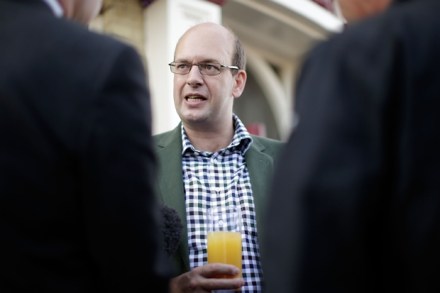
When I first heard ‘Wonderwall’ being played in a public house, in 1995 I suppose, I thought it was some unreleased Beatles record that had been just been discovered. The song appeared on an album, (What’s the Story) Morning Glory?, which has on the cover a picture showing two men about to pass in a very empty Berwick Street in Soho. It must have been daybreak. In the middle distance a magenta doorway indicates the location of a shop called Reckless Records. It’s a good name for a second-hand record shop. Is Reckless such a good name for an MP? I was surprised by how many people made a little joke about Mark Reckless’s name after he defected to Ukip at the weekend. Do they think he is descended (all paternity being regular) from someone who was reckless and thus earned the name?

Rowan Williams has been reading too much Wittgenstein

From our UK edition

It used to seem rather obvious that the world was full of evidence for God. These days, theologians no longer beat this drum — but some of them still give it soft little taps from time to time. Such tapping is what Rowan Williams is drawn to, now that he’s free of the obligation to dance around homosexuals and Muslims, so to speak. In this book, adapted from his recent Gifford lectures (a famous lecture series devoted to ‘natural theology’), he ponders the philosophy of language, and suggests that there is a deep affinity between how humans make meaning and how religious language makes sense. It’s a meticulously restrained and complex performance, as you’d expect — but worth straining to hear.

The rhetorical power of ‘never’, from Ian Paisley to King Lear

From our UK edition

He won’t be remembered as Lord Bannside, but Ian Paisley will be remembered for shouting: ‘Never, never, never, never.’ The fourth never was hardly a shout, by his standards, but merged into the roar of the crowd. Never is a useful word for rhetoric. In our mind’s ear we remember how Churchill stressed the word and paused as he said: ‘Never in the field of human conflict.’ That auditory memory is something of an illusion, for Churchill made his great speech about the ‘Few’ in the Commons, in 1940, and proceedings were not recorded in sound. What we have heard is the version he delivered again for a recording in 1951. If Paisley managed four nevers, Lear outdid him in that moving line: ‘O, thou wilt come no more.

Knee-jerkers vs knee-tremblers

From our UK edition

A little joke by Paddy, Lord Ashdown of Norton-sub-Hamdon, turned upon something to be shunned. Conservative ministers, he said, had ‘indulged in a spasm of knee-jerking which would have made even St Vitus feel concerned’. He has, I think, got his spasms in a twist. Apart from saying ‘Aaah’, the cartoon task for a patient at the doctor’s is to cross a leg for it to be hit with a little hammer. ‘Striking the tendon below the patella gives rise to a sudden extension of the leg, known as the knee-jerk,’ wrote the physiologist Sir Michael Foster in 1890. He was a busy man, sitting on committees to rid Victorian England of evils linked to malaria, sewage, tuberculosis and the University of London. But he didn’t object to knee-jerks.

‘Escalate’: an exciting new way to say ‘pass the buck’

From our UK edition

Shaun Wright, the police and crime commissioner for South Yorkshire, spoke to Sky television last week about how little he knew of sexual exploitation of young people in the area. ‘This report demonstrates that lots of information was not escalated up to political level or indeed senior management level,’ he said. ‘For that I am hugely shocked and hugely sorry.’ He did not apologise for having used the word escalated, no doubt because he thinks it is a fine and proper thing for a man in his position to use the word escalate. Mr Wright uses escalate in a different sense from the escalation reported in the papers last week of violence in the Middle East.

A bitter struggle with the dictionary

From our UK edition

‘Don’t mind if I do,’ is one of husband’s stock phrases — jokes he would think them — in this case trotted out if anyone says, of the weather, ‘Bitter’. (The joke must come from Colonel Chinstrap in ITMA, even though my husband wasn’t born then.) Mr Verdant Green, notionally at Oxford in the mid 19th-century, called drinking bitter beer ‘doing bitters’, a bit of slang he picked up from Mr Bouncer. We don’t say that any more, but we still enjoy bitter beer, despite the Oxford English Dictionary defining the adjective as ‘causing “the proper pain of taste” (Bain)’. By ‘Bain’ it means Alexander Bain (1818–1903), as if that were obvious.

What’s humanitarian about a humanitarian crisis?

From our UK edition

‘Our first priority,’ David Cameron said this week, ‘has of course been to deal with the acute humanitarian crisis in Iraq.’ One knows what he means, but isn’t humanitarian an odd way of putting it? If it had been a vegetarian crisis or a disestablishmentarian crisis, it would be one either caused or suffered by people who professed either of those schools of thought. Humanitarians used to be people who followed the teachings of Pierre Leroux (1797–1871), who believed in the spontaneous perfectibility of the human race. He’d soaked up the ideas of Saint-Simon and squeezed them out over Auguste Comte and George Sand. The dogma-free religion of humanity was all fairly transparent tosh, and very popular in its time.

Is Boris Johnson standing for Parliament — or running for it?

From our UK edition

‘Boris Johnson broke cover yesterday to declare that he will run for parliament,’ the Times reported last week. The Mirror had him running too. The Independent and the Guardian had him standing for Parliament. The Express said rather oddly that he would ‘stand as an MP’, as did the Evening Standard, though the latter made amends by speculating that Zac Goldsmith was being urged ‘to stand as the Tory candidate for Mayor of London’. There is no doubt that running for election was originally an American phrase, though it hardly blew in yesterday. Andrew Hamilton, a founding father of the United States, wrote in a letter that ‘either Governor Clinton, or Mr Burr... is to be run in this quarter as Vice President in opposition to Mr Adams’.

Should you be prejudiced against ‘pre-’?

From our UK edition

‘Pre-diabetes is an artificial category with virtually zero clinical relevance,’ said an American professor in the Times. A friend of mine has even been told by the vet that her little cat is in a pre-diabetic condition, being a little over the norm on the feline body mass index. I began to think that pre-diabetes was like the countryman’s hills: if you can see them it’s going to rain. (If you can’t, it’s raining — you’ve got diabetes.) But then I did something sensible. I looked up the term in the dictionary. It is no neologism. The first example in the OED comes from more than 100 years ago.

The bloody battle for the name Isis

From our UK edition

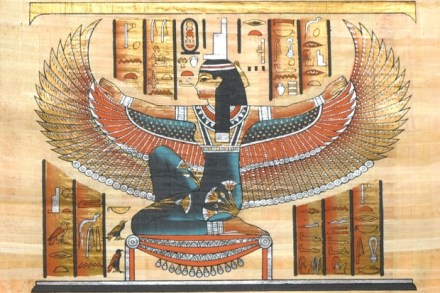
‘This’ll make you laugh,’ said my husband, looking up from the Daily Telegraph. For once he was right. It was a letter from the Pagan Federation complaining that the acronym Isis ‘is likely to form an inadvertent association in the minds of hearers between Sunni jihadists and followers of the goddess Isis’. These ‘may be caught up in unintended fallout’. They are not the only ones. Apart from the army of bloodthirsty Islamists, Isis is a centre for scientific research at Harwell, near Oxford; a group of schools teaching English; an ‘end to end’ professional photographic service in Clerkenwell; a private equity investor; and a seven-seater from Toyota.