Labour party

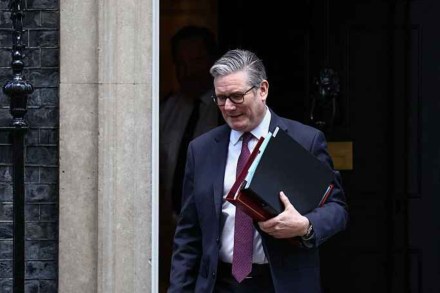
Is Starmer back from the brink?

From our UK edition

13 min listen

After a dramatic day in Westminster, the threat to Starmer appears to have receded – at least in the short term. But with the Gorton and Denton by-election less than three weeks away, (more) trouble could be on the horizon. Luke Tryl – from pollsters More in Common – and James Heale join Patrick Gibbons to discuss. Produced by Patrick Gibbons.

Is Starmer back from the brink?

Could the herd move on Starmer?

From our UK edition

11 min listen

James Heale, Tim Shipman and Oscar Edmondson discuss the continuing fallout over the Mandelson scandal. The mood amongst Labour MPs is pretty dire – following a bruising PMQs and a government climbdown over the release of Mandelson's vetting files – but is it bad enough for Labour MPs to challenge Starmer? And could his chief of staff – and close Mandelson ally – Morgan McSweeney be in the firing line? How long ago the decision to block Andy Burnham seems now...

Could the herd move on Starmer?

How should the UK manage its relationship with China?

From our UK edition

17 min listen

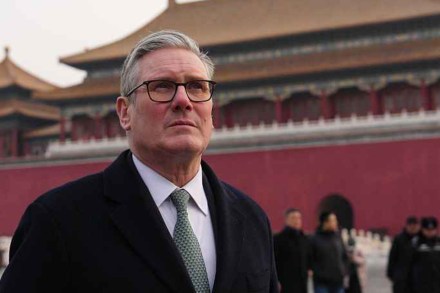
As Keir Starmer's visit to China draws to a close, Sam Olsen – who runs the States of Play substack – and Times columnist Cindy Yu join Patrick Gibbons to discuss how the UK should manage its relationship with China. Starmer's visit has drawn criticism from various China hawks – and from President Trump – but is there a way for the UK to balance legitimate security concerns with the need to trade with the world's second largest economic power? Plus, to what extent to the British public care about these geopolitical concerns? Cindy and Sam explain why is it important for policymakers to explain how these trips link back to domestic issues – and Cindy name checks James Cleverly as she highlights the importance of consistency amongst the political class.

How should the UK manage its relationship with China?

What is ‘Starmerism’?

From our UK edition

If Keir Starmer didn’t already understand Harold Macmillan’s warning about ‘events, dear boy, events’, he got a lesson on Saturday. At 4.49 p.m. on Truth Social, Donald Trump ate humble pie about the -sacrifice of British troops in Afghanistan, having previously claimed Nato forces avoided the front line. ‘We enjoyed it for a few minutes,’ a close aide recalled. Eleven minutes, to be precise. At 5 p.m. on the dot, Andy Burnham announced that he wished to stand in the Gorton and Denton by-election. So began the latest psychodrama at the top of the party. This was an open challenge to Starmer’s authority and a test both of his remaining political power and his willingness to use it.

A decade on, Brexit still means Brexit

From our UK edition

It’s been almost a full decade since Britain voted to leave the European Union. Inside Labour, whatever words are muttered about accepting the referendum’s result, the consensus remains that Brexit was a mistake. Ministers compete to see who can flirt most openly with re-entry, despite their party manifesto pledges not to rejoin the single market or customs union, or to reintroduce freedom of movement. Keir Starmer has attacked the ‘wild promises’ of Brexit supporters and said Britain must ‘get closer’ to the single market. David Lammy and Wes Streeting have both lamented the ‘damage done by Brexit’ and called for a customs union with Brussels – a proposal that Peter Kyle, the Trade Secretary, suggested would be ‘crazy’ not to consider.

What does Starmer want to achieve in China?

From our UK edition

19 min listen

Keir Starmer lands in China tonight as he becomes the first British Prime Minister to visit since Theresa May in 2018. Sam Hogg from the Oxford China Policy Lab and James Heale join Patrick Gibbons to assess the UK-China relationship right now, what Labour is hoping to get from the visit and whether there are risks for Starmer as well as rewards. Is the tight rope Starmer is walking between the UK & China a sign of weakness, or an extension of a pragmatic 'Starmerite' foreign policy? Produced by Patrick Gibbons.

What does Starmer want to achieve in China?

Does British politics reward traitors or faithfuls?

From our UK edition

22 min listen

With the Conservatives on watch for further defectors, academic Richard Johnson and Conservative peer Danny Finkelstein join James Heale to discuss whether British politics rewards traitors or faithfuls. Richard points out that often personal success is dependent on whether the party goes on to be a major or minor player in British politics; Winston Churchill and Shaun Woodward fared better, while Shirley Williams and Mark Reckless had less success. Danny – whose political career began with the SDP in the 1980s – also takes us through his personal experience and the challenges of defecting, from ideology and demography to the perception of betrayal. How fundamental is the shift taking place in British politics? Produced by Patrick Gibbons.
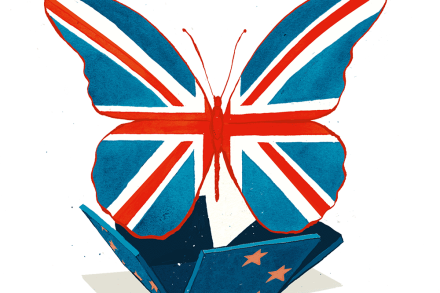
Only divine intervention can save Labour

From our UK edition

A party that can foretell the future stands a very good chance of success. Given Labour’s record of U-turns, they cannot even foretell the present. A state’s success in the ancient world depended on its mastery of natural resources: the more land and people you controlled, the more powerful you were. So states were frequently at war and naturally sought the favour of the gods – by consulting oracles, entrails and flights of birds, or striking lucky by means of dreams, omens, sneezes, odd events and suchlike. However, there were no guarantees. ‘A prophecy is the guess of a sensible man’ (Euripides), ‘No good has ever come from prophecy’ (Aeschylus). Menander hit the spot, when a character desired ‘A future not as I wish, but to my benefit.

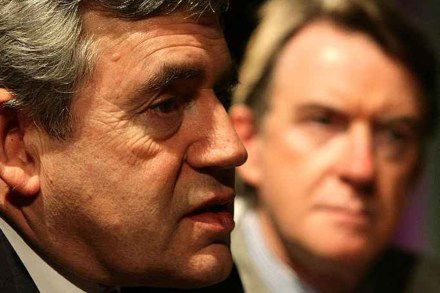
Iran’s useful idiots, Gordon Brown’s second term & the Right’s race obsession

From our UK edition

43 min listen

As the world watches events in Iran, and wonders whether the US will intervene, the Spectator’s cover this week examines 'British complicity in Tehran’s terror’. When thinking about what could happen next in the crisis, there is a false dichotomy presented between regime survival and revolution; the reality is more complicated, though there is no doubt that this is the biggest threat to the theocratic regime in decades.  For this week’s Edition, host Lara Prendergast is joined by political editor Tim Shipman, columnist Rachel Johnson and features editor – and Edition co-host – William Moore. They commend the bravery of Iran’s protestors but criticise the ‘inept, naive and wrong’ response of the Foreign Office.

The tragedy of Keir Starmer

From our UK edition

For someone who likes to present the general public with the idea that he doesn’t have a personality, Sir Keir ‘I don’t dream’ Starmer has actually provided plenty of insight into who he really is. From his occasional flashes of fury when thwarted in the Commons to his chronic lack of authenticity when out bothering voters, a picture emerges of a man who doesn’t much like the ‘people’ side of politics. Perhaps the most revealing example was when, in opposition, he unhesitatingly told Emily Maitlis that he preferred Davos over Westminster. By his own revealed preferences and statements, Starmer is an aspirant technocrat, not an enthusiastic democrat.

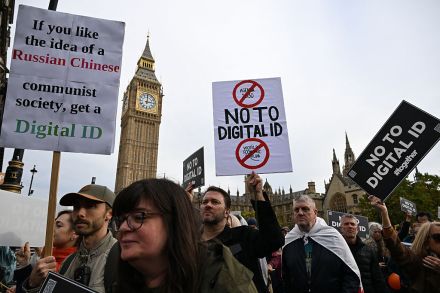
Compulsory digital ID is dropped

From our UK edition

Keir Starmer has just made his 13th u-turn since taking the No. 10 keys. The government, this evening, decided that the digital ID scheme would no longer be compulsory. The IDs were to be used to verify if job applicants had the right to work in the UK – something that is currently done using passports and National Insurance numbers. But, according to the Times, Starmer has now dropped the compulsory aspect of the scheme because of fears it was causing distrust in the principle of digital ID. Under the changed plans there will be an entirely optional digital ID, or workers can use digital versions of existing documents – such as passports – to complete right-to-work checks.

International statesman or ‘never here Keir’?

From our UK edition

18 min listen

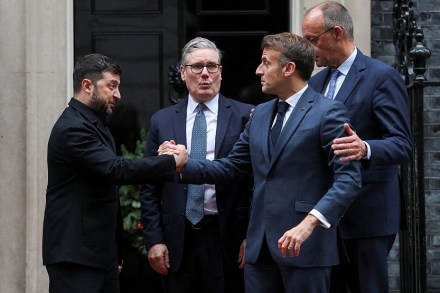
From 'regime change' in Venezuela to Russia's war in Ukraine, the Labour government is trying to navigate complicated situations across foreign affairs. Having appeared to weather the domestic reaction to the situation in Venezuela, Keir Starmer is in Paris today to discuss Ukraine alongside Chancellor Merz and Presidents Macron and Zelensky. This is undoubtably important – but to what extent will this fuel the criticism that the Prime Minister spends too much time abroad? And how can Starmer reconcile the demands of foreign affairs with his domestic priorities? James Heale and Tim Shipman join Patrick Gibbons to discuss. Produced by Patrick Gibbons.

From Porn Britannia to Political Chaos: The Spectator’s Year in Review

From our UK edition

31 min listen

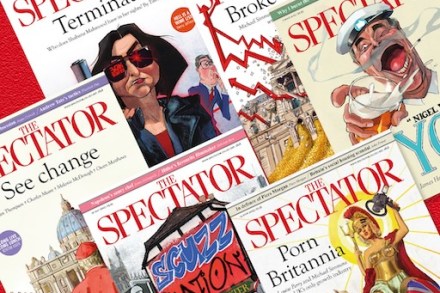
The Spectator’s senior editorial team – Michael Gove, Freddy Gray, Lara Prendergast and William Moore – sit down to reflect on 2025. From Trump’s inauguration to the calamitous year for Labour, a new Pope and a new Archbishop of Canterbury, and the ongoing wars in Gaza and Ukraine, the year has not been short of things to write about. The team take us through their favourite political and cultural topics highlighted in the magazine this year, from the Assisted Dying debate, the ongoing feud over Your Party and Reform’s plan for power, to Scuzz Nation, Broke Britain – and Porn Britannia. Produced by Patrick Gibbons.
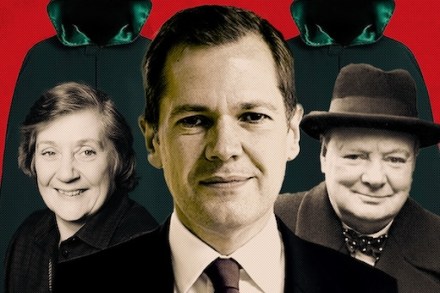
Is Britain depressed?

From our UK edition

Something very strange is happening in Britain at the moment. Look at the economy. Things aren’t really too bad: for a start it’s actually growing, if only a little. At the same time, inflation is falling. Real incomes are on the rise too – with earnings going up 4.4 per cent in the year to October, while inflation was 3.6 per cent. Meanwhile unemployment is at 5.1 per cent, which isn’t terrible. The government is raking in the sorts of taxes that would make the Sheriff of Nottingham weep with joy; and yet our taxes as a percentage of GDP are still only a hair above the OECD average – so, in other words, we are plainly a pretty well-off country with plenty of money left to splash on railways and hospitals and frigates.

Why Britain needs to wake up to extremism

From our UK edition

16 min listen

As the world reacts to the attacks on Bondi Beach in Australia, Conservative peer Paul Goodman joins Tim Shipman and James Heale to discuss the failure of successive British governments to properly tackle extremism – especially Islamist extremism – over the past two decades. In the post 'War On Terror' era, there was a reluctance by some to discuss the problem openly as it got tied up in other polarising topics like immigration. Though that reluctance appears to be fading, Paul argues that there is a 'communalist air of voting' in British politics now, and he warns of the dangers that face British politics if fragmentation becomes entrenched in party politics. Plus – Trump is suing the BBC for $5 billion. What's his motivation? Produced by Patrick Gibbons.
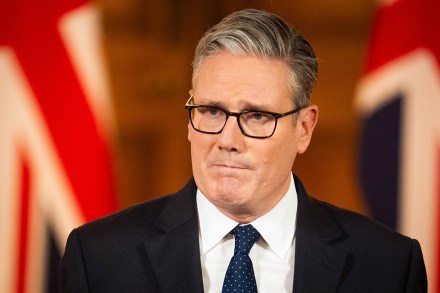
Portrait of the year: Trump’s tariffs, the definition of biological sex and the fall of Andrew Mountbatten-Windsor

From our UK edition

January Downing Street said Rachel Reeves would remain in her role as Chancellor of the Exchequer ‘for the whole of this parliament’. She made a speech standing behind a placard saying: ‘Kickstart economic growth.’ Axel Rudakubana, 18, was sentenced to at least 52 years in prison for the murder of three girls in a knife attack at Southport. Yvette Cooper, the Home Secretary, announced a ‘rapid audit’ of grooming gangs by Baroness Casey of Blackstock. Wildfires raged around Los Angeles. Luke Littler, 17, became world darts champion. The aftermath of the Palisades and Eaton fires in California (Mario Tama/Getty Images) February President Donald Trump of the United States and the Vice-President, J. D.

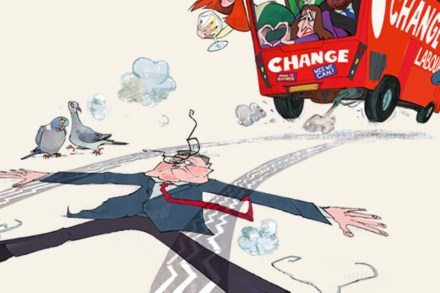
Will Keir still be Prime Minister in a year?

From our UK edition

Keir Starmer will start the new year as he means to go on: by attempting to convince his troops that he is still the best man to lead them. The Prime Minister will begin 2026 by hosting Labour MPs at Chequers. The motive behind the outreach is simple. ‘The only question that matters this year,’ says a non-invitee, ‘is whether Keir can cling on.’ It was not so long ago that a peacetime prime minister with a healthy working majority was thought to be unassailable. No longer. The defining moment in parliament these past 12 months was the summer welfare rebellion. After 120 Labour MPs threatened revolt, the £5 billion cuts were withdrawn. ‘The party took back control,’ says a minister. Some in the Whips’ Office wished to make this a vote of confidence.

Kemi wins PMQs

From our UK edition

12 min listen

Kemi Badenoch’s good form continues at Prime Minister’s Questions. The Tory leader was once more visibly enjoying herself today as she feasted on Labour misfortune, and she did a good job in covering the breadth of problems in the government. She used her six questions to ask about different departments and how they were faring: an approach that can often risk diluting the overall attack. But today, Badenoch had an overarching theme to those questions, which was that the Prime Minister and his colleagues are failing to meet their own promises.  To discuss, James Heale is joined by Tim Shipman and Michael Simmons.

Labour has done more damage to our country than the Luftwaffe

From our UK edition

I still hang out with the same two lovable crackheads I sat beside on the first day of primary school. I keep all the stubs from every concert I’ve ever been to. I meet the same school dads in the same pub on the same night every single week and my point is that I’m a creature of habit. It takes a lot to change my mind, but enough is enough. I’m ending a lifetime of support for my beloved Labour party as 2025 draws to a disastrous close. This nightmarish, totalitarian rabble has done more damage to our country than Margaret Thatcher and the Luftwaffe put together.

Brexit’s back – and so is Truss

From our UK edition

16 min listen

There has been a flurry of UK-European activity across Britain this week, with the German state visit in London, the Norwegian Prime Minister signing a defence agreement in Scotland and the British-Irish council meeting in Wales today. Perhaps then it's inevitable that speculation over closer ties between the UK and the EU has re-emerged. Could Labour seek to rejoin the Customs Union? Would this help or hinder Reform? And would the EU even stomach it? Plus – Liz Truss launches a new show today. Will she say anything new? James Heale and Charles Grant from the Centre for European Reform join Patrick Gibbons to discuss. Produced by Patrick Gibbons.