Labour party

Keir Starmer may have a better chance of taking Labour to power than anyone expected

From our UK edition

First impressions matter in politics. Once the public have made their mind up about a politician, they rarely change it. This is why the first 100 days in charge are so important for any new leader. Get off to a good start, and everything is possible. Stumble out of the gate and your race is run. Keir Starmer is widely expected to be announced as the new Labour leader on Saturday, but he faces the prospect of having to keep his distance from the electorate for the bulk of his first 100 days. The pandemic means that he won’t have the choices that normally come to the winner. There can be no victory rally, no tour of the country designed to show that there aren’t any ‘no-go areas’ for him — the whole country is a no-go area for anyone who isn’t local.

Local elections postponed until next year

From our UK edition

The government has bowed to the inevitable and announced that May’s local and Mayoral elections have been postponed. With the Chief Scientific Advisor saying that the coronavirus peak is 10 to 14 weeks away, it was hard to see how you could have had an election campaign within that period. As I said in the Sun last Saturday, Whitehall has been braced for a delay to these elections for a while now. They will now not take place until 2021, meaning that there’ll be no immediate electoral test for the new Labour leader. These elections won’t be the last event to be postponed. The current thinking among those leading the government’s response to the virus is that a government bar on big public gatherings is, probably, about a month away.

Full text: Labour’s suspension letter to Trevor Phillips

From our UK edition

News broke this morning that the former head of the Equalities Commission Sir Trevor Phillips had been suspended from the Labour party over allegations of Islamophobia. Phillips has spent his career documenting the realities of race and integration in British life.  The think tank Policy Exchange has now released the correspondence between Sir Trevor and the Labour party disciplinary department. Phillips is a senior fellow at the research institute.

What would a Keir Starmer Labour party look like?

From our UK edition

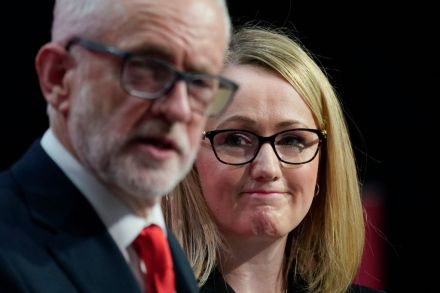
There’s still a month of the Labour leadership contest to go but most MPs have already concluded that Keir Starmer will win. The shadow Brexit secretary has led in every category so far: MPs, unions and local parties. As the contest enters its final stage, polling suggests the membership agree and Sir Keir will sail through. His closest rival, Rebecca Long-Bailey, is now seen as a ten-to-one outsider. One bookmaker is already paying out on a Starmer victory. But if the race seems all but over, the conversation about what he’ll do as Labour leader is very much on-going. Is he the leader that the party’s moderates have craved to stand up to the hard left — or a vessel for continuity Corbynism? So far, he has tried very hard not to say.

Emily Thornberry knocked out of Labour leadership race

From our UK edition

The Labour leadership contest has become a three horse race. Emily Thornberry has been eliminated after failing to win enough Constituency Labour Party nominations to pass through to the final round. The shadow foreign secretary did come close to reaching the required number – she was two short at 31 nominations to the 33 required by Friday evening. Of the candidates who have made it through to the membership stage, Keir Starmer won 374 nominations, Rebecca Long-Bailey164 and Lisa Nandy 72. Thornberry's leadership campaign has been uphill from the beginning.

Why bother joining the Labour party?

From our UK edition

Now that there is yet another chance to vote for a leader of the Labour party, if you are prepared to pay £25 next week, lots of my friends, none of them Labour supporters, are joining up. Their idea is to vote for the Corbyn ‘continuity candidate’, who seems to be Rebecca Long Bailey, thus ensuring, they think, continuous Conservative rule. As someone who is not a member of any political party, and is therefore eligible to join Labour, I am thinking of following suit; but something gives me pause. There is a real question whether the extremists in Labour are any worse than the moderates. The Corbynistas are, for sure, nasty, stupid, narrow and wrong. But that is visible to anyone aged over 25. They have not behaved worse over Brexit than they have over anything else.

The Labour candidates the Tories are worried about

From our UK edition

When a Labour politician or aide stops to chat in the corridors of parliament these days, they only have one question: which leadership candidate would the Tories fear most? The government majority of 80 means it would be hard for even the most talented Labour leader to land a House of Commons victory in the coming years, yet he or she would still have the potential to change the dynamic of this parliament — and disrupt the Tories’ hope for the 2024 election. Right now the leadership candidates are focusing not on hurting the Tories but on wooing the MPs, trade unions and members whose support they need to win.

What’s behind Barry Gardiner’s botched ‘leadership campaign’ launch?

From our UK edition

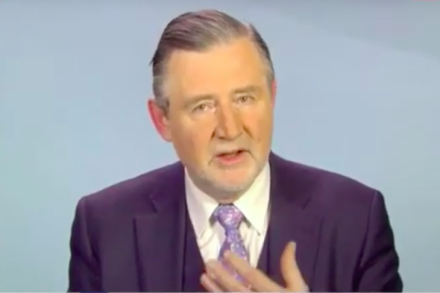
Is Barry Gardiner running for Labour leader or not? The question is almost as confusing as whether Prince Harry and Meghan Markle have resigned from the Royal Family. In the former case, two journalists had the story that Gardiner was standing and would be backed by Len McCluskey, who has become unhappy with Rebecca Long Bailey's current prowess. In the latter, the couple issued a statement saying they would step back as 'senior royals' and work to become financially independent. But then in both cases, the story took a very awkward twist. Buckingham Palace then issued a statement saying the discussions were at an 'early stage', with briefings suggesting the couple hadn't consulted any other royals on their announcement.

Labour moderates were wrong to fear a leadership contest stitch-up

From our UK edition

Despite the muttered predictions from some of the leadership campaigns, Labour's ruling National Executive Committee has today decided on a set of rules for its leadership contest that even a really committed conspiracy theorist would struggle to badge a 'stitch-up'. The timetable is very slightly longer – Jeremy Corbyn will remain Labour leader until 4 April when his successor is announced – and the rules on registered supporters applying to be able to vote are the same as in the 2016 contest. Candidates have a week to get enough nominations from MPs and MEPs (the threshold is 22).

The truth behind the election’s so-called fact checkers

From our UK edition

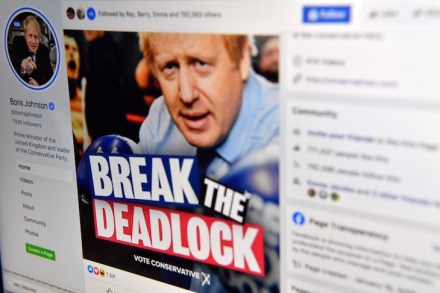
All election campaigns see politicians exaggerate, stretch the truth and make promises they can't keep. But if a report issued in early December is anything to go by, the 2019 general election campaign was a particularly dishonest affair - and one party was particularly guilty. On 10 December, Metro reported: Similarly, the Independent reported: Websites which make no attempt to be impartial were more vociferous. Under the headline, The Tory war on truth – and how to fight back, Open Democracy reported: Independent fact checkers have found that 88% of Tory Facebook adverts contain lies, while 0% of Labour’s do.

Labour leadership contest: the state of the race so far

From our UK edition

The candidates to replace Jeremy Corbyn have been busily launching their campaigns and giving political interviews this weekend, with the party deciding the rules for the contest at a meeting of its ruling National Executive Committee tomorrow. There are still a couple of candidates left to launch their official campaigns, including Rebecca Long-Bailey, who appears to have disappeared to a location far more secretive than any prime ministerial holiday, and Ian Lavery. But here's what we know so far about each of the candidates: Keir Starmer: considered the frontrunner in the contest, the shadow Brexit secretary launched his campaign last night with a moving video.

Podcast: Jess Phillips – My family left Labour over Blair and Iraq

From our UK edition

Jess Phillips is viewed as an outside bet when it comes to the Labour leadership race. While she has a good chance of making it through the parliamentary round, Phillips will have her work cut out among the membership. The Labour MP for Birmingham Yardley has been openly critical of Jeremy Corbyn and also once told key Corbyn ally Diane Abbott to 'f--- off' (see Steerpike for full details of the incident). Another issue is that in comparison to some of the candidates (as Isabel noted on Coffee House) less is known of Phillips's political beliefs in terms of policy. I sat down with Phillips last year to record an episode of the Spectator's Women With Balls podcast.

Labour’s leadership race shows the party has truly lost the plot

From our UK edition

The Labour party has lost the plot. That is the only explanation for the bizarre, self-destructive antics it has been engaged in since its drubbing in the December election. It has learnt nothing. It is blissfully and stupidly carrying on down the path of Remainerism and/ or Corbynism that lost it the election. Instead of taking a breather and asking why working-class voters rejected it en masse last month, Labour is doubling down on its unpopular nonsense. Pretty much every door-stepping canvasser and opinion pollster said the same thing about Labour’s historically awful showing in working-class ‘red wall’ constituencies: it was down to the party’s betrayal of Brexit or to its embrace of eccentric Corbynista blather — or both.

What does Jess Phillips actually believe in?

From our UK edition

Jess Phillips is expected to launch her bid for Labour leader this evening, having only said up to this point that she is seriously considering a bid to take over from Jeremy Corbyn. She is both the candidate most identified with the 'moderate' side of the party and the most high-profile, but that doesn't mean she is launching with a particularly well-formulated policy platform. In fact, while Phillips is well-known for her dislike of Corbyn and her altercation with Diane Abbott pretty early on as an MP, it's not quite as easy to work out what she thinks. Phillips has largely exerted her influence in Parliament in two ways. The first is as a campaigner on issues she knows a great deal about from her pre-parliamentary life, including domestic abuse and cuts to school funding.

Labour’s defeat has not ended anti-Semitism

From our UK edition

The defeat of Jeremy Corbyn and the Labour Party has afforded little respite to British Jews. Residents of Hampstead and Belsize Park woke on Sunday to storefronts and a synagogue daubed in the Star of David and ‘9/11’, apparently invoking the conspiracy theory that Jews were behind the September 11 attacks. December has been sweeps month for anti-Semitism across Europe. Two teenagers were charged after allegedly beating a rabbi in Stamford Hill while shouting ‘kill Jews’. A man was arrested on suspicion of racially or religiously aggravated assault after a United Synagogue official was attacked near his east London home. An Israeli student was assaulted on the Paris Metro for speaking Hebrew.

Nine lessons from the election: Boris was lucky – but he also played his hand right

From our UK edition

The 2019 general election will be remembered as one of the most consequential elections in Britain's recent history. Aside from rejecting a more economically radical Labour Party, the British people used the election to provide what their elected representatives had been unable to provide: an answer to Brexit. For Boris Johnson and the Conservative party, the election was a triumph. They won their largest majority since 1987 and the largest majority for any party since New Labour's second landslide in 2001.

Keir Starmer looks and sounds middle class precisely because he’s working class

From our UK edition

Despite being beaten by an Old Etonian with 'de Pfeffel' as his middle name, the Labour Party has descended into a rather predictable round of the Four Yorkshiremen, with competing factions arguing variously that voters in former 'red wall' seats will only return to Labour if it is led by a northerner, a woman and preferably someone who grew up in a cardboard box. Sir Keir Starmer doesn't appear to be any of those things. He may end up being the only man standing against a group of female contenders. He is a Northerner only in London terms, and as former Director of Public Prosecutions, doesn't sound like he's come from a tough background.

Labour’s failure isn’t necessarily the Tories’ success

From our UK edition

A moment arrives when one does just have to admit defeat. We shall leave the European Union and there isn’t a lot of point going on about it any more. I’m still sure it’s a mistake, but there we are. In a democracy the majority is entitled to make a mistake, just as the minority is entitled to say so. I say so. I’d hoped we could change people’s minds but we haven’t, so enough from me on that. A general election is a different matter. Here too, of course, the majority is entitled to make a mistake, but resistance remains possible and legitimate because there’s always the opportunity at the next election to reverse the electorate’s previous decision. The trouble is, however, that I don’t want to.

Inside Labour’s post-election PLP meeting – ‘We lost the f—ing election’

From our UK edition

The first meeting of the parliamentary Labour party since the party's disastrous election defeat began with a round of applause. Only it wasn't for Jeremy Corbyn. Instead MPs clapped in tribute to those colleagues who had lost their seats in the party's worst election showing since 1935. The reaction the beleaguered Labour leader received was mixed at best – with the session, which ran on for over two hours, dominated by angry outbursts from surviving MPs. Addressing MPs, Corbyn apologised for his role in the result: 'I am very sorry for the result for which I take responsibility. I will continue to lead the party until a new leader is elected.

Corbyn couldn’t have done it without ‘moderates’ like Jess Phillips

From our UK edition

Thursday was a routing for Labour but the reckoning is still to come. Four years into the Corbyn project, and two years after it should have happened, the country crushed the Labour party for embracing the most extreme and dangerous figure in mainstream British politics since Oswald Mosley. For British Jews, who have been put through intolerable torment since 2015, this past weekend marked the first Shabbat dinner at which Jeremy Corbyn’s name could be raised in something other than anger or exasperation or dread. In a break with much of Jewish history, Gentiles were on the right side for once. And while it is naive to assume anti-Semitism was the decisive factor for most voters, for some it was and for others it was swimming around in the broth.