Labour party

Portrait of the week: Scotland votes, Queen speaks and Israel-Palestine crisis escalates

From our UK edition

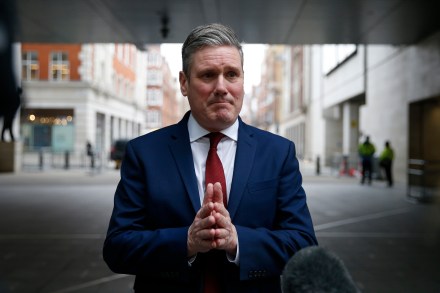
Home A new complexion of British politics was revealed by the capture of Hartlepool by Jill Mortimer for the Conservatives in a by-election, with 15,529 to the Labour candidate’s 8,589. Since its formation in 1974, the constituency had been Labour. Sir Keir Starmer, the Labour leader, said his party had ‘lost the trust of working people, particularly in places like Hartlepool’. The Conservative Ben Houchen was re-elected as mayor of the Tees Valley with 72.8 per cent of the vote. Of 143 English council seats, the Conservatives now control 63, 13 more than before, with 2,345 councillors; Labour lost control of eight councils to end up with 44, and 1,345 councillors. Sir Keir then made a botch of a shadow cabinet shuffle.

Keir Starmer isn’t Labour’s biggest problem

From our UK edition

Keir Starmer has turned a drama into a crisis. The local elections were always going to be difficult for Labour. The government is enjoying the political dividend of the vaccine rollout, and approval for its handling of the Covid crisis is now back to where it was a month into the first national lockdown. Much of the world is still struggling, but Britain has the lowest Covid levels in Europe and Boris Johnson’s approval rating is far higher as a result. He triumphed, and Labour struggled. But Starmer made this so much worse by his actions before and after polling day. The first error was to hold the Hartlepool by-election on the same day as the local elections.

Is Keir Starmer destined to become a ‘Kinnock-esque’ figure?

From our UK edition

Sir Keir Starmer is planning a policy review as part of his plans to ‘change’ Labour after the dismal Super Thursday results. This sounds, to put it mildly, like a rather small response to a rather big problem. Talking to MPs and campaigners over the past 24 hours, I have noticed a shift in the way many of them describe Labour's challenge. The Hartlepool result has underlined that the party’s recovery hasn’t yet started, and that it is going to be a very, very long time before that recovery can take the party back into government. Starmer could become a Kinnock-esque figure, who might merely prepare the ground for another leader who wins.

Starmer’s Telegraph splash is a perfect piece of politics

From our UK edition

The Daily Telegraph is considered the voice of the Conservative grassroots - so today’s splash will have driven a sliver of ice into minister’ veins. Here is the new leader of the opposition, a knight of the realm no less, urging the government to get a grip of the Covid-19 outbreak in care homes. ‘We owe so much to the generation of VE Day,’ he says. ‘We must do everything we can to care for and support them through the current crisis.’ On the day we remember the end of hostilities in Europe, Sir Keir Starmer has planted his tanks boldly on the Tories’ lawn.

Momentum’s cunning plan would keep the Tories in power forever

From our UK edition

Momentum, the Labour campaign group dedicated to keeping Corbynism alive, this week demanded that Keir Starmer commit to introducing a proportional voting system should he win election, replacing the current first past the post model for electing MPs. ‘A popular consensus is building across the labour movement for a change to our first past the post electoral system, which has consistently delivered Tory majorities on a minority of the vote and hands disproportionate power to swing voters in marginal constituencies,’ said Gaya Sriskanthan, Momentum’s co-chair. ‘Momentum will join the charge for PR, as part of a broader commitment to deep democratic change and alongside our strategy of building popular support for socialism in our communities.

Starmer’s long game: party repair comes before opposition politics

From our UK edition

What is Keir Starmer thinking? His approach might baffle Tory MPs, who wonder if he will ever spring to life. The answer, though, is that he’s playing a long game. He hopes he will be a strong opposition leader when the time is right. For now, it is time to offer support to Boris Johnson’s government. The pandemic has created tricky terrain for the shadow cabinet. Much like in wartime, normal political rules don’t apply, because ‘people want the government to succeed’. Starmer’s supporters say coronavirus means the Labour party has been squeezed out of the conversation. It’s not as simple as Starmer not knowing what he wants, even if some Labour MPs see this as the main problem.

Corbyn’s plan to revolutionise the mainstream media

From our UK edition

Jeremy Corbyn is hitting the comeback trail. The former Labour leader made the keynote speech at this week’s Media Democracy Festival organised by the Media Reform Coalition. He began by citing his own journalistic credentials. ‘I produced 500 columns for the Morning Star.’ Then he turned to India where 250 million strikers are protesting against the removal of state support for farmers. The strike involves ‘one in thirty of the entire population of the world,’ enthused Corbyn, which makes it the largest industrial dispute in history. But coverage in the UK has been minimal, 'which says a lot about the priorities and the news values of much of our media outlets in this country, that they don't think it's worth reporting'.

After Starmer: Labour’s liberals should plan for a new party

From our UK edition

Labour's left appears to be licking their lips at the thought of Starmer’s ignominious end as leader, something which they now seem to hope will be coming sooner than they could have ever dreamed back in the summer. Should the party do poorly at the May local elections, the plan seems to be to agitate for a change at the top and unite around John McDonnell as Corbyn’s true successor. If the Labour party was taken over by the far left again, this would leave liberals in a difficult position. Since Keir Starmer took over, most liberals have folded into Labour, correctly seeing that they are the only vehicle for ousting the Tories from government in the relatively short term.

Captain Hindsight strikes again

From our UK edition

A third stint in self-isolation and some extra time alone doesn't seem to have given Keir Starmer time to reflect on his opposition strategy. Last night Labour called on the government to prioritise the reopening of schools when the time comes to lift lockdown restrictions.  https://twitter.com/labourpress/status/1353832519913906177?ref_src=twsrc%5Etfw Clearly a good idea — so good in fact that it's already government policy. Boris Johnson has spent the best part of a year making clear that he will prioritise face-to-face education above almost all other social activity, telling the Commons three weeks ago that schools would be the first thing to reopen.

Letters: Labour’s left vs left struggle

From our UK edition

Left vs left Sir: Your leading article (‘Comfort spending’, 28 November) makes the classic mistake about modern politics which prevents so many from grasping what is going on. You refer to Sir Keir Starmer as the leader of a battle against Labour’s left by its ‘centre’. Since Neil Kinnock’s pantomime battle with Militant in 1985, political journalists have been beguiled by a fantasy. They think that Labour leaders who attack villainous leftist factions do so in the cause of moderation. But this is in fact a battle by the sophisticated left — of post-1968 cultural revolutionaries — against the crude and embarrassing steam-powered left of Militant or Jeremy Corbyn. Each thinks the other is the wrong kind of socialist.

Left behind: how Labour betrayed its base

From our UK edition

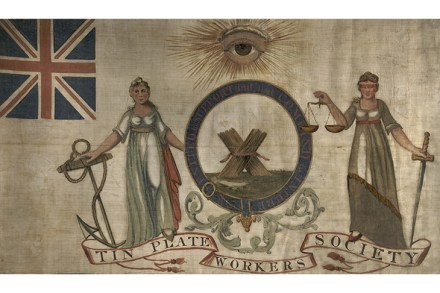
I love the labour movement. I love its history, its traditions, its brass bands and banners. I love its rousing songs, anthems and festivals. I love its slogans and rallying cries, inspired, as they are, by an abiding faith in the collective spirit and the seductive vision of the New Jerusalem. For all that tribalism is given a bad name these days — sometimes with good reason — I feel tribal about my attachment to the labour movement. And I offer no apology for that. As it was for millions of others who grew up in working-class communities, tribalism in the cause of labour was for me less a matter of choice and more one of imperative.

Soft-left squatters have taken over the Lib Dems

From our UK edition

I was never afraid of Jeremy Corbyn, never afraid of Momentum. I’ve never really feared Britain’s hard left at all. They’re wrong, of course, and they can do some serious localised damage; but their ideology is so obviously daft and has so comprehensively failed wherever in the 20th century it was tried that they occupy in my mind a position similar to that of Satanists. Grisly, yes, but a threat to civilised society? Hardly. The hard left always gets found out in the end, and always will. Their doctrines have no natural appeal to the middle-of-the-road British (which is most of us) and in the unlikely event they were ever elected to government, they’d soon enough crash the car.

The dangers of censoring anti-vaxxers

From our UK edition

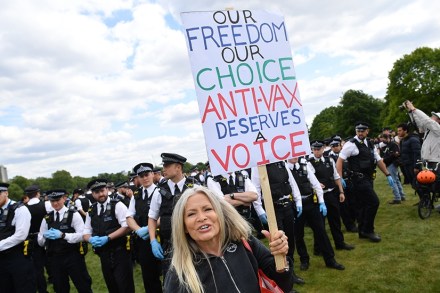
Earlier this week, the Labour party wrote to the government urging it to bring forward legislation so that social media companies which fail to ‘stamp out dangerous anti-vaccine content’ can face financial and criminal penalties. ‘The government has a pitiful track record on taking action against online platforms that are facilitating the spread of disinformation,’ said Jo Stevens, Labour’s shadow culture secretary. ‘This is literally a matter of life and death and anyone who is dissuaded from being vaccinated because of this is one person too many.’ My first thought on hearing this was how pitifully out of touch the Labour party is.

A circuit breaker would break the economy

From our UK edition

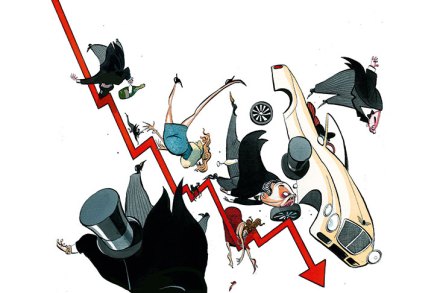
More jobs will be lost in the long run. Businesses will go under. And government debt will soar even higher. Labour’s Shadow Chancellor Anneliese Dodds is pushing the argument that a circuit breaker — that is a short, sharp national lockdown — will be cheaper in the long run. It will keep the virus under control, and therefore enable the economy to bounce back quicker. Channelling her inner Gordon Brown, she has even come up with a very precise figure for that. Apparently, not having a circuit breaker will cost us £110 billion. But hold on. Even leaving aside the point that precise estimates should always make us suspicious — is it really £110 billion, rather £107 billion, or £113 billion? — that is crazy.

Keir Starmer’s quiet revolution

From our UK edition

For the first time in 13 years, the public, when polled, think a Labour leader would make the best prime minister. To be fair, Sir Keir Starmer has been helped in this regard by the Conservatives, who haven’t done wonders for their reputation as the party of competence in recent weeks. But the opposition leader has had a decent start. Yes, Starmer is right when he says his party has a ‘mountain to climb’ to win power following Jeremy Corbyn’s historic defeat, but the Tories are on their fourth term and no party has ever won five times in a row. When Iain Duncan Smith was elected leader of the Conservative party, he said he ought to be judged on his first hundred days. The public gets a sense of the opposition leader by this point, he argued.

Why Rebecca Long-Bailey had to go

From our UK edition

Do you remember where you were when the BBC showed a rerun of Bowie’s Glastonbury set? When we ask each other that in future, the answer is always going to be: ‘At home, recovering from a day of Zoom calls.’ It’s 100 days since lockdown and as we slowly emerge it’s hard to keep a sense of proportion about the events in between. I remember pricking my finger for a trial antibody test; I remember my delight at discovering that an old-time cockney butcher still exists on a nearby council estate; I remember the absolute stillness of the air as a sparrowhawk circled over south London. Best to fix these memories in writing now, because the cryogenic social frost is well and truly melting. I’m on a public webinar with Katja Kipping and Jagmeet Singh.

Liberal fears are contagious

From our UK edition

It has become a commonplace among social psychologists that one of the characteristics that unites conservatives is our sensitivity to disgust. A succession of experiments carried out over the past ten years seems to show that a person’s political views are linked to how disgusting they find the idea of, say, touching a toilet seat in a public lavatory. The more repulsed you are, the more likely you are to hold conservative positions on issues like gay marriage, immigration and abortion. These findings have been lapped up by liberal social scientists since they confirm their view of conservatives as uptight control freaks whose love of hierarchy and tradition is rooted in an irrational fear of contagion.

How the Labour party ran out of ideas

From our UK edition

After losing the leadership contest in April, the left of the Labour Party regrouped. Organising as part of old factions like the Socialist Campaign Group and new ones such as Don’t Leave, Organise, they have held Zoom events and created websites, pledging to make life difficult for Keir Starmer. One thing is missing, however, from their plans: any serviceable ideas. The left of the party can’t seem to name one solid thing in policy terms on which they disagree with Starmer. And, they appear unable to point to a single practical thing they would do differently had they won the leadership contest. Instead, they frame everything in culture war terms, and when the discussion does get round to policy, it’s so vague it falls to dust.

The Jewish Chronicle must be saved

From our UK edition

The Jewish Chronicle must be saved. Take that as our starting point and there is all the more chance of success. The oldest continuously-published Jewish newspaper in the world issued this statement yesterday, on the eve of Passover: ‘With great sadness, the Board of the Jewish Chronicle has taken the decision to seek a creditors voluntary liquidation of Jewish Chronicle Newspapers Ltd. Despite the heroic efforts of the editorial and production team at the newspaper, it has become clear that the Jewish Chronicle will not be able to survive the impact of the current coronavirus epidemic in its current form.

The man who defined Labour’s forgotten past

From our UK edition

To read this long-overdue and welcome biography of Peter Shore is to undergo a journey from Labour’s eurosceptic heights in the 1960s to its demise as a party of the nation state in the 1990s. Titled Labour’s Forgotten Patriot, patriotism is a theme which constantly recurs and, to a considerable extent, defined Shore’s political life. Peter Shore has been a rather neglected figure. This is odd since he had considerable influence over Labour politics for two decades and was probably the staunchest defender of Britain’s independence.