Labour party

Has Putin saved Boris?

From our UK edition

It was with some relief that I heard that Labour’s Diane Abbott was opposed to the Russian invasion of Croatia, because you cannot always tell with the far left what way they are going to swing. The Stop the War mob, along with 11 serving Labour MPs, have been anxious to exonerate Vladimir Putin and, in the usual fashion, blame the West. Their Russophilia has easily survived the end of communism and the transformation of Russia into a fascist state. But Croatia presents additional problems for lefties – and I know many former communists who will not visit Croatia because of the role of the Ustase during the second world war: their loss, in my opinion, as it is a beautiful country full of people who wish they were Austrians, which is a noble aspiration.

No one has done more to save Boris than Keir Starmer

From our UK edition

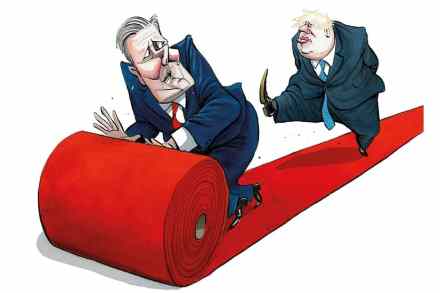
Boris Johnson has a lot of people to thank for his survival in 10 Downing Street, but Keir Starmer should be at the top of the list. The Labour leader whipped his MPs to side with the government when lockdown votes looked tricky. Labour even saved Johnson from a defeat in the Commons over vaccine passports. But Starmer’s greatest service came last month, on a day that could have finished Johnson for good. Members of the 2019 crop of Tory MPs had met to discuss their problems with the Prime Minister. The scene was set for an old-fashioned Conservative regicide. But just as senior Tories began to tell journalists that a confidence vote was imminent, the Labour party announced that Christian Wakeford, a Red Wall MP, had crossed the floor.

Labour’s obsession with race shows no signs of fading

From our UK edition

After a relatively successful spell attempting to side itself with ordinary folk, Labour has lurched back into hardline identity politics with a particular focus on the issue of race. Over recent days some of the party’s leading figures have stoked up the idea of Tory Britain being a hotbed of discrimination. Shadow foreign secretary David Lammy is leading the way with a call for a posthumous royal pardon of those who took part in an anti-slavery uprising in Guyana in 1823. According to Lammy, the pardon would help Britain find a ‘path to repair' in regard to its ‘acknowledgment of its role in the history of slavery’.

Boris will never recover from partygate

From our UK edition

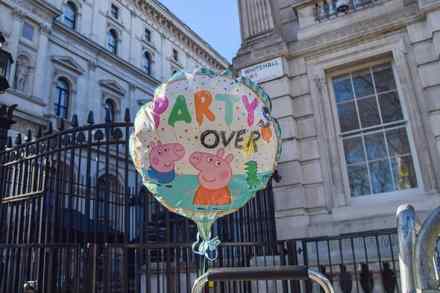
When a political party is hit by a crisis, the tendency these days is for both the politicians and their supporters to pretend that there isn’t a crisis at all, hunker down inside a comfortable state of denial and blame it all on a hostile media. To a degree, this has always happened — but social media has unquestionably exacerbated the process, to the extent that at any one moment a vast number of people are living under a bizarre delusion from which only much later do they emerge blinking into the sunlight. The polarising effect of social media and its echo--chamber properties have led to it becoming little more than a vast conduit for confirmation bias, and this informs the way in which politicians react to crises.

Labour MP Jack Dromey dies, aged 73

From our UK edition

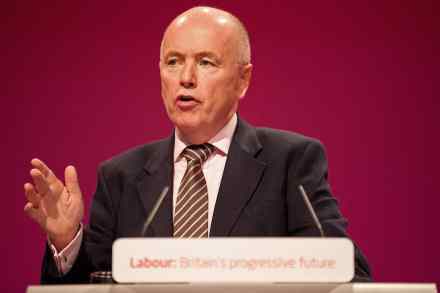
Jack Dromey, who has died today aged 73, was a Labour MP, a trade unionist and a campaigner. He was extremely well-liked across the House of Commons: something that those who didn't know him will have noticed immediately in the shocked tributes that have been pouring in from Westminster figures. He was a good MP, one with a clear set of political beliefs but who never let them stop him from working with those he disagreed with. He formed firm friendships with many MPs on the other side of the house, which is not something every member manages.

Keir’s Centrist Dad reshuffle is the sign of a decadent party

From our UK edition

Sir Keir Starmer has rarely enjoyed such good press as he’s received for overhauling his frontbench. His Centrist Dad reshuffle saw promotions for soft-left pin-ups like Yvette Cooper, David Lammy, Wes Streeting and Lucy Powell, while Corbynista Cat Smith got told to clear her desk. It was a pitch-perfect signal to Labour moderates that they were getting their party back — not least the crucial newspaper columnist demographic — who got to see all their princes return across the water at once. Well, almost. If Sir Keir had really wanted to earn some sweet, sweet commentariat love he'd have arranged a by-election and the first available flight from JFK to Heathrow for David Miliband.

Why scrapping business rates is a bright idea

From our UK edition

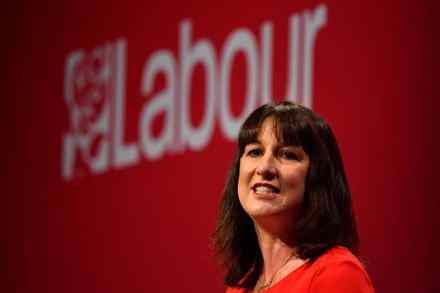
A worthwhile policy proposal amid the Labour conference dogfight? Now there’s a surprise. But shadow chancellor Rachel Reeves’s scheme to freeze and eventually scrap business rates, in the meantime boosting high-street survival by raising the threshold for small business rate relief and incentivising re-use of empty premises, was the brightest moment of the Brighton event. No matter that Reeves is likely to hold her post only as long as Sir Keir Starmer holds his and that anything promised today will resemble a Dead Sea scroll by the time Labour ever returns to power.

Its own opposition: Labour’s conference was all about in-fighting

From our UK edition

As the Tories faced multiple crises this week, Keir Starmer’s party was busy in Brighton doing what it does best: arguing with itself. The Labour conference has been dominated by internal rows about rule changes, a shadow cabinet resignation and whether or not Tories can be called ‘scum’. Labour’s failure to focus on the chaos at petrol stations or chastise the Tories for incompetence was enough to baffle international visitors. ‘Why didn’t Starmer start conference at a petrol station in Brighton trying to fill people’s cars?’ one experienced diplomat asked me. ‘It would have been everywhere.’ Starmer had hoped to use the conference to end his party’s navel-gazing and outline his vision It is a good question.

The tactics of victimhood

From our UK edition

Late last week the Labour deputy leader was the subject of a glowing profile in the Times. The piece described Angela Rayner’s alleged physical similarity to Nicole Kidman, spoke indulgently of her ‘outspokenness’ and otherwise confirmed my suspicion that most of the people who go into politics should never be allowed near the stuff. Rayner described herself as having ‘thrived’ off the ‘chaos’ of recent years. Apparently ‘the trauma, the screaming, the unpredictability — this is my bread and butter’. She continued: ‘In fact, I think it’s strange when people are nice. I find taking compliments more difficult than taking abuse, to be honest. I’ve never had that love and affection, so I don’t crave it.

Portrait of the week: Petrol panic, Labour’s meltdown and China’s crypto crackdown

From our UK edition

Home The crisis of the week was a shortage of fuel at garages. ‘There is no need for people to go out and panic buy,’ said Paul Scully, the small-business minister. That set motorists queueing. BP had shut some petrol stations and blamed a shortage of heavy goods vehicle drivers. Grant Shapps, the Transport Secretary, blamed ‘one of the haulage associations’ for leaking details of a government meeting at which fuel industry people expressed concerns that fuel stocks were at two-thirds of normal levels. But Rod McKenzie, the managing director of policy and public affairs at the Road Haulage Association, said it wasn’t him.

Starmer secures a narrow victory against the left

From our UK edition

Keir Starmer this evening managed to scrape through his reforms to how Labour elects its leader. The victory follows a very passionate debate at the party's conference over the policy, which will raise the qualifying threshold of support from MPs in leadership elections from 10 per cent to 20 per cent. It also drops registered supporters, who could join by paying just £3, from being able to vote in leadership elections and introduces a cut-off date for membership when a contest begins. The idea is that when there is a new leadership contest after Starmer, Labour won’t end up electing a fringe candidate. In other words, it is designed to stop another Jeremy Corbyn.

Will this be Keir Starmer’s Kinnock moment?

From our UK edition

Next week, when Keir Starmer appears on stage at Labour conference in Brighton, it will be the first time he has spoken to a packed crowd of party members since he became leader. Covid restrictions meant his inaugural leader’s speech at party conference in September 2020 was delivered to an empty hall and shared via a video link. It was a blessing in disguise. Starmer had an excuse for failing to make much of an impression. He was also able to deliver criticism of the Jeremy Corbyn era without fear of boos from the delegates. His audience will be less forgiving now. Over the past year, his position as Labour leader has weakened.

Rosie Duffield’s treatment brings shame on the Labour party

From our UK edition

News that Rosie Duffield will be missing the Labour Party conference over threats to her personal security brings to a head an appalling situation where a female Labour MP cannot stand up for the rights of women without triggering opprobrium. Keir Starmer cannot and must not sit on the fence any longer. Maybe he is trying to sit tight and hope that this goes away? This seems unlikely: Duffield’s opponents are motivated by an evangelistic zeal to silence those who dare to disagree with them. Thankfully, Duffield isn’t taking the hint On Friday, she spoke more sense into the debate: https://twitter.com/RosieDuffield1/status/1436276240500105219?ref_src=twsrc%5Etfw https://twitter.com/RosieDuffield1/status/1436276243167580160?ref_src=twsrc%5Etfw https://twitter.

The political power of Roy ‘Chubby’ Brown

From our UK edition

There is a rather sweet moment in the middle of each Roy ‘Chubby’ Brown show where, after some magnificently obscene one-liner, he addresses the howling audience. ‘I love you people,’ he says. ‘Just like me, you’re rough.’ The audience laughs and applauds at this observation of itself. The wall is broken and the performer and audience are as one. This is ‘rough’ used primarily in its north-east of England context, meaning not so much violent or abrasive (although both are also possible), but cheap and low-down and a little bit ugly. Roy’s now 76 and has been knocking them dead for 40 years, packed houses wherever he goes. But you won’t see him on television.

Portrait of the week: Masks to be dropped, John Lewis builds houses and Russia lays claim to champagne

From our UK edition

Home Boris Johnson, the Prime Minister, said that if a review of coronavirus restrictions on 12 July allowed, then on 19 July he expected an end in England to compulsory masks (except in hospitals), working from home, the ban on ordering drinks at the bar, on nightclubs and on singing in church. ‘If we don’t go ahead now,’ he said, ‘then the question is, when would we go ahead?’ Sajid Javid, the Health Secretary, told the Commons: ‘If you’re on public transport, let’s say a very crowded Tube, I think it would be sensible to wear a mask — not least for respect for others.’ In separate provisions, the system of sending home all members of a school bubble if one tested positive would be discontinued.

Keir Starmer’s days are numbered

From our UK edition

I think Keir’s had it. This may not discomfort you terribly, I know. Still less the fact that Labour will rummage around in its idiot box and find someone even more un-electable to lead the party. Cheeky Nandos perhaps, or Angela No-Brayner. Someone mental for whom patriotism is an anathema and who finds it difficult to rise up for a moment off their knee, all the while banging together saucepans for the NHS, Cuba and transgender rights. Starmer’s days are numbered because of what just happened in Chesham and Amersham and what is about to happen in Batley and Spen. Sacking his closest ally and election edgelord supremo, Baroness Chapman of Darlington, and then giving her a job to be useless in somewhere else will not stave off the crisis.

Life is about to get harder for Boris Johnson

From our UK edition

Covid restrictions are meant to end on 19 July. But parliament will not return to normal until September. The Commons goes into recess on 22 July and there’s no desire in government to end proxy voting for the dregs of the session. The chief whip has told colleagues that he might struggle to get MPs to come to Westminster for just the last three days of term. The Commons chamber has been a strange place during the pandemic: less bear pit, more petting zoo. Since so few MPs have been allowed in, it has been far harder for them to persuade their colleagues by force of argument or to put a minister under sustained pressure. This has neutered the chamber as a force. The Covid restrictions have distorted things in other ways too.

Portrait of the week: A bombshell by-election, Scotland bans Mancunians and China staffs its space station

From our UK edition

Home The government contemplated its promised Planning Bill, blamed for contributing to the astonishing victory for the Liberal Democrat Sarah Green in the Chesham and Amersham by-election. She had gained 21,517 votes to transform the former Conservative majority of 16,223 into one of 8,028. Labour did worse than in any by-election before, securing only 622 votes, 1.6 per cent of the total. John Bercow, the former Speaker, joined the Labour party. Clayton Dubilier & Rice, an American private equity company, offered to buy Morrisons, the supermarket chain, for £5.5 billion. White working-class pupils in England have been failed by decades of neglect, the Education Select Committee found in a report.

Why I spoilt my ballot paper

From our UK edition

The headline ‘Government to allow people to hug’ one might have expected to hear on early evening news bulletins in January 1661, shortly after Oliver Cromwell was posthumously executed and puritanism began its slow and welcome withdrawal from England. It sounds a little odd in 2021. Below the headline came the inevitable caveats from the medical clerisy. While hugging you should turn your face aside so as to minimise the risk of infecting the person you are embracing. I think people are also enjoined to keep their hands well above the waist — during amorous encounters with people in your ‘bubble’ you are allowed only to ‘get your tops’, as we schoolboys used to put it. No kissing, and certainly not with tongues.