Labour party

Gordon needs Jamie

From our UK edition

Motherwell Rules. Obviously, like...  He's a nice chap really... Also from The Thick of It: Peter Mannion: This is the trouble with the public, they’re fucking horrible! Emma Messinger: Peter, you can’t say the public are fucking horrible. Peter Mannion: Yes I can, I’ve met them. All true, all too true.

The Shaming of Gordon Brown

From our UK edition

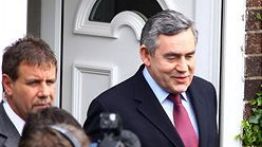
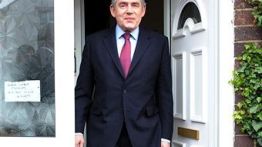
Gordon Brown clearly didn't read my blog post before last. There was something biblical about his humiliation in Rochdale. His loss of dignity was total. It wasn't as if the status of Gillian Duffy as an archetypal Labour voter had not been telegraphed - father singing the red flag at Manchester Free Trade Hall, working for the local council for 30 years. With disabled children for goodness sake. Everything was shouting: "Be nice to this woman. She is one of ours." In public the Prime Minister could keep up the act. But his comments in the car revealed too, too much about the decadent state of Gordon Brown's Labour machine. What happened today is a significant betrayal of every candidate and every party worker currently pounding the streets to get Labour re-elected.

Brown’s apology to Labour members

From our UK edition

This message has just been blasted out to Labour members: As you may know, I have apologised to Mrs Duffy for remarks I made in the back of the car after meeting her on the campaign trail in Rochdale today. I would also like to apologise to you. I know how hard you all work to fight for me and the Labour Party, and to ensure we get our case over to the public. So when the mistake I made today has so dominated the news, doubtless with some impact on your own campaigning activities, I want you to know I doubly appreciate the efforts you make. Many of you know me personally. You know I have strengths as well as weaknesses. We all do. You also know that sometimes we say and do things we regret. I profoundly regret what I said this morning.

Ten reasons why this is a catastrophe for Brown and Labour

From our UK edition

Every politician will be thinking "there but for the grace of God..." today - but the Gillian Duffy incident is not just a gaffe. It is bad for Gordon Brown and Labour on very many levels. Here are ten of them.   1. The image of the Politburo pulling away in the Jag, slagging off the proles. This confirms the idea of an elite, who sneer at voters in private but try to charm them in public. And the idea that politicians (of all parties) say one thing on camera, and another when they think no one is listening. 2. The is not just a gaffe, but the PM on tape insulting the voters. It's the worst thing you can do in an election campaign (ie Obama¹s "cling to guns and religion" remark). Far worse than if Brown were, say, caught swearing, Nixon-style.

Will there be a backlash against criticism of Brown?

From our UK edition

Gordon Brown badly needed Mrs Duffy to come out of her house after his 40 minute meeting with her and grant him public absolution and declare that she’s voting Labour after all. But she chose to stay firmly inside. There’s now no footage to replace that of the initial gaffe on the nightly news tonight.   In his statement after his meeting with her, Brown said he had ‘simply misunderstood some of the words she had used.’ But it is hard to see how he could misunderstood what she said.   Some are asking if there’ll be a backlash to the criticism of Brown as there was after the Jacqui Janes letter. I don’t think there will be.

Oh Dear: Calling Voters “Bigots” Doesn’t Often End Well

From our UK edition

Well the only good thing, from Labour's perspective, is that this has happened the day before the final debate and not several days before it. So there's just a chance it will be a 36 hour story, not a 72 hours one. Clearly it's not a great idea for the Prime Minister to be heard calling a middle-aged widow he's just encountered on the mean streets of Rochdale a terrible "bigoted woman". The video is excruciating and demonstrates why Labour have generally been wise to keep Gordon away from the general public during this campaign: The comments once Brown has escaped to the supposed-safety of his car are pretty awful, but it's the small talk with Gillian Duffy that is truly painful. Here's a man who, whatever his other qualities, is not cut out for modern retail politics.

Brown v The Voters

From our UK edition

We have just witnessed the biggest moment of the 2010 election campaign. It wasn't that Brown let off steam: it was that he instinctively described as "bigoted" a woman who represents what should be Labour's core vote. Sure, she mentioned immigration - but just said "where are they coming from"? Her main concern was the national debt, and what her grandchildren will have to pay. Neither Cameron or Clegg would have thought these points bigoted - and neither would Tony Blair. The thought would not have crossed his mind. Nor that of Kinnock, Foot or Callaghan. Labour's campaign is led by a man who dislikes campaigning, having to get down and dirty with ordinary voters. He doesn't like standing for election. "Whose idea was that?" He asked when inside the car. Whose idea was what?

Brown calls woman a ‘bigot’

From our UK edition

Wow. Just when you thought Labour's campaign couldn't get any worse, they go and wheel out Brown in front of ordinary voters.  And this is the result: he has been caught on mic describing a member of the public as a "bigoted woman".  Speaking to one of his advisers, he added "you shouldn't have put me with that woman. Whose idea was that?"  Classic. This may be trivial beside the big questions about the economy, etc. - but you can expect is to become one of the defining TV moments of the campaign.  It's one thing to insult and attack the politicians who serve alongside you, but quite another to do similar to someone whose vote you're courting.  Toxic, toxic stuff.

The high tide of Liberalism?

From our UK edition

Cleggmania may be in remission. A Populus poll for the Times puts the Tories up 4 at 36 percent, the Lib Dems down 3 at 28 percent and Labour down one at 27 percent. Com Res has Labour and the Lib Dems tied on 29 percent with the Tories up 1 to 33 percent, whilst You Gov has the Tories on 33 percent, Labour on 29 percent and Clegg’s party on 28 percent. A hung parliament remains the probable outcome next Thursday. Anything other than a decisive Tory victory will sustain the Liberal surge, as Clegg would hold the balance of power or a Lib-Lab coalition would seek to inaugurate electoral reform.

The Scottish Question

From our UK edition

The other day a wise friend, lamenting the "madness" of the people carried away with Cleggmania, fretted that it all amounts to the beginning of the end. For the Union, I mean. These days, you see, it's Unionists who are forever whistling an old song and always wondering if it's for the last time. I didn't, I admit, quite follow his argument but it had something to do with the Liberals in power, the advent of proportional representation leading eventually and inexorably to an English parliament and thus loosening the ties that bind to the point that they may be severed with a single blow of a Damoclean sword. Or something like that anyway. Conventional wisdom in Nationalist circles has always been that the independence cause is best advanced by a Conservative victory.

The battle for the middle ground

From our UK edition

The New Statesman has interviewed Douglas Alexander, who appeals, as Andrew Adonis has, to Liberal Democrat voters to back Labour to inaugurate what he terms a ‘New Dawn for Labour and progressive politics.’ Progressive is a vague term, but the best definition for it is reform to encourage social mobility. In this morning’s Times, former Fabian Stephen Pollard argued that only the Tories can guarantee this. For the time, Pollard says, he will vote Conservative and all because of Michael Gove’s schools reform.   ‘Mr Gove has promised that within four years of a Tory government, all parents will have the option of sending their child to an independent school offering to educate the child free.

Labour’s disintegrating campaign

From our UK edition

Fireworks at Labour's press conference this morning, thanks to some brilliant questioning of Mandelson and Balls about the cuts which Labour is concealing from the public. A while ago, the FT did its own version of a table that Coffee House ran in February: the implied cuts that departments will make under HM Treasury forecasts. I reprint it below. The IFS has sought to quantify these cuts. So Sky's Adam Boulton read out this list and confronted Mandelson: which of these would Labour not do? Freezing benefits? Cutting public sector pay? Halving the spend on teaching assistants? Cutting funding to Wales and Scotland? Nick Robinson from the BBC piled in too: Labour has asked broadcasters to focus on the issues, so why can't it discuss this issue?

The government, not Chris Grayling, is misleading the public over violent crime

From our UK edition

The New Statesman’s George Eaton admonishes Chris Grayling repeating his ‘false claim that violent crime has risen dramatically under Labour.’ Eaton cites the British Crime Survey’s findings that violent crime has fallen by 41 percent since 1997. True, the BCS asserts that violent crime has fallen since 1997. Changes in recording practice in 2002-03 mean that comparing current statistics with those compiled a decade ago is inherently inaccurate – a point conceded by UK Statistics Agency head Sir Michael Scholar with regard to Grayling's police statistics, but not the BCS'. The independent House of Commons Library gave a more accurate assessment, finding that violent crime rose from 618,417 to 887,942 last year, or 44 percent.

Nothing to offer except personality politics

From our UK edition

Labour’s press conference this morning highlighted the party’s problem. Labour is demanding that the media cover policy more than process and personality. But when the discussion turns to the biggest policy issue of the day—how to cut the deficit—Labour doesn’t want to engage. This morning, Nick Robinson, Adam Boulton, Andrew Neil all pushed Mandelson, Balls and Cooper on this issue. All of them were clearly frustrated by Labour’s lack of answers. Ironically, all the memorable lines from Labour’s press conference came when process and personality were discussed.

Who Said Never Underestimate the Lib Dems? I Did

From our UK edition

In September 2005 I wrote about the "stampede for the centre ground" in an article for the New Statesman. I had just been underwhelmed by the Liberal democrat conference in Blackpool and noted how easy it was to sneer about the centre party from the Westminster village. The Lib Dems were not making it easy for themselves as they struggled to come to terms with the rise of so-called "Orange Book" Lib Dems such as David Laws and Nick Clegg on the right of the party. However, I said at the time: "It is tempting... to dismiss the Liberal Democrats. It would be unwise to do so yet. Those in the other two main parties thinking seriously about politics recognise this.

Latest projections confirm deepening Labour decline, will it be terminal?

From our UK edition

Well no surprise there – the Politics Home poll projection suggests that the Tory recovery, started by Cameron on Thursday night, comes at the expense of Labour but remains indecisive: ‘In the new projection, which incorporates all polls published up to and including Sunday 25th April, The Conservatives would be thirty six short of a majority, with 289 seats - 11 more than they were projected to win last week. Labour are projected to win 234 seats and the Lib Dems 94. Labour’s projected total has fallen by nine, while the Lib Dem total has fallen by four. The Tories are projected to gain a 35.1 per cent share of the vote, Labour 27.0 and the Lib Dems 28.4.’ No party has significant forward momentum.

The spotlight turns on Labour

From our UK edition

It's the story which has been simmering throughout the election campaign, and now it has has boiled over onto the front pages: fear and loathing in the Labour ranks.  After rumblings in the Sunday Times yesterday, its sister paper splashes with the headline "Labour in turmoil as pressure on Brown grows".  And, inside, Francis Elliot and Suzy Jagger report on the "jockeying to replace Gordon Brown".  Meanwhile, the front of the Independent speaks of "growing recriminations in senior Labour ranks over a lacklustre campaign that has seen the party relegated to third place in opinion polls."  The spotlight is finally turning, white-hot, on to Labour - after ten days of near exclusive illumination on the Lib Dems.