Labour party

Labour’s Tactical Voting Blunder

From our UK edition

Pete asks whether Labour's tactical voting ploy can work. My suspicion is that it cannot and will not. This is not 1997. There is all the difference in the world between voting tactically against a government and voting tactically against the idea of a government that may otherwise come to power. More generally, the advice from Ed Balls and the others that tactical voting is the smart thing to do is an admission that Labour no longer believes it can win. Given the state of the polls that' hardly a startling conclusion but the problem, from Labour's perspective, with conceding it publicly is that it cannot possibly motivate Labour voters to get to the polls. Quite the reverse in fact. The message "Abandon Ship! Save Yourselves!" is no way for the party to hold its nerve.

The Tories’ final onslaught

From our UK edition

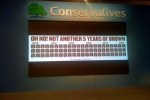
"Where's the popcorn?" I thought, as I joined a bunch of journos to watch the Tories' final broadcast of the election campaign. It was a good nine minutes long, and might as well have been titled The Downfall of New Labour. The opening shots were of Blair and Brown in 97: "a new dawn," and all that. But Blair's image soon faded to black-and-white, and we were bombarded with a montage of headlines, quotes and images which highlighted the failures of the Labour years. 10p tax. Falling education standards. MRSA. The misdemeanours of Peter Mandelson. Defence spending. Purnell's resignation. Gillian Duffy. Even Manish Sood's comments today. Depending on your disposition, it was all gorily nostalgic stuff. Negative, yes. But quite powerful nonetheless.

Will the tactical voting plea work?

From our UK edition

There's only one question which matters when it comes to Labour's tactical voting plea: will it work?  You can certainly see Brown & Co's thinking on this.  This is the election, after all, where the Lib Dems have become a viable option for a lot more people - so they might act as a speed bump for people rushing away from Labour and towards the Tories.  And anything which depresses the Tory vote gives Labour a greater chance of holding the most seats in the House, and of making some kind of post-election pact with Nick Clegg. But as David said earlier, Labour's osciallating stance towards the Lib Dems - lofty sneers one minute, sickly grins the next - is hardly convincing.  And neither is the timing.

Labour PPC: Gordon Brown is the worst Prime Minister ever

From our UK edition

At last, the election has thrown up a real character. Manish Sood, Labour PPC for North-West Norfolk, has told the Lynn Newspaper: ‘Immigration has gone up which is creating friction within communities. The country is getting bigger and messier. The role of ministers has gone bureaucratic and the action of ministers has gone downhill – it is corrupt. The loss of social values is the basic problem and this is not what the Labour Party is about. I believe Gordon Brown has been the worst Prime Minister we have had in this country. It is a disgrace and he owes an apology to the people and the Queen.’ There is a further act in the farce. Mr Sood campaigns on the imaginative ticket of 'taking Britain back to the 1970s.

From carpet-bombing to love-bombing

From our UK edition

Labour’s relationship with the Lib Dems gets more like Dallas’s JR and Sue Ellen with each passing day. Contemptuous and contemptible one day to lisping breathless compliments the next.  Gordon Brown snarled at Nick Clegg during last week’s debate. Clegg would, Brown argued, leap gaily into bed with the Tories on Friday morning - a departure from the previous ‘we must form a progressive coalition’ line pushed by Andrew Adonis. This morning brings another volte face: Brown and several cabinet ministers urge ‘progressives’ to vote tactically. Writing in the Guardian, Gordon Brown pitches for Lib Dems to vote Labour in 100 Tory/Labour marginals.

The Tories plan to cut early – but how would their opponents respond?

From our UK edition

Oh yes, the Tories are broadcasting more Ready For Government noises this morning.  There's an article in the Telegraph suggesting that David Cameron would choose a minority government ahead of coalition with the Lib Dems.  And the Guardian reports that a Tory government would set out a bulkload of spendings cuts in the first six months of office, when, as a senior Tory puts it, the "excitement of the general election aftermath" will still be hanging in the air. You can understand the Tory thinking here.  Not only will they find it easier to achieve things during the heat and righteous fury of early government, but they will also need to seize something like a mandate for the cuts which have remained off-stage during the election campaign.

Old Comrades Drift Back to Labour

From our UK edition

I have had a number of shocked emails from old friends on the left following my previous post here, which many saw as an endorsement of the Liberal Democrats. In fact, I remain one of the great undecided. This weekend I witnessed some good comrades embracing the party of the workers. Nick Cohen devoted his column in the Observer to the thesis (adapting Chesterton) that "when people stop believing in Labour they don't believe in nothing – they believe in anything". Meanwhile, Norman Geras of normblog has published the five reasons he will be voting Labour. There is much soul-searching out there in liberal Britain. The Observer's brilliant but tortured endorsement of the Lib Dems came very close to being an argument for voting Labour.

Nothing but negativity

From our UK edition

A telling passage from Nicholas Watt and Patrick Wintour's campaign report this morning: "Gordon Brown visited 10 London constituencies [yesterday] eventually leaving a pub in Kilburn by a side door after it was besieged by Tory and Lib Dem activists. He is now running a campaign almost exclusively warning of Tory cuts, and claiming that the party's first tax cut would be for Britain's richest millionaires. Brown also described the Tory manifesto as a 'horror show', flagging up their plans on inheritance tax, public services and the deficit, adding: 'I say the Conservative party is not fit for government if it has policies like that.

Gordon Brown knows he is finished

From our UK edition

Gordon Brown knows he is finished. My prediction is that he will not use his constitutional right to hang on if the Tories are the largest party in a hung parliament. OK, the Labour leader might try to stay in No 10 – for a second, maybe a minute, perhaps even an academic quarter, trying desperately to persuade a triumphant Nick Clegg that a Lib-Lab coalition is vital for Britain, and that the Tories are evil and must be resisted. But he will soon give up, throw down the phone in anger, shout at Stewart Wood, ask his colleagues to leave him alone and sit in the office alone for a minute, acknowledging his Greek fate.

The Brownites still think they can win the election

From our UK edition

So, back to the Labour leadership with Patrick Hennessy's snappy article on the subject for the Sunday Telegraph.  The main sweep of Hennessy's piece is that Brown is likely to step down quickly in the event of defeat; that Harriet Harman could well fill the caretaker leader role; and that certain Dark Forces are moving to install David Miliband as party leader proper.  The colour, though, lies in a couple of juicy snippets which are worth repeating here: "Last week, this newspaper has learnt, Lord Mandelson was overheard telling colleagues of his difficulties running the campaign when other figures – who could only be Miss Harman and her followers – kept insisting that every event must have a proper 'gender balance.

Why the Guardian should have backed the Tories

From our UK edition

The Guardian missed a trick today. It should have endorsed the Conservatives. As a regular reader of that great newspaper, I can diagnose the ailment: it is confusing intentions with outcomes. It wishes for a more progressive society, greater equality and the betterment of the most vulnerable. But it has not quite worked out that these aims cannot be achieved by a powerful government: and that state-directed attempts at promoting a "progressive" society actually make it less equal, more regressive and end up empowering a bureaucratic elite. The Guardian lets itself down here: it has focused on what is said – not what is done. In doing so, it does a disservice to its own progressive values.

The curtain starts to fall on Gordon Brown

From our UK edition

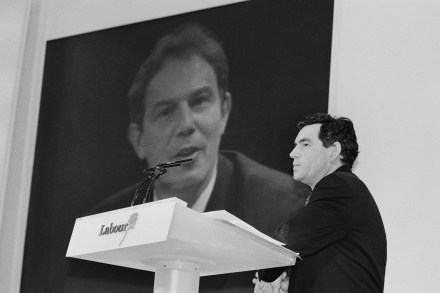
There's a strange fin de siècle air about Labour this weekend: a new appreciation that the forthcoming election marks either the end of their reign, or – at best – is the start of a different, diluted kind of power.  There are still a few signs of life and struggle, sure.  I mean, Gordon Brown's interview with Jeremy Paxman last night was fairly proficient by his standards, if typically disingenuous.  But, even then, the PM is struggling to move the conversation on from Gillian Duffy.  In interview with the Telegraph today, he admits that he has "paid [a] heavy price" for his gaffe. That line forms the headline of the article. Even Tony Blair can't inject much joy into Labour's campaign.

Darling socks it to Balls

From our UK edition

The election is six days away, Labour civil war is seven days away. And Alistair Darling has today delivered a rather nice put-down to Ed Balls for BBC Campaign Straight Talk. Here is his conversation earlier today with Andrew Neil: Andrew Neil: Has Mr Brown given you any indication that you’d stay as Chancellor if he wins? Alistair Darling: Yes he has, and I would. AN: You would? AD: Yes. AN: And you’d be happy to do so? AD: Very happy. AN: So Ed Balls should not be packing his bags to move into Number 11? AD: I don’t think Ed has got any intention of doing that. AN: Well he did it once, but he had to unpack them again. AD: There’s nothing wrong with having ambition. Wonderful.

The quiet rise of Alistair Darling

From our UK edition

A noteworthy set of observations from Iain Martin over at the Wall Street Journal: "The Labour family is starting to realise that if it is out of power it would need a caretaker leader in place quickly so that it can regroup, rethink and then work out which of the competing contenders has the best chance of beginning the work of reconstruction. In this context, I hear the name of Alistair Darling being mentioned increasingly as the interim option. It makes a lot of sense. The Chancellor has had a good crisis and he could steady the ship. He also has a great sense of humour - which will be crucial in the circumstances. Johnson is said not to really want it and Jack Straw is done for. Harriet Harman?

The Darling Option

From our UK edition

Last October I suggested that if Labour wanted to find a caretaker leader they could do much worse than appoint Alistair Darling to the job. Granted, there were a couple of difficulties with this notion: Darling is Scottish and there is no party of Darling or interest that will swing behind him. Well he can't do much about the former, but the latter can be turned to his advantage (if he decides he wants the job) since, evidently, his elevation doesn't dash anyone else's hopes or interest. As I put it in October: Now, sure, Darling isn't a perfect candidate. But if such existed we wouldn't be having this discussion. But he has a certain calmness about him that might, just might, be what Labour need.

Too little, too late | 30 April 2010

From our UK edition

My gosh, these latest Labour posters are open for all kinds of spoofery. But at least they're positive and colouful - unlike Gordon Brown's performance in the TV debate last night.  Which, really, highlights Labour's fundamental problem during this campaign.  The big set-piece events have been almost relentlessly negative, whilst they've left what passes for a positive prospectus to posters which will barely make it past the confines of the political blogosphere.  But, never mind - Tony Blair thinks that "Labour's got every chance of succeeding."  So all's well then.

Labour’s campaign implodes

From our UK edition

Labour’s campaign has been dysfunctional. ‘Bigot-gate’, the concealed cuts, the absence of a spending review, open challenges to the leadership, infighting and a manifesto that read like the terms of surrender, it has been beset by gaffes and self-immolation. Last night, Gordon Brown personified the desperation at Labour’s core. He was negative – dour predictions accompanying an ashen expression. He defibrillated the old cuts versus investment line – a lurid grope for his core vote and one that is incredible in the current circumstances. We expected all of that; what we did not expect was that Brown no longer agrees with Nick.