Labour party

How can the Lib Dems deal against the backdrop of a Labour leadership contest?

From our UK edition

And so it begins. With Brown's statment earlier, the Labour leadership contenders are already creeping out of of the Downing Street woodwork.  Paul Waugh tweets that David Miliband will announce his candidacy tonight.  The News of the World reports that Ed Balls has his campaign primed and ready to detonate.  And I'd be very surprised if there aren't more names about the enter the fray. All this activity is sending electic currents through the Westminster air – and it could end up burning Labour and the Lib Dems.  Both sides are are saying that they want to create a "strong" and "stable" government.  But how can Clegg & Co. see anything stable in this situation?

Brown statement: now with added video

From our UK edition

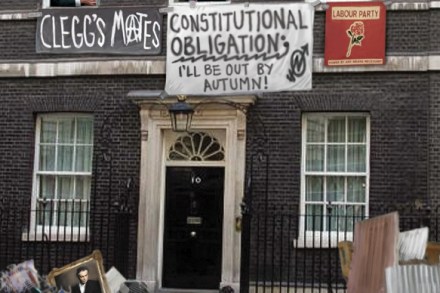
And here's a transcript of the statement "We have a parliamentary and not presidential system in this country and as I said on Friday, with no party able to command a parliamentary majority arising from the general election, my constitutional duty as prime minister is to ensure that government continues while parties explore options for forming a new administration with majority support in the House of Commons. "The business of government has continued including concerted action in Europe today to avert the financial crisis in the Euro area. Alistair Darling the chancellor spent much of his time yesterday in the European finance ministers meeting in Brussels.

The best possible news for the Tories

From our UK edition

Gordon Brown’s announcement that the Liberal Democrats have requested formal coalition talks is the best news that the Conservative party has had since the polls closed on Thursday. David Cameron can now say that his party has negotiated in good faith and that his broad, comprehensive, and open offer to the Lib Dems is on table and they can take it or leave it. If the Lib Dems do end up going into coalition with Labour they would completely discredit themselves and be slaughtered at any subsequent election, remember getting PR through the Lords would take at least a year. The markets would also not be impressed by a coalition that would not be able to take any tough decisions on the deficit.

Gordon Brown announces his resignation

From our UK edition

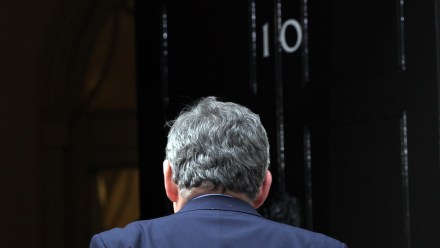
You're witnessing history, CoffeeHousers: Gordon Brown has just announced his departure from frontline politics.  In a statement outside Downing St, he confirmed that he would be stepping down as Labour leader by September – triggering a leadership contest in the process.  It's clear that he's using himself as a bargaining chip, making a Lib-Lab deal more palatable to Nick Clegg.  Indeed, he even said that formal talks between the parties are now commencing. This threatens not just to shake the kaleidoscope, but to smash it to pieces.  Until 17:05 this afternoon, most folk thought that a Lib-Con deal was imminent.  But surely Brown wouldn't have taken this step if there wasn't a chance – however slight – of sabotaging those efforts.

Do the Lib-Lab talks alter the landscape?

From our UK edition

Isn't it all very cosy?  Turns out the Lib Dem negotiating team secretly met with a Labour delegation over the weekend: Ed Balls, Peter Mandelson, Ed Miliband and Andrew Adonis.  And it's thought that Nick Clegg has had more conversations with Gordon Brown, both on the phone and in person.  So the Tories aren't the only ones enjoying some quality LibTime. It doesn't really alter the cut of the situation, though.  Most folk around Westminster seem to expect a Lib-Con deal, of sorts, at some point today.  But Clegg and his team would weaken their hand if they didn't at least explore every option.  The Tory leadership will appreciate this – and, I'm sure, won't be all that perturbed by these latest developments.

What A Carve-Up: The Glittering Prizes Awaiting Cameron and Clegg

From our UK edition

These are interesting times, aren't they? Interesting but scarcely simple. Nick Clegg may have suggested that a deal must be done by close of play, Monday if it is to be done at all and all the signs may still point to David Cameron coming to an arrangement with the Liberal Democrats but, clearly, difficulties remain. How could it be otherwise given the complexity of the situation and the stakes? Policy is the least of the problem. If one accepts that the old left-right labels are increasingly outmoded and that the defining divide today is between the centralisers and the localists, between the liberal and the statist then, theoretically at least, liberal Tories and true liberals in the Liberal Democrats can do a deal.

Confession Time: I Voted Labour

From our UK edition

I left the Labour Party in 1994 and re-joined on May 6th 2010. There, I've said it. I had always intended to vote Liberal Democrat in this election, but changed my mind in the polling station. It seems I wasn't alone.  I couldn't ever quite buy in to the New Labour project, but I would like to be involved in whatever it is that happens next.  Unlike others on the left, I would not be horrified by a Conservative/Liberal Democrat government, although I would be happier with a grand coalition/government of national unity. I voted Labour with a heavy heart. My local MP, Lynne Featherstone is exemplary and the local Labour council's handling of the Baby Peter scandal was woeful.

No Lib-Con deal for at least 24 hours

From our UK edition

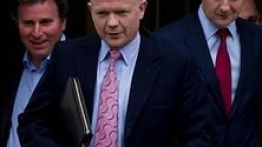
William Hague has just emerged from the Cabinet Office and spoken of the 'positive, constructive and substantive talks' between the Conservatives and the Liberal Democrats. Discussion has encompassed political reform, reducing the deficit, banking reform, regulation of small businesses, environmental issues and civil liberties. Hague says that a further meeting will take place at some stage in the next 24 hours. 'That meeting,' he added. 'Will concentrate on deficit reduction and economic stability'. The language of the statement suggests that an informal pact is more likely than a formal coalition.

Scotland Will Save England From PR

From our UK edition

That's right. There's a genial irony here. The very same Scottish MPs whose election helped prevent the Conservatives from winning a majority will be the men - and they are mostly men - who will prevent electoral reform. Those English voters who think it unfair that the great phalanx of Labour MPs returned from these chilly northern climes exercise an undue (in their eyes) influence upon the affairs of state might also pause to reflect that the people who will prevent electoral reform may well be those same Scottish Labour members. Not that this stops the deluded left from dreaming of some grand so-called progressive alliance. They're all at it and all utterly detached from reality. Exhibit A: Polly Toynbee. Exhibit B: Jackie Ashley. Exhibit C: The Observer's editorial. Wake up people.

A long day’s journey into night

From our UK edition

Sky News are reporting that Brown is to hold a meeting with Cabinet ministers tonight. Lord Ashdown made it pretty clear on Andrew Marr this morning that there would be no 'progressive coalition' with a Labour party that has been comprehensively rejected at the polls, and which would rely on backroom deals with celtic nationalist parties prepared to sell their support for a measure of protection from necessary spending cuts. You'd have thought that tonight's meeting is the beginning of the end for the Labour government.

Where are Labour’s manners?

From our UK edition

For all the feverish political activity in Westiminster today – and beyond the occasional voting reform protest – there's a strange, impermeable calm to the situation.  Everything is going on behind closed doors, and everyone is remaining relatively tight-lipped.  Signs are, we may have to wait a couple of days before any light breaks through the fog of discussion and counter-discussion.   One thing, though, is already becoming increasingly clear: 13 years of tribalism haven't done Labour much good when it comes to cross-party negotiations.  There are, of course, the rumours that Gordon Brown had an – ahem – "unconstructive" meeting with Clegg last night.

Time for a National Government? (Revisited)

From our UK edition

If there is one lesson to be drawn from the television debates, it is that people have grown tired of politicians slagging each other off. David Cameron promised an end to "yah-boo" politics, but the institution of parliament makes this near-impossible in practice. However, while parliament is out of action, there just might be the possibility of creating something genuinely ground-breaking: a government of national unity. I first suggested this idea in the New Statesman during the 2008 Labour Party conference: "If the financial crisis is as serious as many in the government suggest, then extraordinary times require bold solutions.

It’s obvious that Brown’s the impediment, why doesn’t Labour strike?

From our UK edition

Well, Brown the Statesman was a short-lived incarnation. The BBC reports that Brown and Clegg exchanged ‘angry words’ yesterday evening and that Brown delivered a characteristic private political conversation: ‘a diatribe laced with threats’. Clegg and Brown simply cannot work together. This inability to put aside personal differences is far from magnanimous of both men, but it is plain that Brown no longer commands the authority to shape the nation’s future. If there’s no hope of a Lib-Lab coalition with Brown at the helm, then the knives will be sharpening - again. From Labour’s perspective, delaying the inevitable would be fatal as it gives Cameron more time to negotiate with Clegg knowing that he is Clegg’s only option.

Cameron offers the hand of coalition to the Lib Dems

From our UK edition

Woah, I didn't think Cameron would go that far.  In his statement just now, the Tory leader started off by talking about minority government, as one might expect.  But he soon skipped past that, and onto what sounded like a more formal coalition with the Lib Dems.  He called it the Tories' "Big Comprehensive Offer". This offer trumped the one that Brown put forward ealier by virtue of its clarity.  Where Brown had hints and innuendo, Cameron had an itemised list of policies and specifications.  And so the Tory leader set out the areas where he wasn't willing to compromise with the Lib Dems: Europe, cutting the deficit and immgration.

Nick Clegg gives the Tories the go-ahead

From our UK edition

So Nick Clegg has finally spoken – and his words will be welcomed by the Tories.  In an address outside of the Lib Dem HQ on Cowley St, he reiterated his previous argument that "whichever party gets the most votes and the most seats, without gaining a majority, has the first right to form a government."  But added that "it seems this morning that the Conservative Party have the most votes and the most seats ... it is for the Conservative Party to prove that it is capable of governing in the national interest." What this means in practice isn't 100 percent certain – although it doesn't sound good for Labour.

Massive Failure by the Tories and Lib Dems to Manage Expectations

From our UK edition

The old political hands in the Labour Party at least knew that they had to talk down their prospects (beyond the usual nonsense about fighting to win). Lord Mandelson was right to fight this election as the underdog because this now looks in some ways like a victory.  In fact this is a massive achievement for the Conservative Party. When David Cameron took over in 2005 many Tories would have settled for this result. They should always have been fighting a two-election strategy. But the Conservative Party allowed itself to get overexcited about the possibility of outright victory. The Liberal Democrats allowed themselves to dream and find themselves bitterly disappointed this morning.

Peter Mandelson is open to the idea of Brown going

From our UK edition

Peter Mandelson has just tossed a firecracker in to the arena.  Asked on the Beeb whether Labour might get rid of Brown to accommodate the Lib Dems, he replied: "There will be a number of permutations ... I'm not ruling anything in, or anything out." So, in other words: yes.

Let the recriminations begin

From our UK edition

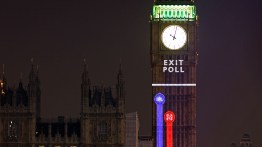
Let's rewind to 10pm yesterday evening, when the exit poll was released.  Most politicos - myself included - were incredulous.  We could just about believe that there might be a hung Parliament with the Tories as the largest party, but a reduced number of Lib Dem seats?  After Cleggmania and all those recent opinion polls?  Gedouttahere. But, this morning, that exit poll is looking a good deal more prescient.  After an evening of erratic results, Sky's projection matches it almost exactly: 309 seats for the Tories, 259 for Labour, and 54 for the Lib Dems.  So we're on for a hung parliament, and all the backroom discussion and subterfuge that that entails. Already, the dividing lines have been traced across Westminster.