Labour party

Who will be Labour’s cuts candidate?

From our UK edition

As Guido and Jim Pickard have pointed out, Liam Byrne's article in the Guardian today reads like the launch of a leadership bid.  But if it is, then it's not a well-judged one.  Amid some sensible points about Labour's demise, there's too much "if we'd have done what I said" bravado which, I imagine, won't go down well with the party faithful right now.  A bit like pouring vinegar on an open wound. But it's worth considering another angle to a Byrne leadership bid.  A couple of weeks ago, I wondered whether Brown's departure would also take Labour away from the "investment vs cuts" dividing line of the past decade, towards a more responsible contribution to the fiscal debate.

Why fraternal rivalry will be good for Labour

From our UK edition

With the Sun reporting that Ed Miliband is going to stand for the Labour leadership, it's probably a good time to dig out Anne McElvoy's profile of the Miliband brothers for the Sunday Times last month. To my mind, its opening neatly encapsulates the choice between the wonkish one and the slighty-less-wonkish one that Labour may have to make: "When David and Ed Miliband were teenagers, their north London household rang to the chatter of some of the most prominent left-wing names of the era: Tony Benn, Tariq Ali, the ANC leader Joe Slovo and the late Michael Foot. David, one regular guest recalls, would sit 'absorbing it all' and asking interested questions of the grandees.

Labour must recognise the scale of its defeat

From our UK edition

Will Straw was on the news this afternoon, arguing that Labour had lost only a small "doughnut" of seats around London and in the south. As John Rentoul notes, some doughnut: Labour was annihilated in England. David Cameron’s swift reform of the Conservative party was built on recognising the scale of defeat. Few on the Labour side have yet done so, including David Miliband, who clings to the spurious consolation that it could have been worse. In a piece for the Guardian, John Denham is candid about a share of the vote that was markedly lower than John Major’s in 1997: ‘Most obvious is just how catastrophic our defeat was.

Miliband storms ahead. Whither Ed Balls?

From our UK edition

Amazingly, given his penchant to procrastinate, David Miliband’s leadership bid is flying. High profile endorsements fly-in – former defence secretary and arch-Blairite John Hutton is the latest. Miliband is out on the stump, canvassing the opinions of former voters. Ed Balls, by contrast, looks tentative and there is no doubt he’s losing ground.   Iain Martin has an excellent post on the Labour leadership contenders and concludes that Miliband is not yet the complete package. I agree. Bananas aside, Miliband’s chief problem is that he expresses himself in meaningless abstractions. Think Tanks and cosmopolitans adore the terminology, voters don’t – The Big Society was A Big Flop.

David Miliband kicks off his “unity” leadership campaign

From our UK edition

Surprise, surprise – David Miliband has just announced his candidacy for the Labour leadership, and there wasn't a banana in sight.  His address only lasted a few minutes, but it contained a number of hints about how, I suspect, he will look to run his campaign.  The emphasis was on newness, natch – "a new era, new dangers, new possibilities, new opportunities" – but also on unity.  He praised the leadership of Gordon Brown; claimed he was looking forward to a "warm, generous and comradely" contest; and said that he would go on a tour of non-Labour constituencies to "listen" to the public.  All of which was meant to reinforce one impression: that he would take Labour beyond the fierce tribalism of the Blair and Brown years.

Game on for the Labour leadership

From our UK edition

The Coalition Cabinet remains unformed as yet - it's rumoured that Chris Huhne is going to environment and Michael Gove and David Laws are out doing one another in the 'I've no idea where I'll be' stakes. All the sounds are very positive but the contents of would-be ministers' statements are careful, as doubtless final decisions are being made. The Labour leadership has its own spot on Westminster's backdrop of delicate intrigue. Yesterday, Andy Burnham positioned himself as the candidate of sense, opposing Lib-Lab talks and acknowledging that Labour needed to reorganise itself in the aftermath of defeat. The preferred path to renewal is clearer this morning. Alan Johnson has declared he will not stand and has backed David Miliband.

Brown resigns as Prime Minister

From our UK edition

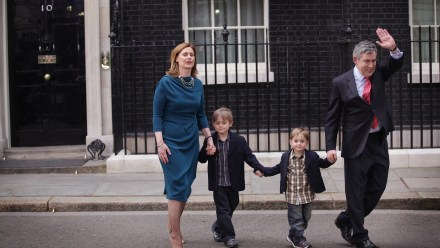
That No.10 lectern has had a lot of use over the past two days. Yesterday, it was wheeled out for Brown's resignation announcement; today, for his resignation proper. It was quite dignified, as it happened. He said that he he loved the job for its "potential to make this country fairer, more tolerant, more green, more prosperous and more just," and wished his successor well. And he finished by paying tribute to his wife and his children, who he said represented the "most important job" he could ever hold. So that is that, as one T Blair once said. The end.

Clegg Gets Labour to Drive His Party to the Tories

From our UK edition

There's one thing that may be said of Nick Clegg's willingness to talk to Labour: it allowed Labour to show Liberal Democrat MPs that a deal with the Tories is the only show in town worth buying a ticket for. Once Labour MPs vowed to derail any plan to force through voting reform without a referendum and once John Reid, David Blunkett and Andy Burnham pointed out the absurdity of a "Loser's Alliance" that, however constitutionally permissable, would mock the actual, you know, result of the election then even the most sawdust-brained Liberal Democrat MP could appreciate that this bird wouldn't fly. That leaves a proper deal with the Tories the only sensible option - an outcome that I suspect was Clegg's preference all along.

The Labour Party Must Accept Defeat and Move On

From our UK edition

As I write, the Liberal Democrats and Tories are meeting in the Cabinet Office. The Labour Party should accept this is the end of any hope of a Rainbow Coalition. This election was lost and well lost. The Conservative achievement is substantial. There are now over a hundred extra Tory MPs in parliament and David Cameron has taken his party from being an unelectable basket case to the dominant political force in Westminster. It would be gracious at this stage to admit defeat.  The unwholesome sight of Labour grandees scrabbling around in search of  deal with the Lib Dems is an affront to democracy. The suggestion that Labour has the best interests of the nation at heart, when it has been so comprehensively rejected by the electorate is the party at its authoritarian worst.

The obstacles to a Lib-Lab deal

From our UK edition

The main development of this morning has been Labour MPs throwing up obstacles to a Lib Lab deal. At the moment there are four main problems. First, David Blunkett and others arguing that Labour would be better off going into opposition and—this is implicit—letting the Tories and the Lib Dems make the cuts. One union fixer told me Labour couldn’t go into a coalition with a party committed to cuts to benefits and tax credits. Second, Jon Cruddas, a champion of party democracy, has demanded that the parliamentary party, the NEC and the unions be consulted on the terms of any deal. Third, there are lots of Labour MPs letting it be known that they’d vote against AV so the Lib Dems might not get the main thing they want from a coalition.

Whatever happens, Clegg has sullied his credibility with the Tories

From our UK edition

Let's not get ahead of ourselves: some sort of deal between the Lib Dems and the Tories is still a distinct possibility, even if negotiations have been rocked by the events of yesterday. But whether it goes through or not, Clegg has seriously dented his credibility in Tory circles. Backbenchers who were warming to the idea of a formal Lib-Con coalition a few days ago – if only to scupper Labour's hopes – are now dead set against it. The very notion of Clegg as Home Secretary is becoming a collective anathema. The question now is whether – failing a Lib-Lab coalition – the Tory leadership is more inclined towards a confidence and supply deal than they were before.

Game on for a Lib-Con Coalition

From our UK edition

Gary Gibbon reports: 'Last night’s two-hour meeting of the Lib Dem MPs (with a sprinkling of peers) seems to have swung the party decisively behind a Lib-Con coalition deal. An announcement is widely expected now today.' It’s preferable to the alternative and as George Osborne made clear this morning the Tories can do nothing without Lib Dem support. There’s a suggestion that Clegg may have forced Cameron’s hand into further concessions with his sudden wooing of Labour, in which case he’s a very clever and brave shyster. I’ll believe it when it happens though. PS: A note of caution, as if one were needed. Clegg can't put a time on any deal. Incidently, there is no appetite for a Lib-Lab coalition among centre-left bloggers.

This isn’t English

From our UK edition

‘The Tories are stuffed,’ a resigned Shadow Cabinet minister tells Gary Gibbon. Endorsing any such view is premature but, with Lib Dem elders counselling Clegg to join Labour, the most likely outcome is a coalition of the losers, albeit nice progressive ones. Ah, the irony of the New Politics – plus ca change and all that. Politics has descended into a grotesque spectacle of blackmail, and bungled devolution is to blame. As James reported last night, talks with the Tories ran aground on sands that are the territory of Holyrood and Scottish Liberals presented every obstacle possible.

The Lib Dem big hitters pushing Clegg towards Labour

From our UK edition

Today's papers have the lowdown on the events of the past few days, and one thing is becoming increasingly clear: a Lib-Con deal faces not just the opposition of the Lib Dem base, but also some of the party's most influential figures.  In a Times account of a Lib Dem meeting yesterday, it's revealed that Sir Menzies Cambell "urged his successor not to bind the party into a irrevocable deal with the Tories."  Meanwhile, the Telegraph reports that "Vince Cable played a significant role in resisting an agreement [with the Tories]."  And Paddy Ashdown was across the airwaves this morning, explaining how a Lib-Lab coalition could provide "stability" and "legitimacy," against a "rabidly anti-European" Tory party.

The Blundering Parties

From our UK edition

The biggest blunderer today was, I think, Nick Clegg but one can make a case arguing that each of the parties played their hand badly on Monday. Oh, sure, in one sense Labour must be enjoying this: Tories in a fury, Liberals suddenly interested again and, who knows, perhaps there's a faint glimmer of hope that something may yet arrive to rescue the party and keep it in office. But Labour's good mood reflects a short-term tactical stroke, not a strategic victory. Gordon might have wrong-footed the Tories today and damaged prospects for a Tory-Liberal arrangement but that's it. Labour's overall position had not, I suspect, improved greatly not least because, despite all the talk and the hype, it remains difficult to see quite how they really can push through a deal.

The Tories should shine a light on Labour’s leadership machinations

From our UK edition

One striking aspect to this evening's brouhaha is how senior Labour figures are going out of their way not to endorse anyone as Gordon Brown's successor.  Brown himself has said that he won't back an "individual candidate," and Peter Mandelson and Alastair Campbell have made similar noises in television interviews. There are, I imagine, two main reasons for this.  First, it's all too soon: Labour won't want to engage in full internecine combat while there's still the chance of a deal with the Lib Dems.  And, second, they will want to create the impression that – contrary to Gordon Brown's ascension to power in 2007 – the next Labour leader has been chosen in an open and clean contest.

The Tories work to seize the moral high ground

From our UK edition

Well, well today just keeps getting more and more extraordinary. The Tories have responded to the Lib Dems beginning formal negotiations with Labour by offering the Lib Dems a referendum on AV in exchange for a full coalition with Lib Dems in the Cabinet. The Tories stress that this is their final offer to the Lib Dems. Having spoken to several members of the shadow Cabinet, it appears that the offer is designed to allow the Tory party to seize the moral high ground. They believe that if the Lib Dems were to join with Labour to ram through a change in the voting system—Labour are offering the Lib Dems AV without a referendum and then a referendum on STV—then they would be discredited.